We find the LiTime 2-pack a lightweight 36V marine power option for trolling motors up to 120 lb thrust, if your motor stays within each battery’s 50A discharge limit. The 38.4V nominal voltage and flat discharge curve help maintain steady performance, while marine-focused protections add safeguards against electrical and environmental hazards. At 34 lb each, the batteries are easier to handle than many alternatives, but 50Ah may limit runtime. We’ll weigh the specs, trade-offs, and fit for your setup below.
Key Takeaways
- The two-pack provides a 36V marine power source using two 36V, 50Ah LiFePO4 batteries.
- Each battery weighs 34 pounds and delivers a stable voltage for consistent trolling-motor performance.
- A 50A BMS protects against electrical faults and environmental hazards, but limits suitability for high-current motors.
- The setup is recommended for trolling motors up to 120 pounds of thrust; check motor draw and runtime needs before buying.
- Batteries support compatible parallel expansion, but added capacity increases cost, weight, and installation effort.
36V 50Ah Battery Specs
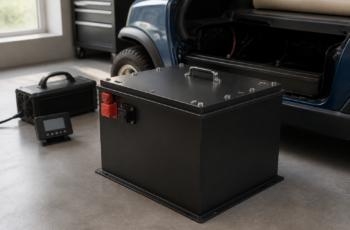
The LiTime 36V 50Ah TM battery uses 12 automotive-grade LiFePO4 cells and delivers 38.4V nominal voltage. Its Group 31 format and 34-pound weight give us useful reference points when checking fit and handling aboard a boat. The 50Ah capacity suits trolling-motor and other energy-storage needs, while the stable battery voltage helps maintain consistent power as capacity is used. LiTime rates maximum discharge current at 1C, a practical limit to compare against your motor’s requirements. This battery is designed for deep-cycle applications, not engine starting, so we should match it to compatible equipment rather than use it as a starting battery.
Detailed features
Beyond its core specifications, the LiTime 36V 50Ah TM adds safeguards and operating traits that matter on the water. Its 50A BMS protection addresses short circuits, overcurrent, overvoltage, undervoltage, temperature extremes, humidity, and salt spray. We should still keep connections dry and follow the manual; built-in safeguards don’t replace careful installation. The flat discharge curve holds voltage above 38.4V through much of the usable capacity, helping a trolling motor maintain steadier power as the battery drains. Low self-discharge also suits seasonal use, though we’d check charge status before heading out. The battery supports parallel expansion, but compatible setup matters.
Pros and Cons
Let’s weigh the battery’s practical advantages, including its marine-focused BMS, stable voltage, and expansion options. We’ll also assess limitations such as its 50A discharge ceiling and unsuitability for engine starting. This comparison will help you judge whether the two-pack fits your setup.
Pros
Three strengths stand out in the LiTime 36V 50Ah TM: its flat discharge curve helps maintain voltage as capacity drops, its 50A BMS guards against common electrical and environmental hazards, and its 34-pound weight makes it easier to handle than many comparable batteries. For trolling motors, that flat voltage curve can support steadier performance throughout a charge. The BMS adds practical protection against salt spray, humidity, temperature extremes, and electrical faults, making Saltwater resistance a useful advantage in marine settings. We also value the manageable weight for installation and transport. Together, these features make this battery a capable, convenient option for boaters seeking dependable deep-cycle power.
Cons
Despite its strengths, the LiTime 36V 50Ah TM has limits worth weighing: its 50A maximum discharge current may not suit higher-draw setups, and its 50Ah capacity may require additional batteries for longer trips or larger loads. We should check our motor’s current demands before buying, since exceeding the battery’s rating can trigger BMS protection. Expanding capacity also raises the high upfront cost and adds weight, wiring, and installation work. Although the battery supports parallel expansion, limited availability could make matching units harder to source when we need them. It’s designed for energy storage, not engine starting, and isn’t recommended for golf carts.
Concluding thoughts
For boaters who need a compact 36V power source, the LiTime 2-Pack 36V 50Ah TM batteries offer a practical balance of capacity, protection, and expansion options. We’d match them with trolling motors up to 120 lb thrust, not engine-starting loads.
| Factor | Assessment | Practical note |
|---|---|---|
| Output | 36V, 50Ah | 50A BMS |
| Weight | 34 lb each | Check space |
| Expansion | Parallel-ready | Up to four |
| Use | Marine-focused | Not golf carts |
We see long term value in LiFePO4 durability, but cycle-life claims vary. Buyer suitability depends on required runtime, fit, and budget; verify these before purchase.
Frequently Asked Questions
Can These Batteries Power a Trolling Motor Rated for 120 Pounds of Thrust?
Yes, we can use these batteries for trolling motors rated up to 120 pounds of thrust, meeting their thrust power requirements. For trolling motor compatibility, confirm your motor supports 36V and stays within the battery’s discharge limits.
Can I Connect Both Batteries in Parallel to Increase Capacity?
Yes—we can connect both batteries in a Parallel Connection for Capacity Expansion, creating a 36V, 100Ah bank. Match voltage, polarity, and state of charge, and follow LiTime’s manual before wiring them together.
Is This Battery Suitable for Starting a Boat Engine?
We wouldn’t use this battery to start a boat engine; it’s an energy-storage workhorse, not a starter. Engine cranking requires starter compatibility, which LiTime doesn’t specify, so choose a dedicated marine starting battery instead.
Can It Be Used With Solar Systems or RV Energy Storage?
Yes, we can use this battery for solar systems and RV energy storage. For solar charge compatibility, we should verify charger settings support LiFePO4 and 36V; RV power integration requires compatible voltage and wiring. It’s not for engine starting.
What Support Options Are Available if I Need Technical Help?
You can contact LiTime customer service by phone or online; we can consult the included manual first for technical troubleshooting. Support reportedly responds within 24 hours, giving us a practical route for resolving battery questions.
Conclusion
On paper, two batteries promise abundant power; in practice, their 50A BMS sets the limit. We’d choose this LiTime 2-pack for compatible trolling motors up to 120 pounds of thrust when manageable 34-pound units, LiFePO4 cycle life, and built-in protections matter. But we wouldn’t mistake energy storage for engine-starting power or assume every 36V setup fits. Check your motor’s current draw, wiring, and charging requirements first. The best upgrade is the one your system can actually use.