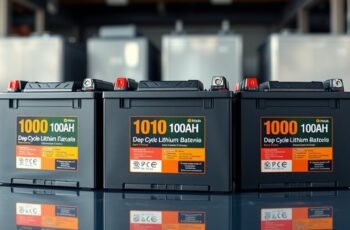
Did you know that lithium batteries can often handle more charge cycles than lead-acid options, even though they come with a higher initial cost? This difference markedly impacts long-term reliability and total system value—yet many overlook these nuances when designing off-grid power solutions. Understanding the technical distinctions between these two technologies can be vital for optimizing performance and cost-effectiveness in your setup. Let’s explore how each stacks up in key areas to help you make an informed decision.
Key Takeaways
- Lithium batteries offer higher energy density, enabling compact, high-capacity off-grid systems compared to lead-acid.
- They provide faster charging/discharging and longer cycle life, ideal for high-demand or fluctuating load applications.
- Lithium systems require less maintenance and have lower long-term operational costs despite higher initial investment.
- Lead-acid batteries are more cost-effective upfront but need more frequent replacements and maintenance.
- Lithium’s broad temperature tolerance and stable voltage improve reliability in diverse off-grid environments.
How Do Lithium and Lead-Acid Batteries Differ in Off-Grid Power?
When evaluating off-grid power solutions, lithium and lead-acid batteries exhibit distinct operational characteristics that influence their suitability for various applications. Lithium batteries offer higher energy density, enabling more compact systems with increased capacity. They also boast faster charge and discharge rates, which improve responsiveness and efficiency in fluctuating load conditions. Conversely, lead-acid batteries operate at a lower voltage and have a more limited depth of discharge, necessitating larger capacity to meet the same energy demands. Temperature sensitivity differs as well; lithium batteries perform well across a broader temperature range, while lead-acid units require additional thermal management. Additionally, lithium batteries maintain consistent voltage output during discharge, enhancing system stability. These differences fundamentally shape their performance, reliability, and integration within off-grid power setups.
Which Battery Type Offers Greater Longevity and Reliability?
Evaluating longevity and reliability requires examining cycle life and durability, as these determine overall lifespan under operational stress. Maintenance and care requirements also influence long-term performance, impacting operational costs and downtime. By analyzing these points, we can identify which battery type sustains performance over extended periods.
Cycle Life Durability
Although both lithium-ion and lead acid batteries serve essential roles in energy storage, their cycle life durability greatly influences long-term reliability. Lithium-ion batteries typically offer substantially higher cycle counts, often exceeding 5000 cycles, compared to lead acid’s 500-1000 cycles. This difference impacts the overall lifespan and cost-effectiveness of off-grid systems. To better understand, consider the following comparison:
| Battery Type | Typical Cycle Life | Depth of Discharge (DoD) Impact |
|---|---|---|
| Lithium-ion | 5000+ cycles | Minimal degradation at high DoD |
| Lead Acid | to 500-1000 cycles | Accelerated wear with deep cycles |
This data highlights lithium’s superior durability, making it a more reliable choice for long-term energy storage.
Maintenance and Care
Maintenance and care play pivotal roles in determining the longevity and reliability of battery systems, with lithium-ion batteries generally requiring less intensive upkeep compared to lead acid batteries. Lithium systems benefit from minimal watering, reduced temperature sensitivity, and stable voltage profiles, which simplify maintenance routines. Conversely, lead acid batteries demand regular watering, equalization charges, and careful monitoring of electrolyte levels to prevent sulfation and capacity loss. Proper thermal management and consistent charging protocols are critical for both types, but lithium batteries are more tolerant of operational variances. To maximize lifespan, consider these factors:
- Regular inspection of terminals and connections
- Monitoring of voltage and temperature during operation
- Maintaining appropriate charge levels and avoiding deep discharges
- Ensuring proper ventilation for lead acid systems
- Implementing temperature control measures for peak performance
How Do Costs Compare Between Lithium and Lead-Acid Batteries?
When comparing the costs of lithium and lead-acid batteries, initial purchase price remains a primary factor, but understanding the full economic picture requires examining long-term expenses. Lithium batteries typically have higher upfront costs, often two to three times that of lead-acid variants. However, their longer cycle life—often exceeding 3,000 cycles—reduces replacement frequency, lowering lifecycle costs. Conversely, lead-acid batteries have lower initial prices but require more frequent replacements due to shorter cycle lives, increasing overall expenses over time. Additionally, lithium systems usually operate more efficiently, reducing energy losses and operational costs. Maintenance and auxiliary equipment costs are also generally lower with lithium batteries. Overall, while lithium batteries demand a higher initial investment, their superior longevity and efficiency can lead to cost savings in the long run.
What Are the Maintenance Needs for Each Battery System?
Maintaining lithium and lead-acid batteries requires different procedures for peak performance and longevity. Lithium systems generally need less frequent inspections and do not require equalization, whereas lead-acid batteries demand regular checks and balancing processes. Understanding these specific maintenance needs is vital for evaluating overall system endurance and replacement cycles.
Routine Inspection Requirements
Routine inspection of battery systems is essential to guarantee peak performance and longevity. Regular checks secure early detection of issues that could compromise efficiency or cause damage. For lithium systems, inspections focus on voltage stability, temperature regulation, and connection integrity, given their sensitivity to operational conditions. Lead acid batteries require monitoring of electrolyte levels, terminal corrosion, and cell voltage consistency.
Key inspection points include:
- Verifying voltage levels across cells or modules
- Checking for signs of physical damage or swelling
- Assuring terminals are clean and corrosion-free
- Confirming proper temperature management
- Inspecting for fluid levels and electrolyte health in lead acid batteries
Consistent, targeted inspections help optimize lifespan and prevent unexpected failures, allowing for precise maintenance interventions tailored to each system’s characteristics.
Battery Equalization Processes
Battery equalization processes are essential for ensuring consistent performance and extending the lifespan of both lithium and lead acid systems. For lead acid batteries, equalization involves controlled overcharging to balance cell voltages and prevent sulfation, which can cause capacity loss and uneven aging. This process requires periodic manual intervention and careful monitoring of voltage and temperature. In contrast, lithium systems generally do not require equalization because they possess inherently balanced cell chemistry and integrated management systems that prevent overvoltage and imbalance. However, maintaining ideal performance still depends on regular system checks and ensuring the Battery Management System (BMS) functions correctly. Overall, while lead acid batteries demand active equalization, lithium systems rely on their internal management, reducing maintenance complexity.
Replacement and Endurance
When evaluating the longevity and maintenance needs of lithium and lead acid batteries, it’s clear that their design and chemistry profoundly influence their replacement cycles and overall endurance. Lithium batteries typically offer longer lifespans, often exceeding 10 years with proper management, and require minimal maintenance. Lead acid batteries, however, usually need replacement every 3 to 5 years and demand regular checks. Key considerations include:
- Lithium’s high cycle life reduces the frequency of replacements.
- Lead acid batteries require periodic water refilling.
- Lithium batteries have lower self-discharge rates, enhancing endurance.
- Maintenance for lead acid involves equalization charges to prevent sulfation.
- Proper temperature management impacts both systems’ lifespan and performance.
Understanding these factors helps optimize system reliability and minimize long-term costs.
Which Off-Grid Applications Are Best Suited for Lithium or Lead-Acid?
Off-grid applications require energy storage solutions that balance performance, longevity, and cost-effectiveness, making the choice between lithium and lead-acid batteries highly dependent on specific use cases. Lithium batteries excel in high-demand, continuous-use scenarios due to their high cycle life and faster recharge rates. Lead-acid batteries are better suited for seasonal or backup systems, where deep cycling is infrequent, and initial costs are a primary concern. Consider the table below for application clarity:
| Application Type | Suitable Battery Type | Key Consideration |
|---|---|---|
| Remote cabins | Lead-acid | Low cost, simple maintenance |
| Off-grid solar systems | Lithium | Longer lifespan, high efficiency |
| Emergency backup | Lead-acid | Cost-effective, reliable |
| Recreational vehicles (RVs) | Lithium | Compact, rapid charging |
This analysis guides ideal application-specific choices for off-grid energy storage.
How Do Charging and Performance Rates Vary Between the Two?
Understanding how charging and performance rates differ between lithium and lead-acid batteries provides valuable insight into their operational efficiencies and long-term viability. Lithium batteries typically charge faster, with higher acceptance rates that minimize downtime, whereas lead-acid batteries require longer charging periods and careful voltage regulation. Performance-wise, lithium maintains consistent capacity across its cycle life, offering reliable power output, while lead-acid batteries experience capacity fade over time.
Lithium batteries charge faster and maintain consistent capacity, unlike lead-acid batteries which fade over time and charge more slowly.
Key differences include:
- Lithium’s rapid charge acceptance reduces overall charging time.
- Lead-acid’s slower, bulk charging increases operational delays.
- Lithium’s stable voltage maintains performance during discharge.
- Lead-acid voltage drops more noticeably under load.
- Lithium’s higher charge/discharge efficiency results in less energy loss.
These distinctions markedly influence system design and operational planning in off-grid setups.
Which Battery System Provides Better Value for Your Off-Grid Setup?
Determining which battery system offers better value for your off-grid setup hinges on analyzing initial costs, long-term performance, and maintenance requirements. Lithium batteries typically have higher upfront costs but offer greater efficiency, longer lifespan, and lower maintenance. Lead acid batteries, conversely, are less expensive initially but may require more frequent replacements and maintenance, reducing overall value over time.
| Aspect | Lithium Batteries | Lead Acid Batteries |
|---|---|---|
| Initial Cost | Higher | Lower |
| Long-Term Value | Greater lifespan, lower maintenance costs | Shorter lifespan, higher maintenance |
While lithium systems have a higher initial investment, their durability and performance often justify the expense for off-grid applications seeking long-term reliability.
Frequently Asked Questions
Are Lithium Batteries Environmentally Friendlier Than Lead-Acid?
We believe lithium batteries are more environmentally friendly than lead-acid due to their longer lifespan, higher efficiency, and reduced hazardous waste. They also require less frequent replacements, minimizing resource extraction and disposal impacts over their operational lifecycle.
How Does Temperature Affect Battery Performance and Lifespan?
Temperature impacts battery performance and lifespan considerably; extreme heat accelerates capacity loss, while cold reduces efficiency temporarily. We analyze thermal management strategies to optimize longevity and performance, ensuring reliable energy storage across diverse environmental conditions.
Can Lithium Batteries Be Used With Existing Lead-Acid Systems?
Yes, lithium batteries can be integrated with existing lead-acid systems, but it requires compatible charge controllers and system modifications. We recommend thorough technical assessment to guarantee proper voltage, current, and safety protocols are maintained for peak performance.
What Safety Concerns Are Associated With Each Battery Type?
We believe lithium batteries pose risks like thermal runaway and require proper management systems, while lead-acid batteries risk acid spills and gas emissions; both demand careful handling, emphasizing safety protocols and appropriate protective measures for reliable, secure operation.
How Easily Can Each Battery Type Be Recycled or Disposed Of?
Can you imagine the environmental impact of recycling batteries? Lithium batteries often require specialized facilities for safe recycling, while lead-acid batteries are widely recycled through established processes, making disposal more straightforward and environmentally friendly for lead-based options.
Conclusion
In the end, choosing between lithium and lead-acid batteries is like selecting the right tool for a precise job—each has its strengths and trade-offs. Lithium batteries shine in longevity, efficiency, and low maintenance, making them ideal for demanding off-grid needs. Lead-acid offers a budget-friendly start but demands more upkeep and replacement. By analyzing your specific energy demands and long-term goals, you can navigate this technical landscape to find the most suitable power solution.