Did you know that lithium batteries are now the preferred power source for over 60% of RV owners due to their high energy density and long lifespan? Despite these advantages, safety concerns remain critical, as improper handling or installation can lead to hazardous situations. Ensuring proper procedures and understanding safety standards is essential for reliable, secure travel. We’ll explore key safety practices that every RV owner should know to prevent accidents and maximize battery performance.
Key Takeaways
- Install batteries in well-ventilated, stable areas away from heat sources and moisture.
- Use high-quality wiring, secure connections, and proper fusing or circuit breakers to prevent electrical hazards.
- Regularly inspect for corrosion, damage, and proper venting to ensure safety and longevity.
- Choose certified lithium batteries (UL 2054, UL 1974) with built-in safety features like overcharge protection.
- Be prepared for emergencies with fire suppression tools and knowledge of safe disconnection procedures.
What Are Lithium Batteries and Why Are They Popular in RVs?
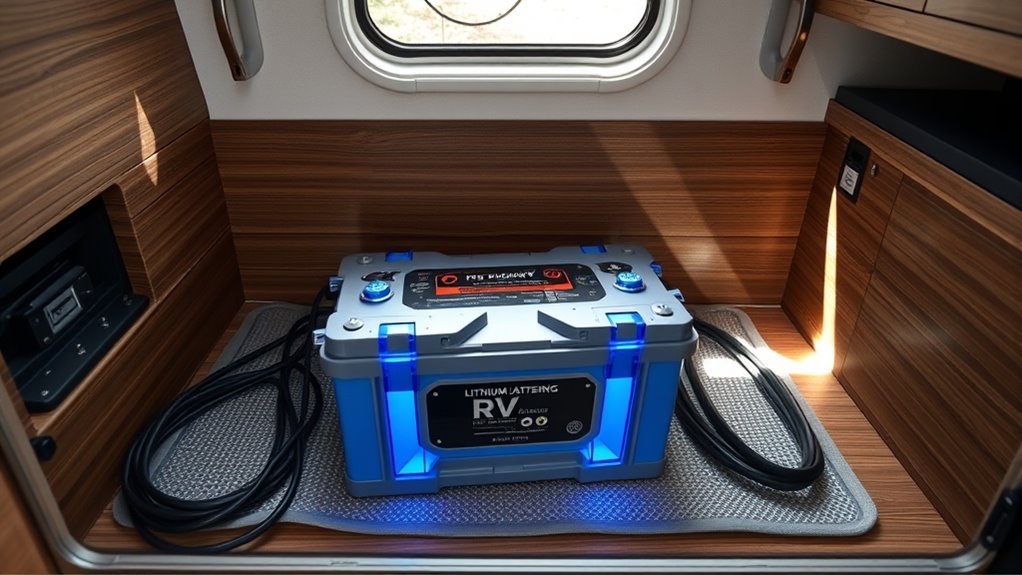
Lithium batteries are advanced energy storage devices that utilize lithium-ion chemistry to deliver high energy density and long cycle life. Their battery chemistry allows for efficient energy storage with minimal self-discharge and high charge retention. These features make them ideal for RV applications, providing reliable power over extended periods. Proper charging protocols are essential to maximize safety and longevity, as lithium-ion batteries require specific voltage and current parameters during charging to prevent thermal runaway or capacity loss. Their lightweight design reduces overall weight, enhancing RV performance and fuel efficiency. Compared to traditional lead-acid batteries, lithium variants offer faster charging times and greater depth of discharge, making them a popular choice among RV owners seeking durable, high-performance energy solutions.
How to Properly Install and Connect Lithium Batteries in Your RV
Proper wiring techniques guarantee safe and reliable connections, minimizing the risk of shorts or overheating. Correct battery placement is essential to facilitate proper cooling and ease of maintenance, while secure connection practices prevent accidental disconnections or damage. Following these precise installation procedures optimizes battery performance and safety in your RV.
Proper Wiring Techniques
When installing lithium batteries in your RV, meticulous wiring is vital to guarantee safety and peak performance. Proper wiring techniques ensure reliable battery maintenance and prevent electrical failures. First, select high-quality wiring materials rated for the battery’s current and voltage, such as appropriately gauged copper cables and marine-grade connectors. Second, maintain secure, corrosion-resistant connections, ensuring terminals are tight and insulated to prevent shorts. Third, implement a dedicated wiring layout that minimizes length and reduces resistance, facilitating efficient power flow. Use fuse or circuit breaker protection close to the battery terminals to prevent overloads. Adopting precise wiring practices not only enhances safety but also prolongs battery life and maintains peak performance, making your RV’s electrical system dependable and safe during operation.
Correct Battery Placement
To guarantee safety and peak performance, we must carefully select and prepare the installation location for lithium batteries in your RV. Proper battery placement involves choosing a stable, well-ventilated area that minimizes exposure to moisture and extreme temperatures. The placement should also ensure vibration resistance; mounting the batteries on a rigid, vibration-dampening surface reduces mechanical stress and prevents internal damage. Positioning batteries in a dedicated compartment with secure, insulated mounting brackets is essential. Adequate spacing around the batteries facilitates cooling and prevents thermal buildup. Additionally, avoid placing batteries near heat sources or direct sunlight. Precise battery placement not only enhances longevity but also reduces safety hazards, guarantee reliable operation during your RV travels.
Secure Connection Practices
Ensuring secure and reliable connections is essential for the safe operation of lithium batteries in your RV. Proper installation minimizes risks related to loose wiring and poor contact, which can compromise battery performance and safety. To achieve this, follow these practices:
- Use high-quality, appropriately rated connectors and secure all terminals tightly to prevent arcing.
- Regularly inspect connections for corrosion, ensuring clean, tight contact as part of ongoing battery maintenance.
- Adhere strictly to recommended charging protocols, avoiding over-tightening or under-tightening connections during installation and maintenance.
These measures promote optimal battery performance, reduce electrical hazards, and ensure safe, consistent power delivery in your RV. Proper connection practices are integral to reliable operation and longevity of lithium batteries.
Essential Safety Tips for Handling and Maintaining Lithium RV Batteries
Proper handling and maintenance of lithium RV batteries are critical to guaranteeing safety and peak performance. Regular inspection for corrosion, secure connections, and proper venting prevent potential hazards. When batteries reach the end of their lifespan, responsible battery recycling is essential to minimize environmental impact and comply with safety regulations. Maintaining a clean, dry environment reduces the risk of short circuits and thermal runaway. Emergency preparedness involves having appropriate fire suppression tools and knowing how to safely disconnect batteries during emergencies. Following manufacturer guidelines for charging and storage reduces the risk of damage. Consistent maintenance and adherence to safety protocols ensure longevity and safe operation, safeguarding both the RV occupants and the environment.
How to Recognize and Respond to Lithium Battery Emergencies
Recognizing lithium battery emergencies promptly is essential for preventing injury and minimizing damage. Early detection allows for effective emergency procedures and enhances fire prevention. Signs of a lithium battery emergency include:
Prompt recognition of lithium battery issues is crucial for safety and fire prevention.
- Unusual heat or swelling indicating thermal runaway.
- Acrid smoke or a distinct chemical odor signaling potential venting or rupture.
- Visible flames, sparks, or melting components indicating an active fire.
In response, we should immediately isolate the battery, avoid opening or puncturing it, and activate fire suppression systems if available. Use Class D fire extinguishers designed for metal fires, and call emergency services if fire persists. Proper response minimizes risk, preserves safety, and ensures adherence to fire prevention protocols. Recognizing these signs and executing precise emergency procedures are vital for safe RV operation.
Common Mistakes to Avoid When Using Lithium Batteries in Your RV
Although lithium batteries offer significant benefits for RV use, many owners make critical mistakes that can compromise safety and lithium battery lifespan. One common error is neglecting proper battery recycling protocols, which can lead to environmental hazards and safety risks. Overcharging or discharging beyond recommended levels accelerates battery degradation, shortening lifespan and increasing fire risk. Failing to use appropriate battery management systems (BMS) can result in unsafe operating conditions. Additionally, improper storage or exposure to extreme temperatures damages internal components. Avoiding these pitfalls ensures the batteries operate at their best and safely. Regular maintenance and adherence to manufacturer guidelines help extend lithium battery lifespan while minimizing potential hazards, ultimately protecting both your investment and your safety during RV adventures.
How to Choose the Right Lithium Battery for Your RV’s Needs
Choosing the right lithium battery for your RV requires understanding your energy needs and how different models meet those demands. Key factors include battery lifespan, which determines long-term cost-effectiveness, and charging methods, essential for maintaining peak performance. To select appropriately:
- Evaluate your daily energy consumption to determine capacity requirements.
- Assess battery lifespan—look for cells rated for at least 2,000 cycles to ensure durability.
- Examine charging compatibility—choose batteries supporting fast charging and compatible chargers to maximize charging efficiency.
Understanding these elements helps guarantee you select a lithium battery that aligns with your RV’s usage patterns, extends lifespan, and adapts to your preferred charging methods. This precision in selection supports safe, reliable power management during your travels.
What Regulations and Certifications Should You Look For in Lithium RV Batteries?
When selecting lithium RV batteries, verifying that they meet specific safety standards and legal requirements is essential, guaranteeing reliable performance and compliance with regulations. Look for certifications such as UL 2054 or UL 1974, which confirm adherence to safety and quality benchmarks. Additionally, certification for battery recycling programs indicates responsible disposal practices, reducing environmental impact. Regulatory compliance also ensures the batteries incorporate necessary safety features, such as thermal management and overcharge protection. Prioritizing batteries with recognized certifications helps mitigate risks like fires or leaks. Moreover, understanding regulations around environmental impact and recycling requirements guarantees that your choice supports sustainable practices and minimizes ecological harm at end-of-life. This approach safeguards your investment and promotes responsible stewardship for future recycling and disposal efforts.
Frequently Asked Questions
How Long Do Lithium RV Batteries Typically Last?
Lithium RV batteries typically last 8 to 15 years, depending on battery longevity and the number of charging cycles. Proper maintenance, avoiding deep discharges, and balanced charging extend their lifespan, ensuring reliable performance over many years.
Can Lithium Batteries Be Used With Existing RV Electrical Systems?
Yes, lithium batteries can be integrated with existing RV electrical systems, provided we upgrade the battery monitoring system and guarantee charging compatibility, especially with smart chargers, to optimize performance and safety.
What Is the Proper Way to Dispose of or Recycle Lithium Batteries?
Imagine a homeowner safely recycling a lithium battery through a certified facility; following proper disposal guidelines guarantees safe battery recycling and prevents environmental hazards. Always adhere to manufacturer instructions and local regulations for lithium battery disposal.
Are There Specific Warranties for Lithium RV Batteries?
We find that lithium RV batteries typically come with warranty coverage specific to battery chemistry, often ranging from 3 to 10 years, depending on the manufacturer. Always review warranty terms for coverage details and limitations.
How Does Temperature Affect Lithium Battery Safety and Performance?
Isn’t thermal management essential? Temperature markedly influences lithium battery safety and performance; high heat elevates overheating risks, while cold reduces capacity. Proper thermal regulation minimizes risks and guarantees ideal operation in varying environmental conditions.
Conclusion
In summary, mastering lithium battery safety isn’t just a prudent choice—it’s the ultimate act of RV sophistication. By adhering to proper installation, maintenance, and emergency protocols, we elevate our travel experience from reckless adventure to calculated precision. Remember, neglecting these details might turn your voyage into a fiery spectacle—less “glamping” and more “glow-in-the-dark disaster.” So, let’s keep our batteries safe and our journeys enlightened, shall we? After all, safety is the new luxury.