Lithium batteries are integral to many modern devices, yet their safety hinges on understanding and managing short circuit risks. A single mishandling can lead to severe damage or fire, making awareness essential. We’ll explore the causes, recognition, and prevention methods that help keep users safe and devices functional. Grasping these safety principles is vital for anyone working with or relying on lithium batteries; let’s examine what it takes to prevent dangerous short circuits effectively.
Key Takeaways
- Disconnect the battery immediately if a short circuit is suspected to prevent further damage or hazards.
- Avoid attempting manual repairs; seek professional assistance or proper disposal methods.
- Store batteries in non-conductive containers and keep away from metals or heat sources.
- Use certified protective accessories like fuses or current interrupters to prevent internal shorts.
- Regularly inspect batteries for damage, swelling, or discoloration, and replace damaged units promptly.
What Causes Short Circuits in Lithium Batteries and Why Are They Dangerous?
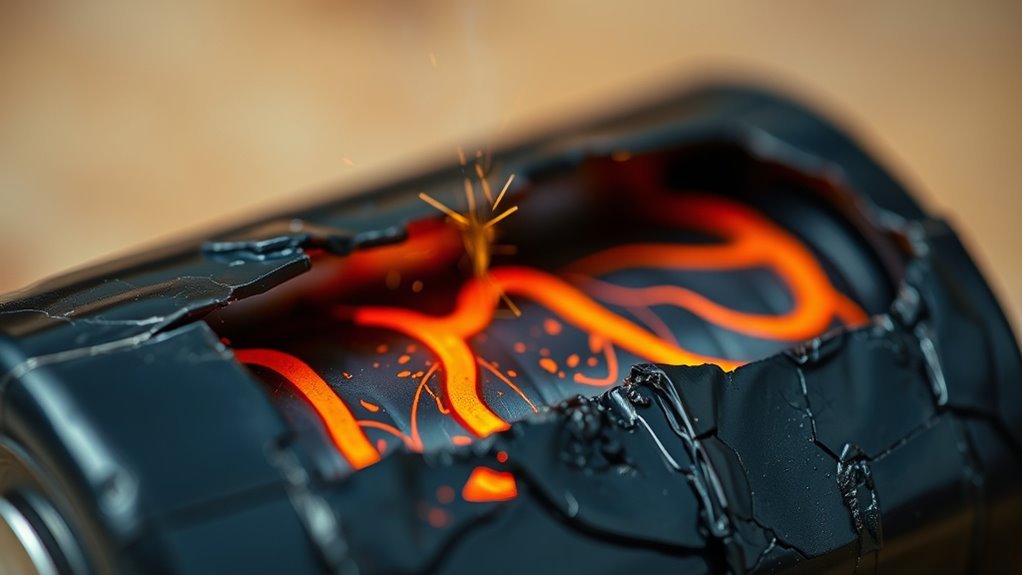
Short circuits in lithium batteries occur when the internal or external pathways between the positive and negative terminals are unintentionally connected, allowing current to bypass the designed load. These faults often stem from issues in battery chemistry, where unstable materials or degradation create unintended conductive paths. Manufacturing defects, such as improper separator installation or internal component damage, can also initiate short circuits. When a short occurs, rapid, uncontrolled current flow generates excessive heat, risking thermal runaway and potential fires or explosions. The inherent instability of lithium-ion chemistry amplifies these dangers, making precise manufacturing and quality control crucial. Understanding these causes highlights the importance of strict manufacturing standards and careful handling to prevent dangerous short circuits and guarantee safe battery operation.
How Can You Recognize a Short Circuit in Your Battery?
We can recognize a short circuit in a lithium battery by observing unusual behavior, such as rapid voltage drops or unexpected shutdowns. Visible damage signs, like swelling, discoloration, or corrosion, also indicate potential internal faults. Monitoring these indicators helps prevent safety hazards and equipment damage.
Unusual Battery Behavior
How can you identify if your lithium battery is experiencing a short circuit? Unusual behavior often signals a problem, such as rapid or unexpected voltage drops, excessive heat, or swelling. These symptoms can occur even if the battery appears physically intact, but they may indicate internal issues like manufacturing defects or compromised insulation. Short circuits accelerate battery degradation, reducing overall lifespan and increasing safety risks. If you notice inconsistent charging or discharging patterns, it’s essential to investigate further. Monitoring these behaviors helps detect potential short circuits early, preventing catastrophic failure. Recognizing these signs allows for timely intervention, safeguarding both the device and user. Always consider that internal damage may not be visible but can still compromise safety.
Visible Damage Signs
Visible damage signs are often the most immediate indicators that a lithium battery may be experiencing a short circuit. Inspecting the battery casing for signs of deterioration is crucial, as visible damage can compromise safety and performance. Swelling, cracks, or deformation in the casing suggest internal issues that could indicate a short circuit. Additionally, discoloration or burn marks are clear visual cues of thermal stress.
| Damage Type | Description |
|---|---|
| Swelling | Indicates gas buildup, risking rupture |
| Cracks | Weakens structural integrity |
| Discoloration | Shows overheating or chemical reaction |
| Burn marks | Signifies thermal runaway or short circuit |
Early recognition of these visible damage signs helps prevent potential hazards and guides proper disposal or repair efforts.
What Are the Essential Safety Tips for Handling Lithium Batteries?
Proper handling procedures and safe storage practices are critical to prevent short circuits and guarantee lithium battery safety. We must follow manufacturer guidelines for charging, discharging, and physical handling to minimize risks. Implementing strict storage protocols, including temperature control and secure containment, further reduces the potential for hazardous incidents.
Proper Handling Procedures
Handling lithium batteries safely is essential to prevent short circuits and other hazards. Proper handling procedures minimize risk and guarantee compliance with regulations. Always inspect batteries for damage before use; damaged cells may pose safety risks. Use appropriate tools to avoid accidental punctures or terminal contact. When disposing, follow recycling regulations to prevent environmental contamination and secure safe battery recycling. Keep batteries away from conductive materials like metal objects to prevent unintended short circuits. When transporting, use non-conductive containers and avoid stacking batteries excessively. Proper handling includes avoiding exposure to extreme temperatures, which can compromise battery integrity. Implementing these safety measures reduces the chance of short circuits and supports responsible recycling practices.
| Inspection | Storage | Transportation |
|---|---|---|
| Damage checks | Temperature control | Non-conductive cases |
| Terminal integrity | Avoid stacking | Use insulated tools |
| Leak detection | Proper labeling | Follow regulations |
Safe Storage Practices
To guarantee safety during storage, we must prioritize controlling environmental conditions and securing batteries from potential hazards. Lithium batteries should be stored in a cool, dry, well-ventilated area away from flammable materials to minimize fire safety risks. Batteries should be kept in their original packaging or a non-conductive container to prevent accidental short circuits. Regular inspection is essential; damaged or swollen batteries must be safely disposed of through proper battery recycling channels to prevent leakage or fire hazards. Avoid storing batteries in high-temperature environments, which can accelerate degradation and increase the risk of thermal runaway. Implementing strict storage protocols reduces the chance of incidents and assures compliance with safety standards, ultimately safeguarding personnel and property.
What Should You Do Immediately If You Think Your Battery Is Short-Circuiting?
If you suspect your lithium battery is short-circuiting, immediate action is critical to prevent damage or injury. First, disconnect the battery from any load or charger to eliminate power flow. Confirm that the battery’s insulation remains intact; compromised insulation can exacerbate the short and increase heat buildup. If accessible, activate any built-in circuit protection features, such as circuit breakers or fuses, to isolate the short circuit. Avoid attempting to disassemble or physically repair the battery yourself, as this can lead to further hazards. Move the battery to a non-flammable, well-ventilated area, and monitor it for signs of overheating or swelling. Promptly seek professional assistance or dispose of the battery according to safety protocols.
How to Store and Transport Lithium Batteries Safely
Proper storage and transportation of lithium batteries are essential to prevent accidents and guarantee safety. Store batteries in a cool, dry environment, away from flammable materials, and avoid extreme temperatures. Use designated containers that prevent contact with conductive surfaces to minimize short-circuit risks. When transporting, follow regulations such as UN3480 and proper packaging standards. Discard damaged batteries through certified battery recycling programs, preventing environmental hazards.
| Storage Tips | Transportation Precautions |
|---|---|
| Keep batteries at room temperature | Use approved packaging and labeling |
| Store away from metal objects | Avoid mechanical shock during transit |
| Ensure dry, ventilated environment | Follow local and international shipping laws |
| Educate on lithium battery myths | Handle with care to prevent punctures |
Understanding these practices dispels lithium battery myths and promotes safe handling.
Best Practices for Charging Lithium Batteries to Avoid Short Circuits
Ensuring safe charging practices is critical to preventing short circuits in lithium batteries. Proper procedures reduce risks associated with thermal management issues and long-term battery health. To optimize safety, consider these best practices:
- Use manufacturer-approved chargers with correct voltage and current ratings to prevent overcharging and thermal buildup.
- Maintain proper thermal management by charging in cool, well-ventilated environments, avoiding exposure to excessive heat that can cause internal shorts.
- Promote battery recycling by disposing of or recycling damaged or degraded batteries properly, as compromised cells increase short circuit risk during charging.
Adhering to these guidelines helps ensure the longevity of lithium batteries and minimizes the potential for short circuits caused by internal damage or thermal stress.
How to Choose Safe Lithium Batteries and Protective Accessories
Selecting the right lithium batteries and protective accessories is essential for ensuring safety and ideal performance. We prioritize batteries with verified battery chemistry, such as lithium iron phosphate (LiFePO4), which offers enhanced thermal stability and reduced risk of short circuits. Carefully examine manufacturer specifications to avoid units with known manufacturing defects, which can compromise safety. High-quality protective accessories, such as current interrupters, fuse systems, and thermal management solutions, are critical for preventing short circuits caused by internal faults or external damage. Always choose components that meet relevant safety standards and certifications. By focusing on reliable battery chemistry and robust protective accessories, we can notably reduce the risk of short circuits and ensure safer, more durable lithium battery systems.
Common Mistakes That Increase Short Circuit Risks and How to Prevent Them
Many common mistakes during battery installation and usage considerably elevate the risk of short circuits. Improper handling, such as neglecting insulation or using damaged connectors, can cause accidental contact between terminals. Failure to follow proper procedures during battery recycling can lead to recycling hazards, increasing fire risk and potential short circuits. Additionally, mixing incompatible batteries or attempting DIY repairs without expertise can compromise internal safety mechanisms.
Proper handling and recycling are essential to prevent short circuits and ensure battery safety.
To prevent these issues:
- Always use insulated tools and verify correct polarity during installation.
- Follow strict protocols for battery recycling, avoiding contaminated or damaged cells.
- Replace worn protective accessories and avoid mishandling batteries during disposal to minimize short circuit risks.
Frequently Asked Questions
Can a Lithium Battery Short Circuit Without Visible Signs?
Yes, lithium batteries can short circuit without visible signs due to their internal battery chemistry, which may cause thermal runaway. This hidden failure risks damage or fire, emphasizing the importance of proper handling and regular safety checks.
How Often Should I Inspect My Lithium Batteries for Damage?
We recommend inspecting lithium batteries monthly for damage, especially during battery storage or prior to proper disposal. Regular checks help identify signs of short circuits or deterioration, ensuring safety and preventing potential hazards from unnoticed damage.
Are There Specific Brands Known for Safer Lithium Batteries?
We recommend brands with strong reputation, certified safety standards, and rigorous testing, such as Panasonic, Samsung, or LG, as they prioritize safety features, reducing short circuit risks and ensuring reliable lithium battery performance for various applications.
What Are the Long-Term Effects of Repeated Short Circuits?
Repeated short circuits can degrade battery chemistry, increase internal resistance, and elevate the risk of thermal runaway, potentially causing permanent capacity loss and safety hazards. We advise against repeated short circuits to maintain long-term battery health and safety.
Is It Safe to Use Damaged Lithium Batteries Temporarily?
Using damaged lithium batteries temporarily isn’t safe; it risks catastrophic failures like fires. Always prioritize proper battery recycling and adhere to fire safety protocols, as even minor damage can lead to severe, unpredictable consequences and long-term hazards.
Conclusion
In summary, understanding and preventing short circuits in lithium batteries is essential for safety. Did you know that lithium battery fires account for approximately 20% of all portable battery-related incidents? By inspecting for damage, using proper tools, and following storage and charging protocols, we can greatly reduce risks. Staying informed and cautious guarantees both safety and longevity of your batteries, protecting you and your environment from potential hazards.