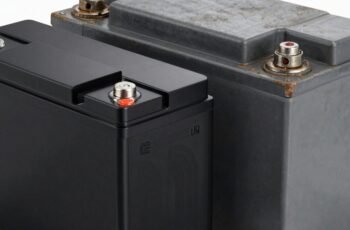
When evaluating deep cycle marine lithium batteries, understanding how they differ from traditional lead-acid options is essential for making an informed choice. We focus on key technical factors such as chemistry, capacity, BMS features, and cost implications that impact performance and longevity in demanding marine environments. As we compare top brands and their specifications, it becomes clear that selecting the right battery involves more than just initial price—there are critical performance aspects that can substantially influence your vessel’s reliability and operational efficiency.
Key Takeaways
- Lithium batteries offer higher energy density and longer cycle life compared to lead-acid batteries for marine applications.
- Proper BMS and thermal management are essential for safety and longevity in marine lithium battery systems.
- Compatibility with existing vessel electrical systems requires matching voltage, capacity, and charging specifications.
- Reputable brands provide longer warranties, proven reliability, and certifications for marine lithium batteries.
- Lithium batteries maintain stable voltage and allow deeper discharge, optimizing operational runtime and reducing maintenance needs.
How Do Marine Lithium Batteries Differ From Traditional Marine Batteries?
Marine lithium batteries differ substantially from traditional marine lead-acid batteries in their chemistry, performance, and operational characteristics. Lithium batteries utilize lithium nickel manganese cobalt oxide (NMC) or similar chemistries, offering a higher energy density, which results in more compact and lightweight designs. They maintain a stable voltage output throughout their discharge cycle, unlike lead-acid batteries that experience voltage drops as they deplete. Lithium cells also have a markedly deeper depth of discharge—often up to 80-100%—without compromising lifespan, whereas lead-acid batteries typically max out at 50%. Additionally, lithium batteries feature faster charging capabilities, minimal self-discharge rates, and require sophisticated Battery Management Systems (BMS) for safety and longevity. These distinctions translate into improved efficiency, longevity, and reliability in marine applications.
Key Factors to Consider When Choosing a Deep Cycle Marine Lithium Battery
When selecting a deep cycle marine lithium battery, several critical factors influence overall performance, safety, and longevity. Capacity, measured in amp-hours (Ah), determines operational runtime and should match your power demands. C-rate and charge/discharge rates impact charge acceptance and cycle life; higher rates may accelerate degradation if not properly managed. Battery management systems (BMS) are essential, as they monitor voltage, current, and temperature, preventing overcharge, deep discharge, and thermal runaway, ensuring safety and durability. Cell chemistry and internal configuration affect energy density, weight, and lifespan, with lithium iron phosphate (LiFePO4) offering enhanced stability. Compatibility with existing charging systems, including voltage and current specifications, is indispensable. To conclude, build quality, terminal connections, and venting features influence reliability and maintenance requirements.
Top Marine Lithium Battery Brands and What Sets Them Apart
When evaluating top marine lithium battery brands, we focus on their reputation for consistent reliability and proven performance in demanding marine environments. These brands distinguish themselves through advanced proprietary technologies, such as optimized cell management systems and enhanced thermal regulation. Understanding these technical advantages helps us identify which manufacturers deliver the durability and efficiency necessary for extended marine use.
Brand Reputation and Reliability
Establishing trust in marine lithium batteries hinges on evaluating brand reputation and reliability, as these factors directly influence performance consistency and longevity under demanding conditions. Reputable manufacturers rigorously test cells for cycle life, thermal stability, and safety standards, ensuring dependable operation over time. Brands with proven reliability often exhibit higher quality control, consistent performance metrics, and responsive customer support. To understand the distinctions, consider this table:
| Brand | Certification & Standards | Warranty Period | Customer Feedback Quality |
|---|---|---|---|
| Brand A | ISO 9001, UL 1642 | 10 years | Consistently positive |
| Brand B | CE, UN 38.3 | 8 years | Mixed reviews |
| Brand C | IEC 62133, UL 2054 | 12 years | Highly favorable |
| Brand D | RoHS, UN 38.3 | 9 years | Variable |
Unique Technology Advantages
Leading brands in marine lithium batteries differentiate themselves through proprietary technologies that enhance performance, safety, and lifespan. For instance, some brands utilize advanced BMS (Battery Management Systems) with real-time cell balancing, ensuring uniform charge and discharge cycles, which extends overall battery life and prevents thermal runaway. Others incorporate high-density lithium nickel manganese cobalt oxide (NMC) chemistries that optimize energy density while maintaining stability. Additionally, proprietary thermal management systems regulate internal temperatures, safeguarding against overheating during high-demand use. Many brands also implement ultra-fast charging algorithms, reducing downtime without compromising cell integrity. These technological innovations collectively improve efficiency, safety, and durability, setting top marine lithium batteries apart in demanding marine environments where reliability is critical.
Comparing Battery Capacity and Voltage for Marine Use
Battery capacity and voltage are fundamental parameters that determine a deep cycle marine lithium battery’s suitability for specific applications. Capacity, measured in ampere-hours (Ah), indicates the total energy reserve, directly affecting runtime. Higher capacity batteries provide longer operational periods, essential for demanding onboard systems. Voltage, typically 12.8V or 25.6V, corresponds to the battery’s cell configuration and impacts system compatibility. Correct voltage alignment guarantees efficient power delivery and prevents damage to connected equipment. When comparing batteries, we focus on how capacity matches the load demands and how voltage aligns with the vessel’s electrical system. Precise matching of these parameters optimizes performance, enhances safety, and secures reliable operation in marine environments. Understanding these technical aspects is critical for selecting the right battery for specific marine applications.
Understanding Battery Lifespan and Warranty Coverage
Understanding the lifespan and warranty coverage of marine lithium batteries is essential for ensuring long-term reliability and cost-effectiveness. Lithium batteries typically offer a cycle life ranging from 2,000 to 5,000 cycles, depending on chemistry, depth of discharge, and operating conditions. Proper management systems and manufacturer-imposed limits influence actual longevity. Warranty coverage varies but often includes 3 to查询 10 years, with specifics on capacity retention (usually around 80%) and defect replacement. It’s critical to scrutinize warranty terms for coverage scope, including manufacturing defects, capacity loss, and performance issues. Additionally, look for warranties backed by reputable brands with transparent service policies. Understanding these factors enables informed decisions that optimize investment and operational reliability in demanding marine environments.
How Weight and Size Impact Marine Lithium Battery Performance
The size and mass of a marine lithium battery directly influence its performance, affecting both installation flexibility and operational efficiency. Heavier batteries typically contain higher cell counts or larger internal components, which can lead to increased energy capacity but also add strain to mounting structures and vessel weight distribution. Compact batteries offer easier integration into confined spaces, reducing the need for extensive modifications, but may limit overall capacity. Size also impacts cooling and ventilation requirements; larger batteries generate more heat and require adequate airflow to maintain peak performance. Precise weight-to-capacity ratios are critical in marine environments, where every kilogram affects stability and fuel efficiency. Consequently, selecting a battery involves balancing size, weight, capacity, and vessel design constraints to optimize performance and safety.
The Importance of Charging Compatibility and BMS Features
Assuring compatibility with charging systems and integrated BMS (Battery Management System) features is critical for maintaining the longevity, safety, and efficiency of marine lithium batteries. Proper charging protocols must align with the battery’s voltage, current, and temperature specifications to prevent overcharging or undercharging, which can degrade cell health. A sophisticated BMS continuously monitors cell voltage, temperature, and state of charge, providing essential safeguards such as cell balancing, over-voltage, under-voltage, and temperature protection. Compatibility with multi-stage chargers and solar controllers guarantees peak charging efficiency and prevents damaging charge cycles. Additionally, advanced BMS features can communicate with external systems, facilitating real-time diagnostics and assuring the battery operates within safe parameters. These technical compatibilities are indispensable for maximizing lifespan and preventing costly failures onboard.
Cost Analysis: Are Higher-Priced Batteries Worth the Investment?
Investing in higher-priced lithium batteries often yields significant long-term cost savings through reduced replacement frequency and lower maintenance needs. The initial premium typically reflects superior build quality and enhanced reliability, which can prevent costly failures and downtime. Consequently, assessing the total cost of ownership is vital to determine if the upfront expense justifies the performance benefits.
Long-Term Cost Savings
Analyzing the long-term cost benefits of marine lithium batteries requires a detailed comparison of initial purchase prices against ongoing operational expenses and lifespan. Lithium batteries typically have higher upfront costs than lead-acid alternatives, but their superior cycle life—often exceeding 2,000 cycles—significantly reduces replacement frequency. Additionally, lithium batteries exhibit lower self-discharge rates and require less maintenance, decreasing operational costs over time. They also optimize energy efficiency, enabling longer usage per charge and reducing overall energy consumption. When factoring in the reduced frequency of replacements, lower maintenance, and improved energy efficiency, lithium batteries demonstrate notable long-term savings. While initial investments are higher, the cumulative operational savings and extended lifespan often justify the premium, making them a cost-effective solution for long-term marine applications.
Quality and Reliability
When evaluating marine lithium batteries, it’s essential to weigh whether their higher price tags translate into superior quality and reliability. Higher-cost batteries often feature advanced cell chemistry, improved thermal management, and enhanced BMS (Battery Management Systems), which guarantee longevity and safety. To illustrate, consider the following comparison:
| Feature | Standard Cost Battery | Premium Cost Battery | Key Benefit |
|---|---|---|---|
| Cell Chemistry | Lithium Iron Phosphate | Lithium Nickel Manganese Cobalt | Better cycle life and stability |
| Thermal Management | Basic cooling | Active cooling system | Reduced overheating risk |
| BMS Features | Basic protections | Advanced diagnostics & balancing | Increased reliability |
Premium batteries, despite higher initial costs, often deliver consistent performance, longer lifespan, and safer operation, making them a worthwhile investment for critical marine applications.
Real-World Performance: User Reviews and Field Testing Insights
Real-world performance data from user reviews and field tests provide critical insights into the longevity, reliability, and practical efficiency of deep cycle marine lithium batteries. Users report consistent voltage stability under varying load conditions, with minimal capacity fade after extensive cycling. Field testing indicates high charge acceptance rates, often exceeding manufacturer specifications, and rapid recharge times, which improve overall system efficiency. Particularly, thermal management remains effective, with batteries maintaining ideal operating temperatures during prolonged use in diverse marine environments. Reliability assessments highlight low failure rates, even after thousands of cycles, emphasizing robust internal circuitry and durable cell chemistry. These insights confirm that, in practical applications, top-performing lithium batteries deliver sustained performance, reinforcing their value for demanding marine use despite higher initial costs.
Tips for Installing and Maintaining Your Marine Lithium Battery
Proper installation of your marine lithium battery requires secure mounting on a vibration-resistant surface and correct wiring to guarantee peak safety and performance. Regular maintenance involves inspecting connections for corrosion, monitoring voltage levels, and balancing cells to prevent capacity loss. Adhering to manufacturer guidelines and using appropriate protective hardware maximizes battery lifespan and operational reliability.
Proper Installation Procedures
Installing your marine lithium battery correctly is essential to confirm safety, peak performance, and longevity. Proper installation involves strict adherence to manufacturer guidelines and precise electrical connections. First, make certain the battery is securely mounted in a ventilated, corrosion-resistant compartment to prevent heat buildup and moisture damage. Second, connect the battery using appropriately rated cables and high-quality, marine-grade connectors to minimize resistance and prevent voltage drops. Third, verify polarity before final connection, making certain positive and negative terminals match the circuit. Additionally, it’s indispensable to use a compatible battery management system (BMS) to monitor voltage, current, and temperature during operation. Proper installation reduces risk of damage, enhances efficiency, and extends battery lifespan, making meticulous attention to these steps indispensable for peak performance.
Regular Maintenance Tips
Regular maintenance is critical to guarantee your marine lithium battery stays in peak condition and delivers consistent performance. We recommend routinely inspecting terminals for corrosion and verifying all connections are tight and free of debris. Use a multimeter to check voltage levels, maintaining them within the manufacturer’ s recommended range— typically around 13.2 to 13.8 volts when fully charged. Periodically monitor battery temperature during operation; excessive heat indicates potential overcurrent or poor ventilation. Keep the battery case clean and dry, avoiding exposure to salt spray or dirt that could compromise integrity. Additionally, perform a state-of-charge check before long-term storage, and if necessary, top off with an appropriate lithium-compatible charger to prevent capacity loss. Consistent, detailed maintenance enhances longevity and secures reliable power delivery during marine operations.
Frequently Asked Questions
How Do Temperature Variations Affect Marine Lithium Battery Performance?
Temperature variations markedly impact marine lithium batteries, with cold temperatures reducing capacity and increasing internal resistance, while high temperatures enhance performance temporarily but risk thermal runaway, so proper thermal management is essential for ideal, safe operation in marine environments.
Are Marine Lithium Batteries Environmentally Friendly and Recyclable?
Imagine a green oasis in a sea of waste; marine lithium batteries are environmentally friendly and recyclable, as they contain valuable materials like lithium and cobalt, which can be reclaimed through specialized processes, reducing environmental impact and resource depletion.
What Safety Precautions Are Necessary With Lithium Battery Use?
We recommend always wearing protective gear, avoiding physical damage, ensuring proper ventilation, using dedicated chargers, and following manufacturer instructions. Regular inspections and proper disposal practices are also essential to safely manage lithium batteries and prevent hazards.
How Do Different Battery Chemistries Compare in Marine Applications?
Think of battery chemistries as different species in a marine ecosystem; lithium iron phosphate offers stability and longevity, while NMC provides higher energy density. We prioritize safety, efficiency, and lifespan tailored to specific marine power needs.
Can Marine Lithium Batteries Be Used With Renewable Energy Sources?
Yes, marine lithium batteries efficiently integrate with renewable energy sources like solar and wind by providing stable, high-capacity power storage, ensuring reliable energy supply, quick charge acceptance, and long cycle life essential for sustainable marine and off-grid applications.
Conclusion
In closing, selecting the appropriate deep cycle marine lithium battery is like choosing a finely tuned instrument—precision, reliability, and longevity are key. By understanding the differences in chemistry, capacity, BMS features, and overall cost, we can make an informed decision that secures our marine adventures are powered by resilience and efficiency. Investing in top-tier batteries might seem costly upfront, but it’s the steady beat that keeps our vessel’s heart alive through every voyage.