Some believe that lithium batteries are inherently safe with minimal precautions, but data suggests that improper handling can lead to serious hazards. As professionals in the field, we recognize that understanding the nuances of safe usage, storage, and emergency response is critical to mitigating risks. By examining these safety practices closely, we can guarantee both device longevity and environmental safety—yet, the specifics of proper management often remain overlooked, prompting us to explore best practices further.
Key Takeaways
- Avoid puncturing, overcharging, or exposing batteries to extreme temperatures to prevent damage and safety hazards.
- Store batteries in a cool, dry place using designated containers to minimize risks of short circuits and corrosion.
- Regularly inspect batteries for swelling, leaks, or heat buildup to detect early signs of damage.
- Use compatible chargers with correct voltage and current ratings to prevent overheating and capacity loss.
- In case of fire, isolate the battery and use a Class D fire extinguisher; alert emergency services immediately.
Why Lithium Battery Safety Matters
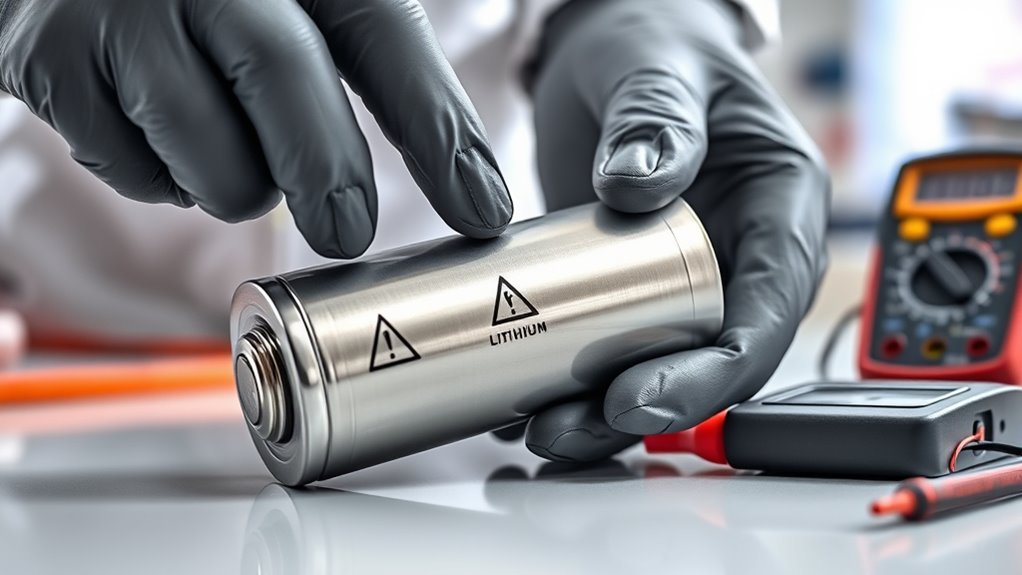
Because lithium batteries are widely used in portable electronics and electric vehicles, understanding their safety implications is essential. Safety measures directly influence battery lifespan, as improper handling or damage can accelerate degradation, reducing performance and longevity. Additionally, safety concerns are closely linked to environmental impact; compromised batteries may leak hazardous chemicals, posing risks during disposal or recycling. Ensuring safe usage minimizes the chance of thermal runaway, fires, or explosions, which can have severe ecological consequences. Furthermore, safeguarding lithium batteries extends their functional life, decreasing the frequency of replacements and reducing electronic waste. Prioritizing safety helps balance technological benefits with ecological responsibility, emphasizing the importance of proper design, handling, and disposal practices to mitigate risks associated with lithium battery use.
How to Handle Lithium Batteries Safely
Handling lithium batteries with care is vital to prevent accidents and guarantee ideal performance. Proper management includes avoiding puncture, overcharging, and exposure to extreme temperatures, which can lead to thermal runaway. We emphasize toxicity awareness; improper disposal or damage can release hazardous chemicals, underscoring the importance of responsible battery recycling. Recycling lithium batteries not only minimizes environmental impact but also reduces the risk of toxic exposure. When handling batteries, use protective gloves and safety glasses to mitigate chemical contact. Additionally, inspecting batteries regularly helps identify potential issues early, preventing leaks or fires. By adhering to these practices, we ensure safety, promote sustainable disposal, and maintain peak battery performance, all while minimizing health and environmental hazards associated with lithium battery toxicity.
Lithium Battery Storage Tips
Proper storage of lithium batteries is critical for maintaining safety and performance. We recommend keeping batteries in a cool, dry environment to prevent thermal runaway and degradation. Additionally, using designated battery containers minimizes the risk of accidental damage or short circuits.
Store in Cool, Dry Place
Storing lithium batteries in a cool, dry environment is essential to maintaining their safety and longevity. Proper temperature regulation minimizes thermal stress, reducing the risk of capacity loss or thermal runaway. Maintaining consistent, moderate temperatures—ideally between 20°C and 25°C—prevents accelerated degradation caused by heat or cold. Moisture control is equally critical; exposure to humidity can lead to corrosion of internal components and compromise the battery’s integrity. Ensuring the storage area remains dry prevents moisture ingress, which can cause internal short circuits or swelling. By controlling both temperature and humidity levels, we mitigate common failure modes and extend the battery’s functional life. Effective storage practices are fundamental for safety, performance, and ideal lifespan of lithium batteries.
Use Proper Battery Containers
Selecting appropriate containers for lithium batteries is critical to preventing damage and guaranteeing safety during storage. Proper containers isolate batteries from external factors and prevent accidental short circuits. Material choice is essential; non-conductive, flame-retardant, and chemically stable container materials reduce risk. Using a dedicated battery compartment minimizes exposure to moisture, heat, and mechanical impact.
| Container Material | Benefits |
|---|---|
| Plastic (Polymer) | Insulation, lightweight, chemical stability |
| Metal (Aluminum) | Durability, heat dissipation |
| Composite | Enhanced strength, chemical resistance |
| Silicone | Flexibility, electrical insulation |
Choosing the right container material and design ensures safe handling, minimizes risks, and prolongs battery lifespan.
Detecting and Preventing Battery Damage
Since lithium batteries are susceptible to damage that can compromise safety, early detection becomes essential. Manufacturing defects, such as internal short circuits or faulty separators, often go unnoticed but can lead to thermal runaway if left unchecked. Regular inspection for swelling, leakage, or unusual heat during operation helps identify early signs of damage. Incorporating non-invasive diagnostic techniques, such as thermal imaging, can reveal hidden defects. Additionally, proper battery recycling practices prevent damaged cells from re-entering the supply chain, reducing the risk of future failures. Preventative measures include strict quality control during manufacturing and careful handling to avoid physical damage. By monitoring for early warning signs and understanding manufacturing vulnerabilities, we can considerably reduce the risk of catastrophic failure and extend battery lifespan.
How to Charge and Discharge Lithium Batteries Safely
Properly charging and discharging lithium batteries is critical to ensuring their safety and longevity. Adhering to established charging protocols minimizes risks like overheating, capacity loss, and potential thermal runaway. Using compatible chargers with the correct voltage and current ratings is essential, as improper charging can degrade battery health over time. Discharging should be controlled, avoiding deep discharge cycles that can damage the battery’s chemistry. Additionally, responsible battery recycling prevents environmental hazards and recovers valuable materials, emphasizing the importance of sustainable practices. By following precise charging protocols and promoting proper battery recycling, we can extend lithium battery life, reduce safety hazards, and support responsible disposal practices. This disciplined approach guarantees maximum performance while safeguarding users and the environment.
What to Do During a Lithium Battery Fire or Accident?
When a lithium battery fire or accident occurs, immediate and informed action is critical to minimizing hazards and preventing escalation. Proper emergency response protocols and effective fire suppression techniques are essential. We must prioritize isolating the battery to prevent oxygen flow, which fuels the fire. Using a Class D fire extinguisher designed for metal fires is crucial, as standard extinguishers can worsen the situation. Additionally, alert emergency services promptly to ensure professional intervention. Keep in mind that lithium fires generate toxic fumes, so personal protective equipment and ventilation are vital during response efforts. Quick, calculated actions can contain the incident, reduce damage, and guarantee safety for all involved. Your preparedness directly influences the effectiveness of the emergency response and fire suppression.
Frequently Asked Questions
Can Lithium Batteries Be Recycled Safely?
Yes, lithium batteries can be recycled safely through specialized recycling methods that guarantee proper battery disposal, minimizing environmental impact and preventing hazards. We recommend using certified recycling centers equipped to handle lithium battery disposal responsibly.
What Are Signs of a Failing Lithium Battery?
We observe signs like battery deterioration, which manifests as reduced capacity, and overheating risks, indicated by excessive heat during use or charging. These symptoms symbolize internal failure, signaling that the battery’s health is compromised and replacement is necessary for safety.
Are There Specific Safety Standards for Lithium Batteries?
We guarantee lithium battery safety through strict manufacturing standards and adherence to safety certifications like UL, IEC, and UN38.3, which govern battery design, testing, and transport, minimizing risks and guaranteeing reliable, safe performance in various applications.
How Do Temperature Changes Affect Battery Safety?
Temperature changes are like a storm within; thermal expansion can crack internal structures, risking safety. Proper temperature regulation guarantees batteries remain stable, preventing overheating or freezing, which could lead to dangerous failures or reduced lifespan.
Can Lithium Batteries Explode if Mishandled?
Lithium batteries can explode if mishandled, primarily due to battery overheating or improper storage precautions. We analyze that avoiding extreme temperatures and following proper storage protocols considerably reduces the risk of thermal runaway and potential explosions.
Conclusion
In conclusion, practicing lithium battery safety is essential—think of it as maintaining a precision instrument. By following proper handling, storage, and emergency procedures, we reduce risks and extend battery lifespan. Vigilance and adherence to safety protocols are our best tools, preventing hazards before they escalate. Just as a well-tuned engine runs smoothly, meticulous care ensures our batteries perform reliably and safely, safeguarding both people and the environment.