When selecting a lithium-ion battery, understanding the technical nuances—such as chemistry, capacity, and safety standards—is essential for peak performance and safety. We recognize that the process involves more than just choosing a high-capacity cell; factors like compatibility, longevity, and certifications can greatly influence your device’s reliability. By examining these aspects carefully, you can make an informed decision that balances technical requirements with practical considerations, ensuring your battery choice supports your specific application effectively.
Key Takeaways
- Determine device requirements: capacity, voltage, discharge rate, and size to select the appropriate battery chemistry and form factor.
- Prioritize safety certifications like UL 2054, IEC 62133, UN 38.3, and CE for reliable, compliant batteries.
- Consider battery chemistry (LiCoO₂, LiFePO₄, NMC) for performance, safety, lifespan, and environmental impact.
- Check compatibility with device connectors, dimensions, and charging protocols to ensure proper fit and operation.
- Evaluate cost versus quality, and opt for reputable brands with good reviews for durability and long-term value.
How Lithium-Ion Batteries Work and Why They Matter
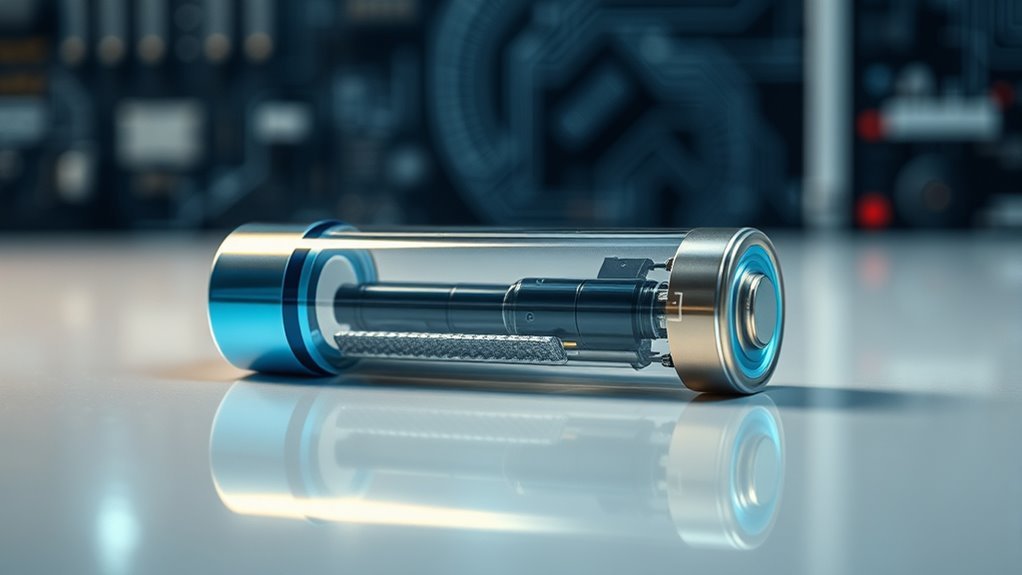
Have you ever wondered how lithium-ion batteries efficiently store and deliver energy in our devices? These batteries operate through intercalation, where lithium ions move between the anode and cathode during charge and discharge cycles. This process enables high energy density and longevity. Understanding their function highlights the importance of battery recycling, which recovers valuable materials like lithium, cobalt, and nickel, reducing resource extraction and environmental impact. Proper recycling minimizes hazardous waste and conserves finite resources, making lithium-ion technology more sustainable. The chemistry and design of these batteries allow for lightweight, rechargeable power sources essential in portable electronics and electric vehicles. Recognizing how they work underscores the necessity of responsible disposal and recycling to mitigate environmental impact and promote a sustainable energy future.
Identify Your Battery Needs: Applications and Use Cases
Understanding the specific device applications and their power demands is essential for selecting the appropriate lithium-ion battery. We need to accurately assess the required capacity, voltage, and discharge rates to guarantee maximum performance. By matching these technical parameters to the intended use case, we can determine the most suitable battery configuration.
Common Device Applications
What specific device applications dictate the choice of lithium-ion batteries? Devices requiring high energy density, rapid charge cycles, or lightweight design influence battery selection. For portable electronics, we prioritize batteries with excellent cycle life and low environmental impact, emphasizing battery recycling to reduce waste. Electric vehicles demand high power output and safety features, while medical devices require reliable, stable power sources.
| Application | Key Requirements |
|---|---|
| Portable electronics | Compact size, long cycle life, eco-friendly disposal |
| Electric vehicles | High energy density, fast charging, safety features |
| Medical devices | Stable voltage, reliability, minimal environmental impact |
Power and Capacity Requirements
Determining the appropriate power and capacity requirements for a lithium-ion battery involves analyzing the specific energy demands and operational parameters of your application. We assess load profiles, discharge rates, and duration requirements to guarantee the selected battery can handle peak and continuous demands efficiently. For high-drain devices, a greater capacity and higher discharge rate are essential, while lower-power applications may need smaller, optimized batteries. Considering environmental impact, choosing batteries with a focus on sustainability and ease of battery recycling is vital, as it reduces waste and promotes responsible battery recycling practices. Properly matching these requirements minimizes excessive capacity, conserving resources and mitigating environmental concerns. Accurate assessment prevents over-specification, enhances system performance, and supports environmentally conscious choices in lithium-ion battery deployment.
Choosing the Right Lithium-Ion Battery Types for Your Devices
Selecting the appropriate lithium-ion battery type hinges on a thorough assessment of your device’s power requirements, operational environment, and lifecycle expectations. Different chemistries, such as lithium cobalt oxide or lithium iron phosphate, offer distinct advantages in energy density, thermal stability, and longevity. For devices with high discharge rates, lithium nickel manganese cobalt (NMC) batteries may be ideal, whereas long cycle life favors lithium iron phosphate (LiFePO4). Considering environmental impact is essential; choosing batteries with better recyclability reduces waste and supports sustainable Battery recycling efforts. Understanding these nuances guarantees peak performance and aligns with eco-friendly practices. Proper selection minimizes potential hazards, extends device lifespan, and mitigates negative environmental effects, making your choice both technically sound and environmentally responsible.
Key Factors: Capacity, Voltage, and Safety Features
Understanding a battery’s capacity, voltage, and safety certifications is essential for guaranteed performance and safety. Capacity determines runtime, while voltage compatibility ensures proper device operation; safety features mitigate risks of overheating or failure. We’ll explore how these factors influence your selection to help you make informed, precise choices.
Capacity and Runtime
Have you ever wondered how the capacity and runtime of a lithium-ion battery directly impact its performance and suitability for your application? Capacity, measured in milliamp-hours (mAh) or amp-hours (Ah), determines how much energy the battery can store, directly affecting runtime. Higher capacity batteries last longer but often weigh more, influencing device efficiency. Runtime depends on load current and capacity, making it vital to match the battery’s specifications to your device’s energy demands. Safety features like thermal management extend battery lifespan and reduce risks, supporting effective battery recycling and minimizing environmental impact. Optimizing capacity and runtime ensures reliable operation and promotes sustainable use, as batteries with longer life cycles contribute less to waste. Understanding these factors helps you select batteries that balance performance with environmental responsibility.
Voltage Compatibility
Voltage compatibility is vital for guaranteeing that a lithium-ion battery functions safely and efficiently within your device. Proper voltage matching between the battery and device prevents overvoltage, which can damage internal components, or undervoltage, leading to insufficient power. When selecting a battery, verify the voltage rating aligns precisely with your device’s specifications. Additionally, evaluating battery connectors is essential; mismatched connectors can cause improper contact, risking electrical faults or damage. Ensuring compatibility involves checking the physical configuration and electrical specifications, including voltage output and connector type. Correct voltage matching maintains peak performance and longevity, while compatible battery connectors ensure secure, reliable electrical connections. By paying close attention to these factors, you minimize safety risks and maximize device reliability.
Safety Certifications
Making certain that a lithium-ion battery carries appropriate safety certifications is fundamental to guaranteeing safe and reliable operation. These certifications verify adherence to strict standards, minimizing risks like thermal runaway and ensuring proper safety features. Additionally, certified batteries often include mechanisms for safe battery recycling, reducing environmental impact. When evaluating certifications, consider standards like UL 2054 or IEC 62133, which address safety and environmental concerns. The table below highlights key certifications and their focus areas:
| Certification | Focus Area | Significance |
|---|---|---|
| UL 2054 | Safety & Reliability | Ensures compliance with safety standards |
| IEC 62133 | Environmental & Recycling Standards | Promotes battery recycling, reduces environmental impact |
| UN 38.3 | Transport Safety | Ensures safe transportation |
| CE | European Market Compliance | Meets safety and environmental regulations |
Safety Certifications and What They Mean
When evaluating lithium-ion batteries, understanding safety certifications is essential because they verify that a product meets rigorous industry standards for safety, reliability, and performance. Certifications like UL 2054 and IEC 62133 ensure the battery has undergone strict testing for thermal stability, electrical safety, and mechanical integrity, reducing risks of overheating or fire. These standards also emphasize proper battery recycling protocols to minimize environmental impact, guaranteeing that hazardous materials are safely managed at end-of-life. Recognizing certified batteries helps prevent safety hazards and supports environmentally responsible disposal. Additionally, certifications indicate compliance with manufacturing quality controls, promoting durability and consistent performance. By choosing certified batteries, consumers contribute to safer usage and environmentally conscious practices, aligning performance with sustainable battery lifecycle management.
Compare Lithium-Ion Battery Types: Which One Is Right for You?
When selecting a lithium-ion battery, understanding the common types—such as cylindrical, prismatic, and pouch cells—is essential for optimizing performance and safety. Each form factor offers distinct advantages in energy density, durability, and application suitability, which directly impact your device’s efficiency and lifespan. We’ll examine these differences to help you choose the most appropriate battery for your specific requirements.
Common Lithium-Ion Types
Have you ever wondered how different lithium-ion battery chemistries influence performance and application suitability? The main types include Lithium Cobalt Oxide (LiCoO₂), Lithium Iron Phosphate (LiFePO₄), and Lithium Nickel Manganese Cobalt Oxide (NMC). Each offers distinct advantages:
- LiCoO₂ provides high energy density, ideal for portable electronics, but has a higher environmental impact and challenges in battery recycling.
- LiFePO₄ offers enhanced thermal stability, longer lifespan, and safer operation, making it suitable for stationary storage and electric vehicles with a lower environmental footprint.
- NMC balances high energy density and power output, commonly used in EVs and grid storage, while requiring careful handling for environmental compliance and battery recycling considerations. Understanding these types helps optimize performance and minimize environmental impact.
Choosing The Right Battery
Selecting the appropriate lithium-ion battery type hinges on understanding the specific performance requirements and environmental considerations of your application. Different lithium-ion chemistries, such as NCA, NMC, and LFP, offer varied energy densities, cycle lives, and safety profiles, impacting overall performance. It is crucial to evaluate how each type aligns with your needs while considering environmental impact, including factors like battery recycling and end-of-life management. For instance, LFP batteries generally have a longer cycle life and lower environmental impact due to safer chemistry and easier recycling options. Choosing the right battery involves balancing these technical attributes with sustainability goals, ensuring your application maximizes efficiency while minimizing ecological footprint through responsible disposal and recycling practices.
How to Maximize Battery Longevity and Performance
Maximizing the longevity and performance of lithium-ion batteries requires a thorough understanding of their chemistry and proper management practices. Proper charging protocols, such as avoiding deep discharges and frequent full cycles, help preserve capacity. Temperature control is essential; operating within 20-25°C minimizes thermal stress and degradation. Additionally, responsible battery recycling reduces environmental impact and conserves resources, extending the overall lifecycle of batteries. Implementing these practices ensures peak performance and sustainability:
- Use chargers with automatic cutoff to prevent overcharging
- Store batteries at partial charge in cool, dry environments
- Prioritize recycling programs to mitigate environmental impact
Cost, Budget, and Getting the Best Value
While the initial purchase price of lithium-ion batteries can vary markedly based on capacity, brand, and technology, understanding the relationship between cost and value is vital for informed buying. Higher-quality batteries often have superior cycle life, efficiency, and safety features, which can reduce long-term costs despite higher upfront expenses. Considering environmental impact is also essential; batteries that are easier to recycle and have lower toxic material content contribute to sustainable practices. Investing in batteries with better recyclability may incur higher initial costs but offers long-term savings and ecological benefits. Ultimately, balancing upfront costs with factors like durability, efficiency, and environmental considerations guarantees you get the best value, aligning budget constraints with responsible consumption and minimizing potential costs associated with battery disposal and environmental impact.
Compatibility and Size: What to Check Before Buying
When evaluating lithium-ion batteries, guaranteeing compatibility with your device or system is paramount. Proper size and specifications prevent malfunctions and enhance performance. To verify compatibility, check:
Ensuring battery compatibility prevents malfunctions and boosts device performance sustainably.
- Physical Dimensions and Fit: Confirm voltage, capacity, and form factor match your device’s specifications to avoid improper connections, which can affect battery recycling processes and increase environmental impact.
- Connector Types and Polarity: Guarantee the connectors align correctly, preventing potential damage and ensuring safe installation, which supports environmentally responsible disposal.
- Discharge Rates and Compatibility Labels: Match recommended discharge rates and certification labels to maintain peak function and reduce waste by prolonging battery life, thereby minimizing environmental impact.
Troubleshooting Common Lithium-Ion Battery Problems
Lithium-ion batteries are generally reliable, but they can encounter common issues that compromise performance and safety. Over time, capacity loss, overheating, and rapid discharge may occur due to electrode degradation or electrolyte breakdown. To troubleshoot, monitor voltage levels and inspect for swelling or leakage, which indicate internal damage. Proper battery disposal and recycling methods are essential to prevent environmental hazards and recover valuable materials. When a battery reaches end-of-life, make sure it’s disposed of properly through certified recycling programs, avoiding trash disposal.
| Issue | Diagnostic & Solution |
|---|---|
| Capacity loss | Calibrate, replace if degraded, avoid overcharging |
| Overheating | Check for damage, improve ventilation |
| Rapid discharge | Test voltage, replace if faulty |
| Swelling/leakage | Discontinue use, follow recycling methods |
Frequently Asked Questions
How Do Temperature Variations Affect Lithium-Ion Battery Performance?
Temperature variations profoundly impact lithium-ion battery performance; extreme heat reduces thermal stability and accelerates degradation, while cold hampers charge capacity and overall resilience. We recommend managing thermal conditions to optimize temperature resilience and extend battery life.
What Are the Environmental Impacts of Lithium-Ion Battery Disposal?
We recognize that improper disposal of lithium-ion batteries hampers eco-friendly disposal efforts, as recycling challenges include hazardous material release and resource loss, emphasizing the need for advanced recycling technologies and responsible handling to minimize environmental impacts.
Can Lithium-Ion Batteries Be Safely Recycled?
Yes, lithium-ion batteries can be safely recycled when we follow strict safety protocols and proper battery recycling methods. These processes prevent hazardous leaks, recover valuable materials, and minimize environmental harm, ensuring a responsible cycle from used to renewed energy sources.
How Do Storage Conditions Influence Battery Lifespan?
Proper battery storage under ideal conditions, such as cool, dry environments away from direct sunlight, considerably extends lithium-ion battery lifespan by reducing capacity loss due to thermal stress and chemical degradation, ensuring safer, more efficient performance over time.
Are There Specific Brands Known for Higher Safety Standards?
We trust brands with strong safety certifications and excellent reputation, such as Panasonic and Samsung, because they adhere to rigorous safety standards like UL and IEC certifications, ensuring higher safety levels and reliability in lithium-ion battery performance.
Conclusion
Ultimately, selecting the right lithium-ion battery requires careful consideration of your device’s specific needs and safety standards. When we align our choices with manufacturer specifications and verified certifications, we guarantee peak performance and longevity. Sometimes, the smallest detail—like a compatible connector—can make all the difference. By approaching battery selection with precision and awareness, we not only power our devices effectively but also trust in the unseen safety and sustainability woven into each carefully chosen cell.