Imagine installing a solar system on a remote farm and weighing the long-term benefits of different storage options. When evaluating solar lithium versus lead-acid batteries, we must consider their technical performance, costs, and environmental impacts. These factors critically influence system reliability and efficiency over time. Understanding the nuances between these technologies can greatly impact your decision—so, let’s examine their strengths and limitations in detail.
Key Takeaways
- Lithium batteries have higher energy density and longer lifespan, making them more efficient and durable for solar storage systems.
- Lead-acid batteries are more affordable upfront but require more maintenance and have shorter cycle lives.
- Lithium systems support faster charging/discharging, improving responsiveness and system performance.
- Lead-acid batteries have a well-established recycling infrastructure, while lithium recycling remains complex and resource-intensive.
- Lithium batteries are space-efficient and lightweight, ideal for limited or high-performance installations.
What Are Solar Lithium and Lead-Acid Batteries?
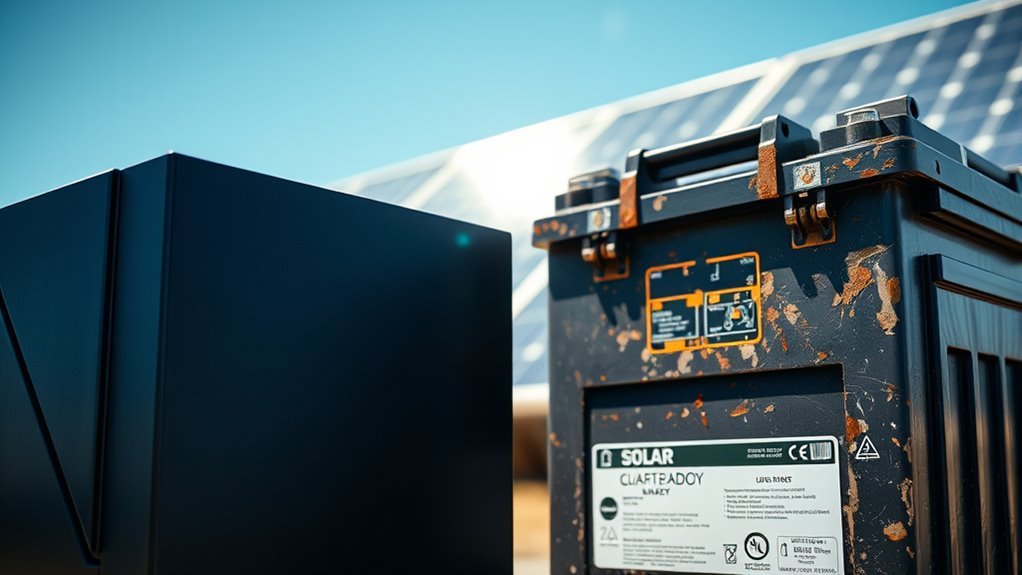
While both solar lithium and lead-acid batteries serve as energy storage solutions for solar power systems, they differ considerably in their chemistry, design, and performance characteristics. Solar lithium batteries utilize lithium-ion chemistry, offering higher energy density, which means they store more energy per unit volume. This results in lighter, more compact systems with longer cycle life. In contrast, lead-acid batteries rely on lead sulfate chemistry, providing lower energy density but proven durability and cost-effectiveness. The chemistry of lithium-ion batteries enables faster charging and discharging, enhancing system efficiency. Lead-acid batteries, while more economical upfront, tend to have reduced cycle life and lower overall energy storage capacity. These fundamental differences shape their suitability for various solar applications, influencing long-term performance and system design choices.
How Much Do Solar Batteries Cost?
The cost of solar batteries varies considerably based on their chemistry, capacity, and intended application, making it a critical factor in system design and long-term investment. Battery chemistry substantially influences cost, with lithium-based options generally more expensive but offering higher energy density. Energy density, in particular, affects the overall system size and efficiency, with lithium batteries providing superior energy density compared to lead-acid variants. This results in reduced space requirements and potentially lower installation costs, despite higher initial prices. Lead-acid batteries tend to be more affordable upfront but have lower energy density and shorter lifespan, which can increase total cost of ownership over time. Consequently, selecting a solar battery involves balancing initial investment with long-term performance and maintenance considerations.
How Do They Perform in Real-World Solar Applications?
In real-world solar applications, the performance of lithium-based batteries and lead-acid batteries diverges considerably due to their distinct chemistries and operational characteristics. Lithium battery chemistry enables higher energy density, resulting in greater storage capacity within a compact form factor, which is essential in space-constrained setups. They also maintain a more consistent depth of discharge, improving overall efficiency and usable capacity. Conversely, lead-acid batteries typically have lower storage capacity and experience reduced performance at deeper discharges. Their slower charge and discharge rates can limit responsiveness in dynamic solar systems. Overall, lithium batteries demonstrate superior performance for continuous, reliable energy storage, while lead-acid batteries tend to be more suited for applications where cost and simplicity outweigh capacity and efficiency demands.
How Long Do These Batteries Last, and What Maintenance Do They Need?
Understanding the lifespan and maintenance needs of solar batteries requires a comparison of their durability and operational requirements. Lithium-ion and lead-acid batteries differ markedly in longevity and upkeep, influenced by usage patterns and environmental factors. Analyzing these aspects helps determine which technology offers superior long-term performance and reliability.
Battery Lifespan Comparison
While both solar lithium-ion and lead acid batteries serve as essential energy storage solutions, their lifespans and maintenance requirements differ considerably. Lithium-ion batteries typically last around 10-15 years, thanks to their stable battery chemistry and high performance consistency. Lead acid batteries, however, generally endure 3-5 years, with performance declining more rapidly over time. The table below highlights key differences:
| Attribute | Lithium-Ion | Lead Acid |
|---|---|---|
| Lifespan | 10-15 years | 3-5 years |
| Battery Chemistry | Lithium-based | Lead plates and sulfuric acid |
| Performance Consistency | High over lifespan | Decreases with age |
| Maintenance | Minimal | Regular, intensive |
This comparison underscores lithium-ion’s durability and stable performance, making it a more reliable long-term choice.
Maintenance Requirements Overview
The maintenance requirements for solar lithium-ion and lead acid batteries differ considerably, directly impacting their operational longevity and total cost of ownership. Lithium-ion batteries, with their stable battery chemistry, require minimal maintenance, primarily ensuring proper cooling and monitoring of voltage levels. They benefit from sophisticated charging protocols that prevent overcharging and deep discharges, extending lifespan. Lead acid batteries, however, demand regular watering, equalization charges, and voltage checks due to their electrolyte-based chemistry. Proper adherence to charging protocols is critical for both types; lithium-ion batteries need precise voltage regulation, while lead acids are more sensitive to overcharging, which accelerates degradation. Consequently, lithium-ion systems typically involve lower maintenance efforts, translating to reduced long-term operational costs.
Factors Affecting Durability
The durability of solar lithium-ion and lead acid batteries fundamentally depends on their chemical composition, usage patterns, and maintenance practices. Battery chemistry influences how well each type withstands charge cycles, with lithium-ion typically offering longer cycle life due to its stable chemistry. Storage capacity impacts how often batteries are cycled, affecting degradation rates; higher capacity batteries generally endure more charge-discharge cycles before performance declines. Proper maintenance—such as avoiding deep discharges and maintaining peak charge levels—mitigates capacity fade and prolongs lifespan. Environmental factors like temperature fluctuations also accelerate deterioration, especially for lead acid batteries, which are more sensitive to such conditions. Ultimately, understanding these factors helps maximize battery longevity, ensuring reliable performance throughout their operational life.
What Is the Environmental Impact and Recycling Process?
Although lithium-ion batteries generally have a lower environmental footprint during use compared to lead-acid batteries, their production and disposal processes pose distinct ecological challenges. Recycling challenges with lithium batteries primarily involve extracting valuable materials like lithium, cobalt, and nickel, which are often complex and energy-intensive. This complexity can hinder efficient material recovery, impacting overall environmental benefits. Conversely, lead-acid batteries are more straightforward to recycle, with established processes that recover lead and sulfuric acid effectively. However, improper disposal of lead-acid units results in soil and water contamination. Overall, while lithium-ion batteries offer environmental benefits during operation, addressing recycling challenges is vital to mitigate their ecological impact at end-of-life, ensuring sustainable lifecycle management for both battery types.
Which Battery Is Best for Off-Grid Solar Systems?
When selecting batteries for off-grid solar systems, cost and longevity are critical factors, as they directly impact long-term investment and system reliability. Maintenance requirements and safety considerations also influence the overall suitability of lithium versus lead-acid options. Analyzing these points helps determine which battery technology aligns best with specific off-grid applications.
Cost and Longevity
Which battery type offers the best balance between cost and longevity for off-grid solar systems? Lithium batteries generally excel here due to their advanced battery chemistry, which enables longer cycle life and higher efficiency. Although lithium batteries have a higher initial cost, their superior energy density allows for more compact and lightweight systems, reducing installation expenses. They typically last 2,000 to 5,000 cycles, profoundly surpassing lead acid batteries, which average around 500 to 1,000 cycles. Lead acid batteries, while more affordable upfront, tend to degrade faster, requiring more frequent replacements and increasing long-term costs. Ultimately, lithium batteries provide a more cost-effective, durable solution over time, making them the preferred choice for off-grid setups prioritizing longevity and reliable performance.
Maintenance and Safety
Lithium and lead-acid batteries each present distinct maintenance and safety profiles influenced by their battery chemistry. Lithium batteries generally require minimal maintenance, as they lack the watering needs of lead-acid cells and offer more stable performance. However, their safety protocols are more rigorous, given the potential risks of thermal runaway and fire if damaged or improperly handled. Lead-acid batteries demand regular inspection for corrosion, electrolyte levels, and equalization charges, increasing upkeep but with well-established safety procedures. Both types necessitate proper ventilation and protective measures during installation and maintenance. Ultimately, lithium’s lower maintenance profile and advanced safety protocols make it more suitable for off-grid applications, though it requires careful handling to mitigate specific risks associated with its chemistry.
What Are the Benefits of Solar Lithium Batteries?
Solar lithium batteries offer significant advantages over traditional lead-acid options, primarily due to their superior energy density and longer lifespan. The battery chemistry in lithium-ion cells enables higher energy density, meaning they store more power in a compact form, which is essential for space-constrained applications. This increased energy density translates into greater efficiency and longer operational periods without needing frequent recharges. Additionally, lithium batteries typically have a longer cycle life, reducing replacement costs over time. Their stable chemistry also enhances safety and reliability, with less risk of sulfation and capacity loss common in lead-acid batteries. Overall, the advanced chemistry and higher energy density of solar lithium batteries make them a technologically superior choice for sustainable energy storage solutions.
What Are the Limitations of Each Battery Type?
While solar lithium batteries offer notable advantages, they also present certain limitations that can impact their suitability for specific applications. Manufacturing challenges include complex processes that increase production costs and energy consumption, which may hinder large-scale adoption. Additionally, lithium batteries pose significant concerns regarding battery recycling; their chemical composition complicates recycling efforts, raising environmental and economic issues. In contrast, lead-acid batteries generally have simpler manufacturing processes and well-established recycling infrastructure, but they suffer from lower energy density and shorter lifespan. Both types face limitations: lithium batteries are costlier and resource-dependent, while lead-acid batteries are heavier, less efficient, and environmentally less sustainable. Understanding these constraints helps in evaluating their long-term viability and environmental impact.
How to Choose the Right Solar Battery for Your Needs
Selecting the appropriate solar battery depends on evaluating your specific energy needs, budget constraints, and sustainability goals. Key factors include battery chemistry and energy density, which influence performance and longevity. Lithium-based batteries offer higher energy density and longer cycle life, making them suitable for space-constrained setups. Lead-acid batteries are more affordable but have lower energy density and shorter lifespan. Consider your daily energy consumption, available space, and budget when choosing. Use the table below for clarity:
| Criterion | Suitability |
|---|---|
| Battery Chemistry | Lithium for high energy density, Lead acid for cost-effective options |
| Energy Density | Lithium batteries excel in energy storage per volume |
| Cost | Lead acid is cheaper upfront |
| Lifespan | Lithium offers longer cycle life |
| Space Requirements | Lithium batteries are more compact |
This analysis guides informed decisions aligned with your energy goals.
Frequently Asked Questions
Can Solar Lithium Batteries Handle Fast Charging and Discharging Cycles Effectively?
Solar lithium batteries handle fast charging and discharge cycles efficiently due to their advanced chemistry, high cycle life, and stable performance. We find they outperform lead acid batteries, making them ideal for demanding applications requiring rapid energy transfer.
Are There Safety Concerns Associated With Using Lithium Versus Lead-Acid Batteries?
We believe lithium batteries pose fewer safety concerns than lead-acid, thanks to advanced manufacturing safety protocols and better battery recycling processes. Still, rigorous standards are essential for both, ensuring safe, sustainable energy storage solutions.
How Do Temperature Fluctuations Affect Each Battery’s Performance and Lifespan?
Temperature fluctuations impact each battery differently; lithium batteries offer better temperature stability with advanced thermal management, extending lifespan. Lead-acid batteries degrade faster under thermal stress, requiring careful thermal management to maintain performance and prevent premature failure.
What Are the Warranty Differences Between Solar Lithium and Lead-Acid Batteries?
We find solar lithium batteries typically offer longer warranties, reflecting lower manufacturing costs and better durability, whereas lead-acid warranties are shorter, often due to higher recycling challenges and material degradation, impacting overall lifecycle and replacement costs.
Are There Government Incentives or Rebates for Installing Solar Lithium Batteries?
Did you know over 30% of solar battery projects qualify for government incentives? We find that government programs often include subsidies for solar lithium batteries, making them more accessible and cost-effective, especially with proper eligibility assessment and technical compliance.
Conclusion
In the battle of solar lithium versus lead-acid batteries, choosing the right one could be the difference between powering a modest cabin or an entire off-grid empire. Lithium’s superior energy density, lifespan, and efficiency make it the clear champion for those demanding top-tier performance and longevity. While initial costs are higher, the long-term savings and environmental benefits make lithium batteries an investment in the future of sustainable energy—an unstoppable force in solar storage.