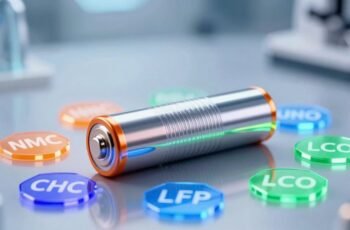
Understanding the durability of different lithium battery chemistries is essential as we increasingly rely on them for energy storage. While some chemistries like Lithium Iron Phosphate (LFP) boast over 2000 cycles, others such as Lithium Cobalt Oxide (LCO) may only reach 500-1000 cycles, impacting their long-term viability. These variations are driven by complex chemical stability and operating conditions, raising important questions about best choices for sustainability and performance in various applications.
Key Takeaways
- LFP batteries typically last over 2000 cycles due to superior chemical stability and resistance to thermal runaway.
- NMC batteries offer 1000-2000 cycles but degrade faster under high temperatures and stress.
- LCO batteries have shorter lifespans, around 500-1000 cycles, due to reactive chemistry and capacity fade.
- Stable chemistries facilitate easier recycling, reducing environmental impact and resource consumption.
- Longer-lasting chemistries contribute to sustainability by minimizing waste and enhancing battery lifespan.
What Factors Influence Lithium Battery Lifespan?

Understanding the factors that influence lithium battery lifespan is essential for optimizing performance and longevity. Manufacturing quality plays a vital role, as precise assembly and high-grade materials reduce internal resistance and degradation over time. Consistent quality control minimizes defects that accelerate capacity loss. Additionally, battery recycling practices impact lifespan indirectly by promoting sustainable material reuse, which encourages manufacturers to improve quality standards. Proper manufacturing reduces impurities and guarantees stable electrode-electrolyte interfaces, limiting degradation mechanisms. Furthermore, recycling processes can influence the development of new, durable chemistries by supplying high-quality recycled materials. Overall, a combination of rigorous manufacturing standards and responsible recycling ensures longer-lasting lithium batteries, highlighting the importance of process integrity and sustainable practices for maximizing lifespan.
Comparing Lithium Battery Chemistries: Which Lasts the Longest?
When comparing various lithium battery chemistries, it becomes clear that each type exhibits distinct longevity characteristics driven by their chemical stability and degradation mechanisms. Lithium Iron Phosphate (LFP) batteries generally last longer due to their stable chemistry, which resists thermal runaway and reduces capacity fade over time. Lithium Nickel Manganese Cobalt Oxide (NMC) batteries offer a good balance of energy density and lifespan but degrade faster under high temperatures. Lithium Cobalt Oxide (LCO) batteries tend to have shorter lifespans due to their reactive chemistry and susceptibility to capacity loss. Additionally, the choice of chemistry impacts battery recycling processes and environmental impact, with more stable chemistries often being easier and safer to recycle, consequently reducing long-term ecological footprints.
Cycle Life and Stability of LCO, LFP, and NMC Batteries
LCO, LFP, and NMC batteries exhibit distinct cycle life and stability profiles that directly influence their suitability for various applications. LFP batteries excel in stability, offering longer cycle lives—often exceeding 2000 cycles—due to their robust chemistry, which minimizes capacity fade over time. NMC batteries strike a balance between energy density and stability, typically enduring 1000-2000 cycles, but their performance can degrade more rapidly under stress. LCO batteries, while providing high energy density, show relatively limited cycle life—around 500-1000 cycles—making them less ideal for long-term applications. These differences impact battery recycling strategies and environmental impact, as longer-lasting chemistries reduce waste and resource consumption. Understanding these stability profiles helps optimize lifecycle management and mitigate environmental concerns associated with battery disposal.
How Operating Conditions Affect Battery Durability
Operating conditions, particularly temperature, play a vital role in determining battery lifespan, as elevated temperatures accelerate degradation mechanisms and increase stress on the cell. Charge cycles under suboptimal conditions can lead to capacity fade and reduced cycle life, highlighting the significance of controlled charging protocols. Understanding these factors enables us to optimize usage and extend the durability of lithium batteries.
Temperature’s Impact on Longevity
Temperature plays a critical role in determining lithium battery lifespan, as it directly influences electrochemical stability and degradation rates. Effective temperature regulation and thermal management are essential for prolonging battery health. Elevated temperatures accelerate degradation mechanisms such as electrolyte decomposition and electrode material breakdown. Conversely, low temperatures hinder ion mobility, reducing performance and causing stress on internal components. Specifically, ideal conditions involve:
- Maintaining a stable operating temperature within manufacturer-specified ranges.
- Avoiding thermal extremes that expedite capacity fade.
- Implementing active cooling or heating systems to guarantee consistent thermal management.
Charge Cycles and Stress
Repeated charge and discharge cycles impose mechanical and chemical stresses on lithium battery components, gradually degrading their capacity and efficiency. Electrode degradation occurs as repeated cycling causes structural changes, loss of active material, and increased internal resistance. These effects are exacerbated under high stress conditions, such as rapid charging or deep discharges. Electrolyte stability plays a vital role in mitigating these stresses; unstable electrolytes accelerate electrode degradation and form solid electrolyte interphases that hinder ion flow. As cycle count increases, the cumulative damage reduces overall battery lifespan. Ideal operating conditions that minimize stress—like controlled charging rates and maintaining voltage limits—are essential for preserving electrode integrity and electrolyte stability, thereby extending the functional life of lithium batteries.
Signs It’s Time to Replace Your Lithium Battery
When a lithium battery begins to lose its efficiency, it’s often a clear indicator that replacement is necessary. Key signs include a significant reduction in capacity, increased self-discharge rates, and frequent unexpected shutdowns. These symptoms reflect degradation in chemical stability and electrode integrity. Poor manufacturing quality can accelerate these issues, emphasizing the importance of sourcing batteries from reputable suppliers that prioritize high-quality components and facilitate battery recycling. Additionally, diminished performance may lead to safety risks, such as overheating or swelling. Recognizing these signs early can guarantee recycling efforts and minimize environmental impacts. Ultimately, monitoring these indicators ensures timely replacement, preserving device performance and supporting responsible disposal practices aligned with sustainable manufacturing standards.
Tips to Maximize Your Battery’s Longevity
To maximize your lithium battery’s lifespan, implementing proper charging and discharging practices is essential. Avoid deep discharges below 20% and don’t overcharge above 80%, as voltage fluctuations accelerate capacity fade. Maintaining a stable temperature, ideally between 20-25°C, mitigates thermal stress that damages cell chemistry. Additionally, adopting battery recycling protocols reduces environmental impact by reclaiming valuable materials, lessening the demand for new resource extraction.
| Practice | Benefit |
|---|---|
| Partial Charging | Preserves capacity, extends cycle life |
| Avoid Deep Discharges | Prevents capacity degradation |
| Temperature Control | Reduces thermal stress, prolongs lifespan |
| Proper Storage | Minimizes aging when unused |
| Recycling & Disposal | Limits environmental impact, supports sustainability |
Future Trends in Lithium Battery Longevity and Chemistry
Advancements in lithium battery chemistry are poised to significantly enhance longevity through innovative material development and engineering strategies. Future trends focus on integrating eco-friendly materials that reduce environmental impact and improve cycle life. Additionally, battery recycling technologies are evolving, enabling the reuse of critical components and minimizing waste. These developments include:
- Utilizing sustainable electrode materials that resist degradation over extended cycles.
- Incorporating solid-state electrolytes to enhance stability and safety.
- Implementing advanced recycling processes to recover valuable elements efficiently.
These approaches aim to extend battery lifespan while promoting environmental sustainability. As research progresses, we anticipate a shift toward more durable, eco-conscious lithium batteries that meet growing demand for longer-lasting energy storage solutions.
Frequently Asked Questions
How Does Temperature Specifically Impact Lithium Battery Chemical Stability?
Temperature directly affects lithium battery chemical stability; elevated heat accelerates thermal degradation, weakening electrode materials, while low temperatures can slow reactions, causing instability. Managing temperature is essential to maintaining ideal chemical stability and prolonging battery lifespan.
Are There Any Recent Breakthroughs Improving Lithium Battery Lifespan?
Recent breakthroughs, like solid-state advancements and improved battery recycling, considerably extend lithium battery lifespan. These innovations enhance chemical stability and sustainability, contrasting earlier limitations and promising more durable, eco-friendly energy storage solutions for future applications.
How Do Manufacturing Processes Influence Battery Longevity?
Our manufacturing processes directly impact battery longevity by minimizing electrode degradation and optimizing electrolyte stability, as precise control over material quality and assembly techniques reduces defects, delays degradation mechanisms, and enhances overall cycle life.
What Role Does Battery Management Systems Play in Lifespan Extension?
Battery management systems greatly extend lifespan, with studies showing they can improve cycle life by up to 30%. They actively monitor battery health, guarantee thermal regulation, and prevent overcharging, consequently optimizing performance and preventing premature degradation.
Can Different Charging Algorithms Significantly Extend Lithium Battery Life?
Yes, different charging algorithms, by optimizing charging patterns, can markedly reduce battery degradation. We analyze how tailored charging approaches minimize stress, thereby extending lithium battery life through controlled voltage and current profiles.
Conclusion
In essence, understanding these chemistries helps us navigate the battery’s lifecycle like a seasoned captain steering through shifting seas. As with the legendary ships of old, selecting the right material guarantees a voyage of durability and efficiency. By considering factors like cycle life and operating conditions, we can optimize longevity. Embracing these insights allows us to harness the future of energy storage, much like forging a reliable path through uncharted waters.