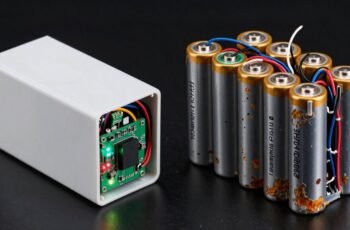
Did you know that despite their similar appearances, Lifepo4 and AGM batteries rely on fundamentally different chemistries that markedly impact their performance and safety profiles? While Lifepo4 batteries are often praised for longevity and thermal stability, AGM units remain popular for their immediate usability and lower upfront costs. Understanding these differences is essential for making an informed choice, especially when considering long-term costs and safety concerns—details that can dramatically influence your application’s success.
Key Takeaways
- Lifepo4 batteries offer longer cycle life and greater durability compared to AGM, reducing replacement frequency.
- Lifepo4 is more environmentally friendly, with non-toxic materials and easier recycling processes than AGM.
- AGM batteries perform better in low temperatures but have higher safety risks like leaks and fire hazards.
- Lifepo4 maintains stable performance in extreme temperatures and is safer due to stable chemistry.
- AGM batteries are generally less expensive upfront but require more frequent replacements, impacting long-term costs.
What Are Lifepo4 and AGM Batteries?
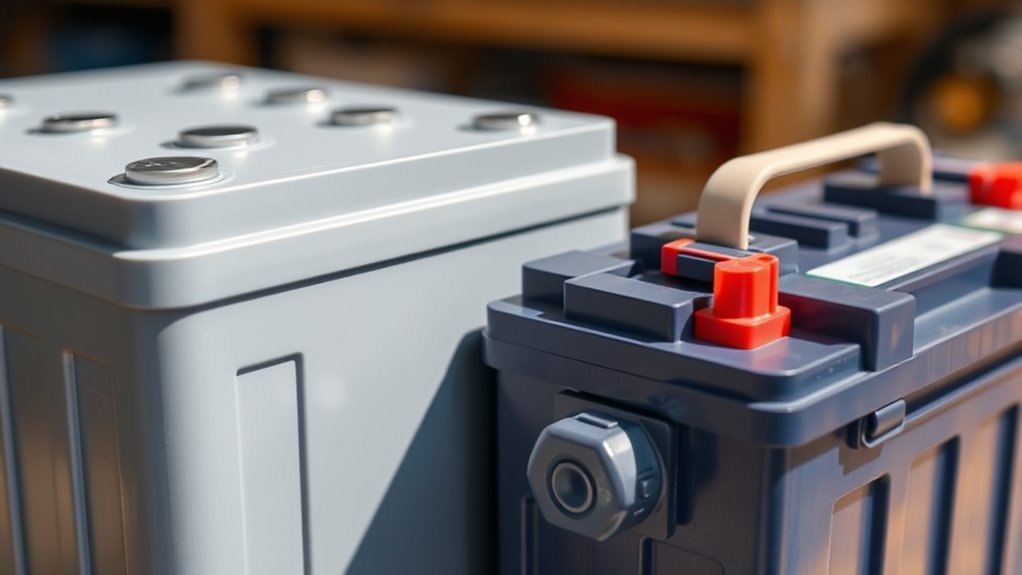
Lifepo4 (Lithium Iron Phosphate) and AGM (Absorbent Glass Mat) batteries are two distinct types of rechargeable energy storage solutions, each with unique chemical compositions and operational characteristics. Lifepo4 batteries utilize lithium iron phosphate chemistry, offering high thermal stability, longer cycle life, and enhanced safety, making them suitable for renewable energy and electric vehicles. AGM batteries, a subtype of lead-acid technology, employ glass mats to immobilize the electrolyte, providing reliable, maintenance-free performance in backup power and automotive applications. Manufacturing advancements are critical for both types, improving efficiency and sustainability. Battery recycling plays a crucial role in reducing environmental impact, especially for lead-acid AGM batteries, while innovations in lithium processing are advancing Lifepo4 sustainability. Understanding these fundamental differences informs better material choices and recycling strategies.
How Do Lifepo4 and AGM Batteries Differ Chemically and Structurally?
The fundamental chemical and structural differences between Lifepo4 and AGM batteries stem from their distinct chemistries and manufacturing processes. Lifepo4 batteries utilize lithium iron phosphate as the cathode material, offering a stable, non-toxic, and thermally safe chemistry. In contrast, AGM batteries are lead-acid-based, with absorbed glass mats that contain sulfuric acid electrolyte. Structurally, Lifepo4 cells have a stable crystal lattice that resists thermal runaway, while AGM cells rely on lead plates and electrolyte soaked glass mats for conductivity. These differences influence battery recycling, with Lifepo4 batteries being more environmentally friendly due to fewer toxic materials. Consequently, Lifepo4’s chemistry reduces environmental impact during disposal, whereas AGM batteries pose higher risks due to lead content and more complex recycling processes.
How Do They Perform in Hot and Cold Conditions?
When evaluating battery performance across temperature extremes, it’s essential to take into account how chemistries respond under such conditions. Lifepo4 and AGM batteries differ markedly in their cold and hot weather resilience. Lifepo4 maintains stable performance in cold temperatures, with minimal capacity loss, but can degrade faster in extreme heat. AGM batteries perform well in moderate temperatures but suffer capacity reduction in cold environments and can overheat under high temperatures, accelerating aging. This impacts not only operational efficiency but also battery recycling efforts, influencing environmental impact.
| Temperature | Lifepo4 Performance | AGM Performance | Environmental Impact |
|---|---|---|---|
| Cold | Stable, reliable | Reduced capacity | Moderate, easier recycling |
| Hot | Degrades faster | Overheats, ages faster | Higher environmental footprint |
| Moderate | Ideal | Good | Similar, depends on cycle life |
What Are the Safety Risks of Lifepo4 and AGM Batteries?
Both Lifepo4 and AGM batteries carry inherent safety risks that warrant careful consideration. Fire hazards, chemical spill risks, and the potential for thermal runaway are critical factors that can compromise safety. Understanding these risks helps us evaluate the overall safety profiles of each battery type more effectively.
Fire Hazard Potential
Are Lifepo4 and AGM batteries equally safe when it comes to fire hazards? Lifepo4 batteries generally pose a lower risk of thermal runaway, reducing the likelihood of fires. Their stable chemistry makes them less prone to overheating or combustion even under stress. AGM batteries, while safer than traditional flooded lead-acid types, still carry a higher fire risk due to potential electrolyte leaks and internal shorts. Safety considerations extend beyond immediate hazards; both battery types impact environmental safety through battery recycling processes. Lifepo4’s design facilitates more environmentally friendly recycling, minimizing hazardous waste. Conversely, AGM batteries contain materials that can pose environmental risks if improperly disposed of, increasing long-term environmental impact. Overall, Lifepo4 batteries offer a safer profile regarding fire hazards and environmental sustainability.
Chemical Spill Risks
While fire hazards are a significant safety concern, chemical spill risks also merit careful consideration when evaluating Lifepo4 and AGM batteries. Both types contain chemicals that, if compromised, can leak and pose environmental hazards. Lifepo4 batteries are generally more stable, reducing spill risks, but their recycling processes are essential for minimizing environmental impact. AGM batteries contain sulfuric acid, which can cause corrosion and health hazards if spilled.
| Battery Type | Spill Risk | Environmental Impact | Recycling Complexity | Safety Measures Needed |
|---|---|---|---|---|
| Lifepo4 | Low | Minimal | Straightforward | Basic containment |
| AGM | Higher | Significant | More complex | Specialized handling |
Understanding these risks helps us prioritize safety and responsible disposal.
Thermal Runaway Possibilities
Thermal runaway is a vital safety concern for lithium-based batteries, as it involves an uncontrollable increase in temperature that can lead to fires or explosions. Lifepo4 batteries tend to have a lower risk due to their stable chemistry, but they are not immune. AGM batteries, being lead-acid, are less prone to thermal runaway but still pose safety risks if damaged or improperly charged. Factors influencing the risk include:
- Internal short circuits from manufacturing defects or damage
- Overcharging or deep discharging
- External heat exposure leading to thermal degradation
Both battery types impact environmental safety, as improper disposal hampers battery recycling efforts and increases environmental impact. Understanding these risks is essential for safe handling, proper recycling, and minimizing ecological harm.
Which Battery Lasts Longer? Comparing Cycle Life and Durability
When comparing Lifepo4 and AGM batteries, cycle life and durability are key factors that determine longevity. Lifepo4 batteries typically offer a higher number of charge-discharge cycles, indicating greater potential lifespan, while AGM batteries often experience more wear over time. Analyzing these aspects helps us assess which technology provides more reliable long-term performance.
Cycle Life Comparison
Understanding the cycle life of batteries is essential for evaluating their long-term reliability and cost-effectiveness. Lifepo4 and AGM batteries differ markedly in this regard. Lifepo4 batteries typically offer 2,000–5,000 cycles, maintaining capacity longer over their lifespan, whereas AGM batteries generally provide around 500–1,000 cycles. This difference impacts not only longevity but also environmental impact, as longer-lasting batteries reduce the frequency of replacements and waste.
- Lifepo4 batteries support sustainable practices through better battery recycling options, decreasing landfill waste.
- AGM batteries tend to generate more electronic waste over time due to shorter cycle lives.
- Durability in cycle life directly influences maintenance costs and ecological footprint, making Lifepo4 more environmentally favorable in the long run.
Durability and Wear
Which battery type truly outperforms the other in durability and lifespan? Lifepo4 batteries generally demonstrate superior durability, often lasting over 2000 cycles compared to AGM’s 500-1000 cycles. This extended cycle life translates to less wear over time, reducing the frequency of replacements. Additionally, Lifepo4’s chemical stability enhances resistance to wear and environmental stress, lowering the risk of degradation. From an environmental perspective, Lifepo4 batteries are more sustainable due to their longer lifespan and easier battery recycling processes, which minimize waste and reduce environmental impact. In contrast, AGM batteries tend to degrade faster, increasing disposal needs and environmental footprint. Overall, Lifepo4 batteries’ durability and longevity make them a more efficient, eco-friendly choice over time.
How Much Do Lifepo4 and AGM Batteries Cost?
The cost difference between Lifepo4 and AGM batteries is primarily driven by their manufacturing processes, materials, and performance characteristics. Lifepo4 batteries tend to have higher initial costs but offer longer cycle life, reducing long-term expenses. Conversely, AGM batteries are generally less expensive upfront but require more frequent replacements, impacting overall cost efficiency. When evaluating costs, consider factors like battery recycling and environmental impact, which influence total lifecycle costs. Lifepo4’s environmentally friendly chemistry facilitates easier recycling, contributing to sustainability goals. AGM batteries, while cheaper initially, may incur higher disposal costs due to hazardous material handling.
- Lifepo4 batteries typically cost more initially but save money over time.
- AGM batteries are budget-friendly upfront but may have higher replacement costs.
- Sustainability factors, like environmental impact, influence long-term value and disposal costs.
What Are the Best Uses for Lifepo4 Batteries?
Lifepo4 batteries excel in applications requiring high safety, longevity, and reliable performance under demanding conditions. Their stable chemistry minimizes risks like thermal runaway, making them ideal for energy storage in critical systems, electric vehicles, and renewable energy setups. These batteries are also advantageous due to their extended cycle life, reducing the frequency of replacements and supporting sustainable practices such as battery recycling. Their environmentally friendly profile stems from lower toxicity and safer disposal processes, which lessen environmental impact compared to traditional lead-acid or other lithium-ion batteries. As a result, Lifepo4 batteries are increasingly preferred for stationary storage, off-grid applications, and portable power solutions where safety, durability, and environmental considerations are paramount.
When Are AGM Batteries the Right Choice?
AGM batteries are the ideal choice in situations where immediate readiness, low maintenance, and cost-effectiveness are prioritized. They excel in applications requiring reliable, plug-and-play operation with minimal downtime. Their sealed design simplifies battery recycling and disposal, aligning with environmental protocols. When considering AGM use, key factors include:
- Compatibility with standard charging protocols to guarantee peak performance and longevity
- Ease of installation in systems demanding quick deployment
- Cost efficiency for short-term projects or budget-conscious applications
AGM batteries also demand adherence to specific charging protocols to prevent damage, and their maintenance-free nature reduces operational complexity. Their straightforward recycling process makes them suitable for environments emphasizing sustainability. Overall, AGM batteries serve well where immediate, reliable power with minimal upkeep is essential.
How to Maintain and Maximize Battery Lifespan
Maintaining ideal battery performance requires diligent attention to proper usage and charging practices, as these directly influence lifespan and reliability. Regularly monitoring voltage levels, avoiding deep discharges, and following manufacturer guidelines help optimize longevity. Proper maintenance also involves responsible battery recycling, which reduces environmental impact and conserves resources. To maximize lifespan, consider the following:
| Practice | Benefit | Key Consideration |
|---|---|---|
| Controlled Charging | Extends cycle life | Use compatible chargers |
| Temperature Management | Prevents capacity loss | Keep within recommended ranges |
| Regular Inspection | Detects early issues | Check for corrosion and damage |
Adhering to these practices ensures efficient operation and minimizes environmental impact, preserving battery health and promoting sustainability.
Choosing the Right Battery for Your Needs
When selecting a battery for your application, understanding the specific power, capacity, and lifespan requirements is essential to making an informed choice. To optimize performance and sustainability, consider these factors:
- Power and Capacity Needs: Determine if your application demands high current output or long-term energy storage.
- Environmental Impact and Battery Recycling: Evaluate the ease of recycling and disposal, especially for Lifepo4, which generally has a lower environmental footprint than AGM.
- Lifespan and Total Cost of Ownership: Assess cycle life and maintenance needs, as Lifepo4 batteries tend to last longer, reducing environmental waste and overall costs.
Frequently Asked Questions
Are Lifepo4 Batteries Environmentally Friendly?
We believe Lifepo4 batteries are environmentally friendly because they contain fewer toxic materials and are easier to recycle, reducing environmental impact. Proper battery recycling minimizes toxic waste, making Lifepo4 a sustainable choice compared to traditional options.
How Quickly Can Lifepo4 and AGM Batteries Be Recharged?
We can recharge Lifepo4 batteries in just a few hours, vastly outpacing AGM’s slower pace, thanks to superior charge acceptance; this boosts battery longevity and offers a compelling cost comparison, making Lifepo4 more efficient and cost-effective long-term.
Can Lifepo4 Batteries Be Used in Marine Applications?
Yes, Lifepo4 batteries are suitable for marine applications due to their enhanced marine safety features and longer battery lifespan. They provide reliable, high-performance power, reducing risks and maintenance, making them ideal for demanding marine environments.
What Are the Weight Differences Between Lifepo4 and AGM Batteries?
We weigh the differences: Lifepo4 batteries are considerably lighter than AGM counterparts, boosting boat weight efficiency. While Lifepo4 offers longer lifespan and higher upfront cost, AGM batteries tend to be more economical initially, affecting overall cost comparison.
Do Lifepo4 Batteries Require Special Charging Equipment?
Yes, Lifepo4 batteries require specific charging protocols to optimize battery lifespan, ensuring safe operation and longevity. Using the correct charger is essential to prevent damage, maintain performance, and extend the battery’s overall lifespan effectively.
Conclusion
In summary, selecting between LiFePO4 and AGM batteries hinges on your specific needs and priorities. While AGM batteries may seem like the trusty steed of yesterday—ready for immediate deployment—the longevity and safety of LiFePO4 batteries resemble a well-forged sword for modern applications. By understanding their distinct chemistries and performance traits, we can make informed decisions that stand the test of time, much like choosing the right tool for a complex quest.