While the initial investment in a 100Ah deep cycle lithium battery may seem significant, the true value lies in understanding its performance, safety features, and longevity. Comparing top brands reveals vital differences in BMS design, energy density, and cycle life that can impact long-term reliability. As we analyze these factors, it becomes clear that choosing the right battery involves balancing cost against performance—an essential consideration for any serious application.
Key Takeaways
- Compare brands based on safety features, BMS capabilities, and adherence to safety standards.
- Evaluate cycle life and durability to determine long-term value and performance consistency.
- Assess efficiency metrics like charge/discharge rates and energy density for optimal system compatibility.
- Consider initial cost versus total cost of ownership, including lifespan and maintenance needs.
- Review customer feedback and testing standards to ensure reliability and safety in real-world use.
What Are 100Ah Deep Cycle Lithium Batteries and How Do They Work?
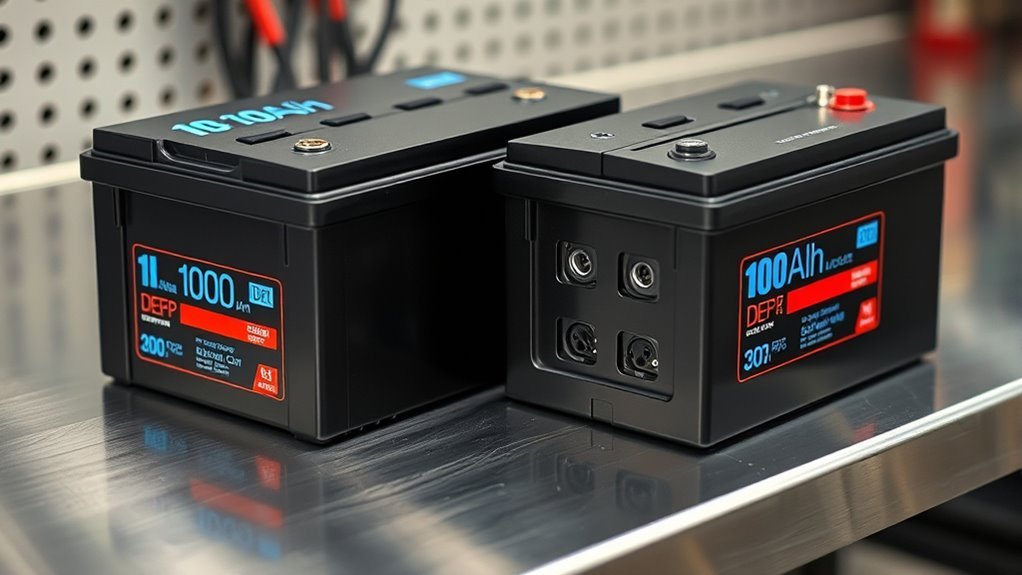
Although often misunderstood as similar to traditional lead-acid batteries, 100Ah deep cycle lithium batteries operate on fundamentally different chemistry, providing notable performance benefits. Their lithium-ion composition results in a longer battery lifespan, often exceeding 10,000 charge cycles when properly managed. This chemistry also enhances charging efficiency, allowing faster recharge times with less energy loss. Unlike lead-acid counterparts, these batteries maintain a consistent voltage output throughout discharge, optimizing power delivery. Their lightweight design and high energy density make them ideal for demanding applications. The advanced chemistry guarantees minimal degradation over time, translating to increased durability and reduced replacement costs. Overall, 100Ah deep cycle lithium batteries deliver superior longevity and charging performance, making them a reliable choice for long-term energy solutions.
Key Features to Consider When Choosing a 100Ah Lithium Battery
When selecting a 100Ah lithium battery, it’s essential to evaluate key features that directly impact performance, durability, and compatibility with your application. Battery safety is paramount; look for built-in protections against overcharge, over-discharge, and thermal runaway, ensuring reliable operation under various conditions. Charging protocols are equally critical; choose batteries with flexible, well-defined charging requirements that align with your system’s charger specifications. Proper adherence to these protocols maximizes lifespan and maintains ideal capacity. Additionally, assess the battery’s internal BMS (Battery Management System) for real-time monitoring and safety features. By focusing on safety measures and compatible charging protocols, you ensure a resilient, efficient, and safe power source tailored to your specific needs.
How Do Top Lithium Battery Brands Compare in Performance and Reliability?
Top lithium battery brands differentiate themselves through rigorous performance testing and stringent quality control processes, which directly influence reliability over time. These measures guarantee consistent battery safety, reducing risks like thermal runaway, and extend lifecycle longevity under various conditions. To compare performance and reliability, consider these key aspects:
| Brand | Battery Safety Standards | Lifecycle Longevity | Consistency in Performance |
|---|---|---|---|
| Brand A | High | 10+ years | Excellent |
| Brand B | Moderate | 8–10 years | Good |
| Brand C | High | 10+ years | Consistent |
| Brand D | Moderate | 7–9 years | Varies |
This table highlights how top brands prioritize safety and longevity, directly impacting long-term reliability and operational stability.
Which 100Ah Lithium Battery Offers the Best Value for Your Money?
Determining the best value for a 100Ah lithium battery requires careful analysis of both upfront costs and long-term performance metrics. Battery lifespan is a crucial factor, as longer-lasting batteries reduce replacement frequency, providing better overall value. Charging efficiency also plays an essential role; higher efficiency means less energy waste during charging, translating into lower operational costs. A battery with superior lifespan and charging efficiency may have a higher initial price but offers greater savings over its service life. We compare these metrics across leading models to identify which delivers the most cost-effective solution. Ultimately, the best value balances initial investment with durability and efficiency, ensuring reliable performance while minimizing total ownership costs.
Common Mistakes to Avoid When Buying a Deep Cycle Lithium Battery
Choosing the right deep cycle lithium battery involves more than just comparing capacity and price; it requires awareness of common pitfalls that can lead to costly mistakes. We must avoid errors that compromise battery lifespan or safety.
- Ignoring charging safety protocols can cause thermal runaway or damage; always confirm compatibility with your charger.
- Overlooking the cycle life guarantees may lead to premature battery failure, reducing overall lifespan.
- Neglecting to verify battery specifications such as voltage and current ratings can cause system incompatibility.
- Underestimating thermal management risks affects both safety and durability, impacting long-term battery lifespan.
Being aware of these issues helps ensure reliable performance and safety in your deep cycle lithium battery system.
Frequently Asked Questions
How Long Do 100AH Lithium Batteries Typically Last With Regular Use?
With proper charging protocols and battery recycling practices, our 100AH lithium batteries typically last 8-10 years under regular use, ensuring peak performance and longevity while minimizing capacity loss through regular maintenance and adherence to manufacturer guidelines.
Are 100AH Lithium Batteries Safe for All Types of Applications?
We believe 100AH lithium batteries are generally safe for various applications, but understanding their battery lifespan and adhering to safety considerations is essential to prevent risks like thermal runaway or overcharging, ensuring reliable and secure usage across contexts.
Can 100AH Lithium Batteries Be Interconnected for Increased Capacity?
We can definitely connect 100ah lithium batteries for increased capacity, but proper battery compatibility and connection methods are essential. We carefully analyze series or parallel configurations to guarantee safety, efficiency, and ideal performance, avoiding any potential pitfalls.
What Maintenance Is Required for 100AH Deep Cycle Lithium Batteries?
We follow strict charging protocols and promote battery recycling to maintain 100ah deep cycle lithium batteries. Regular inspection for damage and proper disposal guarantee safety, longevity, and environmental responsibility, optimizing performance through proactive maintenance and adherence to best practices.
How Do Environmental Conditions Affect 100AH Lithium Battery Performance?
Environmental conditions considerably influence our 100AH lithium batteries through temperature sensitivity and corrosion risks. We guarantee ideal performance by maintaining suitable temperatures, preventing corrosion via protective measures, and monitoring environmental factors regularly for sustained efficiency and longevity.
Conclusion
In steering the landscape of 100Ah deep cycle lithium batteries, we recognize that the ideal choice balances advanced safety features, impressive lifespan, and efficient performance. Like a finely tuned engine, a reliable battery provides seamless power, safeguarding your energy needs against unforeseen challenges. By carefully analyzing brand reliability and technical specifications, we guarantee our energy systems remain resilient, efficient, and ready to power our pursuits with precision and confidence—an investment in enduring performance.