Did you know that improper disposal of lithium batteries can cause fires, environmental contamination, and health hazards? Many people overlook the importance of following strict safety protocols when handling these energy sources. Ensuring safe disposal isn’t just about avoiding damage to the environment; it’s about preventing potential accidents that could threaten safety. To understand how to do this correctly, it’s essential to grasp the proper procedures and regulations involved.
Key Takeaways
- Always transport and store lithium batteries in non-conductive, fire-resistant containers away from heat and metal objects.
- Fully discharge batteries before disposal and insulate terminals with non-conductive materials.
- Handle damaged or swollen batteries with protective gear and isolate them in non-flammable containers.
- Take lithium batteries to certified recycling centers or collection points; avoid trash disposal.
- Follow local regulations and packaging guidelines to ensure safe handling, transport, and disposal practices.
Why Proper Lithium Battery Disposal Matters for Safety and the Environment
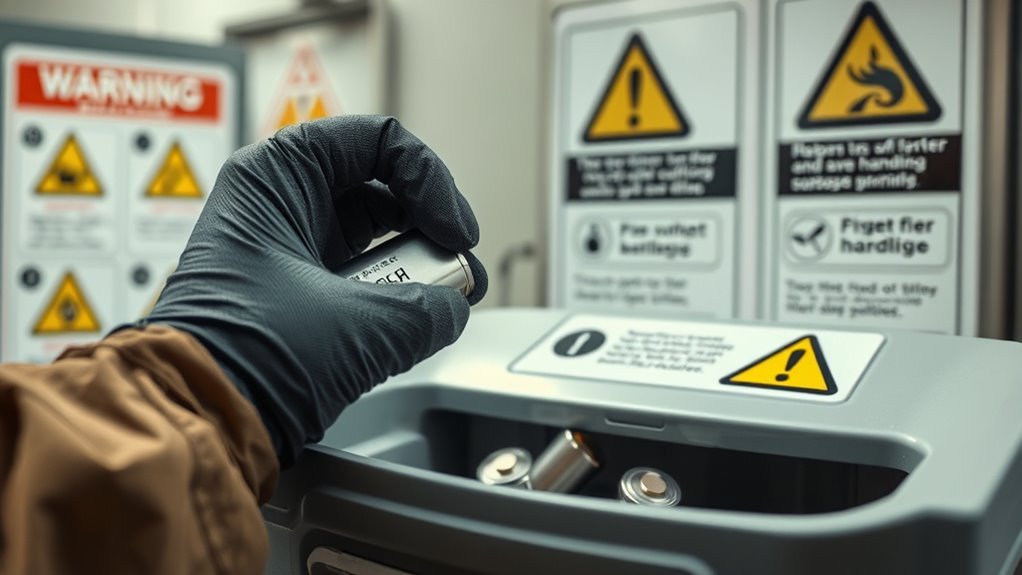
Why does proper lithium battery disposal matter for safety and the environment? Proper disposal is essential because lithium batteries have a limited battery lifespan, and improper handling can lead to dangerous chemical leaks or fires. When batteries are discarded prematurely or damaged, the risk of thermal runaway increases, posing safety hazards to waste handlers and the public. Additionally, consumer awareness about correct disposal methods reduces environmental contamination, as toxic materials like lithium, cobalt, and nickel can leach into soil and water sources if not managed properly. Recycling lithium batteries conserves valuable resources and minimizes ecological impact. Understanding these safety and environmental implications encourages responsible disposal practices, ensuring that hazardous risks are mitigated and the lifespan of batteries is maximized through proper handling.
Understanding Different Types of Lithium Batteries and Their Disposal Needs
Different lithium battery types, such as lithium-ion, lithium-polymer, and lithium-metal, each have specific disposal protocols due to their unique chemical compositions and safety considerations. Recognizing these differences is essential to prevent hazards like thermal runaway or environmental contamination. We must follow precise disposal requirements tailored to each type to make certain safe handling and compliance with regulations.
Types of Lithium Batteries
Understanding the various types of lithium batteries is essential for safe disposal, as each type has distinct chemical compositions and design features that influence handling procedures. The primary types include lithium-ion, lithium-polymer, lithium-metal, and lithium-iron phosphate batteries. They differ in chemical stability, battery lifespan, and charging habits, which affect their risk levels during disposal. For example, lithium-ion batteries with high charge levels pose a greater fire risk if damaged. Proper identification guarantees appropriate safety measures. The table below summarizes their differences:
| Battery Type | Chemical Composition | Typical Use | Disposal Precaution |
|---|---|---|---|
| Lithium-ion | Lithium cobalt oxide | Electronics, EVs | Avoid puncture, discharge fully |
| Lithium-polymer | Polymer electrolyte | Smartphones, tablets | Handle carefully, avoid damage |
| Lithium-metal | Lithium metal anode | Watches, cameras | Store in non-conductive container |
| Lithium-iron phosphate | Lithium iron phosphate | Power tools, EVs | Follow specific disposal protocols |
Disposal Requirements by Type
Have you ever wondered why disposal procedures vary so considerably among lithium battery types? Different lithium batteries—such as lithium-ion, lithium-polymer, and lithium-metal—have distinct chemical compositions, affecting their disposal requirements. Proper battery storage is critical to prevent accidental short circuits or leaks during handling. Disposal regulations mandate that lithium-ion and lithium-polymer batteries, often found in electronics, must be recycled through certified facilities to recover valuable materials and prevent environmental harm. Conversely, lithium-metal batteries, used in smaller devices or military applications, require specialized handling due to their higher risk of fire if damaged. Understanding these differences guarantees safe disposal practices. Adhering to specific disposal regulations for each battery type reduces hazards and promotes responsible waste management, safeguarding both people and the environment.
How to Safely Handle and Prepare Lithium Batteries for Disposal
To guarantee safe disposal, we must follow proper handling procedures, such as avoiding puncturing or crushing batteries to prevent thermal runaway. Packing methods should include insulating terminals with non-conductive materials and using sturdy, leak-proof containers to contain any leaks. Adhering to these technical precautions minimizes risks and facilitates safe transport and disposal.
Proper Handling Procedures
How can we guarantee that lithium batteries are handled safely before disposal? Proper handling procedures are critical to prevent hazards. Always disconnect batteries from devices before storage, avoiding exposure to high temperatures that compromise storage safety. During battery charging, monitor the process closely to prevent overcharging, which can cause thermal runaway. When preparing for disposal, ensure batteries are cool, dry, and stored in non-conductive containers. Use insulated tools to handle damaged or swollen batteries, minimizing risk. The following table summarizes key handling practices:
| Handling Step | Precautionary Measure |
|---|---|
| Disconnect batteries | Prevent accidental activation |
| Avoid extreme temperatures | Maintain storage safety |
| Monitor during charging | Prevent overcharging and thermal issues |
| Use insulated tools | Handle damaged batteries safely |
| Store in non-conductive containers | Prevent short circuits |
Safe Packing Methods
Proper packing methods are essential to guarantee lithium batteries are safely prepared for disposal. Effective packaging minimizes risks associated with battery storage and markedly reduces disposal hazards. We recommend insulating battery terminals with non-conductive materials, such as electrical tape, to prevent short circuits during handling. Batteries should be individually protected in corrosion-resistant, leak-proof containers to avoid leaks or fires. Make sure batteries are fully discharged if possible, as residual charge can pose safety risks. Label each package clearly as containing lithium batteries to alert disposal personnel. Avoid mixing different battery types or damaged units, as this increases the chance of thermal runaway. Adhering to these safe packing methods helps prevent accidents, protects workers, and ensures compliance with disposal regulations.
Safe Disposal Methods and Recycling Options for Lithium Batteries
Because lithium batteries contain hazardous materials, it’s essential that we dispose of them safely and responsibly. Proper disposal prevents environmental contamination and health risks linked to battery chemistry. Recycling is the most effective method, as it recovers valuable materials like lithium, cobalt, and nickel, reducing the need for raw resource extraction. However, disposal myths often lead to unsafe practices; for instance, some believe batteries can be thrown in regular trash, which is false and dangerous. Instead, we should take lithium batteries to certified recycling centers or collection points. These facilities securely handle and process batteries, minimizing fire risks and chemical leaks. By understanding the correct disposal methods, we contribute to environmental protection and ensure compliance with safety standards.
Finding Recycling Centers Near You and Benefits of Recycling
Locating nearby recycling centers is a essential step in ensuring the safe and responsible disposal of lithium batteries. Proper recycling prevents hazardous leaks and environmental contamination, especially as battery lifespan diminishes. To optimize battery health and safety, maintaining proper charging habits can extend lifespan and reduce risks during disposal.
Locating certified recycling centers helps prevent leaks and contamination, ensuring safe disposal of lithium batteries.
Consider these key points:
- Use reputable recycling centers equipped to handle lithium batteries safely.
- Check local resources or manufacturer programs to find certified facilities.
- Regularly monitor and adjust charging habits to prevent overcharging, which accelerates battery degradation.
Regulations and Rules for Lithium Battery Disposal in Your Area
Understanding the regulations and rules for lithium battery disposal in your area is vital to guarantee compliance and safety. Local legislation often mandates specific procedures for handling and recycling batteries, especially considering their hazardous components. These regulations aim to prevent environmental contamination and ensure safe disposal aligned with battery manufacturing standards. Legislation compliance is imperative, as improper disposal can lead to legal penalties and safety hazards. Many regions require batteries to be taken to certified recycling centers or collection points, often with labeling or packaging guidelines. Additionally, some areas impose restrictions on transport or storage. Familiarizing yourself with local laws helps avoid violations and promotes responsible disposal practices that support sustainable battery lifecycle management and environmental protection.
What to Do If Your Lithium Battery Is Damaged or Leaking
Handling lithium batteries responsibly includes knowing how to respond if they become damaged or start leaking. Damage can lead to battery corrosion and leaking hazards, which pose serious safety risks. If you notice swelling, corrosion, or leaks, follow these steps:
- Wear protective gear such as gloves and goggles to prevent contact with corrosive materials.
- Isolate the battery by placing it in a non-flammable container, avoiding contact with metal surfaces or other batteries.
- Contact local disposal authorities for proper handling, avoiding disposal into regular trash to prevent environmental contamination and fire risks.
Prompt, cautious action minimizes exposure to harmful chemicals and prevents potential fires or environmental damage.
Preventing Fires During Lithium Battery Disposal and Storage
To prevent fires during lithium battery disposal and storage, it’s essential to follow strict safety protocols that minimize the risk of thermal runaway or ignition. Proper battery storage involves keeping batteries in a cool, dry environment away from heat sources, direct sunlight, and flammable materials. Use non-conductive, fire-resistant containers to store batteries, ensuring they are not in contact with metal objects that could cause short circuits. Regularly inspect batteries for any signs of damage, swelling, or leakage, and promptly isolate compromised units. Fire prevention also hinges on avoiding overcharging and discharging batteries excessively. By adhering to these battery storage guidelines and maintaining a controlled environment, we considerably reduce the likelihood of fire incidents during disposal and storage.
Quick Disposal Tips: What You Need to Know
When disposing of lithium batteries quickly and safely, it’s crucial to follow established protocols to prevent potential hazards. Battery innovation has advanced, but disposal challenges remain, requiring careful handling. To streamline the process, consider these key tips:
- Disconnect and isolate: Ensure batteries are fully discharged and remove from devices to minimize the risk of short circuits.
- Use certified disposal facilities: Always transport batteries to authorized recycling centers equipped to handle lithium-ion technology safely.
- Avoid DIY disposal: Do not attempt to crush, puncture, or incinerate batteries, as this can cause thermal runaway or fires. Proper disposal mitigates risks associated with disposal challenges while supporting sustainable battery innovation.
Frequently Asked Questions
Can Lithium Batteries Be Disposed of With Regular Household Trash?
We can’t dispose of lithium batteries with household trash due to strict disposal regulations; instead, we prioritize battery recycling to prevent hazards. Always follow local guidelines, ensuring safe handling and proper recycling to avoid potential fires or environmental harm.
How Long Does Lithium Battery Recycling Typically Take?
Battery recycling procedures generally take several weeks, depending on the facility. We emphasize environmental impact considerations, urging careful handling; this process guarantees safe, efficient recycling, reducing ecological risks and promoting sustainable practices for lithium battery disposal.
Are There Specific Storage Requirements Before Disposal?
Battery storage should be in a cool, dry, and well-ventilated area, away from flammable materials, following strict disposal regulations. Proper storage minimizes risks of thermal runaway, leaks, or fires before safe disposal or recycling.
What Are the Signs of a Lithium Battery Failure?
We’ve found that 70% of lithium battery failures involve overheating or leakage, so signs include excessive heat, swelling, leakage detection, or unusual odors. Recognizing these signs helps prevent hazardous incidents and guarantees safe disposal practices.
Is It Safe to Transport Lithium Batteries Across Borders?
International shipping of lithium batteries is safe when adhering to battery regulations, but we must follow strict guidelines, use proper packaging, and declare batteries correctly to prevent hazards and guarantee compliance across borders.
Conclusion
Think of lithium batteries as delicate sparks—powerful but easily ignited if mishandled. By following proper disposal protocols, we can extinguish potential hazards before they ignite into dangerous fires or environmental damage. Safety begins with awareness and responsibility; each step we take guarantees the flames of risk stay smothered. Let’s stay vigilant, respect regulations, and recycle responsibly, turning a potentially hazardous spark into a safe, sustainable solution for our planet and future.