Lithium batteries are integral to many devices, but their storage requires precision to prevent safety hazards. Improper handling can lead to chemical reactions, thermal runaway, or environmental harm. Ensuring correct storage practices is essential, yet many overlook key factors that could compromise safety or battery longevity. Understanding the best procedures can notably reduce risks and improve performance. Let’s explore the critical guidelines that make safe storage both effective and practical.
Key Takeaways
- Store batteries in a cool, dry, well-ventilated area away from direct sunlight and temperature fluctuations.
- Use insulated, non-conductive packaging and containers to prevent short circuits and physical damage.
- Maintain recommended temperature (15°C-25°C) and humidity below 50% to preserve battery integrity and safety.
- Handle with insulated tools, avoid punctures, crushes, or exposure to high heat during storage and transport.
- Regularly review manufacturer guidelines, safety updates, and monitor storage conditions for optimal safety.
Why Safe Storage of Lithium Batteries Matters
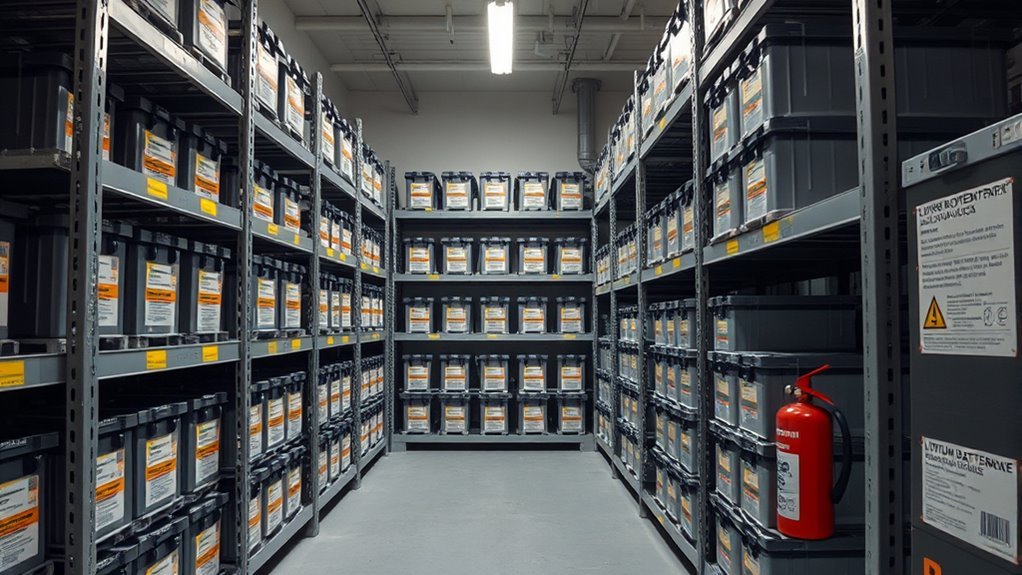
Because lithium batteries store a significant amount of energy in a compact form, their safe storage is essential to prevent potential hazards. Understanding battery chemistry is essential, as improper storage can lead to thermal runaway or chemical degradation. Maintaining appropriate temperature and humidity levels preserves battery integrity and prevents deterioration. Adherence to proper charging protocols is critical; overcharging or deep discharging can compromise cell stability and increase safety risks. Ensuring that batteries are stored in a well-ventilated, secure environment minimizes the risk of accidental activation or damage. Precise management of storage conditions, aligned with the specific battery chemistry and recommended charging protocols, helps prevent safety incidents and prolongs battery lifespan. Proper storage practices are fundamental for safe, reliable lithium battery use.
Understanding the Risks of Lithium Batteries
Lithium batteries pose specific safety risks that must be thoroughly understood to prevent accidents and damage. Central to these risks is their battery chemistry, which involves highly reactive lithium ions. If the internal structure is compromised—due to manufacturing defects, physical damage, or improper handling—it can lead to thermal runaway, causing fires or explosions. Additionally, lithium batteries have a high energy density, meaning they store substantial energy in a compact form, making them vulnerable to overheating and short circuits. This combination of reactive chemistry and elevated energy density necessitates strict safety measures. Understanding these inherent risks allows us to implement appropriate storage and handling protocols, minimizing the potential for hazardous incidents associated with lithium battery use.
How to Store Lithium Batteries Safely
To store lithium batteries safely, maintaining an ideal environment is essential; this involves controlling temperature and humidity to prevent degradation or thermal runaway. We must also follow strict handling procedures, such as avoiding punctures, short circuits, and ensuring proper insulation. Implementing these measures minimizes risks and preserves battery integrity over time.
Proper Storage Environment
Maintaining the proper storage environment for lithium batteries is essential to guarantee safety and preserve their longevity. Ideal conditions minimize capacity loss and extend battery lifespan. Store batteries in a cool, dry place, ideally between 15°C and 25°C, avoiding temperature fluctuations. Use appropriate storage accessories, such as insulated containers or dedicated battery cases, to prevent accidental shorts and physical damage. Humidity should be low—less than 50%—to prevent corrosion. Additionally, avoid direct sunlight and sources of heat. Proper storage conditions ensure the chemical stability of lithium cells, reducing risks of thermal runaway and degradation.
| Temperature Range | Humidity Level | Recommended Storage Accessories |
|---|---|---|
| 15°C – 25°C | < 50% | Insulated cases |
| Avoid extremes | Keep dry | Non-conductive containers |
| Fluctuations harmful | Prevent condensation | Proper cable management |
Safe Handling Procedures
Handling lithium batteries safely during storage requires strict adherence to proper procedures to prevent accidents and damage. Understanding battery chemistry is essential, as certain chemistries, like lithium cobalt oxide, can be more reactive if mishandled. We follow specific charging protocols, guaranteeing batteries are stored at a partial state of charge—typically around 30-50%—to minimize capacity loss and thermal risk. Proper handling involves avoiding punctures, crushes, or exposure to high temperatures and moisture. When moving or inspecting batteries, use insulated tools and wear protective equipment. Proper labeling and documentation are also critical for tracking storage conditions and lifecycle status. By applying these precise handling procedures, we reduce the risk of thermal runaway and assure the longevity and safety of lithium batteries.
Maintaining the Right Temperature and Humidity
Ensuring lithium batteries are stored at the appropriate temperature and humidity levels is critical for preserving their performance and longevity. Precise temperature regulation minimizes thermal stress and prevents capacity degradation, typically maintaining storage conditions between 20°C and 25°C. Excessive heat accelerates chemical reactions within the cells, risking thermal runaway, while cold temperatures can impair internal chemistry. Humidity control is equally essential; high humidity levels can lead to condensation, causing corrosion and internal damage, whereas low humidity helps prevent moisture-related deterioration. Maintaining stable environmental conditions minimizes the risk of electrolyte leakage and other failures. Consistent monitoring and control of temperature and humidity guarantee ideal storage conditions, safeguarding the battery’s integrity and extending its service life.
Disposing of Lithium Batteries Responsibly
Proper disposal of lithium batteries minimizes environmental impact and prevents safety hazards. We must follow established recycling protocols and use authorized collection points to guarantee safe handling. Adhering to safety precautions during disposal is essential to prevent risks such as fires or chemical leaks.
Proper Disposal Methods
Although lithium batteries are essential for modern technology, their improper disposal poses significant environmental and safety risks. Proper disposal methods mitigate fire hazards and prevent chemical leakage. Always follow local regulations for battery disposal, avoiding landfill disposal when possible. Use certified collection centers or authorized disposal facilities to guarantee safe handling. During storage, keep batteries in a cool, dry environment, and disconnect them from devices to prevent accidental battery charging or short circuits. Emergency preparedness involves having spill containment materials ready and knowing how to handle thermal runaway incidents. The table below summarizes key disposal practices:
| Practice | Precaution | Purpose |
|---|---|---|
| Use certified centers | Avoid illegal dumping | Environmental safety |
| Disconnect batteries | Prevent accidental battery charging or leaks | Safety during storage |
| Store properly | Keep in cool, dry places | Reduce fire risk |
| Emergency readiness | Have spill kits and fire extinguishers on hand | Reduce hazard during emergencies |
Recycling Lithium Batteries
Recycling lithium batteries is a responsible step toward minimizing environmental impact and conserving valuable resources. Advanced recycling processes enable the recovery of critical materials such as lithium, cobalt, and nickel, essential for modern battery technology. These processes typically involve mechanical separation, pyrometallurgical, and hydrometallurgical methods to safely extract and purify usable materials. Proper recycling prevents hazardous materials from leaching into soil and water, reducing environmental contamination. By participating in certified recycling programs, we guarantee that batteries are handled by specialized facilities equipped to manage potential risks. Innovating battery technology further enhances recycling efficiency, making it more sustainable and economically viable. Overall, responsible recycling supports a circular economy, conserving resources and reducing the ecological footprint of lithium battery use.
Safety Precautions During Disposal
When disposing of lithium batteries, it’s essential to follow specific safety precautions to prevent accidents and environmental hazards. Proper battery packaging is critical; batteries should be insulated with non-conductive materials to prevent short circuits during transport. Always place batteries in a secure, non-leaking container to avoid leaks or fires. In case of damage or thermal runaway, having an emergency response plan is crucial—this includes readily accessible fire extinguishers rated for electrical fires and protocols for containment. Avoid crushing, puncturing, or dismantling batteries, as these actions can release hazardous materials or trigger fires. Additionally, adhere to local disposal regulations, ensuring batteries are taken to authorized recycling centers. These precautions minimize risks, protect responders, and promote responsible lithium battery disposal.
Follow Manufacturer Instructions and Stay Informed
Following manufacturer instructions is vital for guaranteeing the safe and effective use of lithium battery storage systems. Proper adherence guarantees compatibility with specific battery chemistry, reduces risks, and prolongs lifespan. It’s important to understand recommended storage containers, ventilation requirements, and temperature ranges specified by the manufacturer. Staying informed about updates or recalls related to your battery model helps prevent hazards. Additionally, following guidelines for charge levels and handling procedures minimizes the risk of thermal runaway. Regularly consulting manufacturer resources ensures you’re using current best practices.
- Use approved storage containers that prevent physical damage and short circuits
- Follow specified temperature and humidity ranges for your battery chemistry
- Regularly review manufacturer updates and safety notices
- Avoid overcharging or deep discharging batteries
- Implement proper labeling and organization of storage areas
Frequently Asked Questions
Can Lithium Batteries Be Stored Together Without Risk?
We advise against storing lithium batteries together due to thermal risks; maintaining proper storage temperature and promoting battery recycling minimize hazards. Proper separation and handling guarantee safety, preventing thermal runaway or damage during storage.
What Are the Signs of a Damaged Lithium Battery?
We recognize damaged lithium batteries by swelling indicators or signs of battery leakage, which resemble a balloon about to pop. These visual cues demand immediate attention, as they indicate compromised integrity and potential safety hazards.
How Long Can Lithium Batteries Be Stored Safely?
We can typically store lithium batteries safely for 6 to 12 months if voltage maintenance and proper storage conditions are maintained, and we prioritize battery recycling to prevent environmental impacts and guarantee longevity.
Are There Specific Storage Containers Recommended for Lithium Batteries?
We recommend using vented containers with proper battery insulation for lithium batteries. These containers prevent overheating, reduce fire risk, and guarantee safe heat dissipation, aligning with technical safety standards for ideal lithium battery storage.
What Emergency Steps Should Be Taken if a Lithium Battery Catches Fire?
Studies show lithium battery fires account for 16% of electronic device incidents. If caught, we activate fire suppression systems promptly, follow evacuation procedures carefully, and avoid water, which can worsen the fire. Safety remains our top priority.
Conclusion
In summary, proper lithium battery storage is essential to guarantee safety and ideal performance, much like a well-guarded fortress. By following best practices—maintaining appropriate temperature, humidity, and organization—we minimize risks of thermal runaway and environmental hazards. Staying informed and adhering to manufacturer guidelines is our modern safeguard against potential dangers. Let’s avoid becoming victims of our own “fire-breathing” devices by treating battery storage with the precision and care of a seasoned alchemist.