Ensuring lithium battery safety in solar systems requires a thorough understanding of industry standards, proper handling, and advanced management techniques. While these batteries offer significant benefits, their risks—if not managed correctly—can lead to thermal runaway or mechanical failure. Understanding these safety measures is essential for reliable operation and environmental responsibility, but the complexities involved mean that a all-encompassing approach is necessary to mitigate potential hazards effectively.
Key Takeaways
- Ensure lithium batteries meet safety certifications like UL 9540, IEC 62619, and UN 38.3 for reliability and hazard prevention.
- Properly handle, install, and store batteries in cool, dry, ventilated areas, avoiding impacts or punctures.
- Use monitoring systems to detect temperature spikes, overcharging, or voltage irregularities to prevent thermal runaway.
- Implement effective thermal management and safety features, including venting and robust casing, to minimize fire risks.
- Regularly inspect batteries for physical damage or corrosion and follow manufacturer guidelines for safe operation and disposal.
What Are Lithium Batteries and Why Use Them in Solar Systems?
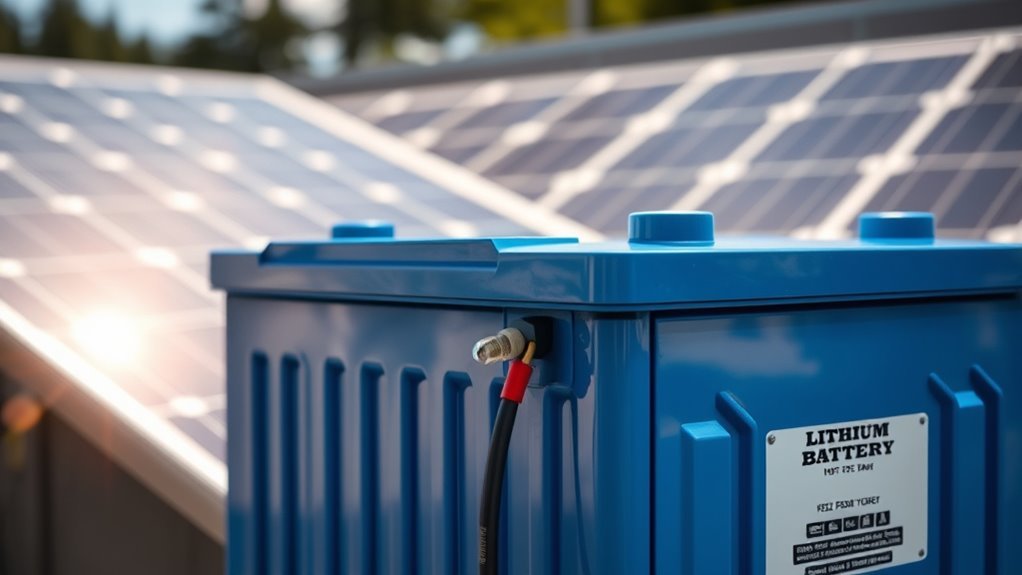
Lithium batteries are rechargeable energy storage devices that utilize lithium-ion chemistries to deliver high energy density, long cycle life, and efficient performance. Their advanced battery chemistry enables them to store substantial amounts of energy in a compact form, making them ideal for solar systems where space and weight are critical considerations. The high energy density of lithium batteries guarantees they can provide sustained power output over extended periods, supporting reliable energy supply from solar sources. Additionally, their long cycle life reduces replacement frequency, enhancing overall system longevity. This combination of energy density and durability makes lithium batteries a preferred choice for solar energy applications, offering optimized performance, efficient energy storage, and dependable operation in various environmental conditions.
What Safety Certifications Do Lithium Batteries Have?
Given the importance of safety in energy storage, lithium batteries undergo rigorous certification processes to meet industry standards. Certification standards, such as UL 9540, IEC 62619, and UN 38.3, establish criteria for safety protocols, ensuring battery resilience against thermal runaway, overcharging, and mechanical damage. These certifications verify that batteries incorporate essential safety features, including venting mechanisms, thermal management, and robust casing design. Manufacturers must pass extensive testing protocols to demonstrate compliance, reducing risks associated with fire, explosion, or leakage. Adhering to these standards provides confidence that lithium batteries meet stringent safety benchmarks, essential for reliable integration into solar systems. This disciplined certification process is crucial for safeguarding users and maximizing the longevity and performance of energy storage solutions.
How to Properly Install and Handle Lithium Batteries Safely?
To guarantee safety when installing and handling lithium batteries, it’s essential to follow strict procedures that minimize risks of damage, thermal events, or electrical hazards. Proper handling involves using insulated tools, avoiding physical impacts, and adhering to manufacturer guidelines. Ensuring correct installation reduces the likelihood of internal damage that could compromise safety or environmental impact.
| Step | Action | Precaution |
|---|---|---|
| Storage | Store in cool, dry, ventilated areas | Prevent thermal runaway |
| Handling | Wear protective gear | Avoid punctures or short circuits |
| Disposal & Recycling | Follow battery recycling protocols | Minimize environmental impact |
| Maintenance | Regular inspections for damage | Extend lifespan, reduce waste |
How Can You Recognize and Prevent Lithium Battery Fires?
Recognizing and preventing lithium battery fires require a thorough understanding of warning signs and proper safety protocols. Early indicators include unusual heat, swelling, or smoke, which signal thermal runaway risks. Regular inspection of batteries for physical damage or corrosion is essential for effective fire prevention. Implementing strict safety protocols, such as proper ventilation and avoiding overcharging, reduces the risk of ignition. Monitoring systems that detect temperature spikes or voltage irregularities are essential for early detection. Additionally, maintaining appropriate storage conditions minimizes fire hazards. By adhering to rigorous fire prevention measures and understanding the warning signs, we can mitigate the risk of lithium battery fires, ensuring safer operation within solar systems. Consistent vigilance and adherence to safety protocols are crucial components of effective lithium battery fire prevention.
How to Charge and Discharge Lithium Batteries Safely?
Properly charging and discharging lithium batteries is essential for maintaining safety and prolonging their lifespan. Effective battery management involves implementing strict charging protocols that regulate voltage, current, and temperature to prevent thermal runaway or overcharging. These protocols typically specify a constant current/constant voltage (CC/CV) approach, ensuring batteries are charged within safe limits. Discharging must also be controlled, avoiding excessive voltage drops that could damage cells or induce safety risks. Consistent monitoring of state of charge (SOC) and temperature through integrated battery management systems (BMS) helps detect anomalies early, maintaining safe operation. Adhering to these protocols and leveraging robust BMS technology ensures peak performance, safety, and longevity of lithium batteries in solar applications.
Signs You Need to Inspect or Maintain Your Lithium Batteries
We need to monitor lithium batteries for signs of unusual behavior, such as rapid voltage drops or inconsistent power output, which can indicate underlying issues. Visible physical damage like swelling, cracks, or corrosion also warrants immediate inspection to prevent failure or safety hazards. Recognizing these indicators early helps maintain peak performance and guarantees safety during operation.
Unusual Battery Behavior
Unusual behavior in lithium batteries often signals underlying issues that require immediate attention. Indicators include:
- Battery overheating: Excessive heat generation can compromise internal components, risking thermal runaway.
- Unusual swelling: Physical expansion indicates gas buildup from internal degradation, compromising structural integrity.
- Rapid voltage fluctuations: Sudden changes suggest internal cell imbalance or deterioration.
- Persistent voltage drops: Unexpected declines during operation point to capacity loss or internal faults.
These signs merit prompt inspection, as they often precede more severe failures. Battery overheating and swelling are particularly critical, as they can lead to safety hazards if ignored. Monitoring these behaviors helps prevent system failures and ensures safe, reliable operation of solar energy storage.
Visible Physical Damage
Visible physical damage to lithium batteries often indicates underlying issues that can compromise safety and performance. Through careful visual inspection, we can identify signs such as cracks, bulges, or leaks that suggest structural compromise. Physical damage may result from mechanical impacts, improper handling, or manufacturing defects, increasing the risk of thermal runaway or fire. Detecting these issues early requires a systematic approach, focusing on surface abnormalities, corrosion, or discoloration. It’s essential to assess any deformation or swelling, as these indicate internal damage affecting cell integrity. Addressing visible physical damage promptly helps prevent catastrophic failure, ensuring system safety. Regular visual inspection remains a key preventative measure in lithium battery maintenance for solar applications.
What to Do in Case of a Lithium Battery Emergency?
When a lithium battery emergency occurs, prompt and informed action is crucial to minimize hazards and prevent escalation. Following established emergency protocols is critical. First, isolate the battery from the system to prevent electrical fires. Second, activate fire suppression measures designed for lithium-ion fires, such as Class D or specialized extinguishers; water should be avoided due to risk of thermal runaway. Third, evacuate the area to ensure safety and prevent inhalation of toxic fumes. Fourth, contact emergency services equipped to handle chemical fires. Continuous monitoring of the battery’s temperature and smoke emissions is essential until professional responders arrive. Adhering to these procedures ensures safety, limits damage, and supports effective fire suppression efforts during lithium battery emergencies.
How to Choose Safe Lithium Batteries for Your Solar System?
Selecting the right lithium batteries for a solar system requires careful evaluation of multiple safety and performance factors. Prioritizing batteries with robust thermal management and built-in safety features minimizes risks of thermal runaway. Additionally, considering battery recycling options is essential for sustainable disposal, reducing environmental impact. High-quality batteries with proven cycle life and stable chemistry ensure reliable energy storage and lessen the need for frequent replacements, further supporting environmental goals. We also assess manufacturer safety certifications and adherence to industry standards to verify product integrity. By integrating these technical considerations—thermal safety, recyclability, and environmental impact—we can make informed choices that optimize system safety, longevity, and ecological responsibility. This holistic approach ensures our solar solutions are both efficient and aligned with sustainable practices.
Frequently Asked Questions
Can Lithium Batteries Be Safely Recycled After Use?
Yes, lithium batteries can be safely recycled following proper battery disposal and recycling protocols. We emphasize adhering to these protocols to prevent environmental hazards, recover valuable materials, and guarantee safe handling throughout the recycling process.
What Are Common Myths About Lithium Battery Safety?
We understand myths about lithium battery safety persist, but proper battery manufacturing and fire prevention protocols considerably mitigate risks, ensuring safer usage. Addressing misconceptions helps us understand real hazards and implement effective safety measures in solar energy systems.
How Do Temperature Fluctuations Affect Lithium Battery Safety?
Temperature fluctuations compromise lithium battery safety by disrupting temperature stability, increasing thermal risks. Effective thermal management maintains consistent conditions, preventing overheating or freezing, and ensuring ideal performance and safety during variable environmental conditions.
Are There Specific Safety Concerns for Outdoor Solar Lithium Batteries?
Outdoor hazards pose significant safety concerns for solar lithium batteries, including exposure to moisture, temperature extremes, and physical damage. We recommend strict storage precautions, such as weatherproof enclosures and regular inspections, to mitigate risks and guarantee operational safety.
How Does Battery Age Impact Safety in Solar Systems?
Battery age increases degradation, reducing capacity and potentially causing thermal management issues. As batteries age, we must monitor for signs of thermal runaway, ensuring proper maintenance and safety protocols to prevent hazards in solar energy systems.
Conclusion
Ensuring lithium battery safety is like steering a complex maze—requires vigilance, knowledge, and adherence to best practices. By understanding certifications, proper installation, and emergency protocols, we can mitigate risks and optimize performance. Regular inspections and mindful handling act as our compass, guiding us safely through potential hazards. When we approach lithium battery management with precision and care, we access reliable, efficient energy storage—empowering our solar systems to operate safely and sustainably, just like a well-orchestrated symphony.