As RV owners, we recognize that effective energy storage is critical for reliable off-grid power. Lithium batteries offer notable technical advantages, such as higher energy density and longer cycle life, but their integration involves careful consideration of installation, safety, and management protocols. Understanding these factors is essential to optimize performance and guarantee safety. Exploring the intricacies of lithium battery technology and proper handling can markedly impact your RV’s energy efficiency—an area worth examining in detail.
Key Takeaways
- Choose lithium batteries with high energy density and proper BMS for safe, efficient RV power storage.
- Ensure compatibility with existing electrical systems and proper ventilation during installation.
- Regularly monitor voltage and temperature to extend battery life and prevent safety issues.
- Select reputable brands like Battle Born, Victron, or Relion for reliable performance and safety.
- Follow recommended charging protocols and plan for recycling at end-of-life to promote sustainability.
Understanding Lithium Batteries and How They Work in RVs
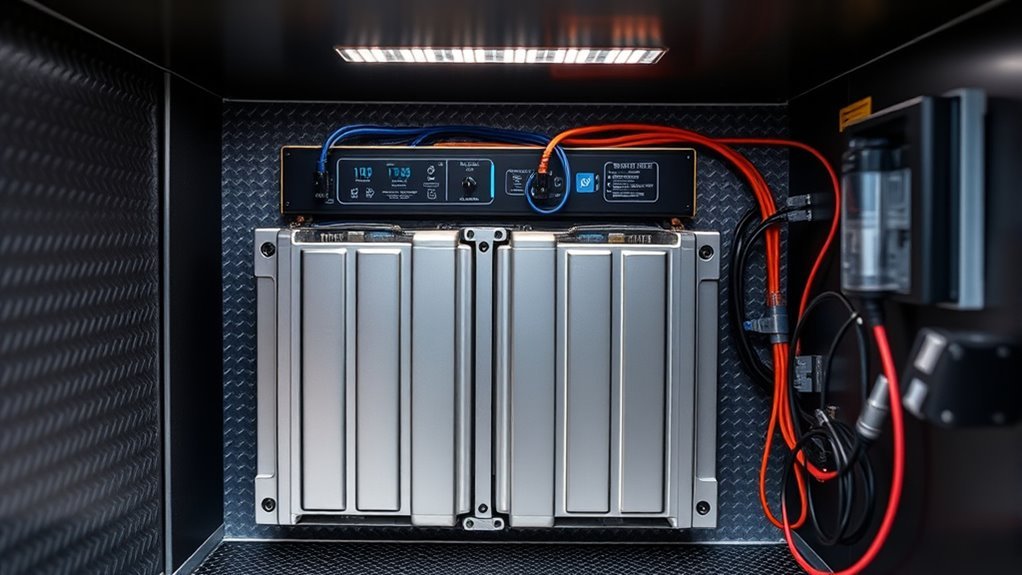
Although lithium batteries have become increasingly popular among RV owners, understanding their fundamental operation is essential for making informed decisions. Lithium batteries operate based on advanced battery chemistry, typically lithium iron phosphate (LiFePO4), which offers high energy density and thermal stability. This chemistry enables efficient charge and discharge cycles, with minimal degradation over time. Proper charging protocols are critical; they involve precise voltage and current management to optimize lifespan and safety. Unlike lead-acid batteries, lithium cells require specific charging profiles—often involving a constant current/constant voltage (CC/CV) approach—that prevent overcharging and thermal runaway. By grasping these core principles—battery chemistry and charging protocols—we better understand how lithium batteries perform reliably in RV applications, ensuring safe and long-lasting power storage.
Why Choose Lithium Batteries Over Traditional Lead-Acid?
Lithium batteries offer significant advantages over traditional lead-acid counterparts, primarily due to their higher energy density and longer cycle life. The distinct battery chemistry of lithium-ion cells enables a much greater energy density, meaning they store more energy in a smaller, lighter package. This results in increased usable capacity and reduced weight, critical factors for RV applications. Additionally, lithium batteries typically deliver deeper discharge cycles without compromising longevity, offering a longer cycle life compared to lead-acid options. The superior energy density allows for more efficient space utilization, while the stable chemistry ensures consistent performance over time. These technical benefits enhance reliability, efficiency, and overall system longevity, making lithium batteries a more advanced and sustainable choice for RV owners seeking peak power storage solutions.
How to Select the Right Lithium Battery Capacity for Your RV
To select the appropriate lithium battery capacity, we first need to accurately assess our RV’s power consumption patterns and daily energy requirements. We should also consider the battery’s cycle life and how its longevity aligns with our usage expectations, alongside our budget constraints. Balancing these factors allows us to optimize our system for reliability and cost-effectiveness.
Assess Power Needs
Understanding your RV’s power consumption is essential before selecting the appropriate lithium battery capacity. We analyze your typical daily energy use, considering appliances, lighting, and hidden loads, to accurately determine capacity needs. This assessment guarantees ideal performance while supporting renewable energy integration, such as solar panels, which can supplement battery charging. Additionally, evaluating your power demands helps maximize battery recycling efforts by choosing systems designed for longevity and efficiency. A precise understanding of energy consumption also minimizes waste, reducing the environmental impact of your RV’s power system. By tailoring capacity to your specific needs, you ensure reliable operation, facilitate efficient renewable energy use, and support sustainability goals through smarter battery management and recycling practices.
Consider Battery Longevity
Given the critical importance of battery longevity in ensuring cost-effective and reliable RV power systems, selecting the appropriate lithium battery capacity requires careful consideration of cycle life, depth of discharge, and overall durability. A higher cycle life extends the battery’s useful life, reducing replacement frequency and associated costs. Depth of discharge influences capacity utilization; deeper discharges can shorten lifespan if not managed properly. Durability encompasses the battery’s ability to withstand thermal and electrical stresses over time. Additionally, longevity impacts environmental considerations, as longer-lasting batteries decrease the frequency of battery recycling and minimize waste, lowering the environmental impact. Selecting a capacity aligned with these factors ensures reliable power, reduces lifecycle costs, and supports sustainable practices in RV energy management.
Match Budget Constraints
Balancing budget constraints with technical requirements is essential when selecting the appropriate lithium battery capacity for your RV. To optimize investments, consider these factors:
- Initial Cost vs. Long-Term Savings: Larger capacities support solar panel integration, reducing reliance on grid power, but entail higher upfront costs. Assess your energy needs versus budget limits.
- Efficiency and Usage Patterns: Smaller batteries may suffice for short trips, whereas extended stays demand higher capacity. Accurate load calculations help prevent overspending.
- Sustainability and Recycling: Opting for batteries with established recycling programs can offset future disposal costs, aligning with eco-conscious budgeting. Recycling incentives may further reduce overall expenses.
Prioritizing these aspects ensures a balanced approach to capacity selection, maximizing value without compromising functionality.
What to Consider When Installing Lithium Batteries in Your RV
When installing lithium batteries in an RV, we must guarantee compatibility with existing electrical systems to prevent operational issues. Proper ventilation is essential to mitigate heat buildup and maintain safe operating conditions. Additionally, implementing appropriate safety measures during installation minimizes risks associated with electrical faults or thermal events.
Compatibility With RV Systems
How do lithium batteries integrate with existing RV electrical systems? Proper integration requires assessing compatibility with your voltage system, charger, and inverter to ensure safe operation. Key considerations include:
- Voltage Compatibility: Confirm the battery’s voltage aligns with your RV’s system to prevent overloads or underperformance.
- Charger & BMS Compatibility: Ensure your charger and Battery Management System (BMS) support lithium chemistry, optimizing performance and safety.
- Environmental Impact & Recycling: Lithium batteries have a significant environmental impact, but proper battery recycling minimizes waste and promotes sustainable use. Compatibility also involves verifying your system can handle the battery’s operational requirements without compromising environmental responsibilities. Failing to consider these points may lead to system inefficiencies or safety hazards, emphasizing the importance of technical precision when upgrading to lithium storage.
Proper Ventilation Needs
Installing lithium batteries in your RV requires careful attention to ventilation, as these batteries can generate heat and potentially release gases during operation or if malfunctioning. Proper ventilation is essential to dissipate heat effectively, reducing the risk of thermal buildup that can compromise battery performance or safety. Battery insulation plays a role in managing temperature extremes but does not eliminate the need for adequate airflow. Ventilation importance becomes evident in preventing gas accumulation, particularly in enclosed compartments, where it could lead to hazardous conditions. Ensuring continuous airflow around the battery bank minimizes heat retention and helps maintain stable operating temperatures. Ultimately, proper ventilation design safeguards both the longevity of the batteries and the safety of your RV environment.
Installation Safety Measures
Ensuring safety during the installation of lithium batteries in your RV requires meticulous attention to detail and adherence to best practices. First, proper placement is critical; batteries should be installed in a well-ventilated, secure compartment to prevent overheating and minimize fire risk. Second, electrical connections must be carefully checked, ensuring correct polarity and secure terminals to avoid short circuits. Third, consider environmental impact and plan for battery recycling; responsible disposal reduces pollution and adheres to safety standards. Additionally, installing fire suppression systems and monitoring devices enhances safety. Proper installation not only protects your RV and its occupants but also supports eco-friendly practices by facilitating responsible battery recycling, ultimately reducing environmental impact.
How to Install Your Lithium Battery System Safely and Effectively
Have you considered the importance of proper safety protocols when setting up a lithium battery system for your RV? Guaranteeing safe installation minimizes risks such as thermal runaway and electrical faults. Use appropriate fusing, proper wiring, and secure mounting to optimize safety and efficiency. A well-installed system also influences environmental impact, especially regarding battery recycling; correct handling prevents hazardous leaks and facilitates recycling. Consider this table to visualize safety components:
| Component | Purpose | Critical Aspect |
|---|---|---|
| Battery Management System | Prevents overcharging/discharging | Protects battery lifespan |
| Proper Ventilation | Dissipates heat | Reduces thermal risk |
| Fusing & Circuit Breakers | Protect against shorts | Ensures electrical safety |
| Secure Mounting | Prevents movement | Maintains structural integrity |
Adhering to these guidelines ensures effective operation and minimizes environmental footprint.
Tips for Maintaining and Extending Your Lithium Battery Life
Proper maintenance is essential to maximize the lifespan and performance of your lithium battery. To achieve this, consider these key practices:
Maintaining your lithium battery enhances longevity, performance, and environmental sustainability through proper care and responsible recycling.
- Regularly monitor voltage and temperature to prevent over-discharge or overheating, which accelerates capacity loss.
- Implement a balanced charging protocol and avoid deep discharges, prolonging battery health and reducing environmental impact.
- Practice responsible battery recycling at end-of-life, minimizing hazardous waste and supporting environmental sustainability.
Consistent maintenance minimizes degradation, guarantees ideal efficiency, and reduces the need for frequent replacements. Additionally, environmentally conscious recycling reduces landfill burden and promotes sustainable resource reuse. By adhering to these steps, RV owners can extend lithium battery longevity, enhance performance, and lessen ecological impact, aligning technical efficiency with ecological responsibility.
How to Safely Charge and Manage Lithium Batteries on the Road
Managing lithium batteries safely while on the road requires careful attention to charging practices and monitoring conditions. Proper charging involves maintaining voltage and current within manufacturer specifications to prevent thermal runaway and capacity loss. Regular monitoring of temperature and state of charge ensures peak performance and longevity. It’s also essential to plan for battery recycling, as lithium batteries contain materials that pose environmental risks if improperly disposed of. Responsible management minimizes environmental impact by reducing waste and promoting sustainable recycling practices. Additionally, adhering to recommended charging cycles helps preserve battery health and prevents overuse, which could lead to hazardous failures. By integrating these technical strategies, RV owners can maximize battery safety, performance, and environmental responsibility during their journeys.
Top Lithium Battery Brands and Models for RVs
When selecting lithium batteries for RV applications, identifying reputable brands and models is essential to ensuring safety, reliability, and performance. Leading brands prioritize advanced battery chemistry and optimized power storage, vital for RV use. Consider these top options:
- Battle Born – Known for lithium iron phosphate (LiFePO4) chemistry, offering stability, longevity, and efficient power storage suitable for demanding RV needs.
- Victron Energy – Provides high-quality lithium batteries with integrated BMS systems, ensuring safe operation and consistent power delivery.
- Relion – Offers cost-effective lithium iron phosphate options, combining reliable battery chemistry with robust power storage capacity for extended RV use.
These brands emphasize technical performance, making them ideal choices for those seeking durable, high-quality lithium battery solutions.
Troubleshooting Common Lithium Battery Problems in RVs
Despite their advantages, lithium batteries in RVs can encounter issues that compromise performance and safety. Common problems include capacity loss, abnormal voltage fluctuations, and reduced cycle life, often caused by improper charging or temperature extremes. Troubleshooting requires checking connections, verifying charger compatibility, and monitoring voltage levels with precision instruments. Addressing these issues promptly not only restores efficiency but also minimizes environmental impact, as improper disposal can hinder battery recycling efforts. Lithium batteries contain materials that demand careful handling at end-of-life to prevent environmental contamination. Ensuring proper maintenance and understanding failure modes helps prolong battery life and supports responsible disposal, reducing ecological footprint. Consequently, systematic troubleshooting and environmentally conscious practices are essential for sustainable RV lithium battery management.
Is Upgrading to Lithium Batteries Worth It for Your RV?
Upgrading to lithium batteries can considerably enhance an RV’s energy management system, but whether it’s worth the investment depends on several technical and practical considerations. First, lithium batteries offer higher energy density and longer cycle life, reducing replacement frequency. Second, their efficiency minimizes energy loss, optimizing power use during off-grid adventures. Third, environmental impact plays a vital role; lithium batteries are recyclable, but responsible battery recycling is essential to mitigate ecological concerns. Cost remains a factor, as initial investment is higher than lead-acid options. Evaluating these benefits against environmental considerations helps determine if the upgrade aligns with your sustainability goals. Overall, the decision hinges on balancing the technical advantages with responsible battery recycling practices and environmental impact.
Frequently Asked Questions
What Are the Environmental Impacts of Using Lithium Batteries in RVS?
Environmental concerns with lithium batteries include resource extraction and battery disposal challenges, which can lead to soil and water contamination. We analyze these impacts to promote responsible recycling and sustainable practices in RV battery use, minimizing ecological footprint.
How Do Lithium Batteries Perform in Cold Weather Conditions?
In cold weather, lithium batteries often retain better efficiency than traditional options, yet performance can still decline markedly below freezing. We monitor temperature effects closely, recognizing that cold impacts battery chemistry and overall power delivery in critical ways.
Can Lithium Batteries Be Recycled or Disposed of Safely?
We can recycle lithium batteries through specialized procedures that recover valuable materials safely, ensuring proper disposal. Following recycling procedures is essential for environmental safety, and adhering to disposal safety standards prevents hazards associated with improper lithium battery disposal.
Are There Any Warranties or Guarantees for RV Lithium Battery Systems?
Back in the day, warranties for RV lithium battery systems usually cover performance guarantees and defect repairs. We find that all-encompassing warranty coverage offers peace of mind, ensuring reliable performance and support throughout the battery’s lifespan.
How Does Battery Management Impact Long-Term Performance?
Effective management strategies optimize battery lifespan by preventing overcharging and deep discharges, reducing degradation. Proper battery management guarantees long-term performance, maintaining capacity and reliability, which is vital for sustained RV energy needs and system longevity.
Conclusion
In summary, upgrading to lithium batteries is like switching from a bicycle to a sports car—our RV’s power system becomes more efficient, reliable, and capable. By understanding their chemistry, choosing the right capacity, and following proper installation and management protocols, we guarantee safety and longevity. While initial costs are higher, the long-term performance benefits make lithium batteries a smart investment—transforming our RV adventures into more dependable, high-performance journeys.