As professionals in marine energy storage, we recognize that lithium batteries offer substantial technical advantages over traditional lead-acid systems, including higher energy density, faster charging, and extended lifespan. These attributes can markedly improve vessel performance and operational safety. However, integrating lithium technology involves complex considerations such as system design, safety protocols, and cost implications. Understanding these factors is essential for making informed decisions, especially as innovations continue to shape the future of marine power solutions.
Key Takeaways
- Lithium batteries offer higher energy density, longer lifespan, and faster charging for marine power needs.
- Proper BMS management and secure installation ensure safety and optimal performance on boats.
- They provide environmental benefits through recyclability and reduced hazardous materials compared to traditional batteries.
- Compatibility with existing systems and handling deep discharge cycles are crucial factors in selection.
- Leading brands develop eco-friendly, high-performance models with future advancements focusing on safety and sustainability.
Why Switch to Lithium Batteries for Your Boat?
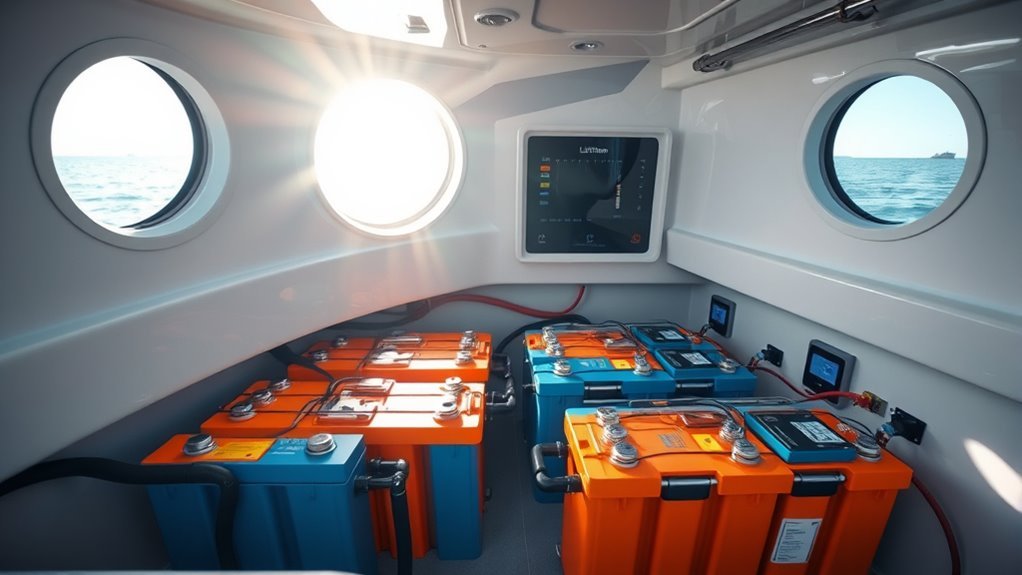
Although traditional lead-acid batteries have served boaters for decades, lithium batteries now present a compelling upgrade due to their superior energy density, longer lifespan, and faster recharge capabilities. Lithium batteries offer higher efficiency, reducing overall power consumption and minimizing charging times. They also have a markedly longer cycle life, lowering replacement frequency and maintenance costs. From an environmental perspective, lithium batteries are more sustainable when paired with responsible battery recycling practices, reducing the environmental impact associated with disposal. Unlike lead-acid alternatives, lithium batteries contain fewer hazardous materials, making recycling safer and more effective. This combination of technical advantages and environmental benefits makes lithium batteries an increasingly attractive choice for modern marine power systems.
How Do Lithium Battery Storage Systems Work on Boats?
Lithium battery storage systems on boats operate through a sophisticated management framework that optimizes performance, safety, and longevity. Central to this is understanding battery chemistry, which involves lithium-ion cells that provide high energy density and rapid charge acceptance. The system employs advanced Battery Management Systems (BMS) to monitor voltage, current, and temperature, ensuring safe operation. Charging protocols are precisely controlled to prevent overcharging or deep discharging, extending battery lifespan. The BMS manages these protocols by regulating current flow, balancing cell voltage, and implementing safety cut-offs when necessary. This integration of battery chemistry and intelligent charging protocols allows for efficient energy storage and retrieval, ensuring reliable power for onboard systems while maintaining the safety standards essential for marine environments.
What Factors Should You Consider When Choosing Lithium Batteries?
When selecting lithium batteries for marine applications, it’s essential to evaluate a range of technical factors to guarantee compatibility, safety, and peak performance. Key considerations include the battery’s chemistry and capacity, ensuring it aligns with your boat’s power demands. Proper charging protocols are critical; lithium batteries require specific charging voltages and current limits to optimize lifespan and prevent damage. Additionally, considering the battery’s lifecycle and ease of battery recycling is vital for sustainable operation. High-quality batteries with built-in safety features reduce risks associated with thermal runaway. Compatibility with existing power systems and the ability to handle deep discharge cycles are also indispensable. By meticulously assessing these factors, boat owners can select lithium batteries that deliver reliable, efficient, and environmentally responsible energy storage.
How Do Lithium Batteries Compare to Traditional Marine Power Systems?
Traditional marine power systems typically rely on lead-acid batteries, which have been the standard for decades due to their proven reliability and lower upfront costs. However, lithium batteries offer markedly higher energy density, faster charging, and longer cycle life, making them more efficient overall. Lithium batteries also reduce the environmental impact through improved energy efficiency and potential for battery recycling, although their production involves more complex processes.
| Feature | Lead-Acid Batteries | Lithium Batteries |
|---|---|---|
| Energy Density | Lower | Higher |
| Charging Speed | Slower | Faster |
| Environmental Impact | Moderate (recycling) | Lower (recycling potential) |
| Cycle Life | Shorter | Longer |
| Cost (initial) | Lower | Higher |
How to Install and Maintain Lithium Batteries on Your Boat
Installing and maintaining lithium batteries on your boat requires careful planning and adherence to specific procedures to guarantee safety, peak performance, and longevity. Proper installation involves secure mounting, correct wiring, and the use of compatible BMS (Battery Management Systems) to prevent overcharging and thermal runaway. Regular maintenance includes monitoring voltage, ensuring connections are tight, and inspecting for corrosion. When replacing batteries, prioritize environmentally responsible practices like battery recycling to minimize environmental impact. Proper disposal prevents hazardous materials from contaminating ecosystems and supports sustainable practices. Additionally, maintaining ideal operating conditions and avoiding deep discharges extend battery life, reducing replacement frequency. By following these detailed procedures, boat owners can ensure their lithium batteries operate efficiently while reducing environmental impact and supporting responsible battery recycling efforts.
What Are the Safety Tips for Using Lithium Batteries on Watercraft?
Although lithium batteries offer significant advantages for watercraft, their use demands strict adherence to safety protocols to prevent accidents and damage, especially given their high energy density and sensitivity to misuse. Key safety tips include maintaining proper ventilation to mitigate the risk of fire hazards caused by thermal runaway. Ensuring that batteries are installed in well-ventilated compartments reduces the buildup of flammable gases. Regular inspection for damage or swelling is essential, as compromised cells can ignite. Use certified protective gear and fire suppression systems designed for lithium fires. Here’s a clear overview:
| Safety Aspect | Implementation |
|---|---|
| Fire hazards | Use fire-resistant enclosures, extinguishers |
| Proper ventilation | Install ventilation fans or vents during setup |
| Battery inspection | Conduct regular visual and electrical checks |
| Damage prevention | Handle with care, avoid mechanical impacts |
Are Lithium Batteries Cost-Effective for Marine Use?
We need to evaluate whether the higher initial cost of lithium batteries is justified by their extended lifespan and lower maintenance requirements compared to traditional lead-acid options. Over time, reduced replacement frequency and operational efficiency can influence overall cost-effectiveness. Analyzing these factors helps determine if lithium technology offers a tangible economic advantage for marine applications.
Initial Investment Versus Longevity
While lithium batteries typically have a higher upfront cost compared to traditional lead-acid or AGM options, their extended lifespan and superior performance often justify the initial investment for marine applications. Lithium chemistries offer cycle lives of 2000-5000 cycles, markedly outlasting lead-based batteries, which reduces replacement frequency and total cost of ownership over time. This longevity also mitigates environmental impact, as fewer batteries need disposal, and advances in battery recycling technologies help recover valuable materials, lessening ecological footprints. The higher initial expense may be offset by reduced maintenance, lower weight, and increased efficiency. Ultimately, when considering lifecycle costs, environmental considerations, and recycling prospects, lithium batteries can be a cost-effective, sustainable choice for marine power systems.
Maintenance and Replacement Costs
Lithium batteries generally require less maintenance and have lower replacement costs compared to traditional lead-acid or AGM batteries, making them a potentially more economical choice for marine applications over time. Their longer cycle life reduces the frequency of replacements, which cuts down on labor and material expenses. However, when replacement is necessary, proper battery recycling becomes critical to mitigate environmental impact, as lithium-ion cells contain hazardous materials. While initial costs are higher, the durability and reduced maintenance needs translate to cost savings over the battery’s lifespan. Additionally, advancements in recycling technologies are improving the environmental footprint of lithium batteries, making them a more sustainable option for boat owners seeking both performance and ecological responsibility.
Top Brands and Models of Lithium Batteries for Marine Applications
Are you aware of the leading brands shaping the marine lithium battery market with reliable, high-performance models? Top brands like Victron Energy, Battle Born, and LG Chem offer models with advanced cell chemistry, optimized for marine environments. These batteries feature high energy density, fast charging, and robust thermal management, minimizing environmental impact through improved safety and longevity. Importantly, manufacturers prioritize battery recycling, reducing waste and environmental footprint. For example, Victron’s models incorporate recyclable materials, ensuring eco-friendly end-of-life disposal. Below is a comparison of key models:
| Brand | Model | Capacity | Features |
|---|---|---|---|
| Victron | AGM12/200 | 200Ah | High cycle life, fast charging |
| Battle Born | BB10012 | 100Ah | Deep cycle, lightweight |
| LG Chem | RESU10H | 9.8kWh | Compact, high energy density |
| Renogy | RL12-1000D | 100Ah | Durable, suitable for marine use |
What Are the Future Trends in Lithium Battery Technology for Boats?
Advancements in lithium battery technology are rapidly shaping the future of marine energy storage, driven by the need for higher efficiency, safety, and environmental sustainability. Emerging trends focus on improving battery chemistry to enhance cycle life and energy density, facilitating longer voyages and reduced weight. Battery recycling is gaining prominence, aiming to minimize environmental impact by recovering valuable materials and reducing waste. Innovations in solid-state electrolytes promise safer, more stable batteries with lower risk of thermal runaway. Additionally, researchers are developing eco-friendly manufacturing processes and biodegradable components to further lessen environmental footprints. These technological developments collectively aim to optimize performance while addressing sustainability concerns, ensuring that lithium batteries for boats become cleaner, safer, and more efficient, aligning with global efforts to reduce ecological impact.
Frequently Asked Questions
How Long Do Lithium Boat Batteries Typically Last Before Replacement?
Typically, lithium boat batteries last 8 to 15 years with proper battery maintenance and lifespan optimization, including regular cycling and avoiding deep discharges, which helps maximize their longevity and guarantees reliable performance over their extensive service life.
Can Lithium Batteries Be Safely Used in Saltwater Environments?
We confirm lithium batteries can be safely used in saltwater environments due to their corrosion resistance and saltwater compatibility. Proper sealing, corrosion-resistant terminals, and protective coatings guarantee durability and operational safety in harsh maritime conditions.
What Are the Environmental Impacts of Disposing of Marine Lithium Batteries?
Disposing of marine lithium batteries impacts the environment due to toxic materials; however, battery recycling mitigates these risks by safely recovering valuable components, preventing soil and water contamination, and reducing the need for raw material extraction.
Are There Specific Regulations for Using Lithium Batteries on Boats?
Surprisingly, regulations exist for lithium batteries on boats, requiring strict adherence to battery certifications and safety standards. These rules guarantee safe operation, preventing hazards caused by non-compliance, even though some might think boat use is unregulated or risky.
How Does Temperature Affect Lithium Battery Performance on Watercraft?
Temperature impacts lithium battery performance considerably; thermal regulation maintains ideal function, while temperature monitoring helps prevent overheating or freezing, ensuring safety and efficiency on watercraft, especially in fluctuating marine environments where temperature extremes are common.
Conclusion
As we navigate the future of marine energy, lithium batteries shine as the guiding star—powerful, reliable, and eco-friendly. Their advanced tech and longevity transform how we experience boating, turning the open water into a domain of efficiency and safety. Embracing these innovations isn’t just a choice; it’s a leap toward sustainable exploration. With each charge, we’re charting a course toward a cleaner, smarter, and more resilient maritime horizon.