We recognize the significance of safety, compliance, and efficiency in lithium battery storage and transport. Proper handling, packaging, and adherence to regulations are essential to prevent hazards such as fires, leaks, and short circuits. Ensuring these protocols are followed protects personnel, the environment, and assets. To effectively manage these risks, it’s essential to grasp the best practices and standards that govern lithium battery storage and transit—details that are critical for safe operations and regulatory compliance.
Key Takeaways
- Follow UN 3480/3481 packaging standards with proper labeling and cushioning for safe transport.
- Store batteries at 40–60% capacity in cool, dry, well-ventilated areas to prevent damage.
- Limit state of charge during shipping and avoid exposure to extreme temperatures.
- Insulate damaged batteries in non-conductive, fire-resistant containers and handle with protective gear.
- Ensure personnel are trained in handling protocols and emergency response procedures.
How to Safely Store and Transport Lithium Batteries
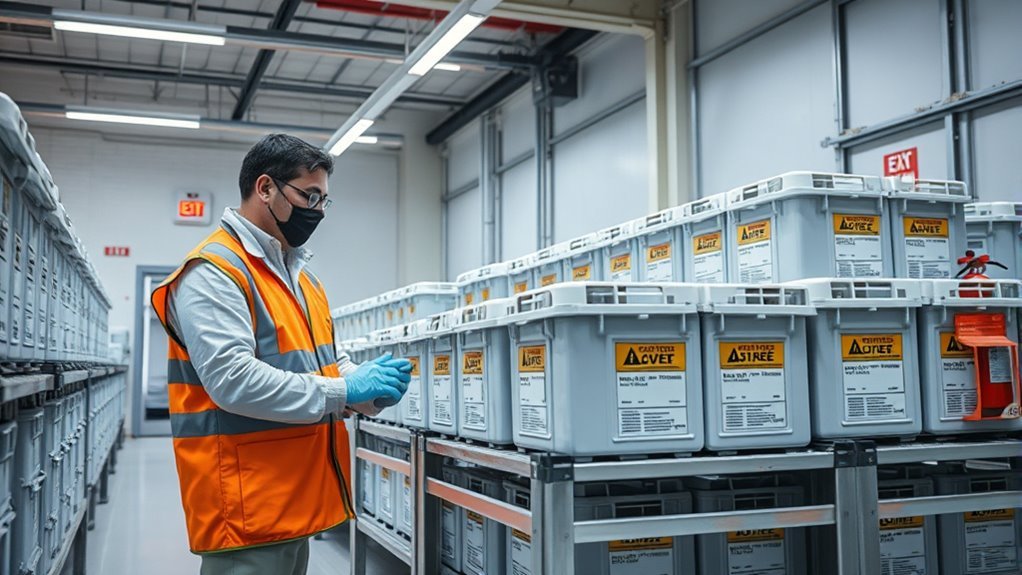
To guarantee safety when storing and transporting lithium batteries, it is essential to follow strict handling protocols that minimize the risk of fire, leakage, or damage. Proper packaging using non-conductive materials and secure containment prevents accidental short circuits. Adherence to environmental regulations ensures proper disposal and facilitates battery recycling, reducing environmental impact. We must also evaluate the state of batteries before transit, removing damaged or swollen units to prevent hazardous failures. Transportation regulations specify voltage limits and labeling requirements, ensuring safe handling during transit. Implementing these protocols aligns with environmental standards and promotes responsible battery recycling practices. Strict compliance minimizes safety hazards and environmental risks, safeguarding personnel and ecosystems while supporting sustainable disposal and reuse processes.
The Basic Chemistry and Storage Needs of Lithium Batteries
Lithium-ion batteries consist of an anode, cathode, electrolyte, and separator, each contributing to their overall function. The chemical reactions between lithium ions and electrode materials enable energy storage and release, requiring careful control of reaction mechanics. To maintain ideal performance and safety, understanding the specific environmental conditions necessary for storing these components is essential.
Lithium-Ion Battery Components
Understanding the fundamental components of lithium-ion batteries requires examining their core chemistry and design elements. Central to their function are the electrode materials, which include the cathode and anode, typically composed of lithium metal oxides and carbon-based compounds, respectively. These materials facilitate lithium-ion movement during charge and discharge cycles. The battery casing provides structural integrity, safeguards internal components, and guarantees safety during operation. It is usually constructed from durable, lightweight materials like aluminum or plastic, designed to withstand mechanical stress and prevent leakage. Precise engineering of electrode materials and the casing is crucial for peak performance, safety, and longevity. Together, these components form the backbone of lithium-ion battery functionality, enabling reliable energy storage and transfer.
Chemical Reaction Mechanics
The core operation of lithium batteries hinges on electrochemical reactions involving lithium ions and electrons. During discharge, electrochemical processes facilitate ion transfer from the anode to the cathode through an electrolyte, generating an electric current. This movement of ions is vital for energy flow, as electrons travel externally through the circuit. The chemistry involves lithium atoms losing electrons to form lithium ions, which migrate across the electrolyte. Conversely, during charging, this process reverses: lithium ions move back to the anode, and electrons flow in the opposite direction. Maintaining stable chemical reactions requires careful control of the battery’s internal environment. Understanding these reaction mechanics is essential for optimizing storage, ensuring safety, and preventing degradation caused by unwanted side reactions.
Storage Environment Requirements
Because lithium batteries rely on delicate electrochemical balances, maintaining an appropriate storage environment is essential for preserving their stability and performance. Proper conditions minimize capacity loss and extend battery lifespan, guaranteeing ideal functionality over time. Temperature control is critical; storage should be kept between 0°C and 25°C to prevent thermal degradation. Humidity levels must be low, ideally below 60%, to reduce the risk of corrosion and electrolyte deterioration. Additionally, batteries should be stored in a cool, dry, and well-ventilated area, away from direct sunlight and sources of heat. This approach not only preserves battery integrity but also reduces potential environmental impact by preventing leaks and chemical degradation. Adhering to these requirements ensures safety, longevity, and minimizes ecological risks associated with improper storage.
What Are the Shipping Rules for Lithium Batteries?
Shipping lithium batteries requires strict adherence to specific regulations designed to guarantee safety and compliance. These rules minimize risks during transport, prevent accidents, and promote responsible battery recycling to reduce environmental impact. Regulations specify packaging standards, labeling, and documentation, ensuring batteries are safe to handle and ship. Non-compliance can lead to legal penalties and environmental hazards.
| Safe Shipping Practices | Environmental Responsibility |
|---|---|
| Proper packaging & labeling | Minimizing battery waste |
| Compliance with UN 3480/3481 | Promoting battery recycling |
| Limited state of charge | Reducing environmental impact |
| Documentation & training | Sustainable battery management |
How to Pack Lithium Batteries for Safe Transport
To assure lithium batteries are transported safely, we must carefully select appropriate packaging that prevents short circuits, leakage, and physical damage. Packaging should include non-conductive materials, such as insulated compartments or wrapping, to avoid accidental contact that could cause sparks or fires. Secure batteries individually to prevent movement within the container, reducing the risk of damage. Proper labeling indicating the battery type and handling instructions is essential. Additionally, packaging must consider environmental impact by minimizing waste and supporting battery recycling efforts. Using recyclable materials and adhering to regulations helps reduce ecological footprint. Careful packing not only ensures safety during transit but also promotes responsible disposal and sustainable battery recycling, ultimately reducing adverse environmental effects associated with battery transportation.
Best Practices for Storing Lithium Batteries at Home and in Warehouses
Effective storage of lithium batteries requires strict adherence to proper conditions, including controlled temperature and humidity levels. Safe handling procedures minimize risks during handling and prevent damage that could lead to thermal runaway. Regular inspections guarantee early detection of potential issues, maintaining safety and battery longevity.
Proper Storage Conditions
Proper storage conditions are essential for maintaining lithium battery safety and performance over time. We recommend storing batteries in a cool, dry environment with temperatures between 20°C and 25°C to prevent capacity loss and thermal hazards. Batteries should be stored at approximately 40-60% of their capacity to minimize degradation. Avoid exposure to direct sunlight or high humidity, which can accelerate deterioration and increase environmental impact if leaks occur. Proper labeling and segregation prevent accidental damage and facilitate battery recycling when disposal becomes necessary. Maintaining ideal storage conditions also supports sustainability efforts by reducing the likelihood of leaks or fires, which can have significant environmental consequences. Ensuring these conditions helps prolong battery lifespan and minimizes ecological footprint through safer disposal and recycling practices.
Safe Handling Procedures
Handling lithium batteries safely requires adherence to specific procedures that minimize risk during storage both at home and in warehouses. Proper handling reduces the likelihood of thermal runaway, leaks, and potential fires, while also supporting responsible battery recycling to mitigate environmental impact.
Key best practices include:
- Store batteries in a cool, dry environment, away from flammable materials.
- Use fireproof containers and ensure proper labeling for easy identification.
- Educate personnel on handling protocols to prevent punctures, short circuits, and improper disposal.
Implementing these safety measures guarantees the integrity of the batteries, promotes safe storage, and aligns with environmental standards by encouraging responsible battery recycling, thereby reducing ecological footprint.
Regular Inspection Schedule
Regular inspection of lithium batteries is vital to guarantee safety and peak performance during storage. We recommend establishing a routine schedule to monitor battery condition, checking for signs of swelling, corrosion, or leakage, which could compromise safety. Consistent inspections help extend the battery lifespan by identifying potential issues early, preventing failures that may lead to environmental hazards or fire risks. Proper storage practices also facilitate effective battery recycling by maintaining batteries in their best condition when they reach end-of-life. Maintaining detailed records of inspections supports lifecycle management and ensures compliance with safety regulations. Ultimately, a disciplined inspection schedule minimizes risks, maximizes battery durability, and promotes responsible disposal through appropriate recycling channels.
How to Recognize and Prevent Common Lithium Battery Hazards
Understanding the common hazards associated with lithium batteries is essential for ensuring safety during storage and transport. These hazards include thermal runaway, internal short circuits, and chemical leaks, which can lead to fires or explosions if unrecognized. To prevent incidents, proper hazard labeling is vital, clearly indicating battery type and potential risks. Regular inspection helps identify damage or swelling that could compromise safety. Additionally, proper procedures for battery recycling minimize environmental risks and reduce the chance of accidental hazards. Handling damaged or defective batteries with caution and avoiding exposure to high temperatures further mitigates danger. Recognizing these hazards allows us to implement effective safety measures, ensuring safe handling, transport, and disposal of lithium batteries.
Choosing the Right Containers and Materials for Lithium Battery Transport
Selecting appropriate containers and materials is essential for guaranteeing the safe transport of lithium batteries, as improper choices can lead to damage, short circuits, or thermal events. Container materials must be non-conductive, durable, and resistant to environmental factors. Effective packaging techniques involve cushioning, segregation of cells, and secure sealing to prevent movement and accidental contact. The table below highlights key considerations:
| Aspect | Material Choice | Packaging Technique |
|---|---|---|
| Container materials | Polyethylene, cardboard, composite | Foam inserts, shrink wrapping |
| Insulation | Non-conductive, flame-resistant | Padding, barrier layers |
| Structural integrity | Impact-resistant, sturdy | Securing batteries within containers |
Proper selection guarantees compliance with safety standards and mitigates risks during transit.
How to Handle Damaged or Faulty Lithium Batteries Safely
When handling damaged or faulty lithium batteries, safety must be our top priority to prevent fire, chemical leaks, or personal injury. Proper procedures are critical for hazardous material handling, especially for compromised batteries.
Prioritize safety when handling damaged lithium batteries to prevent fires, leaks, and injuries.
- Isolate the battery in a non-conductive, fire-resistant container to prevent short circuits or thermal runaway.
- Avoid puncturing, crushing, or exposing the battery to extreme temperatures, which can worsen damage.
- Initiate battery recycling protocols promptly to ensure safe disposal and environmental protection.
Always use appropriate protective gear and work in well-ventilated areas. Proper handling minimizes risks and supports compliance with hazardous material regulations, ensuring safe management of damaged batteries.
Tips for Shipping Lithium Batteries by Air, Road, and Sea
Transporting lithium batteries by air, road, and sea requires strict adherence to safety regulations to prevent incidents. Proper packaging with flame-resistant materials and secure insulation minimizes risk during transit. Labeling batteries correctly ensures handlers recognize hazards and follow safety protocols. To reduce environmental impact, shipping companies should prioritize battery recycling options, preventing hazardous waste buildup. Additionally, selecting carriers with eco-friendly practices can mitigate the environmental footprint associated with transportation. Compliance with international standards, such as IATA, ADR, and IMDG codes, is essential for safe shipping. Proper documentation, including safety data sheets and declaration forms, facilitates smooth transit. Overall, meticulous planning and compliance with regulations support safe transportation while promoting sustainable practices through responsible battery disposal and recycling.
What to Do During a Lithium Battery Fire or Leak Emergency
In the event of a lithium battery fire or leak, immediate and deliberate action is vital to minimize hazards and prevent escalation. Rapidly assess the situation, ensuring personal safety and activating emergency response protocols. Use appropriate fire suppression methods specifically designed for lithium battery fires, such as Class D dry powder extinguishers, to contain combustion. Avoid water, as it can exacerbate thermal runaway. Isolate the affected area, prevent the spread of corrosive or toxic materials, and ventilate if possible. Properly document the incident for regulatory compliance and future review. Remember, effective emergency response mitigates damage, reduces health risks, and helps contain environmental contamination. Quick, informed actions are essential to managing lithium battery fire or leak emergencies efficiently.
Frequently Asked Questions
Are There Specific Regulations for Transporting Lithium Batteries Internationally?
Yes, we must guarantee regulation compliance and packaging standards when transporting lithium batteries internationally. These regulations ensure safety, proper handling, and prevent hazards, requiring precise documentation, specialized packaging, and adherence to international guidelines like IATA and IMDG codes.
How Can I Identify if a Lithium Battery Is Damaged Before Transport?
We detect damage signs during battery inspection, like swelling or corrosion, that signal compromised integrity. These visual cues act as warning flags, helping us prevent transport of batteries that could pose safety risks.
What Are the Environmental Considerations for Disposing of Lithium Batteries?
We consider environmental impact by prioritizing battery recycling, ensuring proper disposal to prevent toxic leakage, and adhering to regulations. Responsible disposal minimizes harmful emissions, conserves resources, and supports sustainable practices in lithium battery management.
How Do Temperature Variations Affect Lithium Battery Safety During Transit?
Temperature variations can dangerously compromise lithium battery safety during transit, risking thermal runaway. We emphasize rigorous temperature monitoring and maintaining thermal stability, as even minor fluctuations can escalate into catastrophic failures, jeopardizing both cargo and safety.
What Training Is Required for Personnel Handling Lithium Battery Shipments?
We guarantee personnel handling lithium battery shipments receive thorough training on proper battery packaging and safety protocols, including hazard recognition and emergency procedures, to maintain safety standards and prevent incidents during transit.
Conclusion
By following these guidelines, we guarantee lithium batteries are stored and transported with precision and care, like a delicate symphony of safety measures. Imagine each battery as an essential component in a finely tuned machine—proper packaging, ventilation, and handling prevent hazards and protect lives and the environment. With diligence and adherence to protocols, we safeguard our pathways, ensuring these powerful energy sources serve us safely and efficiently, like a well-orchestrated technical masterpiece.