While lithium batteries often seem straightforward, their high energy density and inherent safety risks mean they demand more careful handling than other power sources. Improper storage can lead to degradation, thermal runaway, or even fire hazards, making it essential to follow specific protocols. Understanding these requirements is vital for safe, effective use—so let’s explore what makes their storage unique and how to do it properly.
Key Takeaways
- Lithium batteries require storage in a cool, dry, and well-ventilated environment to prevent degradation and safety hazards.
- Proper insulation of terminals is essential to avoid accidental short circuits during storage.
- They should be stored at a partial charge (around 30-50%) to maintain battery health over time.
- Using flame-resistant containers enhances safety in case of thermal runaway or damage.
- Regular inspections are necessary to detect swelling, damage, or capacity loss, ensuring safe and effective storage.
What Makes Lithium Batteries Different From Other Batteries?
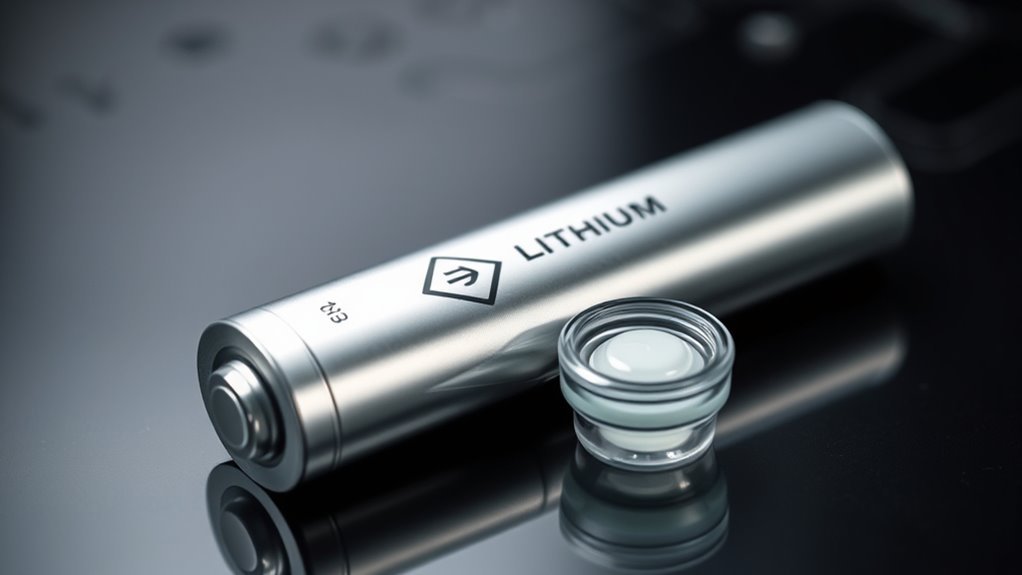
Lithium batteries differ considerably from other types of batteries primarily due to their high energy density and lightweight design. Their unique battery chemistry, based on lithium-ion technology, allows for greater capacity in smaller, lighter packages. This chemistry also influences their charging protocols, requiring precise control to prevent overcharging or overheating, which can lead to thermal runaway. Unlike lead-acid or nickel-based batteries, lithium batteries demand specific charging algorithms that optimize longevity and safety, including constant current/constant voltage (CC/CV) charging. These protocols ensure stable operation and protect the integrity of the battery chemistry. Consequently, understanding these differences is vital for proper storage and handling, as improper management can compromise performance and safety.
What Are the Risks of Improper Lithium Battery Storage?
Improper storage of lithium batteries can lead to serious safety hazards and performance issues. One primary risk is accelerated battery degradation, which reduces capacity and lifespan due to exposure to unsuitable temperatures or mechanical damage. Additionally, improper storage markedly increases fire hazards; lithium batteries are prone to thermal runaway if damaged or improperly stored, risking internal short circuits. Inadequate ventilation or exposure to high heat can trigger spontaneous ignition, posing safety threats to both property and individuals. Moisture exposure can also compromise internal components, leading to corrosion and potential failure. Overall, neglecting proper storage conditions compromises battery integrity, elevates the risk of dangerous malfunctions, and undermines safety protocols. Proper storage is crucial to mitigate these risks and ensure reliable, safe operation.
Best Lithium Battery Storage Practices for Home and Work
Ensuring safe and effective storage of lithium batteries requires adherence to specific practices tailored for both home and workplace environments. Proper storage involves maintaining batteries in a cool, dry, and well-ventilated area, away from flammable materials to mitigate fire safety risks. Regular inspection for damage or swelling is critical, preventing potential thermal runaway. Implementing safety protocols, such as storing batteries in flame-resistant containers, further reduces fire hazards. Additionally, responsible battery recycling is essential; used or damaged batteries must be disposed of following local regulations to prevent environmental contamination and safety risks. By following these best practices—proper environmental controls, vigilant inspection, fire safety measures, and battery recycling—we ensure maximum safety and longevity of lithium batteries in any setting.
How to Store Lithium Batteries for Long-Term or Travel Use
When storing lithium batteries for long-term or travel use, it’s vital to prioritize safety and battery integrity through specific precautions. Maintaining an ideal storage temperature—typically between 32°F and 77°F (0°C to 25°C)—minimizes capacity loss and reduces risk of thermal runaway. Avoid exposing batteries to extreme heat or cold, which can degrade internal components. Proper battery disposal is essential at the end of their lifespan; never discard batteries in regular trash. Instead, follow local regulations for recycling or disposal to prevent environmental hazards. For travel, store batteries in a cool, dry place away from conductive materials, and consider insulating terminals to prevent accidental short circuits. These practices guarantee safety, prolong battery life, and comply with environmental standards.
How to Tell If Your Lithium Batteries Need Replacing in Storage
Over time, lithium batteries in storage can degrade, even if they haven’t been used recently. Signs of deterioration include reduced capacity, increased self-discharge, or swelling. To assess if replacement is needed, check the battery’s voltage and overall appearance. A significant voltage drop indicates capacity loss, while swelling suggests internal damage.
| Indicator | Action |
|---|---|
| Voltage below recommended | Consider replacing or recycling the battery |
| Visible swelling or damage | Discard and replace; avoid reusing damaged batteries |
| Excessive self-discharge | Replace to prevent potential failure during use |
| Unsuitable storage containers | Use proper storage container types to minimize degradation |
Proper storage, including suitable container types, can extend battery life and facilitate effective battery recycling when necessary.
Frequently Asked Questions
Can Lithium Batteries Be Stored With Other Types of Batteries?
We advise against storing lithium batteries with other types due to safety risks. Always follow proper battery disposal and charging precautions, ensuring separation to prevent potential short circuits, fires, or damage from incompatible chemical reactions.
Is It Safe to Store Lithium Batteries in a Refrigerator?
Storing lithium batteries in a refrigerator isn’t recommended due to temperature fluctuations and condensation risks. For refrigerator safety, keep batteries in their designated battery compartment, avoiding extreme cold to prevent internal damage and potential hazards.
How Do Temperature Fluctuations Affect Lithium Battery Storage?
Temperature fluctuations compromise thermal stability, accelerating battery degradation and diminishing lifespan. We recommend stable, moderate temperatures for storage, as consistent conditions maintain ideal performance and prevent damage caused by thermal stress and instability.
What Is the Ideal Storage Temperature for Lithium Batteries?
We recommend storing lithium batteries at a cool, stable temperature around 20°C, like a gentle breeze through a forest. This helps prevent battery degradation and aligns with storage best practices, ensuring longevity and peak performance over time.
Are There Specific Storage Containers Recommended for Lithium Batteries?
We recommend using non-conductive, flame-retardant containers for lithium batteries to guarantee safety and compliance with storage guidelines. Proper containers help prevent short circuits, mitigate fire risks, and uphold battery safety standards effectively.
Conclusion
Proper storage of lithium batteries isn’t just recommended—it’s vital for safety and longevity. While some might think regular storage methods suffice, neglecting specialized practices can lead to thermal runaway or fire hazards. By following established guidelines—like keeping batteries in a cool, dry place and inspecting terminals regularly—we guarantee safe handling and peak performance. Investing time in correct storage isn’t an inconvenience but a key step in preventing accidents and extending your batteries’ lifespan.