Imagine the quiet hum of a boat’s engine, powered smoothly by batteries that optimize space and performance. As we compare marine lithium and AGM batteries, we find critical distinctions in chemistry, longevity, safety, and cost—factors that directly influence your vessel’s reliability and efficiency. Understanding these differences is essential for selecting the right energy source for your needs, but the nuances can be complex, leaving many questions about which option truly offers the best value and performance.
Key Takeaways
- Marine lithium batteries offer higher energy density, longer lifespan, and lighter weight compared to AGM batteries.
- AGM batteries are more affordable upfront and safer, with minimal risk of thermal runaway or leakage.
- Lithium batteries require specialized chargers and management systems, while AGM batteries work with standard lead-acid chargers.
- Lithium batteries provide more consistent power under high loads and resist deep discharges better than AGM batteries.
- AGM batteries are easier to recycle, safer to handle, but have a shorter lifespan and higher environmental impact than lithium options.
What Are Marine Lithium and AGM Batteries?
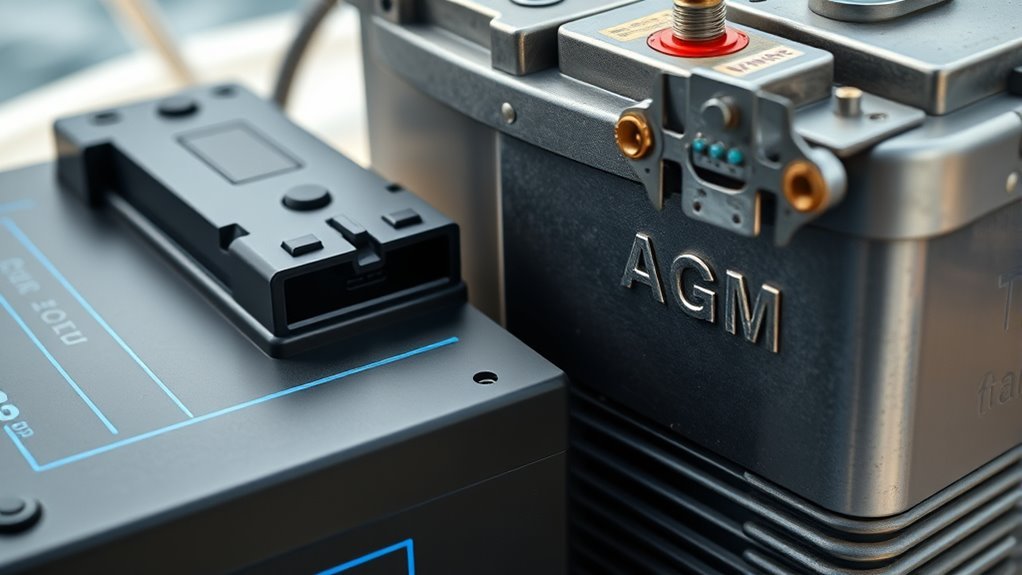
Although both marine lithium and AGM batteries serve as reliable power sources for boats, they differ markedly in their chemical composition and operational characteristics. Marine lithium batteries utilize lithium-ion chemistry, offering high energy density, fast charging, and lightweight design, but require careful management to prevent thermal runaway. AGM batteries, a type of lead-acid, use absorbed glass mat separators to immobilize electrolyte, providing robust performance and low maintenance. From an environmental perspective, battery recycling is essential; lithium batteries pose challenges due to their valuable materials and potential toxicity, while AGM batteries contain lead, necessitating proper disposal to minimize environmental impact. Understanding these distinctions helps in selecting batteries that balance performance with responsible disposal, reducing environmental footprint and promoting sustainable boating practices.
How Do Marine Lithium and AGM Batteries Perform and Last?
To assess performance and longevity, we examine key factors such as capacity and power output, which directly influence operational efficiency. We also consider durability and lifespan under typical marine conditions, alongside charging protocols and maintenance requirements that impact overall reliability. Understanding these technical aspects helps determine which battery type best suits demanding marine applications.
Capacity and Power Output
When comparing marine lithium and AGM batteries, their capacity and power output capacities are fundamental to understanding performance and longevity. Lithium batteries typically offer higher energy density, enabling greater capacity in a smaller footprint, with a rapid discharge rate suitable for high-demand applications. AGM batteries provide stable voltage and reliable power delivery but generally have lower capacity per cell. Key considerations include:
- Marine lithium batteries often deliver 3-4 times the cycle life of AGM, enhancing long-term capacity retention.
- Power output in lithium batteries remains more consistent under high loads, supporting demanding onboard systems.
- Both technologies influence environmental impact: lithium batteries demand responsible battery recycling to mitigate ecological effects, whereas AGM batteries contain lead, increasing disposal concerns.
Understanding these differences is essential for optimizing performance while minimizing environmental footprint.
Longevity and Durability
Marine lithium batteries generally outperform AGM batteries in aspects of longevity and durability due to their advanced chemistry and design. Lithium-ion chemistry allows for more charge-discharge cycles—often exceeding 3,000—compared to AGM’s typical 500-1,000 cycles, reducing replacement frequency. Their robust construction resists vibration, temperature fluctuations, and deep discharges better, ensuring longer service life. However, despite their durability, lithium batteries pose environmental concerns related to battery recycling, as improper disposal can lead to toxic waste. AGM batteries, while less durable, are easier and more established to recycle, impacting their overall environmental footprint. Ultimately, marine lithium batteries offer superior longevity and durability, but their environmental impact must be managed through responsible recycling practices.
Charging and Maintenance Needs
Although both marine lithium and AGM batteries require proper charging and maintenance protocols, their operational needs differ considerably due to underlying chemistry and design. Marine lithium batteries demand a precise, multi-stage charging process to maximize lifespan and avoid capacity loss, while AGM batteries are more tolerant but still benefit from regulated charging to prevent sulfation. Regular maintenance includes monitoring voltage levels, ensuring proper ventilation, and adhering to manufacturer guidelines. Additionally, both types impact the environment—lithium batteries emphasize the importance of battery recycling to mitigate resource depletion, whereas AGM batteries contain lead, requiring careful disposal to reduce environmental impact. Proper handling prolongs battery life and minimizes ecological footprint, emphasizing the importance of understanding these distinct maintenance needs for superior performance.
What Are the Charging and Maintenance Differences?
Charging and maintenance protocols differ markedly between marine lithium batteries and AGM batteries, primarily due to their distinct chemical compositions and design characteristics. Lithium batteries require specialized chargers with advanced voltage and current regulation to prevent overcharging and guarantee longevity. They also benefit from active temperature management during charging cycles. AGM batteries, on the other hand, are more tolerant to standard lead-acid chargers but need careful voltage regulation to avoid damage. Maintenance-wise, AGM batteries require periodic checks for electrolyte levels and terminal cleanliness, whereas lithium batteries are virtually maintenance-free. From an environmental perspective, lithium batteries offer advantages in battery recycling due to more efficient reclaiming of raw materials, therefore reducing environmental impact. Proper charging and maintenance are vital for optimizing performance and minimizing ecological footprint.
Which Battery Offers Better Value and Cost?
Determining which battery offers better value and cost requires an analysis that balances initial purchase price, lifespan, maintenance expenses, and overall performance. Lithium batteries tend to have a higher upfront cost but offer longer cycle life and lower maintenance, reducing long-term expenses. AGM batteries are more affordable initially but may require replacements sooner, increasing total cost over time. When evaluating value, consider the environmental impact and battery recycling options, as lithium batteries generally have a more sustainable lifecycle with better recycling prospects. Conversely, AGM batteries contain lead and other hazardous materials, complicating recycling efforts and increasing environmental footprint.
- Higher initial cost for lithium batteries vs. lower AGM price
- Longer lifespan reduces replacement costs for lithium batteries
- Environmental impact varies, with lithium batteries offering better recycling options
How Do Weight and Space Savings Compare?
When comparing lithium and AGM batteries regarding weight and space, lithium batteries consistently demonstrate significant advantages due to their higher energy density. This results in superior weight comparison and space efficiency, making them ideal for constrained marine environments. Lithium batteries typically weigh 40-50% less than equivalent AGM units, offering notable reductions in vessel weight. Additionally, their compact design allows for more efficient use of limited space onboard. To illustrate:
| Battery Type | Approximate Weight (per kWh) | Space Efficiency |
|---|---|---|
| AGM | 25-30 kg | Moderate |
| Lithium | 15-17 kg | High |
This data highlights how lithium batteries optimize both weight savings and spatial constraints, delivering enhanced performance and vessel design flexibility.
Are Marine Lithium and AGM Batteries Safe?
Safety is a critical consideration when selecting marine batteries, and understanding the distinct risk profiles of lithium and AGM types is essential for informed decision-making. Marine lithium batteries, while generally safe when properly managed, pose thermal runaway risks if damaged or improperly handled, requiring robust protective systems. AGM batteries are inherently safer, with minimal risk of leakage or thermal issues, but they contain lead and acids, impacting environmental sustainability. Both types influence environmental impact through battery recycling challenges; lithium batteries require specialized recycling processes to reduce toxicity, whereas AGM batteries need careful disposal of lead and acid components. Key safety considerations include:
- Thermal management and protective circuitry for lithium batteries
- Proper disposal and recycling protocols to mitigate environmental harm
- Handling procedures to prevent leakage and chemical exposure
Which Battery Is Best for Your Boat’s Needs?
Selecting the most suitable marine battery depends on your boat’s specific power demands, usage patterns, and operational environment. Lithium batteries typically offer higher energy density and faster charging, ideal for extended trips and high-power equipment, whereas AGM batteries excel in deep cycling and resilience in rough conditions. Consider environmental impact and battery recycling programs, as lithium batteries pose recycling challenges but provide longer lifespan, reducing waste. AGM batteries are more straightforward to recycle but may require more frequent replacements, increasing disposal frequency. Your choice should align with your operational needs, environmental considerations, and maintenance capacity.
| Feature | Marine Lithium Battery | AGM Battery |
|---|---|---|
| Energy Density | Higher | Lower |
| Charging Speed | Faster | Moderate |
| Lifespan | Longer | Shorter |
| Environmental Impact | Recycling more complex | Easier to recycle |
| Cost | Higher | Lower |
Tips to Maintain and Extend Your Marine Battery’s Life
Maintaining proper care of your marine battery is vital to maximizing its lifespan and guaranteeing reliable performance on the water. Regularly inspecting terminals for corrosion and applying dielectric grease can prevent resistance loss and extend battery life. Consistently monitoring voltage levels helps identify early signs of degradation, while maintaining proper charging practices prevents overcharging or deep discharges that shorten lifespan. To promote environmental responsibility, always prioritize battery recycling at end-of-life to reduce environmental impact.
- Keep terminals clean and protected from corrosion
- Use a battery management system (BMS) to optimize charge cycles
- Properly dispose of old batteries through certified recycling programs
Implementing these tips ensures your marine battery performs efficiently and reduces ecological footprint, aligning with best practices for sustainable boating.
Frequently Asked Questions
How Do Environmental Conditions Affect Marine Lithium and AGM Batteries?
Environmental conditions impact marine lithium and AGM batteries primarily through temperature sensitivity and corrosion resistance. High temperatures accelerate degradation, especially in lithium batteries, while AGM batteries resist corrosion better in humid, salty environments, maintaining performance longer under varying conditions.
Are Marine Lithium Batteries Recyclable or Environmentally Friendly?
Marine lithium batteries are indeed eco-friendly, as they utilize recyclable materials and support battery recycling initiatives, reducing environmental impact. Their design promotes sustainability, aligning with modern standards for environmentally responsible energy storage solutions.
What Warranties Are Typically Offered for Each Battery Type?
We find that marine lithium batteries typically offer warranties of 8-10 years, reflecting their longer lifespan and minimal charging requirements, while AGM batteries usually come with 3-5 year warranties, emphasizing their shorter lifespan and more frequent maintenance needs.
Can Marine Lithium Batteries Be Used With Existing Boat Electrical Systems?
Think of your boat’s electrical system as a finely tuned orchestra; marine lithium batteries can seamlessly join in, provided the battery installation and charging compatibility are carefully managed, ensuring smooth operation without disrupting your existing electrical harmony.
How Do Cold Weather Conditions Impact Battery Performance?
Cold weather reduces battery performance by increasing internal resistance, which hampers charging procedures and diminishes capacity. Proper battery installation in insulated compartments and adjusting charging procedures for low temperatures help maintain ideal performance and longevity.
Conclusion
Ultimately, choosing between marine lithium and AGM batteries depends on your specific needs and budget. While “you get what you pay for,” investing in marine lithium batteries offers longer-term savings through superior performance, longevity, and space efficiency. However, AGM batteries provide a safer, more cost-effective solution upfront. Assess your boat’s power demands, maintenance capacity, and safety priorities carefully—because, in marine power systems, making informed decisions guarantees smoother sailing and sustained performance over time.