Imagine a battery that endures thousands of recharge cycles without significant degradation, quietly powering devices and vehicles for years. As we analyze the various lithium chemistries, it becomes clear that not all are created equal in longevity. Understanding which chemistry offers the longest lifespan involves examining their internal structures, stability, and performance under stress. The question remains: which lithium battery chemistry truly surpasses the rest in durability, and what factors influence this endurance?
Key Takeaways
- Lithium Titanate (LTO) batteries offer the longest cycle life, exceeding 10,000 charge-discharge cycles.
- Lithium Iron Phosphate (LiFePO₄) batteries provide over 2,000 cycles with high thermal stability and safety.
- Chemistries like LTO and LiFePO₄ are designed for durability and long-term use in demanding applications.
- Long-lasting chemistries typically have lower degradation rates, extending overall battery lifespan.
- Factors such as design, operating conditions, and maintenance significantly influence battery longevity.
What Are the Main Types of Lithium Battery Chemistries?
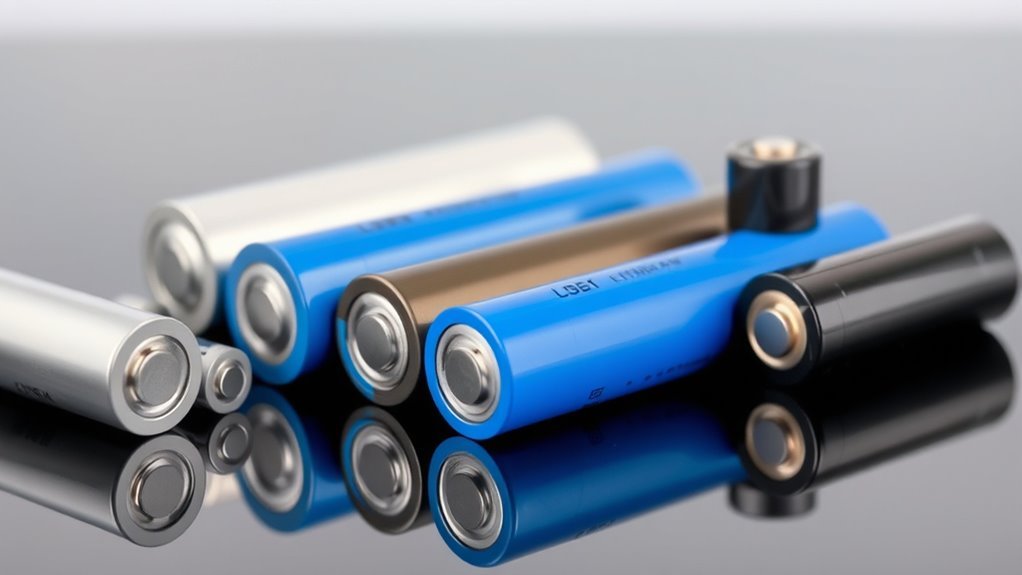
Lithium batteries encompass several primary chemistries, each defined by distinct electrode materials and electrochemical properties that influence performance, safety, and application suitability. The most common types include Lithium Cobalt Oxide (LiCoO₂), Lithium Iron Phosphate (LiFePO₄), and Lithium Nickel Manganese Cobalt Oxide (NMC). These chemistries differ in energy density, thermal stability, and lifespan, which impacts their suitability for specific uses. Additionally, understanding battery recycling processes is essential, as diverse chemistries present unique challenges for environmental impact mitigation. Proper recycling minimizes hazardous waste and recovers valuable materials, reducing ecological footprints. Analyzing these chemistries helps us optimize performance while balancing environmental responsibility, ultimately guiding more sustainable choices in battery development and disposal practices.
How Does Battery Chemistry Affect Its Lifespan and Durability?
The chemistry of a lithium battery directly influences its lifespan and durability by determining how well it resists degradation over charge-discharge cycles. Different chemistries exhibit varying stability, affecting how quickly capacity fades. For example, lithium iron phosphate (LiFePO4) offers enhanced cycle life due to its stable crystal structure, while others like lithium cobalt oxide (LiCoO2) tend to degrade faster. This chemical stability also impacts environmental considerations, as longer-lasting batteries reduce the frequency of replacements, lowering the environmental impact. Additionally, battery recycling becomes more efficient with specific chemistries, since some materials are easier to recover and process. Overall, choosing a chemistry with superior durability not only extends lifespan but also contributes to sustainable practices and minimizes ecological footprint.
Which Lithium Chemistry Lasts the Longest? A Cycle Life Comparison
When comparing the cycle life of different lithium battery chemistries, it becomes evident that not all are equally durable over extended use. Lithium iron phosphate (LiFePO4) batteries typically outperform others, offering around 2,000 to 3,000 cycles due to their stable chemistry. In contrast, lithium nickel manganese cobalt oxide (NMC) batteries usually provide 1,000 to 2,000 cycles. Longer cycle life reduces the frequency of battery replacements, impacting battery recycling needs and environmental impact. Chemistries with shorter lifespans generate more waste, increasing ecological strain. As a result, selecting chemistries like LiFePO4 not only prolongs operational lifespan but also minimizes environmental impact by decreasing waste and simplifying recycling processes. This cycle longevity is vital for sustainable energy solutions and responsible resource management.
Key Factors That Impact Lithium Battery Longevity
The stability of battery chemistry fundamentally influences overall longevity, with more stable chemistries resisting degradation over numerous cycles. Additionally, our usage and charging habits—such as high voltage charging or deep discharges—significantly accelerate capacity loss. By understanding these key factors, we can optimize operation to extend lithium battery lifespan effectively.
Battery Chemistry Stability
What are the primary factors that influence the stability of lithium battery chemistry and, consequently, its longevity? Stability hinges on several critical elements:
- Electrode Material Integrity – stable electrode structures resist degradation over cycles.
- Electrolyte Composition – determines ion transport efficiency and minimizes side reactions.
- Thermal Management – prevents overheating, which accelerates capacity fade.
- Manufacturing Quality and Material Purity – reduces defects that cause internal failures.
These factors directly affect the battery’s lifespan and environmental impact. Stable chemistry enhances battery recycling efficiency, reducing waste and resource extraction. Conversely, unstable chemistries hasten degradation, increasing environmental burden. Understanding these core stability factors helps us develop longer-lasting batteries with minimized ecological footprints.
Usage and Charging Habits
Proper usage and charging habits play a vital role in determining lithium battery longevity, as improper procedures accelerate capacity loss and degrade internal components. Avoiding deep discharges and overcharging minimizes stress on the chemistry, extending operational life. Regularly calibrating the battery guarantees accurate monitoring and prevents unnecessary cycling. Additionally, maintaining ideal charge levels reduces the frequency of replacements, impacting battery recycling efforts and overall environmental impact. Responsible usage extends beyond individual devices; it promotes sustainable practices by reducing e-waste. Properly managing charge cycles also preserves the chemical integrity of the battery, which is essential for efficient recycling and minimizing hazardous material leaks. Ultimately, disciplined charging habits not only prolong battery life but also contribute to eco-friendly disposal and sustainable resource management.
Real-World Examples of Long-Lasting Lithium Battery Chemistries
In examining long-lasting lithium battery chemistries, we observe that Lithium Iron Phosphate (LiFePO4), Lithium Nickel Manganese Cobalt (NMC), and Lithium Titanate (LTO) each demonstrate distinct advantages in durability and cycle life. These chemistries are chosen for specific applications based on their electrochemical stability and overall longevity. Analyzing real-world implementations highlights how their inherent properties translate into extended service life and reliability.
Lithium Iron Phosphate (LiFePO4)
Lithium Iron Phosphate (LiFePO4) batteries have gained prominence due to their exceptional thermal stability, long cycle life, and safety profile, making them a preferred choice for various long-lasting applications. Their robustness translates into:
- Extended cycle life—often surpassing 2000 cycles.
- Enhanced safety—resistant to thermal runaway.
- Lower environmental impact—due to reduced toxicity and safer disposal.
- Better suitability for battery recycling—facilitating sustainable reuse and reducing waste.
These attributes make LiFePO4 ideal for renewable energy storage and electric vehicles. Their long lifespan minimizes the frequency of replacements, decreasing environmental impact. Additionally, their safer chemistry simplifies battery recycling processes, contributing to a more sustainable lifecycle. This combination of durability and eco-friendliness underscores their role in long-term energy solutions.
Lithium Nickel Manganese Cobalt (NMC)
Despite their complex composition, Lithium Nickel Manganese Cobalt (NMC) batteries demonstrate remarkable longevity in practical applications, owing to their balanced electrochemical stability and high energy density. These attributes make NMC chemistries ideal for electric vehicles and grid storage, where longevity directly impacts performance and cost-effectiveness. However, their sustainability depends heavily on effective battery recycling strategies that mitigate environmental impact. Recycling NMC batteries allows recovery of critical metals like cobalt, nickel, and manganese, reducing resource extraction and lowering ecological footprints. While NMC chemistries generally last longer than some alternatives, their widespread use underscores the importance of developing robust recycling processes to guarantee environmental stewardship, minimize waste, and promote a sustainable lifecycle for lithium-ion batteries.
Lithium Titanate (LTO)
Although Lithium Titanate (LTO) batteries are less common than other lithium chemistries, they exemplify exceptional longevity and cycle stability in demanding applications. Their rapid charge-discharge capability and extended cycle life—often exceeding 10,000 cycles—highlight their durability. Factors contributing to this include:
- *Superior thermal stability*, reducing degradation during battery manufacturing and use.
- *Fast charging capabilities*, minimizing stress on materials.
- *Lower electrode wear*, translating into longer operational life.
- *Reduced environmental impact*, as LTO batteries contain no cobalt and have a lower risk of hazardous waste.
These features make LTO ideal for grid storage and electric buses. Their longevity, coupled with environmentally friendly battery manufacturing, positions them as a sustainable long-term solution despite higher initial costs.
How to Choose the Most Durable Lithium Battery for Your Needs
When selecting a lithium battery for durability, it’s crucial to evaluate key technical specifications that directly impact lifespan and performance under various operating conditions. Critical factors include cycle life, rate capability, and temperature tolerance. Additionally, consider the battery’s design regarding ease of battery recycling, which influences its overall environmental impact. A more sustainable option not only reduces waste but also minimizes resource extraction and manufacturing emissions. Durability hinges on electrolyte stability and electrode material resilience, which determine how well the battery withstands repeated charge cycles. By analyzing these technical aspects alongside environmental considerations, we can identify batteries that offer ideal longevity while aligning with ecological responsibility. This extensive approach ensures that durability and sustainability go hand in hand in your selection process.
Tips to Maximize Your Lithium Battery’s Lifespan
Maximizing the lifespan of your lithium battery requires a strategic approach grounded in understanding its operational limits and maintenance practices. Proper management enhances battery safety, reduces environmental impact, and prolongs performance. To optimize lifespan:
- Keep the charge level between 20% and 80%, avoiding deep discharges that accelerate capacity loss.
- Store batteries in cool, dry environments to minimize thermal stress and degradation.
- Use compatible chargers that prevent overvoltage or undervoltage, maintaining safe operation.
- Regularly monitor and calibrate battery status to detect early signs of capacity decline, ensuring optimal performance.
Implementing these practices not only extends battery life but also mitigates safety risks and environmental footprint, making your usage more efficient and responsible.
Frequently Asked Questions
Are Certain Lithium Chemistries Safer Than Others Over Long-Term Use?
We find lithium iron phosphate (LiFePO4) batteries safer long-term due to their stable chemistry, better resistance to thermal runaway, and improved battery recycling, which supports more charge cycles and enhances overall safety over extended use.
How Do Environmental Conditions Affect Lithium Battery Lifespan?
Like a delicate plant, lithium batteries thrive or wither under environmental factors. Temperature effects accelerate degradation or preserve capacity, so we must analyze these conditions carefully, understanding that extreme temps considerably impact battery lifespan and performance.
Can Battery Chemistry Changes Extend a Battery’s Overall Life?
Changing battery chemistry can influence overall life by enhancing chemical stability, reducing battery degradation, and improving longevity; however, it requires balancing energy density, safety, and stability to optimize lifespan in specific applications.
What Are the Cost Implications of Choosing Longer-Lasting Lithium Chemistries?
Choosing longer-lasting lithium chemistries, like solid-state batteries, often involves higher initial costs but reduces long-term expenses through lower maintenance requirements and durability, as shown in case studies highlighting cost comparisons and extended lifecycle efficiencies.
Are There Emerging Lithium Chemistries Promising Even Longer Durability?
Emerging lithium chemistries, like lithium-silicon and solid-state batteries, show promise for longer durability, enhanced by manufacturing advancements. We believe that improved Battery recycling techniques will further optimize longevity and sustainability in future lithium battery technologies.
Conclusion
In summary, LiFePO₄ batteries stand out for their exceptional longevity, surpassing other lithium chemistries with over 2,000 charge cycles—more than double many alternatives. Their stable crystal structure and thermal resilience underpin this durability, making them ideal for long-term applications. As battery technology advances, understanding these core differences enables us to select the most sustainable and cost-effective solutions. Ultimately, choosing the right chemistry ensures optimal performance and longevity tailored to specific energy needs.