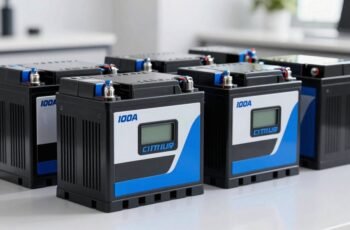
Like the foundation of a building, the chemistry of a lithium battery determines its resilience over time. Each chemistry type offers distinct trade-offs in longevity, stability, and performance, shaping its suitability for specific applications. Understanding these nuances is critical for making informed choices, yet many overlook how operational factors influence lifespan. As we explore these differences, we uncover the complexities behind battery durability and the implications for future energy storage solutions.
Key Takeaways
- LFP batteries generally have a longer cycle life (>2000 cycles) due to their stable phosphate-based cathode structure.
- NMC batteries balance capacity and longevity but tend to experience gradual capacity fade over time.
- LCO batteries have a shorter lifespan because high energy density compromises structural integrity and accelerates capacity loss.
- NCA batteries emphasize rapid charging and high capacity but may degrade faster under frequent high-voltage cycling.
- Operating conditions, such as temperature and depth of discharge, significantly influence lifespan across all chemistry types.
What Are the Main Types of Lithium Battery Chemistries?
Understanding the main types of lithium battery chemistries is essential for evaluating their performance, lifespan, and application suitability. The most common chemistries include lithium cobalt oxide (LCO), lithium iron phosphate (LFP), lithium nickel manganese cobalt oxide (NMC), and lithium nickel cobalt aluminum oxide (NCA). LCO offers high energy density, making it ideal for portable electronics, but it has limited cycle life. LFP provides enhanced thermal stability and longer lifespan, frequently used in electric buses and grid storage. NMC balances energy density and longevity, suitable for electric vehicles and power tools. NCA emphasizes high energy capacity and rapid charging, often chosen for aerospace and high-performance EVs. Each chemistry’s specific electrochemical properties influence their suitability for different applications, with trade-offs between energy, safety, and durability.
How Does Lithium Cobalt Oxide (LCO) Chemistry Affect Battery Lifespan?
Lithium Cobalt Oxide (LCO) chemistry substantially influences the lifespan of a battery due to its electrochemical characteristics and material stability. LCO’s high energy density enables compact designs, but its structural integrity diminishes with repeated charge-discharge cycles. The material’s layered crystal structure is prone to capacity fade caused by lattice degradation and electrode-electrolyte interactions. Additionally, LCO batteries experience significant capacity loss at high voltages, accelerating electrode wear. Thermal stability issues further reduce lifespan, as elevated temperatures promote side reactions and electrolyte decomposition. Despite its widespread use in consumer electronics, LCO’s inherent material limitations lead to a relatively shorter cycle life compared to other chemistries. Understanding these electrochemical constraints helps explain why LCO batteries often have limited longevity under intensive use.
What Longevity Factors Are Unique to Lithium Iron Phosphate (LiFePO4)?
Unlike other lithium-ion chemistries, Lithium Iron Phosphate (LiFePO4) batteries exhibit unique longevity factors primarily rooted in their stable crystal structure and inherent chemical properties. This stability minimizes capacity fade from thermal stress and repeated cycling. Their phosphate-based cathode resists structural degradation, enabling high cycle life, often exceeding 2000 cycles. Additionally, LiFePO4’s lower operating voltage reduces electrode wear and mitigates electrolyte decomposition.
| Factor | Impact | Explanation |
|---|---|---|
| Crystal Stability | Enhances cycle life | Strong lattice structure resists breakdown |
| Thermal Tolerance | Prevents thermal runaway and degradation | Maintains performance under high temperatures |
| Chemical Inertness | Reduces side reactions | Limits capacity loss from electrolyte decomposition |
| Voltage Stability | Guarantees consistent performance | Limits stress on electrodes during charge/discharge |
Comparing NMC and LMO Batteries: Which Lasts Longer?
When comparing NMC (Nickel Manganese Cobalt) and LMO (Lithium Manganese Oxide) batteries, it’s crucial to analyze their structural compositions and electrochemical behaviors, as these directly influence their lifespan. NMC batteries feature layered cathode structures that support high energy density and stability over multiple cycles, but they can experience gradual capacity fade due to cobalt dissolution and structural degradation. LMO batteries, with their spinel structure, excel in thermal stability and cycle life, often outperforming NMC in longevity under moderate cycling conditions. However, LMO’s lower energy density limits their practical lifespan in high-demand applications. Overall, LMO batteries generally last longer in cycle life, primarily due to their robust chemistry, while NMC batteries may show faster capacity loss but offer higher energy retention.
How Usage and Maintenance Influence Battery Durability by Chemistry
Operational practices and maintenance routines profoundly impact the longevity of batteries, with the effects varying based on chemistry. Proper handling minimizes degradation mechanisms like electrode wear and electrolyte decomposition. For instance, NMC batteries benefit from moderate charge cycles and avoiding high voltage levels, while LFP batteries tolerate deeper discharges with less capacity fade.
| Chemistry | Best Usage Strategy | Maintenance Focus |
|---|---|---|
| NMC | Limit high-voltage charging | Avoid deep discharges |
| LFP | Deep cycles acceptable | Regular temperature checks |
| LTO | Frequent fast charging | Minimal maintenance needed |
Adhering to chemistry-specific protocols guarantees maximum durability, as improper practices accelerate capacity loss and shorten lifespan.
Key Considerations for Choosing the Right Lithium Battery Chemistry
Selecting the appropriate lithium battery chemistry requires careful assessment of specific application demands, environmental conditions, and long-term performance goals. Critical considerations include energy density, power output, cycle life, and safety profiles. For instance, high energy density chemistries like NMC suit portable electronics, whereas LFP offers enhanced thermal stability for stationary storage. Environmental factors such as temperature extremes influence chemistry selection, as some chemistries perform better under harsh conditions. Cost and availability also factor into decision-making, impacting overall lifecycle economics. Additionally, the expected lifespan and maintenance requirements must align with operational expectations; chemistries with longer cycle lives reduce replacement frequency. Ultimately, choosing the finest chemistry demands a balanced analysis of these technical parameters to secure reliability, safety, and economic viability over the device’s lifespan.
Common Misconceptions About Lithium Battery Lifespan
Many common beliefs about lithium battery lifespan are oversimplified or inaccurate, leading to misguided maintenance practices. Misunderstanding battery aging processes, charge cycle impacts, and temperature sensitivities can result in premature failure and reduced performance. Addressing these misconceptions helps optimize longevity through targeted, evidence-based strategies.
Battery Aging Myths
A common misconception is that lithium batteries inevitably degrade to unusable levels after a fixed number of charge cycles, but in reality, their aging process is more nuanced. Battery degradation is influenced by multiple factors beyond cycle count, including temperature, voltage, and internal chemistry stability. While cycle count contributes to capacity fade, it is not the sole determinant of lifespan. Chemical side reactions, electrode degradation, and electrolyte decomposition also play major roles in aging, often proceeding at variable rates depending on usage conditions. This means that two batteries with identical cycle counts can exhibit different performance levels. Understanding these complex interactions dispels oversimplified myths, emphasizing that proper management and operating conditions can substantially extend a battery’s functional lifespan despite cycle progression.
Charge Cycle Misconceptions
Understanding how charge cycles influence lithium battery lifespan is pivotal, yet prevalent misconceptions often lead to oversimplified assumptions. Many believe that every full charge and discharge drastically shortens battery life, but this isn’t entirely accurate. In reality:
- Partial cycles (e.g., 50%) have less impact than full cycles, allowing more charge cycles over the battery’s lifespan.
- The number of cycles isn’t the sole factor; depth of discharge substantially influences longevity.
- Battery chemistry determines how well it withstands repeated cycling, not just the quantity of cycles.
These misconceptions can cause users to unnecessarily limit usage or overcharge, accelerating degradation. Recognizing that chemistry and discharge depth matter more than raw cycle count enables more precise management, ultimately extending battery performance and lifespan.
Temperature Effects Overlooked
Temperature fluctuations markedly influence lithium battery lifespan, yet this factor is often underestimated or overlooked. Elevated temperatures accelerate electrochemical reactions, increasing degradation rates and capacity fade, while low temperatures impair ionic mobility, reducing efficiency and accelerating stress-induced aging. Many assume that standard operating conditions suffice, but thermal extremes—either heat or cold—can profoundly shorten battery life across all chemistries. Proper thermal management is indispensable; neglecting it leads to accelerated electrolyte decomposition, separator deterioration, and electrode degradation. Additionally, temperature impacts the formation of solid electrolyte interphase (SEI) layers, which are critical for stability but can become unstable under thermal stress. Recognizing and controlling temperature variations is essential for optimizing battery longevity, as even minor deviations from ideal conditions can compound degradation mechanisms over time.
Future Trends in Lithium Battery Chemistry and Longevity
Emerging lithium chemistries focus on materials that improve cycle life and thermal stability, promising significant durability gains. Innovations such as solid-state electrolytes and advanced cathode formulations are extending overall battery longevity. We anticipate these developments will reshape performance benchmarks and enable more sustainable energy storage solutions.
Emerging Chemistries Enhancing Durability
As research advances, new chemistries are being developed to substantially enhance lithium battery durability, addressing the limitations of conventional designs. These emerging chemistries promise significant improvements in lifespan, safety, and performance.
- Solid-state electrolytes replace liquid electrolytes, offering superior thermal stability and reduced degradation, which prolongs cycle life.
- Silicon-based anodes increase energy density while maintaining structural integrity under repeated cycling, reducing capacity fade.
- Lithium-sulfur chemistries provide higher theoretical capacities and lower costs, with ongoing innovations improving cycle stability.
These innovations are driven by the need for longer-lasting batteries in high-demand applications, making them indispensable for future energy storage solutions. Such developments represent a pivotal shift toward more durable, reliable lithium-based energy systems.
Innovations Extending Battery Life
Advancements in lithium battery chemistry are poised to markedly extend battery lifespan, driven by ongoing research into novel materials and structural innovations. Researchers are exploring solid-state electrolytes to replace liquid ones, reducing dendrite formation and enhancing cycle stability. Incorporating silicon or lithium metal anodes promises higher energy density and longer cycle life but requires addressing volume expansion challenges. Additionally, advanced cathode materials like nickel-rich layered oxides improve structural stability under repeated cycling. Innovations in electrode architecture, such as nanostructuring, facilitate better ion transport and mitigate degradation mechanisms. Smart management systems and advanced coatings further minimize capacity fade. Collectively, these innovations aim to enhance durability, safety, and longevity, paving the way for lithium batteries that maintain performance over substantially extended operational lifespans.
Frequently Asked Questions
How Does Temperature Impact Lithium Battery Lifespan by Chemistry?
Temperature markedly influences lithium battery lifespan; high temperatures accelerate aging and capacity loss due to increased chemical degradation, while low temperatures slow reactions but can cause capacity reduction and internal resistance increases, ultimately reducing overall battery longevity.
What Role Does Charging Speed Play in Battery Longevity?
We find that faster charging accelerates battery wear due to increased thermal and electrochemical stress, ironically reducing lifespan. Slow, controlled charging preserves cell integrity, highlighting that patience in charging is essential for maximizing lithium battery longevity.
Can Battery Lifespan Vary Significantly With Different Manufacturing Processes?
Yes, battery lifespan can vary considerably with different manufacturing processes. Variations in electrode material quality, electrolyte formulation, and assembly precision directly impact durability, capacity retention, and overall longevity, making manufacturing quality control vital for peak battery performance.
How Do Cycling Patterns Influence Lithium Battery Degradation?
Cycling patterns profoundly influence lithium battery degradation; frequent, deep cycles accelerate capacity loss, while shallow, controlled cycling preserves longevity. We analyze charge/discharge rates and cycle depth to optimize lifespan, minimizing detrimental stress and chemical wear.
Are There Specific Chemistries Better Suited for High-Temperature Environments?
Like a fortress withstands storms, lithium iron phosphate (LiFePO₄) batteries excel in high-temperature environments due to their stable chemistry. They resist thermal degradation, offering prolonged lifespan and safety, making them ideal for demanding conditions.
Conclusion
To recap, grasping the nuances of lithium battery chemistries is vital for optimizing lifespan and performance. While LFP offers unparalleled longevity that could outlast the universe’s age, LCO’s high energy density comes with a shorter cycle life. By carefully selecting and maintaining the right chemistry for your needs, you can harness batteries that perform like a well-oiled machine for years to come. Ultimately, informed choices turn batteries into enduring powerhouses, not fleeting sparks.