Imagine a drone operator relying on a Tattu LiPo battery to complete a professional mapping mission, only to face unexpected power loss mid-flight. This scenario underscores the critical importance of selecting the right battery for peak performance and safety. With numerous options available, understanding the technical differences and how they impact flight time, reliability, and maintenance becomes essential—yet many overlook these details when choosing their power source.
Key Takeaways
- Choose reputable brands like Tattu, Gens Ace, or Turnigy known for safety, reliability, and high energy density.
- Prioritize batteries with high C ratings for quick power delivery and stable flight performance.
- Ensure compatibility with your drone’s voltage, capacity, and connector specifications.
- Opt for batteries with built-in protection circuits to prevent over-discharge and thermal issues.
- Regularly maintain and inspect batteries for signs of wear, swelling, or damage to ensure safe operation.
What Are LiPo Batteries and Why Are They Perfect for Drones
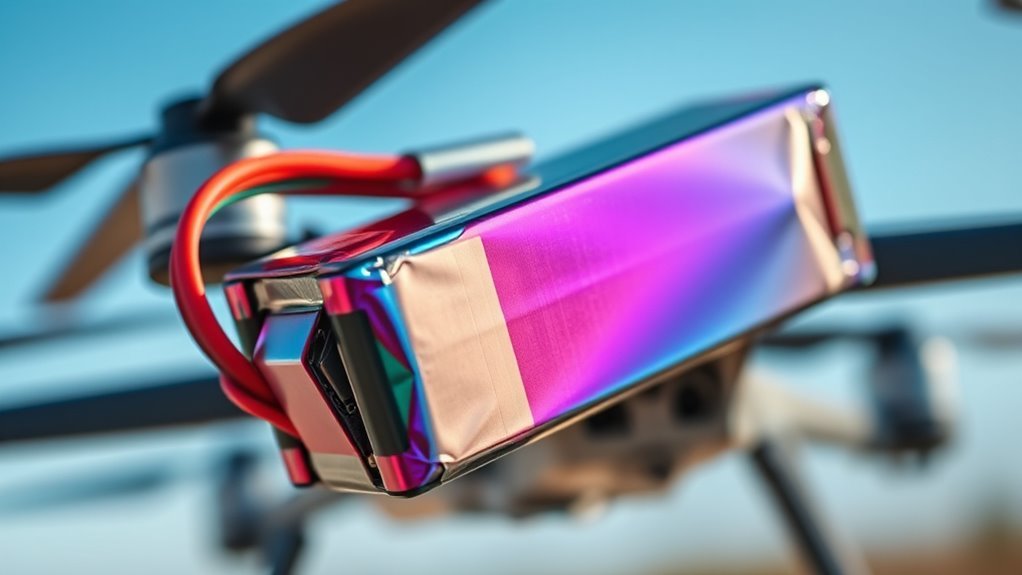
What makes lithium polymer (LiPo) batteries the preferred power source for drones? Their unique battery chemistry offers high energy density, enabling longer flight times without excessive weight. This lightweight characteristic is essential in drone design, where minimizing mass improves agility and endurance. LiPo batteries also provide a high discharge rate, supporting rapid power delivery for quick accelerations and stable hovering. The flexible, pouch-style cell design allows for custom configurations, optimizing space within compact drone frames. Additionally, their voltage stability guarantees consistent performance during flight. Overall, LiPo batteries’ combination of chemistry, high energy capacity, and adaptable form factors makes them ideal for meeting the demanding power and design needs of modern drones.
How to Choose the Right LiPo Battery for Your Drone
Choosing the right LiPo battery for your drone requires careful consideration of several technical parameters that directly impact performance and safety. Key factors include voltage, capacity, and discharge rate, which influence flight time and power delivery. Battery safety is paramount; selecting batteries with built-in protection circuits reduces risks of overheating or failure. Charging efficiency is also critical, as it affects how quickly and safely the battery can be recharged without degrading its lifespan. Proper balancing and compatibility with your drone’s power system guarantee ideal performance and longevity. Additionally, understanding the relationship between capacity and weight helps maximize flight endurance without compromising safety. Overall, a thorough evaluation of these parameters ensures you select a battery that maximizes performance while maintaining safety standards.
Features That Help Extend Your Drone’s Flight Time
Optimizing flight time hinges on selecting features that enhance energy efficiency and reduce power drain. Key to this is understanding battery chemistry; advanced lithium polymer chemistries can offer higher energy densities and improved thermal stability, directly impacting flight endurance. Features like optimized cell design and balanced voltage distribution minimize internal resistance, reducing unnecessary energy loss. Additionally, sophisticated BMS (Battery Management Systems) monitor thermal conditions and cell health, preventing over-discharge and extending overall battery lifespan. Lightweight construction and high discharge rates also contribute to maximizing flight endurance by decreasing energy consumption during operation. By focusing on these features, we can guarantee that the drone’s power system operates efficiently, translating to longer flight times without compromising performance or safety.
Top LiPo Battery Brands and Models for Drones
When selecting lithium polymer (LiPo) batteries for drones, it’s essential to take into account the top brands and models that consistently deliver reliable performance, safety, and high energy density. Reputable manufacturers like Tattu, Turnigy, and Gens ace stand out for their advanced battery chemistry, optimizing energy-to-weight ratios pivotal for flight efficiency. These brands often meet or exceed drone regulations, ensuring compliance with safety standards. Top models feature built-in protection circuits to prevent over-discharge and thermal runaway, aligning with industry safety protocols. By choosing proven brands and models with verified performance data, users can mitigate risks associated with battery failure. Ultimately, understanding the nuances of battery chemistry and regulatory requirements helps in selecting the best LiPo batteries tailored to specific drone applications.
How to Maintain and Safely Use Your Drone Batteries
Maintaining peak performance requires strict adherence to proper charging techniques, including using compatible chargers and avoiding overcharging. Safe storage practices involve keeping batteries in a cool, dry environment and at appropriate charge levels to prevent degradation. Regular inspections for physical damage and capacity testing are essential to guarantee reliability and safety during operation.
Proper Charging Techniques
How can we guarantee the longevity and safety of our drone’s lithium polymer batteries during charging? Proper charging techniques are vital to maintain battery chemistry integrity and assure charging safety. We must use chargers compatible with our batteries’ specifications, avoiding overvoltage or excessive current. Consistent monitoring prevents thermal runaway and capacity degradation.
| Charging Parameter | Recommended Setting |
|---|---|
| Voltage Limit | 4.2V per cell |
| Current Rate | 1C or less |
| Charging Temperature | 0°C to 45°C |
| Balance Charging | Always use balancer |
Adhering to these parameters minimizes risks associated with improper charging, preserves capacity, and extends lifespan. Prioritizing precise, controlled charging practices optimizes both safety and performance, respecting the unique battery chemistry of lithium polymer cells.
Safe Storage Practices
Proper storage of lithium polymer batteries is vital to preserving their capacity, safety, and overall lifespan. Effective battery safety begins with maintaining the correct storage conditions—ideally in a cool, dry environment with temperatures between 40-60°C (104-140°F). Using a fireproof container or battery-safe storage bag minimizes risk during unexpected failures. Storage tips include keeping the batteries at a state of charge around 50%, as overcharging or complete discharge accelerates capacity loss and safety hazards. Avoid exposing batteries to direct sunlight or high humidity, which can degrade internal components. Additionally, disconnect batteries from devices when not in use to prevent unintended discharge or damage. Adhering to these practices guarantees safer handling, prolongs battery life, and mitigates potential safety risks associated with lithium polymer batteries.
Regular Battery Inspections
Regularly inspecting drone batteries is crucial to guarantee safety, optimize performance, and extend their service life. Consistent checks help identify potential issues like swelling, corrosion, or damaged connectors, which can compromise battery safety. Monitoring charge cycles is critical because each cycle slightly degrades battery capacity; tracking these helps determine when replacement is necessary. We recommend inspecting voltage levels before and after flights to confirm they stay within safe operating ranges. Additionally, visual examinations should be conducted periodically to detect any signs of deterioration that might lead to thermal runaway or failure. Proper inspection routines not only prevent accidents but also maximize the battery’s lifespan by ensuring it operates efficiently within its designed parameters. Ultimately, diligent inspections are essential for safe, reliable drone operation and battery longevity.
Signs Your LiPo Battery Is Worn Out and When to Replace
We observe that a decline in flight time, swelling, or leakage from cells signals battery degradation. Difficulties in maintaining a full charge also indicate reduced capacity and potential safety risks. Recognizing these signs promptly allows for timely replacement to guarantee drone performance and safety.
Reduced Flight Time
How can you tell if your LiPo battery is nearing the end of its useful life? Reduced flight duration is a key indicator, often reflecting diminished capacity due to battery chemistry degradation. As batteries age, their ability to hold charge declines, causing shorter flight times despite similar power demands. This decline results from chemical changes within the cells, affecting energy transfer efficiency. Monitoring voltage sag under load and consistent flight time reductions are practical measures. Even if a battery appears physically intact, a significant drop—more than 20% from new—signals it’s time for replacement. In essence, a decline in flight duration, coupled with signs of capacity loss, reveals wear and warrants attention to maintain ideal drone performance.
Swollen or Leaking Cells
Swollen or leaking cells are clear and immediate indicators that a LiPo battery has deteriorated beyond safe or effective use. Battery swelling, often caused by gas buildup from internal chemical reactions, compromises structural integrity and safety. Chemical leaks signal severe degradation, risking damage to your drone and potential hazards. Recognizing these signs early is essential for safe operation.
- Visible bulging or deformation of the battery casing
- Pungent or chemical odor indicating leaks
- Sticky or discolored external surfaces
- Excessive heat during charging or use
- Unusual swelling after recharging cycles
If you observe any of these signs, replace the battery immediately. Continuing to use swollen or leaking cells can lead to catastrophic failure, fire hazards, or damage to your drone’s components.
Difficulty Holding Charge
When a LiPo battery begins to lose its ability to hold a charge, it signals underlying degradation that can compromise both performance and safety. Over time, battery chemistry changes, leading to reduced capacity and increased heat during charging. Recognizing signs early helps prevent safety hazards and guarantees ideal drone operation.
| Symptoms | Implications |
|---|---|
| Shortened flight times | Decreased capacity due to worn chemistry |
| Rapid voltage drops | Internal resistance increase |
| Difficulty completing charges | Safety risk from incomplete charging |
If you notice these signs, it’s time to replace the battery. Regular monitoring of capacity and voltage behavior safeguards charging safety and prolongs drone performance.
Tips to Maximize Battery Life and Performance
To maximize the lifespan and efficiency of lithium polymer batteries in drones, it’s essential to implement proper charging, discharging, and storage practices. Consistent use of designated charging stations ensures ideal voltage levels, preventing overcharging that accelerates degradation. Regularly discharging batteries to around 20-30% before recharging helps maintain cell balance. Proper storage involves keeping batteries in a cool, dry environment and avoiding full depletion for extended periods, which can harm their capacity. Additionally, practicing battery recycling when batteries reach end-of-life supports sustainability.
Maximize drone battery life by proper charging, discharging to 20-30%, and storing in a cool, dry environment.
Here are some key tips:
- Use certified charging stations for consistent performance
- Avoid leaving batteries fully charged or discharged for long periods
- Store batteries at recommended temperature ranges
- Balance cells during charging to prevent uneven wear
- Recycle old batteries responsibly to reduce environmental impact
Common Mistakes to Avoid When Handling LiPo Batteries
Handling LiPo batteries improperly can considerably reduce their lifespan and compromise safety. One common mistake is overcharging or discharging beyond recommended limits, which accelerates capacity loss and increases fire risk. Mishandling during storage, such as leaving batteries at full charge or in extreme temperatures, can cause permanent damage. It’s essential to dispose of damaged or expired batteries responsibly through proper battery recycling channels, reducing environmental impact. Neglecting safe handling procedures not only jeopardizes drone operation but also contributes to hazardous waste. Proper awareness and adherence to safety protocols extend battery life, minimize environmental harm, and promote sustainable practices. Avoiding these mistakes ensures safer drone operation and aligns with responsible battery disposal and recycling efforts.
Where to Buy Quality LiPo Batteries for Your Drone
Finding reliable sources for high-quality LiPo batteries is vital to guarantee peak performance and safety in drone operation. For drone racing and aerial photography, selecting reputable vendors ensures consistent power delivery and reduces risks of failure during critical flights. Trusted suppliers often provide certifications verifying battery quality, capacity, and safety standards. It’s imperative to buy from established brands or authorized dealers to avoid counterfeit products that could compromise performance or damage your drone. Additionally, consider vendors with technical support and detailed product specifications for tailored solutions. Online specialty stores, drone-specific retailers, and direct manufacturer outlets are prime options. Properly sourcing LiPo batteries minimizes downtime, maximizes flight efficiency, and enhances overall operational safety for demanding applications like racing or high-resolution aerial photography.
Frequently Asked Questions
How Do Temperature Changes Affect Lipo Battery Performance?
Temperature changes impact LiPo battery performance by affecting temperature stability and battery longevity. Extreme heat accelerates degradation, while cold reduces capacity and efficiency. Maintaining stable temperatures ensures ideal performance and extends your drone’s battery lifespan.
Can I Use Third-Party Chargers for My Drone’s Lipo Batteries?
We advise against using third-party chargers for drone LiPo batteries due to potential battery compatibility issues and safety risks. Always opt for manufacturer-approved chargers to guarantee proper charging cycles, voltage regulation, and to maintain ideal battery health and performance.
What Safety Gear Should I Use When Handling Lipo Batteries?
We recommend wearing flame-resistant gloves, safety glasses, and a fireproof container for battery fire prevention. Using safe handling techniques, like avoiding punctures and overcharging, minimizes risks and guarantees safe management of LiPo batteries.
How Do Storage Conditions Impact Lipo Battery Lifespan?
Proper storage conditions, including maintaining ideal voltage levels and temperature, directly influence LiPo battery lifespan. Following storage best practices and regular battery calibration help prevent capacity loss, ensuring longevity and reliable performance over time.
Are There Specific Regulations for Transporting Drone Batteries?
We find that transporting drone batteries requires adherence to airline restrictions and battery certification standards. Ensuring compliance with these regulations minimizes safety risks, helps avoid legal issues, and facilitates smooth air travel with lithium polymer batteries.
Conclusion
In summary, selecting the right LiPo battery involves understanding your drone’s power needs and prioritizing safety and durability. While some may worry about costs, investing in reputable brands like Tattu or Gens ace ensures reliable performance and longer lifespan. Think of it as choosing a high-quality motor—initial expense saves time and money in the long run. Proper maintenance and handling maximize efficiency, ultimately enhancing your drone’s flight capabilities and ensuring safe, sustained operation.