When selecting a lithium polymer battery, we recognize the importance of understanding technical specifications, safety standards, and environmental impacts to guarantee peak performance and reliability. Managing these factors requires a careful evaluation of application needs and quality indicators, as well as awareness of potential risks associated with counterfeit products. To make informed choices, it’s essential to take into account not just price but also long-term efficiency and safety features—elements that can greatly influence your project’s success.
Key Takeaways
- Assess application requirements such as capacity, voltage, cycle life, and discharge rate for optimal performance.
- Choose reputable suppliers with certifications like UL 2054 and IEC 62133 to ensure safety and quality.
- Verify battery specifications and documentation to match device needs and confirm compliance standards.
- Prioritize batteries with built-in safety features like BMS, cell balancing, and thermal protection.
- Avoid counterfeit batteries by purchasing from trusted sources, checking for warranties, and being wary of suspiciously low prices.
What Are Lithium Polymer Batteries and How Do They Work?
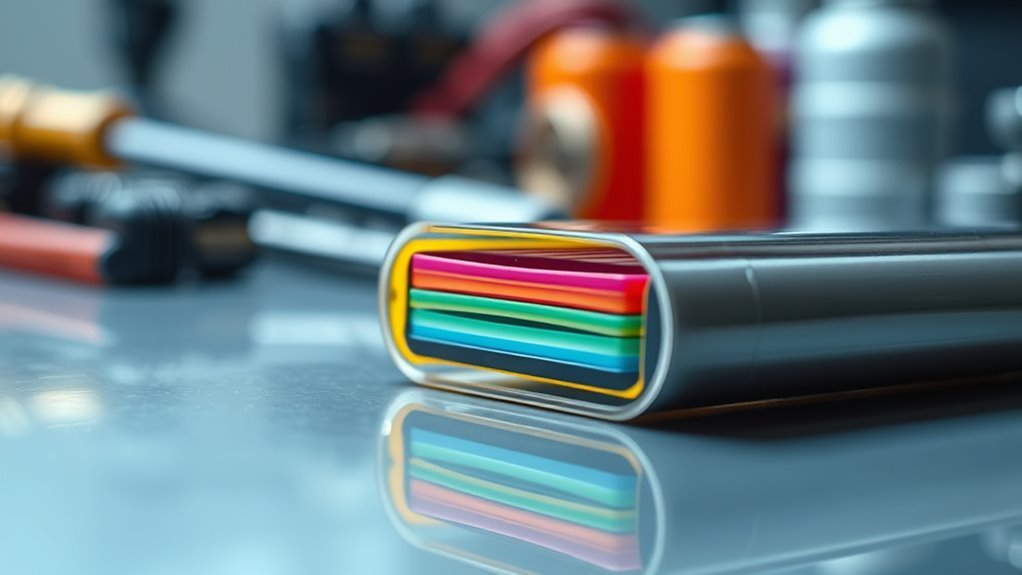
Lithium polymer batteries are a type of rechargeable energy storage device characterized by their use of a gel-like polymer electrolyte instead of the liquid electrolyte found in traditional lithium-ion batteries. This shift in battery chemistry permits flexible form factors and improved safety by reducing leakage risks. The polymer electrolyte’s solid or semi-solid state enhances stability and enables thinner, lighter designs. Manufacturing processes for lithium polymer batteries involve precise coating and layering of electrode materials onto current collectors, followed by encapsulation with the polymer electrolyte. These steps assure uniformity and high-quality performance. The unique battery chemistry of lithium polymer batteries results in efficient ion transfer and high energy density, making them suitable for compact, high-performance applications.
How to Choose the Right Lithium Polymer Battery for Your Needs
Selecting the appropriate lithium polymer battery depends on a clear understanding of your specific application requirements and performance expectations. To make an informed choice, consider factors such as desired battery lifespan, which impacts longevity and replacement costs, and environmental impact, including disposal and recyclability. Batteries with higher cycle life generally offer increased durability, reducing waste and environmental footprint over time. Additionally, evaluate the materials used and manufacturing processes to understand their ecological implications. A careful balance between performance demands and sustainability considerations guarantees ideal compatibility with your project goals. Ultimately, choosing a battery that aligns with both technical specifications and environmental responsibility will enhance reliability, reduce long-term costs, and support eco-friendly practices.
What Do Battery Capacity, Voltage, and Discharge Ratings Mean?
Understanding the fundamental specifications of a battery is essential for guaranteeing it meets your project’s power demands. Battery capacity, measured in milliamp-hours (mAh) or amp-hours (Ah), indicates how much charge the battery can store, directly affecting runtime. Voltage reflects the electrical potential difference, determined by the battery’s chemistry and design, influencing compatibility with your device. Discharge ratings specify the maximum current the battery can safely deliver without damage, tied to manufacturing standards and quality control. Variations in battery chemistry—such as lithium polymer—impact these ratings, emphasizing the importance of selecting a battery that aligns with your application’s power and safety requirements. Recognizing how these specifications interrelate ensures you choose a battery capable of delivering reliable, efficient performance within the constraints of established manufacturing standards.
How to Find a Battery That Fits Your Project
How can you identify a battery that precisely matches your project’s specific power, size, and safety requirements? The key lies in evaluating options for battery customization, guaranteeing the cell configuration aligns with your voltage and capacity needs. Precise sizing involves analyzing dimensions and weight constraints while maintaining performance standards. Additionally, consider environmental impact by selecting batteries with sustainable materials or those designed for recyclability, reducing ecological footprint. Using technical specifications such as discharge rates and cycle life helps determine suitability for your application. Balancing these factors ensures ideal integration, minimizing wasted resources and enhancing safety. Ultimately, a systematic comparison of customizable features and environmental considerations guides you toward a lithium polymer battery that fits your project’s demands efficiently and responsibly.
Safety Features and Certifications to Look For
When selecting a lithium polymer battery, verifying mandatory safety certifications guarantees compliance with industry standards and reduces risks. Built-in protection mechanisms, such as overcharge, discharge, and short-circuit safeguards, are essential for maintaining battery integrity during operation. These features collectively help prevent failures that could lead to safety hazards or device damage.
Mandatory Safety Certifications
Have you ever wondered what safety standards guarantee that a lithium polymer battery can operate reliably and securely? Mandatory safety certifications, such as UL 2054 and IEC 62133, are essential benchmarks that guarantee rigorous testing for thermal stability, overcharge protection, and mechanical integrity. These certifications verify that the battery includes features to prevent catastrophic failures like fires or explosions, which directly relate to safety. They also influence the environmental impact, as certified batteries typically adhere to standards promoting safer battery recycling processes, reducing hazardous waste. Without these certifications, batteries may pose risks to both users and the environment. Ensuring compliance with recognized safety standards is critical for responsible usage and aligns with sustainable practices in battery recycling efforts.
Built-In Protection Mechanisms
Built-in protection mechanisms are fundamental components that enhance the safety and reliability of lithium polymer batteries. They prevent hazards like overcharge, over-discharge, short circuits, and thermal runaway, vital for minimizing environmental impact through safer battery recycling processes. Key safety features include:
- Integrated BMS (Battery Management System): Monitors voltage, current, and temperature to prevent unsafe conditions.
- Cell Balancing: Ensures uniform charge across cells, reducing risk during disposal or recycling.
- Overcurrent and Short-Circuit Protection: Stops excessive current flow that could cause damage or fires.
- Thermal Cutoff: Disconnects power when temperature exceeds safe limits, mitigating thermal runaway risk.
These mechanisms not only safeguard users but also contribute to environmentally responsible battery recycling, reducing potential hazards.
How to Compare Prices and Quality of Lithium Polymer Batteries
Comparing prices and quality of lithium polymer batteries requires a systematic approach grounded in technical specifications and market analysis. We focus on understanding pricing strategies that reflect battery capacity, cycle life, and safety features. Equally important is evaluating quality assurance measures, such as certifications and manufacturing standards, to ensure reliability. Below is a comparison table to aid your evaluation:
| Aspect | Considerations |
|---|---|
| Price | Cost per mAh, brand reputation, bulk discounts |
| Quality Assurance | Certifications, warranty, manufacturing standards |
| Technical Specs | Capacity, discharge rate, cycle life, safety features |
This method guarantees you select batteries that balance cost and performance, minimizing risk while maximizing value.
Tips for Charging, Maintaining, and Extending Your Battery’s Life
To maximize the lifespan and performance of your lithium polymer battery, it’s essential to follow proper charging and maintenance practices. Proper charging protocols prevent capacity loss, while regular maintenance ensures peak function. To extend your battery’s life, consider these strategies:
- Charge between 20-80% to reduce stress and prolong cycle life
- Avoid overcharging or discharging below 10%, which can cause irreversible damage
- Use compatible chargers to prevent voltage inconsistencies
- Recycle batteries responsibly to minimize environmental impact and support sustainability
Adhering to these practices not only enhances performance but also promotes environmentally conscious battery recycling, reducing e-waste. Maintaining efficient charging routines preserves battery health and reduces the need for frequent replacements, benefiting both the user and the environment.
Where to Buy Reliable Lithium Polymer Batteries and What to Avoid
When sourcing lithium polymer batteries, it’s vital to prioritize reputable suppliers that specialize in high-quality, certified products. A strong supplier reputation indicates consistent quality control and adherence to safety standards, reducing the risk of receiving substandard or counterfeit batteries. Counterfeit risks are significant, as low-quality imitations can compromise device safety and performance, and pose fire hazards. Always verify supplier credentials, seek reviews from trusted sources, and prefer well-established brands or authorized distributors. Avoid unfamiliar or unverified sources, especially those offering prices that seem too good to be true. A reliable supplier provides transparent documentation, proper certifications, and warranties, guaranteeing your investment’s safety and longevity. Carefully selecting your supplier is essential to avoid counterfeit risks and attain maximum battery performance.
Frequently Asked Questions
Can Lithium Polymer Batteries Be Recycled Safely?
We believe lithium polymer batteries can be recycled safely through specialized battery recycling processes, reducing environmental impact. Proper recycling minimizes hazardous waste, prevents toxic leaks, and guarantees valuable materials are recovered efficiently, aligning with environmental safety standards.
How Do Temperature Variations Affect Battery Performance?
Like a delicate dance, temperature fluctuations challenge lithium polymer batteries, disrupting thermal stability and performance. Proper temperature regulation maintains ideal function, preventing overheating or freezing, ensuring consistent power output and prolonging battery lifespan under varying environmental conditions.
Are There Environmental Concerns With Lithium Polymer Batteries?
We recognize environmental concerns with lithium polymer batteries stemming from battery manufacturing and disposal; strict adherence to environmental regulations mitigates impacts, but ongoing innovations aim to improve sustainability and reduce ecological footprints in the production and recycling processes.
What Are Common Signs of Battery Failure or Damage?
We notice that about 20% of failed batteries exhibit swelling or performance degradation within their lifespan. These signs indicate potential internal damage, risking safety and device efficiency, so promptly replacing or repairing is essential for peak, safe operation.
How Do I Dispose of Old or Damaged Lithium Polymer Batteries?
We recommend battery recycling centers for safe disposal of old or damaged lithium polymer batteries, ensuring proper handling of hazardous materials. Never throw batteries in regular trash; always follow local regulations for environmentally responsible and safe disposal.
Conclusion
In the quest for the perfect LiPo battery, making an informed choice isn’t just smart—it’s essential to access peak performance and unparalleled reliability. By meticulously analyzing specifications, safety features, and sourcing from trusted suppliers, we safeguard our projects from catastrophic failures and subpar performance. This meticulous approach guarantees not just safety and efficiency but elevates your entire project to a new domain of technological excellence. In this pursuit, precision isn’t optional—it’s everything.