Consider a homeowner who experienced a thermal runaway in a lithium-ion battery pack, highlighting the critical safety risks involved. This incident underscores the importance of selecting the right chemistry for residential storage. We recognize that not all lithium batteries are created equal regarding safety, which prompts an analysis of the underlying chemistries. Understanding what makes certain chemistries inherently safer can inform better choices for safeguarding homes and ensuring reliable energy management.
Key Takeaways
- Lithium iron phosphate (LiFePO₄) is widely regarded as the safest lithium chemistry for home energy storage.
- LiFePO₄ batteries have high thermal stability, reducing risks of thermal runaway and fire.
- They offer longer cycle life and better resistance to overcharging and high temperatures.
- LiFePO₄ is non-toxic, environmentally friendly, and easier to recycle.
- Other chemistries like NMC and LTO are safer than LiCoO₂ but less stable than LiFePO₄ for home use.
What Are the Safety Concerns With Lithium Batteries for Home Use?
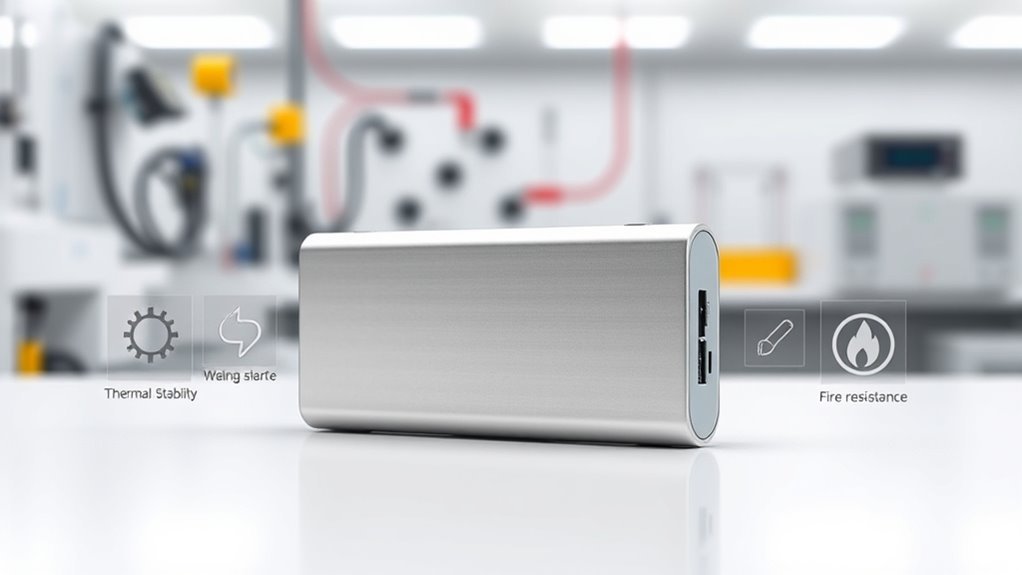
While lithium batteries are widely regarded for their efficiency and energy density, safety remains a critical concern, especially for home applications. The primary safety issues relate to thermal runaway, overcharging, and potential fire hazards, which can compromise user safety. However, these risks are often mitigated through strict manufacturing standards that enhance battery integrity and reduce defect probabilities. Battery lifespan also influences safety, as degraded cells may become unstable over time, increasing the risk of failure. Confirming high manufacturing standards helps maintain consistent quality and safety, minimizing the likelihood of internal faults. Consequently, understanding and adhering to rigorous manufacturing processes is essential to mitigate safety concerns, prolong battery lifespan, and guarantee reliable, safe home energy storage solutions.
Which Lithium Battery Chemistry Is Safest for Residential Storage?
Lithium iron phosphate (LiFePO₄) batteries are widely regarded as the safest option for residential energy storage due to their stable chemical structure and lower risk of thermal runaway. Their inherent stability translates into a longer battery lifespan, often exceeding 10,000 charge cycles, which enhances long-term reliability. From a cost perspective, LiFePO₄ batteries tend to be more expensive upfront compared to other chemistries, but their durability and safety profile can offset initial costs over time. Additionally, their resistance to overcharging and high-temperature operation reduces maintenance and safety-related expenses. Overall, LiFePO₄ offers a compelling balance of safety, longevity, and manageable costs, making it an ideal choice for residential storage where safety and dependability are paramount.
Why Is Lithium Iron Phosphate (LiFePO4) Considered the Most Secure?
Lithium iron phosphate (LiFePO4) batteries exhibit superior thermal stability compared to other chemistries, considerably reducing the risk of thermal runaway. This inherent stability translates into lower fire hazards and enhanced safety in various applications. Understanding these thermal advantages is key to evaluating LiFePO4’s position as the most secure lithium battery chemistry.
Thermal Stability Advantages
Because of its inherent chemical structure, Lithium Iron Phosphate (LiFePO₄) exhibits superior thermal stability compared to other lithium-ion chemistries. This chemical stability minimizes the risk of thermal runaway, even under high temperatures or physical abuse. The stable phosphate backbone acts as a thermal buffer, preventing rapid temperature escalation. Additionally, LiFePO₄’s layered crystal structure resists decomposition, maintaining integrity during thermal stress. This results in:
- Reduced propensity for overheating and fires
- Lower degradation rates at elevated temperatures
- Greater resistance to internal short circuits
- Enhanced safety margins during thermal excursions
These attributes make LiFePO₄ exceptionally suited for home applications where thermal stability is critical, providing a safer, more reliable energy storage option through its inherent chemical stability.
Reduced Fire Risks
The inherent chemical properties of LiFePO₄ considerably reduce the risk of fire compared to other lithium-ion chemistries. Its stable crystal structure prevents thermal runaway, a primary cause of battery fires. Unlike cobalt or nickel-based chemistries, LiFePO₄ resists overheating even under stress. Manufacturing standards further enhance safety, ensuring consistent quality and proper cell design to minimize defects. Additionally, the chemistry’s non-toxic nature simplifies battery recycling, reducing environmental hazards and the potential for fire during disposal. These factors collectively contribute to a lower probability of fire incidents in home applications. By adhering to strict manufacturing standards and prioritizing safe chemistries like LiFePO₄, manufacturers can substantially improve overall safety, making this chemistry the most secure choice for residential energy storage.
How Do Different Lithium Chemistries Compare in Safety?
Different lithium chemistries exhibit significant variations in safety profiles due to their distinct chemical compositions and thermal behaviors. Lithium iron phosphate (LiFePO₄), for instance, offers enhanced thermal stability and resistance to overcharging, reducing thermal runaway risks. In contrast, lithium cobalt oxide (LiCoO₂) cells are more prone to overheating and require stringent safety protocols. Key comparisons include:
LiFePO₄ offers superior thermal stability and safety compared to LiCoO₂’s higher overheating risks.
- Thermal stability: LiFePO₄’s higher resilience minimizes fire hazards.
- Voltage stability: NMC chemistries provide balanced performance with manageable safety considerations.
- Chemical reactivity: LTO batteries are less reactive, offering safer operation under abuse conditions.
- Safety protocols: Different chemistries demand tailored safety measures to prevent and mitigate potential failures.
Understanding these distinctions helps inform ideal battery chemistry choices aligned with safety priorities, especially for home use.
What Role Does a Battery Management System Play in Ensuring Safety?
A well-designed Battery Management System (BMS) acts as the nerve center for guaranteeing safety in lithium battery systems. It monitors critical parameters like temperature, voltage, and current, directly influencing battery lifespan and adherence to charging protocols. By preventing overcharging, deep discharging, and thermal runaway, the BMS mitigates safety risks.
| Safety Function | Impact on Battery Performance |
|---|---|
| Voltage balancing | Extends battery lifespan |
| Temperature regulation | Prevents thermal runaway |
| State of charge control | Ensures proper charging |
This systematic control enhances safety and longevity, making the BMS indispensable for secure, reliable home energy storage. Its role in maintaining ideal operating conditions safeguards both users and the investment.
How Can You Choose the Safest Lithium Battery for Your Home?
Selecting the safest lithium battery for your home requires a careful evaluation of core safety features, chemistry stability, and quality certifications. Prioritizing these factors guarantees ideal battery lifespan and charging efficiency, reducing safety risks over time. Key considerations include:
- Chemistry type: Lithium iron phosphate (LiFePO4) offers enhanced thermal stability and safety.
- Battery management systems: Robust BMS enhances safety by monitoring voltage, current, and temperature.
- Certifications and standards: Ensure compliance with UL, IEC, or other relevant safety standards.
- Material quality: High-quality, reputable manufacturers typically provide longer-lasting, more reliable products with superior safety profiles.
What Are the Future Safe Lithium Battery Technologies for Home Energy?
Advancements in lithium battery technology are focusing on enhancing safety through innovative chemistries and structural designs that mitigate thermal runaway risks. Future safe lithium battery technologies aim to improve stability by adopting solid-state electrolytes, which eliminate flammable liquid components. These designs inherently reduce fire hazards and enable more reliable operation for home energy storage. Additionally, manufacturing advancements facilitate the integration of safer materials and scalable production processes, ensuring consistent quality and safety standards. Battery recycling also plays a critical role, as it promotes sustainable development and reduces environmental impact by recovering valuable materials and preventing hazardous waste. Together, these technological and industrial innovations promise to deliver safer, more durable, and environmentally responsible lithium batteries tailored for residential energy needs.
Frequently Asked Questions
Are There Specific Safety Certifications for Residential Lithium Batteries?
Yes, residential lithium batteries often meet safety certifications like UL 2054 and UL 1973, guaranteeing adherence to strict standards on battery lifespan and charging protocols, which helps prevent safety risks and ensures reliable home energy storage.
How Does Ambient Temperature Affect Lithium Battery Safety at Home?
Ambient temperature impacts lithium battery safety by influencing temperature fluctuations, which accelerate battery degradation. We observe that high temperatures increase risk of thermal runaway, while low temperatures reduce efficiency, emphasizing the need for stable environmental control to guarantee safety.
Can Lithium Batteries Pose Fire Risks During Extreme Weather Conditions?
Like a fragile house of cards, lithium batteries face fire risks during extreme weather. Weather impact can trigger thermal runaway, increasing fire risk, especially in high temperatures or freezing conditions, demanding careful management for safe home energy storage.
What Maintenance Practices Enhance Lithium Battery Safety Over Time?
We enhance lithium battery safety by following proper charging protocols, avoiding overcharging or deep discharges, and maintaining ideal temperature conditions, which extend battery lifespan and minimize risks associated with degradation and thermal instability over time.
Are Second-Hand Lithium Batteries Safe for Home Installation?
Second-hand lithium batteries can be safe if properly assessed for battery aging and integrity, and if battery recycling protocols are followed; thorough testing guarantees they meet safety standards, minimizing risks related to degradation or unseen damage.
Conclusion
Certainly! Here’s the modified text with alternative words replacing “In conclusion”:
Ultimately, choosing LiFePO₄ for home energy storage isn’t just smart—it’s a fortress against fire hazards and safety risks, offering unmatched stability and longevity. Its proven resilience, combined with advanced battery management systems, makes it the gold standard in residential safety. While future innovations may bring new options, LiFePO₄’s reliability and environmental benefits make it the most dependable choice for safeguarding your home and loved ones in an ever-evolving energy landscape.