The consequences of improper LiFePO4 battery storage can be catastrophic, risking both safety and performance integrity. We understand that maintaining ideal conditions is complex but essential. From temperature control to SOC management, each factor plays a critical role in prolonging battery life. If overlooked, it could lead to premature degradation or failure, making thorough knowledge crucial. So, let’s explore the precise storage guidelines that safeguard both your investment and operational safety.
Key Takeaways
- Store LiFePO4 batteries in a temperature-controlled environment between 0°C and 25°C with humidity below 50%.
- Keep batteries at 50% SOC during long-term storage, avoiding full charge or deep discharge.
- Use sealed, ventilated enclosures with insulation to buffer temperature and humidity fluctuations.
- Regularly monitor and record battery health, voltage, temperature, and humidity for maintenance.
- Follow safety protocols for handling, emergency response, and proper disposal at end-of-life.
Understanding the Importance of Proper Storage for LiFePO4 Batteries
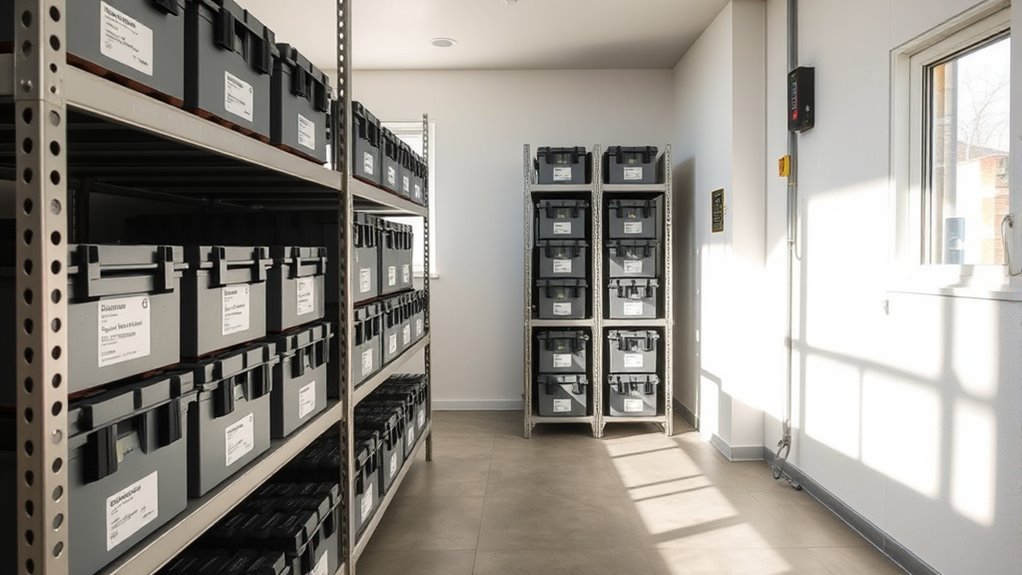
Understanding the importance of proper storage for LiFePO4 batteries is essential to maintaining their performance and longevity. The unique battery chemistry of LiFePO4 demands specific handling to prevent capacity loss and degradation. Effective storage accessories, such as insulated containers and voltage-maintaining chargers, help stabilize the battery’s state of charge and protect against environmental fluctuations. Proper storage minimizes risks associated with over-discharge or exposure to unwanted conditions, which can compromise cell integrity. We recognize that the right combination of storage accessories ensures consistent performance over time. By carefully managing these factors, we can optimize the lifespan of LiFePO4 batteries, safeguarding their energy density and safety while reducing long-term replacement costs. Proper storage is, consequently, a critical aspect of responsible battery management.
Ideal Temperature and Humidity Conditions for Lithium Iron Phosphate Storage
Maintaining ideal temperature and humidity conditions is critical for preserving LiFePO4 battery performance over time. We recommend keeping storage temperatures between 0°C and 25°C, with humidity levels controlled below 50% to prevent degradation. Precise regulation of these environmental factors minimizes capacity loss and extends battery lifespan.
Optimal Temperature Range
To guarantee ideal performance and longevity, lithium iron phosphate (LiFePO4) batteries must be stored within specific temperature and humidity ranges. The best temperature range for storage is typically between 0°C and 25°C, where temperature regulation minimizes thermal stress and degradation. Maintaining stable temperatures prevents capacity loss and extends cycle life. Proper battery insulation is vital, especially in environments prone to temperature fluctuations, as it helps buffer external temperature variations. Insulation materials should be chosen based on their thermal resistance properties to maintain consistent internal conditions. Avoiding extreme temperatures and rapid thermal changes reduces the risk of internal damage. Consistent temperature control and effective insulation are essential for maximizing battery lifespan and guaranteeing reliable performance over time.
Humidity Level Control
How does humidity influence the storage stability of lithium iron phosphate (LiFePO4) batteries? Excess moisture can compromise the battery’s internal chemistry, leading to reduced lifespan and potential safety hazards. Effective humidity control is crucial for moisture prevention, especially in environments with high ambient humidity. Maintaining relative humidity levels between 30-50% minimizes the risk of corrosion and dendrite formation, which can impair performance. We recommend storing LiFePO4 batteries in sealed, desiccated enclosures with proper ventilation to regulate moisture exposure. Consistent monitoring of humidity levels ensures ideal storage conditions, preventing moisture ingress that accelerates degradation. Proper humidity level control not only preserves the battery’s chemical integrity but also enhances long-term reliability, making it a critical aspect of thorough storage management.
Determining the Best State of Charge for Storage
Determining the most favorable state of charge (SOC) is critical for maximizing battery lifespan and performance during storage. We analyze how charge levels within the recommended range influence degradation, especially considering the effects of full discharge and prolonged storage durations. Understanding these parameters allows for more precise guidelines tailored to specific usage scenarios and storage conditions.
Optimal Charge Level Range
Establishing the ideal charge level range is essential for maximizing battery lifespan and efficiency. For LiFePO4 batteries, maintaining a state of charge between 20% and 80% minimizes degradation and enhances longevity. This range aligns with current market trends favoring deep-cycle applications while supporting sustainable battery recycling practices. Proper storage at preferable levels reduces capacity loss and prolongs usable life, which is vital as market dynamics shift toward longer-lasting, recyclable batteries. The table below summarizes the recommended charge ranges:
| State of Charge | Purpose |
|---|---|
| 20-80% | Preferable storage for lifespan |
| 80-100% | Avoid for long-term storage |
| 0-20% | Risk of deep discharge damage |
Impact of Full Discharge
What is the impact of fully discharging a battery before storage? Full discharge can accelerate battery degradation, reducing lifespan and performance. Lifepo4 batteries are less prone to damage from deep cycling, but consistent full discharges still cause cumulative stress.
Key impacts include:
- Increased risk of capacity loss over time
- Accelerated chemical deterioration within cells
- Higher likelihood of voltage imbalance
- Reduced overall cycle life due to stress
While Lifepo4 batteries tolerate deeper discharges better than other chemistries, frequent full discharges before storage should be avoided. Maintaining a partial charge minimizes stress and preserves battery health, ensuring better longevity and reliable performance. Proper management of the state of charge is essential to mitigate degradation linked to full discharge scenarios.
Recommended Storage Duration
How long should batteries be stored to guarantee ideal longevity without risking degradation? Essential storage duration for LiFePO4 batteries typically ranges from one to three months, maintaining a state of charge around 50%. Longer storage periods at higher or lower states of charge accelerate capacity loss and degrade battery health. To minimize degradation, it’s necessary to choose appropriate storage container options that prevent moisture and temperature fluctuations. Regularly monitoring the state of charge and ensuring it remains within recommended levels extends battery lifespan. Additionally, proper storage practices facilitate battery recycling at end-of-life, reducing environmental impact. Limiting storage duration and maintaining best conditions are vital for preserving battery performance, maximizing lifecycle, and ensuring safe recycling processes.
Safe and Effective Long-Term Storage Tips
To guarantee battery longevity and safety during long-term storage, it’s essential to follow specific protocols that mitigate degradation and prevent hazards. Proper storage conditions minimize capacity loss and reduce risks associated with thermal runaway. Maintaining a stable environment with a temperature around 15°C (59°F) and low humidity is vital. Regularly monitoring the state of charge prevents over-discharge or overcharge, which can compromise battery integrity. Additionally, storing batteries in a location that facilitates future battery recycling or repurposing aligns with sustainable practices and alternative power sources initiatives.
- Store in a cool, dry environment with stable temperature
- Keep the state of charge around 50% for extended periods
- Periodically inspect and cycle batteries to prevent capacity fade
- Use designated containers to prevent physical damage
Common Mistakes to Avoid When Storing LiFePO4 Batteries
Avoiding common storage mistakes is essential for maintaining LiFePO4 battery performance and safety. One critical error is neglecting proper disposal procedures, which can cause environmental harm and regulatory issues. Incorrect disposal or delaying recycling disrupts the battery’s chemical stability and can lead to leakage or fire hazards. Additionally, improper storage practices—such as leaving batteries at full charge or in high temperatures—accelerate capacity loss and degrade cell integrity. Always adhere to recommended storage conditions and plan for timely battery recycling to prevent potential hazards. Failing to follow proper disposal procedures not only jeopardizes safety but also violates environmental standards, emphasizing the importance of responsible handling throughout the battery’s lifecycle.
Monitoring and Maintaining Your Batteries During Storage
Maintaining ideal performance during storage requires continuous monitoring and diligent upkeep of LiFePO4 batteries. Regular voltage checks ensure cells remain within peak levels, preventing over-discharge or excessive charge that could compromise lifespan. Temperature monitoring is critical; batteries should be stored in a temperature-controlled environment to avoid degradation. Periodic capacity testing identifies potential capacity loss early, facilitating timely interventions. Emergency procedures should include protocols for handling thermal runaway or leaks, with clear steps for battery recycling when end-of-life is reached. Proper documentation of maintenance activities aids in tracking battery health over time. By adhering to these practices, users can extend storage life, ensure safety, and facilitate efficient recycling when necessary, maintaining system reliability and minimizing environmental impact.
Frequently Asked Questions
How Often Should I Check My Lifepo4 Battery During Storage?
We recommend checking our Lifepo4 batteries monthly during storage, focusing on battery maintenance and storage cleanliness. Regular inspections prevent degradation, guarantee ideal performance, and help identify potential issues early, extending battery lifespan effectively.
Can I Store Lifepo4 Batteries Outdoors Safely?
Yes, you can store Lifepo4 batteries outdoors if you guarantee proper outdoor weatherproofing and temperature regulation. Uncontrolled weather exposure risks damage; thus, insulating and shielding batteries from extreme temperatures is critical for safety and longevity.
What Are the Signs of Battery Degradation During Storage?
We observe battery degradation through reduced capacity, increased internal resistance, and voltage inconsistency. Monitoring changes in battery chemistry and maintaining ideal storage temperature help detect these signs early, ensuring longevity and safe performance during long-term storage.
How Does Altitude Affect Lifepo4 Battery Storage?
Altitude effects can cause temperature fluctuations, impacting LiFePO4 battery performance; consequently, proper storage insulation is crucial. We visualize this as insulating a delicate instrument from external elements, ensuring stability and longevity despite altitude-induced environmental changes.
Are There Specific Storage Containers Recommended for Lifepo4 Batteries?
We recommend using durable, non-conductive container materials like polypropylene or fiberglass, ensuring adequate ventilation to dissipate heat and gases. Proper airflow prevents temperature buildup, safeguarding Lifepo4 batteries’ longevity and safety during storage.
Conclusion
In summary, proper storage is essential for maximizing the lifespan and safety of LiFePO4 batteries. By maintaining ideal temperature, humidity, and SOC, we can prevent premature degradation and guarantee reliable performance. Regular monitoring and adherence to best practices help us stay ahead of potential issues. After all, a stitch in time saves nine, and diligent care now will pay off in the long run, keeping our batteries safe and efficient.