When it comes to charging lithium batteries, safety isn’t optional—it’s vital. Improper handling or using the wrong equipment can lead to serious hazards like fires or chemical leaks. As professionals, we must follow strict guidelines and stay vigilant throughout the process. Ensuring proper procedures can prevent accidents before they happen, but understanding the specific safety practices involved is key to truly protecting yourself and your equipment. Let’s explore what it takes to charge these batteries safely and effectively.
Key Takeaways
- Always use chargers compatible with your lithium battery’s voltage and current specifications.
- Charge batteries in a well-ventilated, fire-resistant area away from flammable materials.
- Monitor the charging process regularly and disconnect once fully charged to prevent overcharging.
- Avoid using damaged or swollen batteries and dispose of them following hazardous waste regulations.
- Ensure charging equipment is in good condition and follow manufacturer instructions for safe operation.
How Do Lithium Batteries Work? Why Safety Matters
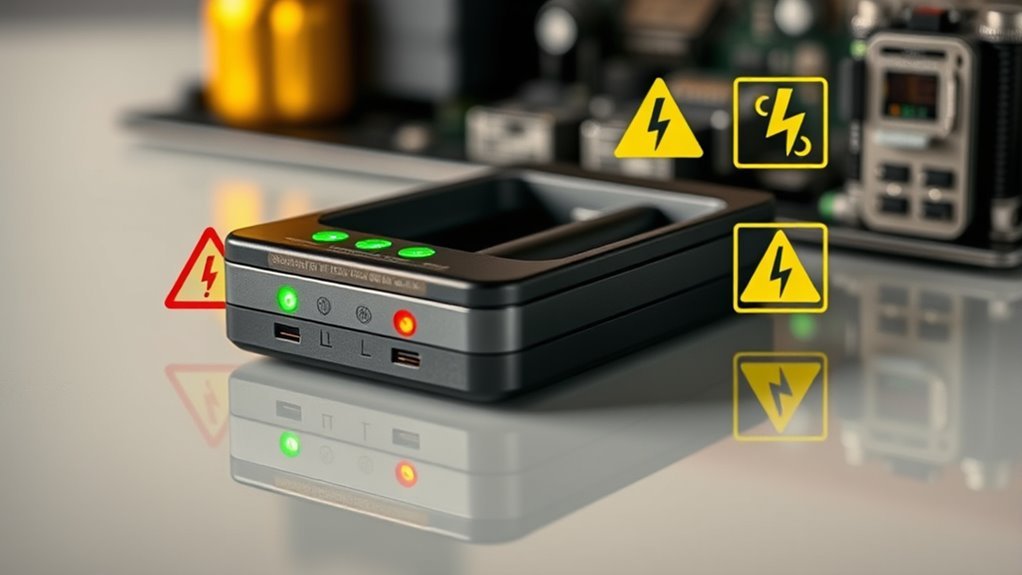
Lithium batteries store energy through electrochemical processes involving lithium ions moving between the anode and cathode. This battery chemistry enables efficient energy storage but also introduces potential safety risks if mishandled. During operation, lithium ions flow across the separator, facilitating charge transfer. Proper management of this process is vital, as improper handling can lead to thermal runaway or fires. The delicate balance of chemical stability demands strict safety precautions, especially during charging and discharging cycles. Understanding the fundamental workings of lithium-based energy storage highlights the significance of using compatible chargers and avoiding physical damage. Recognizing these risks guarantees safer handling and prolongs battery life, making safety an essential aspect of working with lithium batteries and their associated systems.
Choosing the Right Charger for Your Lithium Battery
Selecting the appropriate charger for your lithium battery is a critical step in guaranteeing safe and efficient operation. A compatible charger optimizes battery lifespan by preventing overcharging and reducing heat buildup, which can degrade capacity over time. It’s essential to choose a charger that matches your battery’s voltage and current specifications, as mismatched charging speeds can accelerate wear or cause safety hazards. A charger with controlled charging speed ensures a balanced, steady current flow, preserving the battery’s health. Using the right charger minimizes risks and maximizes performance, assuring the longevity of your lithium battery. Always verify manufacturer recommendations and avoid generic or incompatible chargers, as improper selection can compromise safety and reduce overall battery lifespan.
What Makes a Safe Charging Environment?
Creating a safe charging environment requires careful attention to the physical setup and ongoing monitoring. We must eliminate environmental hazards such as moisture, extreme temperatures, and dust that can compromise battery safety. Proper ventilation is vital to prevent heat buildup, which can lead to thermal runaway. We should also guarantee that charging areas are free from flammable materials and adequately grounded. Additionally, responsible battery recycling is essential; improper disposal can cause environmental hazards and pose fire risks. Regular inspections of charging equipment and adherence to manufacturer guidelines help detect potential issues early. By maintaining a controlled environment and practicing proper disposal protocols, we reduce the risk of accidents and extend battery lifespan. A cautious approach ensures safety and minimizes environmental impact.
How to Properly Charge Lithium Batteries: A Step-by-Step Guide
To guarantee safe and effective charging, we must select the correct charger compatible with the battery specifications. Following precise charging procedures helps prevent risks such as overheating or overcharging. Strict adherence to these steps is essential for maintaining battery integrity and safety.
Choose Correct Charger
Ensuring you use the correct charger is essential for the safe and efficient charging of lithium batteries. An incompatible charger can lead to improper charging speed, which may reduce your battery’s lifespan or cause safety hazards. Always verify that the charger’s voltage and current ratings match the battery manufacturer’s specifications. Using a charger designed specifically for lithium batteries helps maintain ideal charging conditions and prevents overcurrent or overheating. Choosing the right charger also guarantees consistent charging performance, preserving battery health over time. Avoid generic or low-quality chargers that lack proper safety features, as these can compromise both safety and battery longevity. Properly selecting your charger is a critical step toward maximizing battery lifespan while guaranteeing safe, efficient charging.
Follow Charging Procedures
When charging lithium batteries, following proper procedures is essential to guarantee safety and maximize battery lifespan. Incorrect charging can lead to dangerous failures and reduce battery efficiency over time. To ensure safe charging:
- Always use a charger compatible with your battery’s specifications to prevent overvoltage or undervoltage issues.
- Monitor the charging process regularly, avoiding overcharging, and disconnect once fully charged to prevent thermal runaway.
- After use, prioritize battery recycling to minimize environmental impact and ensure proper disposal of damaged or end-of-life batteries.
Adhering to these steps safeguards against hazards and prolongs battery life. Proper charging procedures also support responsible practices like selecting compatible chargers and environmentally conscious battery recycling, reinforcing safety and sustainability.
Common Mistakes That Can Damage Your Lithium Battery
Despite their efficiency, lithium batteries are sensitive to certain practices that can cause irreversible damage. Overlooking proper handling during charging or discharging can accelerate capacity loss and reduce lifespan. Using incompatible chargers or neglecting manufacturer guidelines risks overcharging or overheating, which can lead to internal damage. Improper disposal or neglecting battery recycling protocols not only damages the battery but also poses environmental impact concerns, emphasizing the need for responsible disposal. Repeated exposure to extreme temperatures can degrade battery components, decreasing performance. These mistakes not only limit battery longevity but also contribute to environmental hazards if improperly discarded. Recognizing these risks underscores the importance of cautious, informed practices to preserve battery integrity and minimize ecological footprint.
How to Spot and Prevent Overcharging
To prevent overcharging, we need to be vigilant for clear indicators like increased temperature or voltage irregularities. Using compatible, high-quality chargers guarantees the battery receives the correct current without risking damage. By monitoring these signals and selecting proper equipment, we can substantially decrease the risk of overcharging incidents.
Recognize Overcharge Indicators
Overcharging a lithium battery can lead to safety hazards, so it’s crucial to recognize the signs early. Overcharge indicators include several critical warning signs:
- Visible Battery Swelling: Swelling indicates internal gas buildup, a clear sign of overcharge, and requires immediate attention.
- Excessive Heat: Overcharged batteries often become unusually hot to touch, risking thermal runaway.
- Voltage Irregularities: Fluctuations or sustained high voltage levels can signal overcharge conditions.
Monitoring these signs helps prevent dangerous situations. Battery swelling is particularly concerning, as it signifies internal damage and potential failure. Recognizing these overcharge indicators allows us to act quickly, disconnect the charger, and avoid safety risks associated with continued overcharging. Always stay alert to these warning signs to ensure safe handling of lithium batteries.
Use Proper Charging Equipment
Using proper charging equipment is essential to prevent overcharging and guarantee lithium battery safety. Selecting chargers specifically designed for your battery type ensures appropriate charging speed and reduces risk of damage. Incompatible or low-quality chargers can lead to overcurrent, overheating, and potential safety hazards. Always verify that the charger has the correct voltage and current ratings, and avoid overusing fast chargers that can stress the battery. Proper equipment also facilitates battery recycling efforts by minimizing damage that complicates recycling processes. Monitoring charging conditions with quality equipment helps identify signs of stress early, preventing overcharge situations. Ultimately, using certified, compatible chargers enhances safety, prolongs battery life, and supports responsible battery management through safe recycling practices.
Safe Storage Tips for Lithium Batteries
Proper storage of lithium batteries is essential to prevent accidents and preserve their lifespan. Incorrect storage can lead to thermal runaway, fires, or environmental hazards. To guarantee safety, consider these guidelines:
- Store batteries in a cool, dry place away from direct sunlight and flammable materials. Ideal temperature ranges are typically between 32°F and 77°F (0°C and 25°C).
- Keep batteries at a partial charge, around 30-50%, to minimize capacity loss and adhere to lithium safety regulations.
- Participate in responsible battery recycling programs to prevent environmental damage, and stay informed about local regulations governing lithium battery storage and disposal.
Following these precautions helps prevent hazards and supports sustainable practices within lithium safety regulations.
What to Do If Your Battery Is Damaged or Swollen
When a lithium battery shows signs of damage or swelling, immediate action is necessary to prevent potential hazards. Battery swelling indicates internal chemical damage, often caused by overcharging, thermal stress, or manufacturing defects. Swollen batteries pose a risk of rupture, fire, or chemical leaks, which can be dangerous. If you notice any swelling or other signs of damage, do not attempt to charge or use the battery further. Carefully handle the battery with protective gloves, and place it in a non-flammable, well-ventilated area away from combustible materials. Do not puncture, crush, or expose it to extreme temperatures. Dispose of the damaged battery following local hazardous waste regulations, ensuring that chemical damage does not lead to environmental contamination or safety hazards.
Essential Safety Equipment and Precautions When Charging
Before beginning to charge a lithium battery, it’s essential to equip ourselves with the right safety gear and follow strict precautions to minimize risk. Proper safety equipment includes fire-resistant gloves, safety goggles, and a non-conductive work surface. Additionally, verify the charging area is well-ventilated and free of flammable materials. Precautions also involve monitoring the charging process closely and avoiding overcharging, which can lead to thermal runaway. Using appropriate equipment supports responsible battery recycling practices, reducing environmental impact. If a battery shows signs of damage or swelling, proper disposal is critical to prevent environmental contamination. By adhering to these safety measures, we minimize hazards and promote safer handling, ultimately contributing to sustainable battery use and environmental preservation.
Troubleshooting Charging Problems and When to Seek Help
Despite taking all necessary safety precautions during charging, issues can still arise that hinder battery performance or pose safety risks. Common problems include overheating, slow charging, or unexpected shutdowns. If you notice swelling, persistent overheating, or failure to hold a charge, it’s vital to stop using the battery immediately and seek professional assistance. Troubleshooting may involve inspecting connections or using compatible chargers, but avoid attempts to repair internal components yourself. Proper disposal and recycling of damaged batteries are essential to minimize environmental impact and support battery recycling efforts. Recognizing when professional help is needed guarantees safety and prolongs battery lifespan, reducing hazardous waste and environmental harm. Always prioritize safety, and don’t hesitate to consult experts when in doubt.
Frequently Asked Questions
Can I Use a Lower-Rated Charger for My Lithium Battery?
Using a lower-rated charger risks incompatible charger compatibility and poor voltage regulation, which can damage your lithium battery. We advise against it because inadequate charging may cause safety issues, reduced battery lifespan, and potential hazards.
How Often Should I Inspect My Lithium Battery During Charging?
We suggest inspecting your lithium battery during charging at least every 30 minutes, focusing on battery monitoring for overheating, swelling, or unusual odors. Following strict charging schedules minimizes risks and guarantees safe, ideal battery performance.
Are There Specific Safety Certifications to Look for in Chargers?
We check for charger certifications aligned with official certification standards, guaranteeing compliance with charger regulations. Always select chargers that have recognized safety certifications like UL, CE, or FCC to minimize risks and ensure reliable, safe charging performance.
What Are the Signs of a Failing Lithium Battery?
We notice signs like battery overheating and swollen battery indicators, which suggest failure. These issues can lead to safety hazards, so we advise cautious handling and immediate removal from use to prevent potential fires or damage.
Is It Safe to Leave a Charging Lithium Battery Unattended?
We advise against unattended charging, as it’s like leaving a lit candle unattended—fire hazards escalate unexpectedly. Always monitor lithium batteries during charging to prevent risks, ensuring a safer environment and avoiding potential disasters.
Conclusion
In summary, prioritizing safety when charging lithium batteries isn’t just a precaution—it’s essential. By following proper procedures, using the right equipment, and remaining vigilant, we can prevent accidents before they happen. Remember, a stitch in time saves nine; taking careful steps now ensures long-term safety and battery longevity. Let’s stay vigilant and never cut corners, because when it comes to lithium batteries, safety should always come first.