Ensuring the safety of lithium batteries in home storage is a technical challenge that demands careful attention to potential risks like thermal runaway, internal faults, and external heat sources. While these systems offer significant benefits, improper handling and installation can lead to dangerous failures. Understanding the critical safety measures and evolving standards is essential for reliable operation. As we explore these safety considerations, you’ll see why ongoing vigilance remains a key part of responsible energy management.
Key Takeaways
- Choose batteries with proper certifications (UL, IEC) to ensure safety standards and reliable performance.
- Implement effective thermal management and proper installation practices to prevent overheating and internal shorts.
- Regularly monitor voltage, temperature, and charge levels to detect potential safety issues early.
- Follow manufacturer guidelines for safe charging, discharging, and recycling of lithium batteries.
- Be prepared with appropriate fire suppression methods and emergency protocols for battery fires or failures.
What Are the Safety Risks of Lithium Batteries in Home Storage?
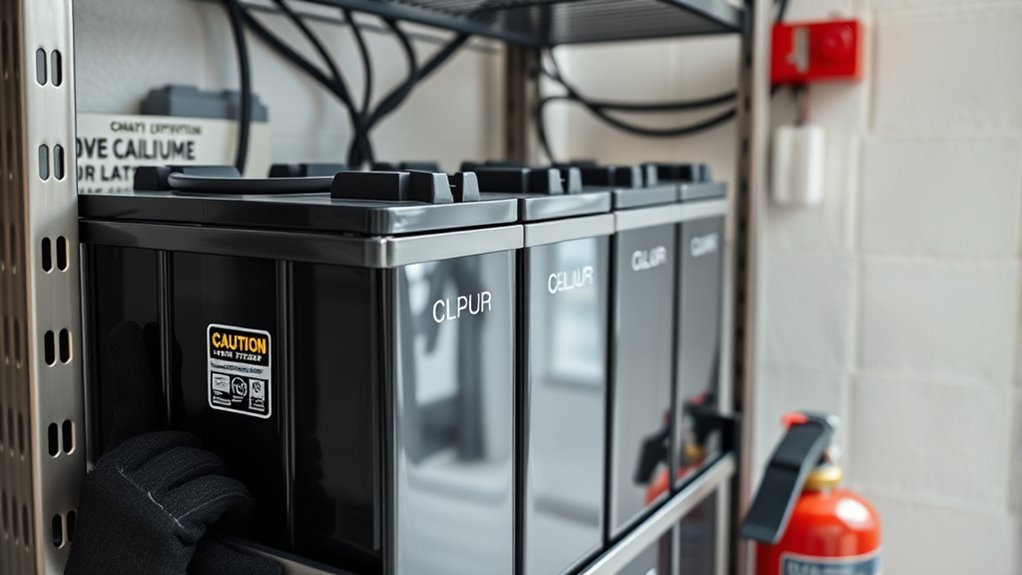
Although lithium batteries offer efficient energy storage, they pose significant safety risks when used in home environments. One primary concern is battery temperature; if it rises beyond safe thresholds, thermal runaway can occur, leading to fires or explosions. Maintaining proper thermal management is essential to prevent overheating. Additionally, the chemically stable nature of lithium-ion cells is paramount for safety; instability during charging or discharging cycles can compromise the battery’s integrity. Fluctuations in temperature or exposure to external heat sources can reduce chemical stability, increasing the risk of internal short circuits. Consequently, understanding and controlling battery temperature, along with ensuring the chemical stability of the cells, is critical for safe home storage. Proper system design minimizes these risks and enhances overall safety.
How to Choose a Safe and Reliable Lithium Battery System
Selecting a safe and reliable lithium battery system requires a thorough evaluation of key technical specifications and safety features. We focus on battery chemistry, cycle life, and thermal management to guarantee system stability and longevity. Manufacturer certifications, such as UL or IEC standards, are critical indicators of compliance with safety protocols and quality assurance. These certifications validate that the system undergoes rigorous testing to mitigate risks like thermal runaway or fire. Additionally, considering battery recycling practices reflects a commitment to environmental safety and responsible disposal, reducing long-term hazards. A complete assessment of these factors helps guarantee the system’s safety and reliability, providing peace of mind for home storage applications. Ultimately, choosing a certified, environmentally conscious system minimizes potential safety risks and supports sustainable energy use.
Proper Installation Practices for Lithium Battery Safety
Proper installation practices are critical to guarantee lithium battery safety, as incorrect setup can lead to thermal runaway, electrical faults, or fire hazards. Assuring the system is installed according to manufacturer certifications guarantees adherence to safety standards and proper thermal management. Selecting certified batteries minimizes risks associated with substandard components and enhances overall reliability. Additionally, proper installation includes planning for safe Battery Recycling practices, preventing environmental hazards from end-of-life batteries. We emphasize that installers must follow detailed guidelines for wiring, ventilation, and placement to mitigate overheating and electrical faults. Using manufacturer-certified components and maintenance protocols ensures a safer, more sustainable home energy system, reducing the likelihood of accidents and supporting responsible disposal practices.
Maintenance and Monitoring Tips to Keep Your Battery System Safe
Once a lithium battery system is installed correctly, ongoing maintenance and monitoring become vital to guarantee its safety and reliability. Regular checks help identify signs of battery degradation, which can compromise safety and efficiency. Adhering to proper charging protocols prevents overcharging or undercharging, key factors in prolonging battery life and avoiding thermal risks. Monitoring voltage, temperature, and state of charge ensures peak operation and early detection of anomalies. Implementing a maintenance schedule minimizes risks related to aging components and potential failure. Below is a visual guide for key practices:
| Aspect | Monitoring Focus | Preventive Measure |
|---|---|---|
| Battery Degradation | Capacity loss, internal resistance | Regular capacity testing |
| Charging Protocols | Voltage, current levels | Use manufacturer guidelines |
| Thermal Management | Temperature fluctuations | Guarantee ventilation and cooling |
How to Respond to Battery Emergencies and Fires
When a lithium battery emergency or fire occurs, prompt and informed response is critical to minimizing damage and ensuring safety. Immediate action involves evaluating the situation carefully, prioritizing personal safety and preventing escalation. If safe, disconnect the battery to halt power flow, and avoid attempting to extinguish the fire with water, as this can intensify the reaction. Instead, utilize fire suppression systems designed for lithium battery fires, such as Class D fire extinguishers or specialized foam agents. After controlling the fire, proper battery disposal becomes essential; damaged batteries should be handled following hazardous waste protocols to prevent environmental contamination. Monitoring the incident and documenting the response helps inform future safety measures, ensuring thorough handling of battery emergencies and adherence to safety standards.
Staying Up-to-Date on Lithium Battery Safety Regulations and Advances
Staying current with lithium battery safety regulations and technological advances is vital for maintaining safety standards and preventing incidents. We must monitor updates in battery certification processes, which guarantee products meet essential safety criteria before market entry. Regulatory compliance requires adherence to evolving standards set by authorities, such as UL 9540 or IEC 62619, which address safety and performance benchmarks. Advances in battery chemistry, thermal management, and monitoring systems continually influence these regulations, necessitating ongoing review. By staying informed through industry publications, certification bodies, and regulatory agencies, we can proactively implement necessary safety measures. This vigilance ensures that our home storage systems not only meet legal requirements but also incorporate the latest innovations to enhance safety and reliability.
Frequently Asked Questions
Can Lithium Batteries Be Safely Used in Small Residential Spaces?
Yes, lithium batteries can be safely used in small residential spaces when we prioritize fire prevention and monitor battery lifespan, ensuring proper installation, ventilation, and maintenance to mitigate risks and maintain ideal performance.
Are There Specific Brands Known for Higher Safety Standards?
Like a lighthouse guiding ships, reputable brands like Tesla and LG prioritize safety certifications and brand reliability, ensuring their lithium batteries meet rigorous standards. These brands’ commitment minimizes risks, making them safer choices for residential energy storage.
How Do Temperature Fluctuations Affect Lithium Battery Safety at Home?
Temperature fluctuations induce thermal expansion in lithium batteries, risking structural integrity. Effective temperature regulation minimizes these risks, ensuring safety by preventing overheating or thermal stress that could lead to thermal runaway or battery failure.
What Are the Long-Term Safety Considerations for Lithium Batteries?
We consider long-term safety by monitoring battery degradation, which impacts capacity and stability, and implementing fire prevention measures. Regular maintenance and proper thermal management are essential to mitigate risks associated with aging lithium batteries.
Do Lithium Batteries Emit Harmful Gases During Normal Operation?
No, lithium batteries don’t emit harmful gases during normal operation thanks to their chemical stability. While minor gases like oxygen or carbon dioxide might be released, they’re harmless, making these batteries safe for home storage when used correctly.
Conclusion
By following rigorous safety protocols, selecting certified batteries, and maintaining vigilant oversight, we can *substantially* mitigate risks associated with lithium home storage. Proper practices transform what could be a volatile threat into a dependable energy source—like turning a ticking time bomb into a well-oiled machine. Staying informed on safety standards and responding promptly to emergencies ensures our systems remain safe and reliable, safeguarding our homes and loved ones from potential disasters that are far more devastating than we often imagine.