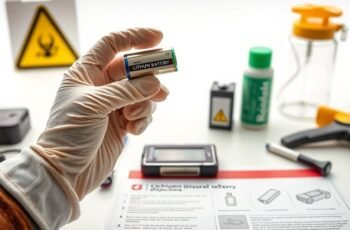
Ensuring safety when using portable lithium battery packs is critical to prevent accidents, equipment damage, or environmental harm. Proper handling, storage, and adherence to safety protocols can considerably reduce risks like fire, explosion, or malfunction. As technology advances, understanding best practices becomes essential for safe operation across various applications. We’ll explore key safety tips that help you manage these powerful devices responsibly and effectively—but there are important details that can make all the difference in your safety approach.
Key Takeaways
- Store batteries in a cool, dry place and avoid extreme temperatures to prevent damage and safety risks.
- Use manufacturer-approved chargers and avoid overcharging or deep discharges.
- Regularly inspect batteries for physical damage, swelling, or corrosion before use.
- Pack batteries securely and follow airline regulations when traveling with large capacity packs.
- Disconnect and safely dispose of damaged or malfunctioning batteries promptly to prevent hazards.
What Are the Risks of Using Portable Lithium Battery Packs?

While portable lithium battery packs offer convenience and mobility, they also present specific safety risks that users must understand. The primary hazards involve thermal runaway, which can lead to fires or explosions if the battery is damaged or improperly handled. Additionally, overcharging or short circuits can cause internal failures. From an environmental perspective, improper disposal of these batteries hampers battery recycling efforts, potentially releasing toxic substances. The extraction of lithium during battery manufacturing raises concerns about resource sustainability and environmental impact, emphasizing the importance of responsible lithium extraction practices. Understanding these risks highlights the necessity of proper handling, storage, and disposal. Safe usage practices are essential to mitigate hazards and support sustainable practices like battery recycling and responsible lithium extraction.
How to Choose a Safe Portable Lithium Battery Pack
When selecting a portable lithium battery pack, we focus on certification and compliance to guarantee adherence to safety standards. We also consider battery capacity and size to match your power needs without compromising safety. Making informed choices based on these points reduces risks and enhances reliable performance.
Certification and Compliance
How can you guarantee that a portable lithium battery pack is safe to use? Verification relies heavily on battery certification and adherence to strict compliance standards. Reputable manufacturers secure certifications such as UL, CE, or UN38.3, indicating rigorous safety testing. These certifications ensure the pack complies with international safety protocols, minimizing risks like overheating or explosion. When selecting a battery pack, verify the presence of certification labels and documentation.
| Certification Type | Compliance Standards | Key Safety Features |
|---|---|---|
| UL | UL 2054, UL 1642 | Overcharge protection |
| CE | EN 62133 | Short circuit prevention |
| UN38.3 | Transport Safety | Thermal stability |
| FCC | Radio Frequency | Electromagnetic interference |
Battery Capacity and Size
Selecting the appropriate battery capacity and size is essential for ensuring safety and ideal performance of a portable lithium battery pack. Adequate capacity directly influences battery performance, providing sufficient power for your devices without overloading the system. Size considerations are equally important; larger packs typically offer higher capacity but may compromise portability and increase risk factors during handling. We recommend choosing a capacity that aligns with your usage needs while remaining within safety limits specified by regulatory standards. Oversized batteries can generate excess heat or stress components, elevating safety concerns. Conversely, undersized packs may underperform or fail prematurely. By carefully evaluating your power requirements and considering size considerations, you can optimize both safety and performance, ensuring reliable operation of your portable lithium battery pack.
How to Charge Your Battery Pack Safely
To guarantee safe and efficient charging of your portable lithium battery pack, it’s essential to follow manufacturer guidelines and use the designated charger. Proper charging practices help maintain ideal charging cycles, which directly influence battery lifespan. Avoid overcharging by disconnecting once the battery reaches full capacity, as prolonged charging can degrade cell integrity. Similarly, refrain from frequently allowing the battery to fully discharge, since deep discharges accelerate capacity loss. Using incompatible chargers or charging in extreme temperatures can compromise safety and reduce the number of effective charging cycles. Maintaining a stable, moderate environment during charging preserves battery health and prolongs overall lifespan. Adhering to these precise protocols ensures safe operation and maximizes the longevity of your lithium battery pack.
How to Use Your Battery Pack Correctly During Travel
When traveling with a lithium battery pack, we must guarantee it is packed securely to prevent damage and accidental activation. Following airline regulations for battery placement and capacity is essential to avoid delays or safety issues. Proper handling and compliance minimize risks and ensure safe usage throughout your journey.
Pack Properly and Securely
Ensuring your lithium battery pack is packed properly and secured is essential for safe travel. We recommend storing it in a protective case to prevent physical damage and accidental activation. Keep the battery isolated from metallic objects that could cause short circuits. Secure the pack in carry-on luggage, avoiding compression or impact risks. Proper packing facilitates lithium safety by reducing the chance of thermal runaway or leaks. When disposing of or replacing batteries, follow battery recycling protocols to prevent environmental harm. Always check for damage before use, and avoid packing damaged units. Securing your battery pack minimizes hazards during transit, aligns with safety regulations, and promotes responsible disposal through battery recycling. Proper packing is integral to safe, compliant travel with lithium battery packs.
Follow Airline Regulations
Following airline regulations is essential for safely carrying your lithium battery pack during travel. These guidelines ensure compliance with safety standards and help minimize environmental impact through proper battery recycling. Airlines typically restrict lithium batteries to 100Wh or less in carry-on luggage and require their declaration. To visualize compliance, consider this table:
| Capacity | Allowed in Cabin | Allowed in Checked | Additional Requirements |
|---|---|---|---|
| Up to 100Wh | Yes | No | No special packaging |
| 100-160Wh | Yes | Limited | Airline approval needed |
| Over 160Wh | No | No | Prohibited |
Adhering to these regulations prevents hazards, reduces fire risks, and promotes responsible disposal, thereby guaranteeing environmental impact.
How to Store Your Battery Pack Safely
Proper storage of your lithium battery pack is essential to prevent damage and guarantee safety. Store the pack in a cool, dry environment with a stable storage temperature, ideally between 20°C to 25°C, to minimize thermal stress and degradation. Avoid exposing the battery to extreme heat or cold, which can impair performance and increase the risk of thermal runaway. When not in use for extended periods, store the battery at around 50% charge to reduce capacity loss. Additionally, always adhere to proper battery disposal protocols; do not discard damaged or expired packs improperly. Confirm the storage area is free from flammable materials and away from direct sunlight or moisture. Proper storage practices extend battery lifespan and reduce safety hazards associated with lithium batteries.
How to Recognize Signs of Battery Damage or Overheating
We should regularly inspect our battery packs for visible physical damage, such as cracks, swelling, or corrosion, which can indicate internal issues. Unusual heating during use or charging is another critical sign of potential failure or overheating. Recognizing these indicators early helps prevent safety hazards and prolongs battery lifespan.
Visible Physical Damage Signs
Visible physical damage to a lithium battery pack is a clear indicator of potential failure or safety risk. Recognizing physical signs of damage is essential for safety. Key visible damage includes:
- Swelling or bulging: The battery casing appears inflated, indicating internal gas buildup.
- Cracks or fractures: Visible fissures compromise the integrity of the casing, increasing leakage risk.
- Corrosion or leaks: Discoloration, residue, or fluid around connectors or vents signals chemical leakage.
These physical signs suggest compromised battery health and potential safety hazards. If any of these visible damage indicators are present, the battery should be disconnected immediately and replaced. Regular visual inspections are critical to prevent accidents related to damaged lithium batteries.
Unusual Heating Indicators
Unusual heating of a lithium battery pack is a critical warning sign that the battery may be damaged or experiencing thermal instability. Elevated temperatures indicate internal issues such as thermal expansion or compromised cell integrity. If you notice the battery feels abnormally hot during use or charging, it’s essential to stop operation immediately. Battery swelling, often caused by gas buildup from overheating, is another clear indicator of damage. Swelling can lead to deformation, compromising safety and possibly causing leaks or rupture. Recognizing these signs early helps prevent catastrophic failure, fire, or injury. Always monitor your battery pack for abnormal warmth, and if any signs of swelling or excessive heat occur, dispose of the battery properly and replace it promptly.
What Should You Do If Your Battery Overheats or Malfunctions?
When a lithium battery pack overheats or malfunctions, immediate and correct action is essential to prevent further damage or safety hazards. First, disconnect the battery from any connected devices and move it to a non-flammable surface in a well-ventilated area. Second, do not attempt to puncture or disassemble the pack, as this can exacerbate the problem. Third, if safe, use a fire extinguisher rated for electrical fires (Class C) to contain any flames. Once the situation is stabilized, dispose of the malfunctioning battery through proper battery recycling channels to reduce environmental impact. Prompt response minimizes potential damage and guarantees responsible disposal, safeguarding both safety and environmental health.
How to Maintain Your Battery Pack for Longevity and Safety
Regular maintenance of your lithium battery pack guarantees peak performance and safety over its lifespan. To guarantee longevity, always store the pack in a cool, dry environment, avoiding extreme temperatures that accelerate capacity loss. Regularly inspect for signs of damage or counterfeit products, which pose safety risks. Proper battery recycling practices are essential when disposing of spent packs to prevent environmental harm. Use a multimeter to monitor voltage levels and prevent overcharging or deep discharging, which degrade battery health. Additionally, avoid using unauthorized chargers. Below is a guide to key maintenance aspects:
| Aspect | Action | Benefit |
|---|---|---|
| Storage | Store in cool, dry place | Extends lifespan |
| Inspection | Check for physical damage or counterfeit products | Ensures safety and authenticity |
| Recycling | Follow proper battery recycling protocols | Prevents environmental hazards |
Common Mistakes to Avoid When Using Lithium Battery Packs
Avoiding common mistakes is essential to guarantee the safe and efficient use of lithium battery packs. First, improper handling of charging accessories can lead to overheating or short circuits; always use manufacturer-approved chargers and avoid third-party alternatives. Second, neglecting battery recycling protocols increases environmental risks and can compromise safety; dispose of used batteries at designated recycling centers. Third, overcharging or discharging batteries beyond recommended limits accelerates degradation and poses safety hazards. Regularly monitor battery health and follow manufacturer guidelines for charging cycles. Ensuring proper use of charging accessories and adhering to battery recycling practices minimizes risks, enhances performance, and prolongs battery lifespan. Awareness of these mistakes helps prevent accidents and supports responsible battery management.
Conclusion: Staying Safe While Using Portable Lithium Battery Packs
To guarantee safety while using portable lithium battery packs, we must remain vigilant and adhere strictly to established guidelines. Proper handling minimizes risks of thermal runaway, fires, and explosions. Additionally, responsible battery recycling is essential to mitigate environmental impact, as improper disposal can lead to hazardous chemical leakage and ecosystem contamination. We should always follow manufacturer instructions, use approved chargers, and avoid exposing batteries to extreme temperatures or physical damage. When batteries reach the end of their lifespan, recycling programs ensure safe disposal and material recovery, reducing environmental harm. By prioritizing safe usage practices and supporting proper battery recycling, we protect both user safety and the environment, fostering sustainable use of portable lithium battery technology.
Frequently Asked Questions
Can You Safely Use a Damaged Lithium Battery Pack?
We advise against using a damaged lithium battery pack because thorough battery inspection is essential; damage prevents proper safety measures, risking fire or explosion. Always replace compromised packs to guarantee safe, reliable performance and prevent further damage.
Are There Specific Regulations for Transporting Lithium Batteries?
We understand transporting lithium batteries requires strict regulatory compliance and adherence to transportation protocols, like packaging and labeling. For example, a shipment mishandling led to a recall, highlighting the importance of following specific regulations to prevent hazards.
How Do Temperature Changes Affect Battery Safety?
Temperature changes can substantially impact battery safety, so we emphasize temperature monitoring and thermal regulation. Sudden shifts may cause thermal runaway or damage, making it essential to maintain ideal temperature ranges for safe operation and longevity.
What Is the Proper Disposal Method for Lithium Batteries?
We must dispose of lithium batteries properly through authorized battery recycling programs to prevent catastrophic environmental impact. Mishandling causes severe pollution; always follow local regulations for safe disposal, ensuring minimal environmental harm and safeguarding public health.
Can Counterfeit or Unbranded Battery Packs Be Safe?
Counterfeit or unbranded battery packs pose significant risks due to unverified quality and safety standards. We recommend always verifying brand authenticity and purchasing from trusted sources to mitigate counterfeit risks and guarantee safety during use.
Conclusion
Just as a skilled captain navigates treacherous waters with care and precision, we must handle lithium battery packs with vigilance and respect. By following safety guidelines, inspecting regularly, and using approved chargers, we steer clear of hazards like fires or explosions. Our diligent attention guarantees our journey remains smooth and secure. With careful stewardship, our portable power sources become reliable allies, powering our adventures without risking the stormy seas of danger.