When traveling with portable lithium battery packs, understanding airline regulations is vital to guarantee safety and compliance. These rules specify limits on capacity, quantity, and storage methods, which vary between carry-on and checked luggage. Failing to adhere can result in confiscation, delays, or safety hazards. To avoid issues, it’s essential to stay informed about the latest standards and airline-specific policies, as these can greatly influence your travel plans.
Key Takeaways
- Lithium battery packs must be carried in carry-on luggage; spares require individual protection.
- Batteries under 100Wh are generally allowed without approval; 100-160Wh batteries need airline approval.
- Pack batteries in original or insulated cases, preventing damage and short circuits.
- Avoid storing lithium batteries in checked baggage due to fire risk and safety concerns.
- Always verify airline-specific policies and international regulations before travel.
What Are the Airline Rules for Carrying Lithium Batteries?
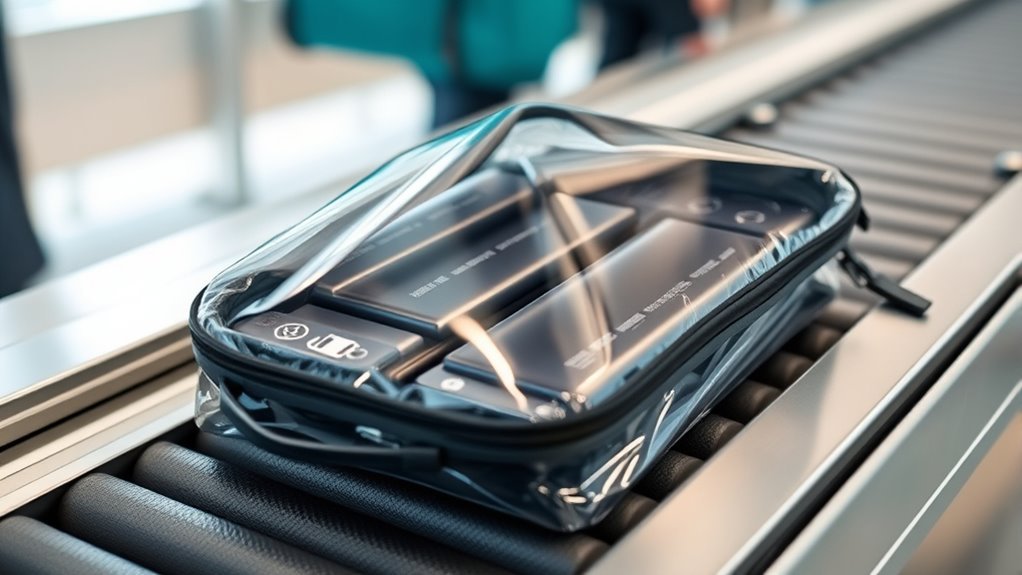
When it comes to carrying lithium batteries on a flight, understanding airline regulations is essential to guarantee compliance and safety. Airlines typically restrict batteries based on capacity and type, emphasizing the importance of proper battery disposal and recycling. Lithium batteries must be carried in carry-on luggage, with spares individually protected to prevent short circuits. Devices containing batteries are often permitted in checked baggage, but spare batteries require separate packaging. Ensuring safe battery recycling and proper disposal at the end of their life cycle minimizes fire risks and environmental impact. Airlines strictly enforce these rules to prevent hazards. Failure to adhere can lead to confiscation or delays. Always check specific airline policies before travel to ensure your lithium batteries meet safety standards and comply with international regulations.
How Much Battery Capacity and Quantity Can You Bring?
Understanding the limits on battery capacity and quantity is essential for compliance with airline safety standards. Airline regulations specify maximum allowed capacities based on battery technology, with lithium-ion batteries typically categorized into two tiers: up to 100Wh and between 100Wh and 160Wh. For batteries under 100Wh, passengers can generally carry multiple units without prior approval. Batteries between 100Wh and 160Wh require airline approval, and quantity limits usually range from two to four units. These restrictions are designed to mitigate fire risks associated with lithium chemistry. Airlines strictly enforce these rules, which are aligned with international safety standards. To guarantee compliance, travelers must verify their battery’s capacity and quantity before packing, as exceeding limits can lead to confiscation or travel disruptions.
Packing Lithium Batteries Safely in Your Luggage
Properly packing lithium batteries is essential for ensuring safety during air travel, as improper handling can increase the risk of fire or damage. To comply with airline regulations and enhance battery safety, store batteries in their original containers or protective cases. Avoid loose batteries bouncing around in your luggage, which can cause short circuits. Keep batteries separate from metal objects like keys or coins that might cause accidental discharge. Use clearly labeled, insulated bags for spare batteries.
| Packing Method | Safety Tip |
|---|---|
| Original packaging | Prevents damage and short circuits |
| Protective cases | Shields batteries from impacts |
| Insulated bags | Minimizes risk of accidental activation |
| Separate compartments | Avoid contact with metallic objects |
| Avoid bulk stacking | Prevents overheating or damage |
Are There Restrictions for Checked and Carry-On Bags?
Airline regulations regarding lithium batteries differ depending on whether they are packed in checked or carry-on luggage. For safety reasons, the FAA mandates that lithium batteries be stored in carry-on baggage whenever possible, due to better monitoring and immediate response in case of thermal events. Battery storage in checked bags is highly restricted because of the risk of fire and the difficulty in managing incidents mid-flight. Airlines prioritize airline safety by imposing limits on watt-hour ratings and quantity per passenger, ensuring safe handling and reducing fire hazards. Passengers must adhere to these restrictions to prevent confiscation or delays. Proper packaging and compliance with airline policies are vital for safe battery transport, aligning with aviation safety standards and minimizing risks during air travel.
How to Stay Informed and Avoid Confiscation or Delays
To avoid confiscation or delays, it’s essential that travelers proactively stay informed about the latest airline regulations and safety standards concerning lithium batteries. Monitoring updates guarantees compliance with battery safety protocols and prevents mishandling. Airline regulations vary, so verifying specific rules before travel is key. We recommend consulting official airline websites, security advisories, and regulatory bodies like IATA. Consider maintaining a concise, updated record of permitted battery capacities and packaging requirements. Use this table as a quick reference:
| Aspect | Key Details | Source |
|---|---|---|
| Battery Capacity | ≤ 100Wh for carry-on, up to 160Wh | Airline Regulations |
| Packaging | Terminal protection required | Security Guidelines |
| Documentation | Manufacturer’s info if needed | Regulatory Authorities |
This approach guarantees adherence to battery safety and smooth transit.
Frequently Asked Questions
Can I Use My Portable Lithium Battery During the Flight?
Yes, you can use your portable lithium battery during the flight, as long as it complies with airline regulations and battery safety standards, including capacity limits typically under 100Wh, to guarantee safety and prevent incidents.
Are There Size Restrictions for Lithium Batteries on International Flights?
International airline regulations specify size restrictions for lithium batteries, emphasizing battery safety. We adhere strictly to these guidelines, ensuring batteries are within allowed dimensions to prevent hazards and comply with global aviation safety standards.
Do Different Airlines Have Varying Rules for Lithium Battery Transport?
Ever wondered if airline regulations vary? Different airlines do impose specific rules for lithium battery safety, so it’s crucial to verify each airline’s policies beforehand. Strict adherence ensures compliance with airline regulations and safe transport.
What Should I Do if My Lithium Battery Pack Is Damaged or Swollen?
If your lithium battery pack is damaged or swollen, we recommend performing a damage inspection and safely disposing of it according to local battery disposal regulations. Do not attempt to recharge or use a compromised battery.
Are There Specific Labeling Requirements for Lithium Batteries in Luggage?
Studies show that over 90% of lithium battery incidents involve improper handling. We guarantee compliance with battery labeling and packaging regulations, clearly marking lithium batteries in luggage to meet airline safety standards and prevent hazards.
Conclusion
Understanding airline regulations for lithium batteries is essential for safe travel. With over 2.5 million lithium battery incidents reported annually worldwide, proper handling is important to prevent hazards. By following capacity limits, packing protocols, and airline guidelines, we can guarantee safety and avoid delays. Staying informed and prepared protects both our belongings and fellow travelers. Let’s prioritize safety and compliance to make every journey secure and smooth.