Just as a delicate balance keeps a tightrope walker steady, managing lithium batteries’ temperature is vital for safety and longevity. Overheating risks not only damage the battery but can lead to thermal runaway, a hazardous event. Understanding the underlying causes and prevention strategies is fundamental for anyone relying on these power sources. To make certain your batteries operate within safe limits, it’s important to take into account proper handling, storage, and charging practices—topics we will explore in detail.
Key Takeaways
- Store batteries in a cool, dry environment and avoid exposure to high temperatures or direct sunlight.
- Use chargers compatible with the battery’s specifications and avoid overcharging or rapid charging.
- Regularly inspect batteries and charging equipment for damage, corrosion, or signs of overheating.
- Keep batteries at a moderate charge level (around 30-50%) during storage to reduce stress.
- Ensure proper heat dissipation by avoiding physical damage and providing adequate ventilation during use and charging.
What Causes Lithium Batteries to Overheat?
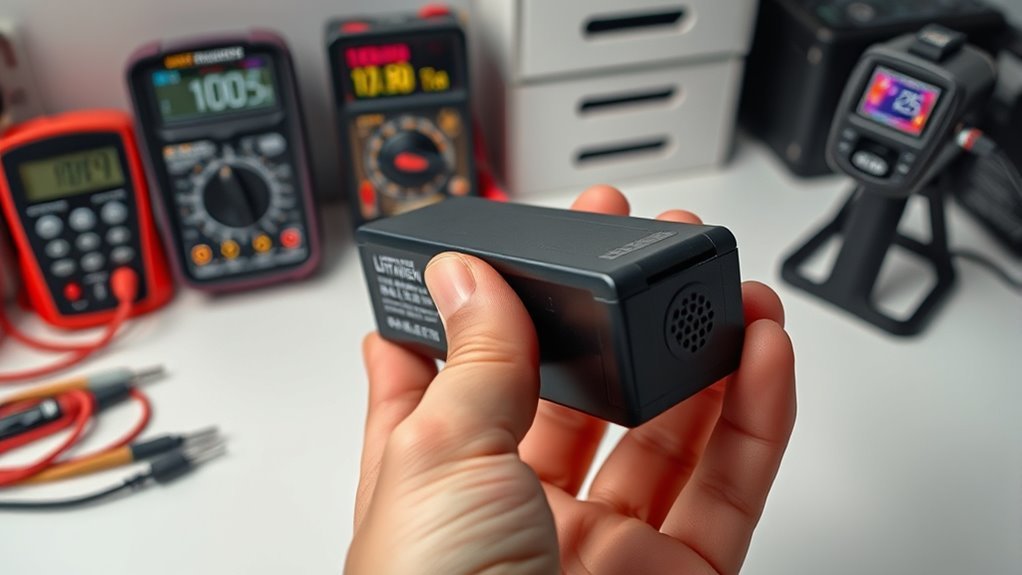
Lithium batteries tend to overheat primarily due to internal and external factors that disrupt their thermal stability. Variations in battery chemistry, such as imbalanced electrode materials, can cause uneven current flow and localized heat generation. Manufacturing defects, like poor sealing or internal short circuits, further compromise thermal regulation, leading to hotspots. These defects often stem from inadequate quality control during production, increasing the risk of internal shorting and heat buildup. External influences, such as exposure to high temperatures or physical damage, exacerbate these issues by accelerating chemical reactions within the cell. Understanding how battery chemistry and manufacturing flaws contribute to overheating helps us identify potential risks and implement better design and handling practices to mitigate thermal runaway.
Signs Your Battery Is Overheating
Recognizing the early signs of battery overheating is essential for preventing potential safety hazards and preserving battery lifespan. Overheating symptoms often manifest through specific indicators that signal abnormal thermal activity.
Detecting early signs of battery overheating is key to safety and extending battery life.
- Excessive Heat: Feelings of warmth or hot surfaces indicate thermal buildup, risking damage and reduced battery lifespan.
- Swelling or Deformation: Physical expansion suggests internal overheating, which can compromise structural integrity.
- Unusual Odors: A chemical or burnt smell may point to internal overheating and potential failure.
- Rapid Discharge or Voltage Fluctuations: Sudden drops in power or inconsistent voltage readings are technical signs of overheating symptoms affecting performance.
Monitoring these signs helps prevent irreversible damage and extends battery longevity, emphasizing the importance of early detection.
How to Charge Batteries Safely
To guarantee safe battery charging, it’s essential to follow specific procedures that minimize thermal risks and prevent damage. Proper charging involves controlling charging speed and ensuring cable quality. Fast charging can generate excessive heat, increasing overheating risks, while inadequate charging may undercharge the battery, reducing lifespan. Use cables designed for lithium batteries, with high-quality insulation and proper current ratings, to avoid overheating caused by poor connections. Always verify charger compatibility with your battery’s specifications.
| Charging Speed | Cable Quality | Thermal Risk | Battery Longevity | Safety Precautions |
|---|---|---|---|---|
| Moderate | High-grade | Minimized | Extended | Regular checks |
| Fast | Standard | Elevated | Reduced | Use certified chargers |
| Slow | Premium | Low | Optimized | Avoid overcharging |
| Rapid | Inferior | High | Shortened | Do not force charge |
| Controlled | Properly rated | Managed | Preserved | Disconnect after full charge |
Temperature’s Impact on Battery Safety
Temperature fluctuations considerably influence battery safety by affecting chemical stability and internal resistance. Elevated temperatures accelerate chemical reactions, increasing the risk of thermal runaway, while low temperatures impair ion mobility, reducing performance. Proper temperature regulation minimizes these risks and maintains ideal battery function. Key factors include:
- Thermal expansion: Excessive heat causes materials to expand, risking mechanical deformation and internal short circuits.
- Chemical stability: High temperatures destabilize electrolyte and electrode interfaces, leading to degradation.
- Internal resistance: Temperature variations alter resistance, impacting charge flow and heat generation.
- Heat dissipation: Effective thermal management prevents temperature spikes and ensures safe operation.
Understanding these effects underscores the importance of controlling temperature to safeguard battery integrity and longevity.
Best Environments to Store Your Batteries
Choosing the ideal environment for storing lithium batteries is essential to preserving their performance and safety. Optimal storage conditions involve maintaining stable indoor humidity levels, ideally between 30-50%, to prevent moisture-related degradation. Excessive humidity can lead to corrosion and capacity loss, while overly dry environments may cause dielectric breakdown. Sunlight exposure must be minimized, as direct sunlight can elevate temperature and accelerate chemical reactions within the battery, increasing the risk of overheating or leakage. A cool, dry, and well-ventilated space is preferred, with consistent temperature control to avoid thermal stress. Proper storage environments mitigate risks associated with thermal fluctuations and environmental factors, ensuring batteries maintain their longevity and safety during periods of non-use.
Proper Storage Tips to Prevent Overheating
Ensuring lithium batteries are stored properly is essential in preventing overheating, which can compromise safety and reduce lifespan. Proper storage maintains optimal battery capacity and minimizes thermal risks. To achieve this:
- Store batteries in temperature-controlled environments, ideally between 20-25°C, to prevent thermal stress.
- Use dedicated, insulated storage containers that prevent contact with conductive materials and reduce external temperature fluctuations.
- Keep batteries at approximately 30-50% charge during storage to prevent capacity degradation and thermal buildup.
- Avoid stacking batteries directly on top of each other; separate them with non-conductive, breathable materials to promote airflow and dissipate heat.
Following these steps ensures safe, effective storage that preserves battery capacity and minimizes overheating risk.
What to Do If Your Battery Gets Too Hot?
When a lithium battery overheats, our first step should be to power it off immediately to prevent thermal runaway. We then need to move the device to a cooler environment to slow heat buildup and reduce risk. Prompt action is essential to mitigate potential damage or safety hazards.
Power Off Immediately
If your lithium battery begins to overheat, it’s critical to power it off immediately to prevent potential thermal runaway or fire hazards. Rapid disconnection halts electrical flow, limiting damage and ensuring safety. During this emergency, follow these procedures:
- Disconnect the device from power sources instantly.
- Isolate the battery from other components to prevent heat transfer.
- Use fire-resistant materials or a non-flammable container if possible.
- Initiate emergency procedures, such as contacting fire services if necessary, and plan for timely battery replacement.
Prompt power-off minimizes the risk of catastrophic failure. It’s essential to evaluate whether the battery needs replacement post-incident, as damaged cells can compromise safety and performance moving forward. Immediate action is vital in preventing severe consequences.
Move to Cool Area
As soon as you notice your lithium battery reaching an elevated temperature, moving it to a cooler area becomes a crucial step in mitigating potential hazards. A cooler environment helps slow thermal runaway progression and reduces the risk of combustion. We recommend relocating the battery to a shaded location away from direct sunlight or heat sources, ensuring minimal exposure to external heat influences. This immediate action prevents further temperature escalation and allows for safer cooling. Maintaining the battery in a well-ventilated, temperature-controlled space can greatly improve heat dissipation. It’s essential to monitor the temperature continuously after relocation, as sustained high temperatures pose ongoing risks. Promptly transferring the battery to a cooler environment is an essential safety measure in overheating scenarios, effectively reducing the likelihood of thermal damage or fire.
Maintaining Battery Quality to Avoid Overheating
Maintaining the quality of lithium batteries is essential for preventing overheating, as degraded or poorly maintained cells are more prone to thermal issues. To optimize battery lifespan and manage charging cycles effectively, we recommend:
- Monitoring charge levels to avoid deep discharges and overcharging, which accelerate capacity loss.
- Using chargers compatible with battery specifications to guarantee proper voltage and current regulation.
- Limiting full charge and discharge cycles by maintaining intermediate charge levels to reduce stress on the cells.
- Conducting regular performance assessments to detect capacity degradation early, allowing timely interventions.
Common Mistakes That Cause Battery Overheating
Many common mistakes in handling lithium batteries directly contribute to overheating risks. Improper battery cycling, such as excessive or shallow charge-discharge cycles, causes stress that generates heat and accelerates degradation. Similarly, neglecting proper charging protocols—like overcharging, charging at inappropriate current rates, or using incompatible chargers—can lead to thermal buildup. Fast charging without adequate thermal management often results in localized overheating, while irregular cycling patterns increase internal resistance, raising temperature. These issues compromise battery safety and longevity. Ensuring correct battery cycling practices and adhering to manufacturer-recommended charging protocols are essential steps in preventing overheating. By avoiding these mistakes, we can maintain the battery’s thermal stability, optimize performance, and reduce the risk of thermal runaway.
How to Safely Dispose of Damaged Batteries
When a lithium battery sustains damage, immediate and proper disposal is critical to prevent safety hazards such as fire, chemical leaks, or environmental contamination. Proper disposal involves understanding recycling procedures and managing hazardous waste responsibly.
- Handle with Care: Use protective gear and avoid puncturing or crushing the damaged battery.
- Contain Safely: Place the battery in a non-conductive, fire-resistant container to minimize risk.
- Follow Recycling Procedures: Take the battery to certified hazardous waste collection centers or authorized e-waste recyclers that follow strict recycling procedures.
- Avoid Trash Disposal: Never dispose of damaged lithium batteries in regular trash, as this can lead to chemical leaks or fires, posing environmental risks.
Adhering to these steps ensures safe, environmentally responsible disposal.
Frequently Asked Questions
Can Using Counterfeit Chargers Cause Lithium Battery Overheating?
Counterfeit chargers considerably compromise battery safety, causing overheating and potential damage. We advise against their use, as they lack proper regulation, protective circuits, and quality control, increasing the risk of lithium battery overheating and safety hazards.
How Does Ambient Humidity Affect Battery Overheating Risk?
Studies show high humidity increases battery overheating risk by up to 40%, as moisture effects accelerate internal degradation. Moisture impacts electrolyte stability, leading to potential short circuits and thermal runaway, emphasizing the need for controlled environments to safeguard lithium batteries.
Are There Specific Brands More Prone to Overheating?
Certain brands exhibit higher overheating susceptibility due to inconsistent reliability and manufacturing standards. We recommend thoroughly researching brand reliability, focusing on reviews and certifications, to mitigate risks associated with overheating and guarantee safer, more dependable lithium batteries.
Does Frequent Fast Charging Increase Overheating Chances?
Fast charging acts like a turbo boost, increasing overheating risk by generating more heat in the battery. This accelerated process stresses thermal management systems, making frequent fast charging a key factor in raising overall overheating chances.
Can External Damage Lead to Internal Battery Overheating?
External impact can cause internal damage, disrupting battery structure and leading to internal heat build-up. This damage impairs heat dissipation, increasing overheating risk; therefore, protecting batteries from external impact is essential for safety and performance.
Conclusion
By understanding the causes and signs of overheating, we can treat lithium batteries like precision instruments—delicate yet robust when handled correctly. Just as a skilled engineer monitors every component to prevent failure, we must vigilantly manage temperature and handling practices. Neglecting these protocols is akin to ignoring a warning light on a crucial system, risking catastrophic failure. Our commitment to proper care ensures longevity and safety, transforming these power sources from potential hazards into reliable assets.