Lithium batteries are like delicate ecosystems—requiring careful management to sustain their importance. We understand that optimizing their lifespan involves precise charging practices, temperature regulation, and maintenance routines. Yet, the specifics behind these strategies often remain elusive. By exploring the underlying principles and practical measures, we can better protect our devices’ power sources and extend their usability. So, let’s uncover the essential steps to keep your lithium batteries thriving over time.
Key Takeaways
- Keep charge levels between 20% and 80% to reduce stress and prevent capacity loss.
- Avoid deep discharges below 20% and overcharging to maintain battery health.
- Store batteries at moderate temperatures (20°C–25°C) and in a cool, dry environment.
- Use high-quality, certified chargers to ensure stable voltage and current during charging.
- Regularly monitor battery health and calibrate with partial charges/discharges for accurate readings.
How Lithium Batteries Work and Why They Degrade
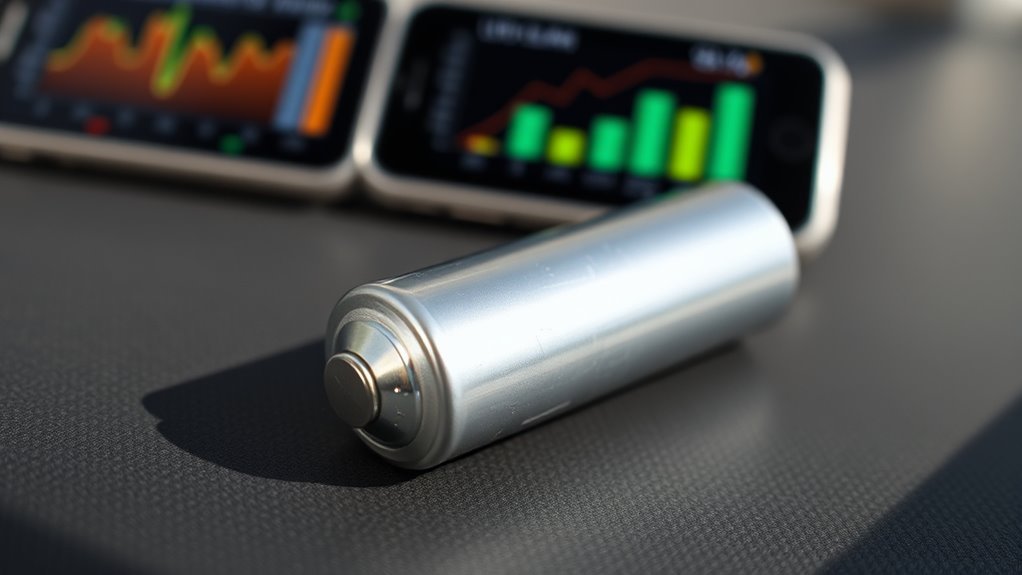
Lithium batteries operate through the movement of lithium ions between the anode and cathode during charging and discharging cycles. This process relies on specific battery chemistry, where lithium ions shuttle across the electrolyte, facilitating energy transfer. Over time, degradation mechanisms—such as solid electrolyte interphase (SEI) layer growth, electrode material breakdown, and lithium plating—impair performance. These mechanisms are driven by repeated charge cycles, high temperatures, and overcharging, which accelerate capacity loss and increase internal resistance. Understanding the fundamental battery chemistry helps explain how these degradation processes occur, ultimately reducing battery lifespan. Addressing these mechanisms through careful use and proper management can notably slow deterioration, preserving capacity and extending the functional life of lithium batteries.
Maintain Your Battery’s Charge Between 20% and 80
Maintaining a lithium battery’s charge between 20% and 80% minimizes stress on the cells, extending their lifespan. Avoiding full discharges and overcharging prevents capacity loss and reduces degradation. Using moderate power levels during operation further preserves overall battery health.
Optimal Charging Range
To optimize battery lifespan, we should keep the charge level within a specific range—ideally between 20% and 80%. This range minimizes stress on the battery chemistry, reducing degradation caused by high voltage stress and repeated charging cycles. Maintaining this buffer prevents overvoltage and deep discharges, which accelerate capacity loss. To implement this, consider:
- Limiting daily charges to stay below 80%, avoiding full charges.
- Avoiding deep discharges below 20% to reduce strain on battery chemistry.
- Using smart charging tools that regulate voltage and current.
- Monitoring charge levels regularly to prevent unnecessary full cycles.
This approach minimizes the number of charging cycles and prolongs overall battery health.
Avoid Full Discharges
Avoiding full discharges is essential for preserving battery health, as repeatedly draining the battery below 20% accelerates capacity loss and increases chemical strain. Consistently operating within the 20% to 80% charge range minimizes stress on lithium-ion cells, extending their lifespan. Maintaining this charge window improves energy efficiency by reducing the number of full charge cycles needed over time. Additionally, it supports sustainable practices like battery recycling, ensuring fewer batteries are prematurely discarded due to capacity degradation. This approach not only preserves performance but also contributes to environmental conservation. By avoiding complete discharges, we optimize battery longevity, enhance energy efficiency, and promote responsible resource management—key factors in maximizing the value and sustainability of lithium-based energy storage systems.
Use Moderate Power Levels
Keeping your battery within a moderate power range helps prevent unnecessary stress and prolongs its lifespan. Proper power management involves maintaining the charge between 20% and 80%, reducing strain from deep discharges or overcharging. To optimize battery health, consider these practices:
- Regularly calibrate the battery to ensure accurate charge readings, preventing mismanagement.
- Avoid frequent charging to 100%, which accelerates capacity fade.
- Use devices at moderate power levels to minimize voltage fluctuations that degrade chemistry.
- Monitor charge cycles and keep the state of charge within the recommended range for consistent performance.
Avoid Fully Discharging Your Lithium Battery Regularly
Regularly discharging lithium batteries to zero voltage can cause irreversible damage and capacity loss. To prevent this, we recommend using partial charges and avoiding deep discharges. Maintaining voltage levels within the ideal range enhances overall battery longevity.
Prevent Deep Discharges
Have you ever wondered what happens to a lithium battery when it’s fully discharged? Deep discharges can cause irreversible damage, affecting capacity and lifespan. When a lithium battery fully discharges, the voltage drops below safe levels, risking internal chemical degradation. This can lead to the memory effect, where the battery “remembers” a reduced capacity, and complicates proper battery calibration. To prevent this, avoid letting the charge fall below 20%. Consider these points:
- Voltage collapse: Internal chemical imbalances occur.
- Capacity loss: Reduced effective storage over time.
- Memory effect: Impaired ability to hold full charge.
- Calibration issues: Skewed state-of-charge readings.
Maintaining charge above critical levels preserves battery health and longevity.
Use Partial Charging
While fully discharging a lithium battery can seem harmless, it actually accelerates capacity loss and shortens its overall lifespan. To mitigate this, we recommend partial charging strategies, ideally maintaining the charge between 20% and 80%. This approach minimizes stress on the battery’s chemistry, reducing degradation. Avoiding complete discharges also supports faster charging speeds, decreasing the time the battery spends in vulnerable, high-stress states. Additionally, partial charging aligns with sustainable practices like battery recycling, as it extends usable life and delays premature disposal. Consistently limiting depth of discharge helps preserve capacity over time, ensuring better performance and longevity. By adopting partial charging habits, we optimize battery health, reduce the need for frequent replacements, and promote more environmentally responsible battery recycling.
Use a High-Quality Charger for Better Battery Health
Using a high-quality charger is essential for maintaining ideal lithium battery health, as it guarantees consistent voltage and current delivery, reducing stress on the battery cells. This improves charging safety and supports proper battery calibration, preventing overcharge or undervoltage conditions. A reliable charger minimizes voltage fluctuations that can accelerate capacity loss. Consider these factors:
Using a high-quality charger ensures safe, consistent charging and prolongs lithium battery lifespan.
- Certified chargers with integrated safety features ensure stable power delivery.
- Precise voltage regulation minimizes stress and prolongs cell lifespan.
- Compatibility with your device prevents improper charging cycles.
- Built-in safeguards reduce risks of overheating and electrical faults.
Choosing premium chargers promotes effective charging conditions, preserves battery chemistry, and extends overall lifespan by maintaining consistent charging parameters essential for lithium battery longevity.
Keep Your Battery Within Safe Temperature Ranges (0°C–45°C)
Maintaining the battery temperature within the safe range of 0°C to 45°C is essential for longevity. Exposure to extreme cold or heat accelerates degradation and can cause permanent capacity loss. Using insulated storage helps regulate temperature and prevents harmful fluctuations during periods of inactivity.
Avoid Extreme Temperatures
Extreme temperatures can substantially accelerate the degradation of lithium batteries, so it’s crucial to keep them within the safe range of 0°C to 45°C. Temperature fluctuations, especially in storage conditions, can cause internal stress and capacity loss. To minimize damage, consider these measures:
- Avoid leaving devices in parked cars during hot or cold weather.
- Store batteries in climate-controlled environments, away from direct sunlight.
- Use insulated containers if exposure to temperature extremes is unavoidable.
- Monitor ambient temperatures regularly to ensure they remain within ideal limits.
Maintaining stable storage conditions prevents rapid chemical reactions and reduces the risk of thermal runaway, ensuring longer battery life. Consistent temperature management is necessary for peak performance and longevity.
Use Insulated Storage
To effectively prevent temperature-related degradation, we should store lithium batteries in insulated storage that maintains their environment within the safe range of 0°C to 45°C. Proper temperature regulation minimizes thermal stress, preventing capacity loss and internal damage. Insulated storage solutions act as barriers against external temperature fluctuations, ensuring consistent conditions. This is especially important during extended storage periods, where ambient temperatures can fluctuate considerably. Using materials with high thermal resistance, such as foam or specialized insulative membranes, enhances temperature stability. By controlling ambient conditions through insulated storage, we reduce the risk of overheating or freezing, both of which accelerate battery aging. Precise temperature regulation through insulation directly supports improved battery longevity and ideal performance over its lifespan.
Limit Quick Charging and High-Drain Activities
Although quick charging and high-drain activities offer convenience, they can substantially accelerate battery degradation over time. Fast charging generates excessive heat, stressing the battery’s internal components and reducing lifespan. Similarly, high-drain activities rapidly deplete the battery’s charge, increasing stress during discharge cycles. To mitigate this, consider these practices:
- Limit use of fast charging stations, especially for daily charging needs.
- Avoid leaving devices plugged in during rapid charging sessions.
- Reduce high-drain activities like gaming or video editing when possible.
- Monitor battery temperature during intense usage to prevent overheating.
Store Batteries Properly When Not in Use
Proper storage of lithium batteries is essential to preserve their capacity and extend their lifespan. Effective battery storage involves maintaining ideal conditions to prevent capacity loss over time. Temperature control is critical; storing batteries in environments between 20°C and 25°C minimizes chemical degradation. Exposure to high temperatures accelerates capacity fade, while low temperatures can cause internal damage if batteries are charged or discharged during storage. Additionally, storing batteries at approximately 50% charge reduces stress on the cells and prevents capacity loss. Avoid storing batteries in high humidity or direct sunlight, as moisture and heat can compromise internal components. Consistent monitoring and controlled storage conditions ensure lithium batteries retain their performance and longevity during periods of non-use.
Update Your Device Software to Improve Battery Life
Keeping your device’s software up to date can considerably enhance battery performance. Software updates often include improvements in power management and bug fixes that optimize device compatibility. To maximize benefits:
- Make sure your device runs the latest operating system version, supporting better energy efficiency.
- Enable automatic updates to prevent outdated software from causing battery drain.
- Review update release notes for enhancements targeting power consumption and device stability.
- Regularly verify that critical apps are also updated, as outdated apps may cause excessive background activity.
Monitor Battery Health and Know When to Replace
Monitoring your battery’s health is essential for maintaining peak device performance and preventing unexpected failures. Regular health monitoring allows us to assess the state of charge capacity and internal resistance, providing insights into battery degradation. Using built-in software tools or third-party apps, we can track key metrics such as cycle count and voltage drops. When these indicators decline beyond manufacturer-recommended thresholds, it signals that battery replacement is necessary to restore ideal function. Precise health monitoring helps us avoid premature replacements or neglecting critical deterioration. Recognizing the signs of reduced capacity ensures timely intervention, prolonging the overall lifespan of the device. Ultimately, diligent health monitoring guides informed decisions on battery replacement, safeguarding device reliability and longevity.
Tips for Daily Lithium Battery Care
Consistent daily care of lithium batteries can considerably extend their lifespan and maintain ideal performance. To optimize battery chemistry, we recommend the following practices:
- Use compatible charging accessories specifically designed for lithium-ion batteries to prevent voltage surges.
- Avoid frequent deep discharges; keep the state of charge between 20% and 80% to reduce stress on the battery.
- Store devices in a cool, dry environment, as high temperatures accelerate chemical degradation.
- Regularly calibrate the battery by performing partial charges and discharges, ensuring accurate State of Charge readings and prolonging overall health.
Adhering to these guidelines minimizes wear on the battery chemistry, maximizes cycle life, and prevents early capacity loss, ensuring consistent, reliable performance over time.
Frequently Asked Questions
How Does Ambient Humidity Affect Lithium Battery Longevity?
Humidity effects can accelerate lithium battery degradation by promoting corrosion and chemical instability, especially under poor storage conditions. We recommend maintaining low ambient humidity and ideal storage environments to preserve battery longevity and prevent capacity loss over time.
Can External Magnetic Fields Harm Lithium Battery Performance?
External magnetic fields can drastically impair lithium battery performance through magnetic interference, but proper magnetic shielding prevents damage. We recommend shielding solutions to maintain ideal battery function, ensuring your devices operate smoothly without magnetic disruption.
Do Different Lithium Battery Chemistries Require Varied Care?
Different lithium battery chemistries require tailored care, focusing on proper battery storage and refined charging habits to prevent capacity loss. We recommend consulting manufacturer guidelines for specific chemistries to guarantee peak performance and longevity.
What Are the Signs Indicating a Lithium Battery Is Nearing Failure?
When a lithium battery’s capacity diminishes noticeably, it’s like a lighthouse dimming—signs include rapid voltage drops, inconsistent performance, and reduced charge cycles. Proper battery calibration and ideal storage conditions help delay these failure indicators.
How Does Frequent Software Updates Impact Battery Lifespan?
Frequent software updates can positively impact battery lifespan through software optimization, enhancing efficiency, but may cause issues if firmware compatibility isn’t maintained, potentially leading to increased power drain or system instability that shortens battery longevity.
Conclusion
By following these best practices—maintaining ideal charge levels, avoiding deep discharges, using quality chargers, controlling temperature, storing properly, updating software, and monitoring health—we can greatly extend the lifespan of lithium batteries. Consistent care guarantees reliability, efficiency, and longevity. We must prioritize these habits, prevent unnecessary degradation, and improve performance. Together, by understanding and applying these principles, we safeguard our batteries, enhance device longevity, and maximize our investment in technology.