Many believe that storing lithium batteries at room temperature is sufficient, but evidence suggests that maintaining a specific temperature range greatly impacts battery longevity and safety. Precise temperature control minimizes chemical reactions that degrade capacity and reduces risks of thermal runaway. Understanding the ideal storage conditions is essential for preserving battery performance over time. To guarantee you’re applying the best practices, it’s important to examine the factors influencing suitable storage temperatures and how they can be effectively managed.
Key Takeaways
- Store lithium batteries at a temperature between 15°C to 25°C (59°F to 77°F) for optimal longevity.
- Avoid extreme temperatures below 0°C (32°F) or above 25°C (77°F) to prevent capacity loss and chemical degradation.
- Moderate, stable temperatures reduce risks of thermal runaway, electrolyte decomposition, and internal component stress.
- Use temperature-controlled storage environments with sensors or data loggers to maintain consistent conditions.
- Proper storage at recommended temperatures helps maximize battery lifespan, safety, and performance.
What’s the Best Temperature to Store Lithium Batteries?
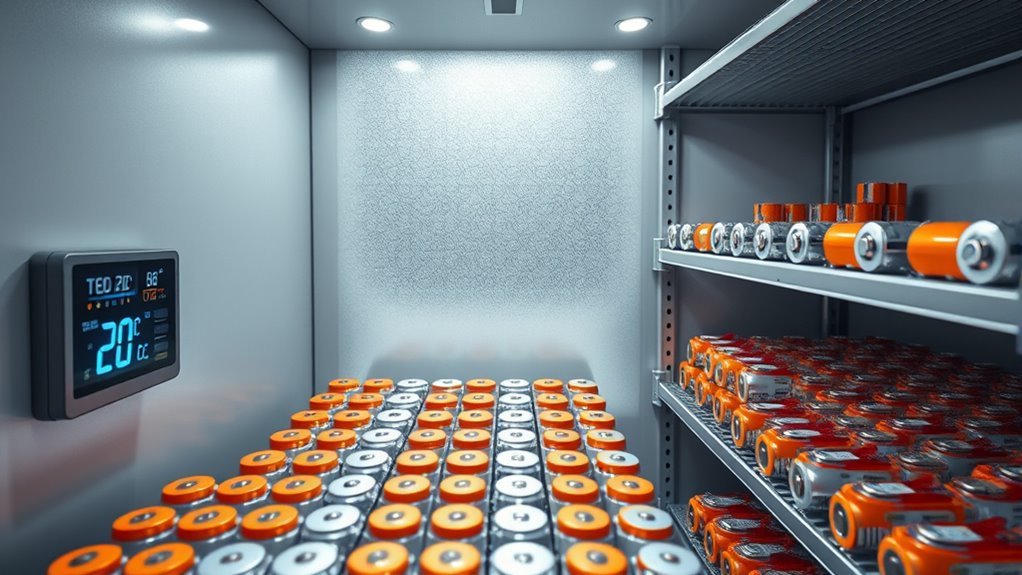
Maintaining ideal storage temperature is essential to preserving lithium battery performance and longevity. The best temperature range for storing lithium batteries generally falls between 32°F and 77°F (0°C to 25°C), depending on battery chemistry. Storage environments with stable, moderate temperatures prevent capacity loss and degradation caused by thermal stress. Extremes outside this range accelerate chemical reactions within the battery, leading to capacity fade or potential failure. Lithium-ion batteries are sensitive to temperature fluctuations, which can impact internal electrochemical processes. Ensuring consistent conditions minimizes risks associated with overexposure to heat or cold. Proper storage environments—cool, dry, and well-ventilated—are critical for maintaining the integrity of the battery’s chemistry and extending its overall lifespan.
Why Temperature Control Is Key for Battery Safety and Longevity
Since lithium batteries are highly sensitive to temperature fluctuations, controlling their environment is essential for ensuring safety and extending lifespan. Thermal conductivity plays a vital role in this process, as it determines how heat dissipates within the battery and its surroundings. Proper temperature regulation prevents localized hotspots that can lead to thermal runaway or capacity loss. Maintaining a stable temperature minimizes stress on internal components, reducing degradation and enhancing safety. Effective temperature control involves managing heat exchange between the battery and its environment, ensuring it stays within ideal ranges. This precise regulation prevents excessive heating or cooling, which can compromise battery integrity. Ultimately, rigorous temperature management safeguards performance, prolongs battery life, and mitigates safety risks associated with thermal instability.
How Hot or Cold Temperatures Damage Lithium Batteries
Extreme temperatures accelerate chemical degradation within lithium batteries, leading to capacity loss over time. High heat causes increased internal resistance and potential thermal runaway, while cold temperatures impede ion movement, reducing performance. Both conditions considerably shorten the battery’s overall lifespan and reliability.
Temperature Accelerates Degradation
Temperature plays a critical role in the degradation of lithium batteries, as both high and low extremes accelerate chemical reactions that diminish battery capacity and lifespan. Elevated temperatures increase parasitic reactions, leading to capacity fade, while cold conditions slow ion mobility, reducing efficiency. This temperature-induced degradation impacts climate adaptation strategies, highlighting the need for controlled environments to optimize energy efficiency. To illustrate, consider the following:
| Temperature Range | Effect on Battery | Degradation Rate |
|---|---|---|
| 0°C to 25°C | Moderate chemistry stability | Low |
| 25°C to 40°C | Accelerated reactions | High |
| Below 0°C | Reduced ion mobility | Moderate |
Proper temperature management is essential for preserving battery integrity and maximizing lifespan.
Extreme Conditions Reduce Lifespan
High or low temperature extremes directly impair lithium battery lifespan by accelerating detrimental chemical processes or hindering ion movement. In storage environments, excessive heat increases the rate of side reactions within battery chemistry, leading to capacity loss and potential safety hazards. Conversely, cold temperatures reduce ion mobility, decreasing performance and causing mechanical stress over time.
- Heat exposure accelerates electrolyte decomposition and electrode degradation, shortening lifespan.
- Cold conditions cause solid electrolyte interphase (SEI) layer instability, impairing charge transfer.
- Repeated cycling between extreme temperatures exacerbates material fatigue, resulting in faster capacity fade.
Understanding these effects helps optimize storage environments to preserve lithium battery health and longevity.
Best Practices for Safe Lithium Battery Storage at Home and Work
Maintaining the proper storage environment is essential for ensuring the safety and longevity of lithium batteries at home and in the workplace. We recommend storing batteries in a cool, dry, well-ventilated area, ideally between 15°C and 25°C, to prevent thermal degradation. Avoid exposure to high temperatures and humidity, which accelerate capacity loss and increase fire risk. Proper storage also involves understanding the importance of battery recycling; unused or damaged batteries should be disposed of responsibly to minimize environmental impact. Additionally, awareness of lithium mining practices underscores the need for sustainable sourcing and recycling efforts, reducing ecological harm. Implementing these practices safeguards both users and the environment, ensuring lithium batteries perform reliably over their lifespan while supporting responsible resource management.
Using Storage Containers and Monitors to Protect Your Batteries
To effectively safeguard lithium batteries during storage, we must utilize appropriate containers and monitoring tools. Proper storage containers provide essential insulation, minimizing temperature fluctuations and reducing thermal stress. Incorporating humidity control within these containers prevents condensation, which can compromise battery integrity. Monitoring devices are critical for maintaining ideal conditions; they track temperature, humidity, and voltage levels in real-time.
Proper storage with insulation, humidity control, and real-time monitoring safeguards lithium batteries and extends their lifespan.
Key strategies include:
- Using sealed, insulated containers with humidity regulation features to prevent moisture ingress.
- Installing sensors that continuously monitor temperature and humidity, alerting us to deviations.
- Implementing data loggers to record environmental parameters, ensuring storage conditions remain within safe thresholds.
These measures help maintain stable storage environments, prolonging battery lifespan and preventing damage.
Common Mistakes That Shorten Battery Life and How to Avoid Them
Ignoring ideal temperature ranges, overcharging, deep discharging, or using incompatible chargers can considerably reduce lithium battery lifespan. These mistakes cause stress on the battery’s chemistry and degrade its capacity over time. To maximize longevity, it’s essential to follow proper charging protocols and maintain appropriate environmental conditions.
Ignoring Optimal Temperature Ranges
Failing to adhere to the recommended temperature ranges when storing lithium batteries can considerably accelerate capacity loss and shorten overall lifespan. Ignoring these ideal temperature guidelines often stems from temperature myths and storage myths, leading to improper handling.
To avoid this, consider these key points:
- Misconception of “cooler is always better” – Excessively low temperatures can cause lithium plating, damaging the battery.
- Ignoring ambient temperature variations – Fluctuations can increase internal stress, reducing longevity.
- Overlooking manufacturer guidance – Different battery chemistries have specific suitable storage temperatures, and disregarding these can accelerate degradation.
Understanding and respecting temperature ranges ensures maximum battery performance and durability, preventing premature failure caused by neglecting storage myths.
Overcharging or Deep Discharging
Overcharging and deep discharging are among the most common mistakes that considerably reduce lithium battery lifespan. These practices disrupt the battery chemistry, causing irreversible damage to the electrodes and electrolyte. Overcharging occurs when the battery exceeds its maximum voltage, leading to thermal stress and potential safety hazards. Deep discharging, or draining the battery below its recommended voltage, accelerates capacity loss and compromises cell integrity. Proper management of these risks depends heavily on optimized storage environments, which should maintain stable temperature and humidity conditions to prevent unintended overcharge or discharge cycles. Avoiding these mistakes involves monitoring voltage levels and employing appropriate charging protocols. By safeguarding the battery chemistry through careful control of storage environments, we prolong battery life and ensure safer, more reliable performance.
Using Incompatible Chargers
Using incompatible chargers is a common mistake that considerably shortens lithium battery lifespan. These chargers often have improper labeling or lack compatibility specifications, risking voltage and current mismatches. Such mismatches can lead to overheating, reduced capacity, or permanent damage. To avoid this, consider the following:
- Verify the charger’s output voltage and current ratings match the battery’s specifications.
- Use original or certified chargers explicitly designed for your lithium battery type.
- Avoid third-party chargers with ambiguous or incorrect labeling, as they may not provide appropriate power regulation.
Selecting the right charger ensures proper charging cycles, maintains battery health, and prevents premature failure caused by incompatible charging equipment. Proper adherence to manufacturer guidelines is crucial for maximum battery longevity.
When to Seek Professional Help for Battery Storage Solutions
While proper maintenance can often address minor issues, recognizing when to seek professional help is vital for lithium battery safety and performance. Signs include persistent overheating, swelling, or leakage, which pose safety risks. If you notice corrosion or damage to the storage container materials or suspect improper battery recycling practices, consult experts immediately. Professionals can assess and optimize storage conditions, ensuring compatibility with container materials and proper temperature regulation. They can also evaluate whether the system requires upgrades or repairs. Properly managed, these measures prevent hazards and prolong battery lifespan.
| Issue | Action Needed |
|---|---|
| Persistent overheating or swelling | Seek professional inspection immediately |
| Damage to storage container materials | Consult experts for assessment and replacement |
| Signs of corrosion or leakage | Contact specialists for safe handling and recycling |
| Suspected improper battery recycling | Engage professionals for proper disposal and recycling |
Frequently Asked Questions
How Does Temperature Fluctuation Impact Lithium Battery Performance Over Time?
Temperature fluctuations compromise thermal stability, accelerating degradation mechanisms in lithium batteries. Over time, this leads to reduced capacity and lifespan, as repeated thermal stress causes material deterioration, highlighting the importance of stable storage conditions for ideal performance.
Are There Specific Storage Temperature Ranges for Different Lithium Battery Chemistries?
We recommend specific storage temperature ranges tailored to lithium battery chemistries to optimize battery lifespan and maintain performance. A controlled storage environment, typically between 0°C and 25°C, minimizes degradation and guarantees consistent operation over time.
Can Temperature Extremes Cause Lithium Batteries to Catch Fire or Explode?
Temperature extremes can cause thermal runaway, substantially increasing fire risk or explosion potential in lithium batteries. We advise strict thermal management, as overheating or extreme cold can destabilize the chemistry, leading to dangerous, uncontrollable reactions.
How Often Should I Check Storage Temperature Conditions for Batteries?
We recommend checking storage temperature conditions weekly, ensuring the storage container maintains ideal temperature and humidity control. Regular monitoring prevents potential issues, preserving battery integrity and safety, and avoiding conditions that could accelerate battery degradation or compromise performance.
What Are the Signs of Temperature-Related Damage in Stored Lithium Batteries?
We observe signs like swelling, discoloration, or leakage indicating thermal insulation failure, which accelerates battery degradation. Temperature-related damage manifests as reduced capacity and increased internal resistance, signaling compromised battery integrity and the need for immediate inspection or replacement.
Conclusion
Maintaining the ideal storage temperature for lithium batteries—between 15°C and 25°C—is essential for maximizing lifespan and safety. Studies show that improper storage can decrease battery capacity by up to 20% annually, highlighting the importance of temperature control. By following best practices and monitoring conditions carefully, we can prevent thermal stress and electrolyte degradation. Proper storage not only prolongs battery life but also reduces risks of thermal runaway, ensuring safer, more reliable performance over time.