Many believe that storing lithium batteries at room temperature is sufficient for long-term preservation, but this oversimplifies their complex chemistry. Proper storage requires precise control over temperature, humidity, and charge levels to prevent capacity loss and safety hazards. Understanding these factors is vital for maximizing battery lifespan and safety. To make certain you’re following best practices, it’s important to examine specific storage conditions and techniques—details that can greatly impact both performance and environmental safety.
Key Takeaways
- Store batteries in a cool, dry place at 20-25°C with 40-60% humidity, away from direct sunlight and heat sources.
- Keep batteries charged around 40-60% to prevent over-discharge and capacity loss during long-term storage.
- Regularly inspect for swelling, corrosion, leaks, or damage, and perform low-current cycling to maintain cell health.
- Handle damaged or swollen batteries carefully, store in ventilated areas, and follow safety protocols to prevent hazards.
- Dispose of batteries responsibly through recycling programs once they show significant capacity decline or physical deterioration.
How to Safely Store Lithium Batteries for Long-Term Use
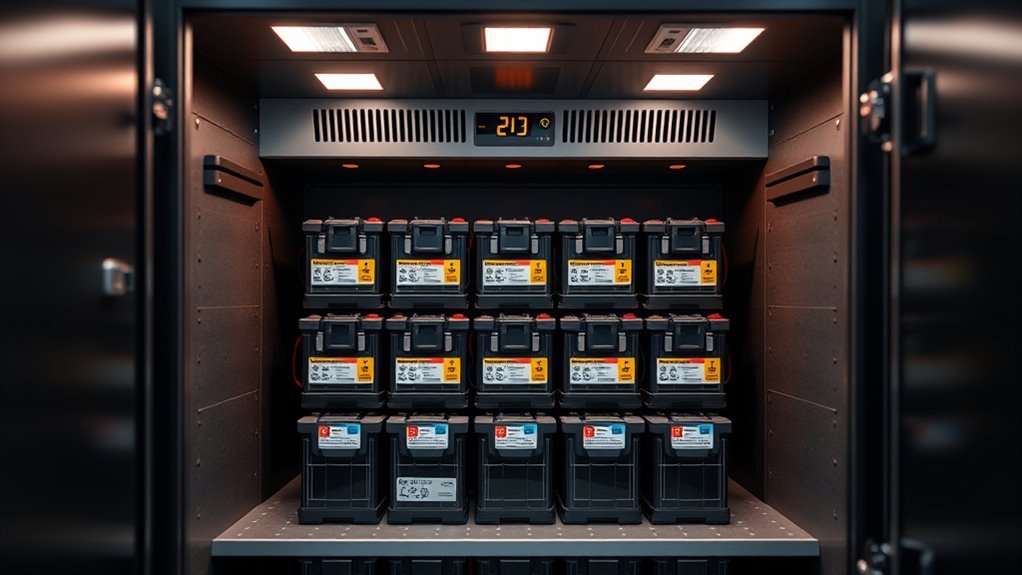
To guarantee lithium batteries remain safe and functional during long-term storage, proper handling and environmental control are essential. We must prevent potential hazards like thermal runaway, which emphasizes the importance of fire safety protocols. Regularly inspecting batteries for damage and ensuring they are stored in a cool, dry, well-ventilated area reduces risk. Proper disposal through battery recycling programs minimizes environmental impact and prevents hazardous leaks. Maintaining a partial charge—around 30-50%—helps preserve battery integrity over time. Avoiding exposure to extreme temperatures and physical damage is vital for safety and longevity. Implementing these measures ensures safe storage, facilitates responsible battery recycling, and minimizes the risk of fire incidents, promoting both safety and sustainability.
What Are the Ideal Temperature and Humidity Conditions?
Maintaining ideal temperature and humidity levels is critical for ensuring lithium battery longevity and safety during storage. Ideal conditions typically range between 20°C to 25°C (68°F to 77°F) with relative humidity kept between 40% and 60%. Elevated temperatures accelerate electrochemical reactions, increasing the risk of capacity loss, leakage, or thermal runaway. Conversely, low temperatures can reduce internal resistance but may hinder performance. Humidity fluctuations can lead to moisture ingress, damaging internal components and compromising storage container materials, which must be resistant to corrosion. Consistent environmental control minimizes stress on the battery’s internal chemistry and preserves structural integrity. Properly selected storage container materials further protect against environmental fluctuations, ensuring stable conditions that maximize battery safety and lifespan.
Why Keep Lithium Batteries Partially Charged During Storage
Maintaining a partial charge prevents lithium batteries from over-discharging, which can cause irreversible capacity loss. It also helps keep the voltage within a favorable range, reducing stress on internal components. Consequently, this practice extends the overall lifespan and guarantees reliable performance during storage.
Prevents Battery Over-Discharge
Because lithium batteries are prone to over-discharge if left fully depleted for extended periods, keeping them partially charged during storage is vital. Over-discharge can irreversibly reduce battery capacity and impair performance, especially after multiple charging cycles. Maintaining a state of partial charge minimizes stress on the battery’s internal chemistry, preventing capacity loss caused by deep discharges. This approach also helps preserve the overall lifespan by reducing the number of full discharge cycles, which accelerate capacity degradation. Proper storage at an ideal charge level ensures the battery remains within safe voltage limits, avoiding damage from over-discharge. By monitoring and maintaining this intermediate charge state, we safeguard battery health, extending its effective lifespan and ensuring readiness for future use.
Maintains Optimal Voltage Level
Keeping lithium batteries at an ideal voltage level during storage helps prevent voltage fluctuations that can damage the internal chemistry. Proper voltage regulation guarantees the cells maintain a stable state, avoiding overvoltage or undervoltage conditions. Maintaining a partial charge (around 40-60%) supports charge balancing across individual cells, preventing imbalance that can impair performance. Consistent voltage levels reduce stress on the battery’s electrolyte and electrode materials, preserving chemical integrity. This approach minimizes the risk of capacity loss and potential safety hazards.
- Guarantees stable voltage regulation, preventing harmful fluctuations
- Supports charge balancing among cells for uniform performance
- Minimizes internal stress caused by voltage extremes
- Protects chemical stability, preserving battery health
Extends Battery Lifespan
Storing lithium batteries at a partially charged state considerably extends their overall lifespan by minimizing stress on internal components. Maintaining a charge level around 40-60% reduces the number of full charging cycles needed during storage, which helps prevent capacity fade. This practice also decreases the risk of over-discharge, which can cause irreversible damage. Additionally, partially charged batteries are less prone to internal corrosion and degradation over time. Proper storage at this level facilitates more efficient battery recycling when the device reaches end-of-life, as the battery remains in a healthier state, making recycling processes more effective. Ultimately, keeping lithium batteries partially charged during storage preserves their capacity, enhances longevity, and supports sustainable battery management practices.
Where Is the Best Place to Store Your Lithium Batteries?
The ideal storage environment for lithium batteries requires maintaining stable temperature and humidity levels to prevent capacity loss and safety hazards. We recommend storing batteries in a cool, dry place, ideally between 20°C and 25°C, with humidity below 50%. Proper environmental control minimizes degradation and guarantees battery longevity.
Optimal Storage Environment
Choosing the most suitable environment for lithium battery storage is essential to maintain their performance and lifespan. An ideal location minimizes exposure to factors that accelerate degradation, such as extreme temperatures or humidity. The environment should be cool, dry, and well-ventilated, away from direct sunlight. Avoid storing batteries near charging stations or areas prone to electrical surges, which can impact stability. Proper storage also facilitates efficient battery recycling when needed, preventing environmental hazards. A dedicated storage cabinet or closet with controlled climate conditions is ideal, ensuring minimal temperature fluctuations. Additionally, keeping batteries separated from metal objects and sources of static reduces risk of short circuits. Maintaining these conditions helps preserve capacity, safety, and readiness for future use or recycling.
Temperature and Humidity Tips
Since temperature and humidity directly influence lithium battery stability and lifespan, selecting an environment with controlled climate conditions is vital. Ideal storage requires strict humidity control to prevent moisture ingress, which can lead to corrosion or capacity loss. Maintaining temperature regulation within a narrow range—typically between 20°C and 25°C—reduces thermal stress and degradation. Avoid high humidity environments or extreme temperatures, as fluctuations accelerate chemical reactions within the battery, shortening its service life. Use dehumidifiers or desiccants where necessary to stabilize humidity levels. Proper temperature regulation combined with humidity control ensures minimal self-discharge, preserves capacity, and extends overall battery longevity. Consistent environmental management is essential for safeguarding lithium batteries during storage.
How to Spot Signs of Battery Degradation While in Storage
Detecting signs of battery degradation during storage is essential to maintain ideal performance and longevity. Early identification prevents potential failure and safety hazards. Look for battery swelling, which indicates internal gas buildup and structural compromise. Check for corrosion signs around terminals or on the battery surface, signaling chemical deterioration. Observe any leakage or residue, which could suggest electrolyte leakage. Ultimately, monitor for abnormal temperature increases or irregular voltage readings during use or testing, as these are indicators of compromised cell integrity. Regular visual inspection and testing are vital. Recognizing these signs promptly allows for proper handling, recycling, or replacement, ensuring safety and maximizing battery lifespan.
Tips to Maximize Lithium Battery Lifespan During Long-Term Storage
Proper storage conditions are key to preserving lithium battery health over extended periods. To maximize lifespan, store batteries at a partial state of charge, ideally around 40-60%, to minimize capacity loss. Avoid full discharges or constant full charges, as excessive charging cycles accelerate degradation. Temperature control is critical; store batteries in a cool, dry environment to slow chemical reactions that diminish capacity. Regularly inspecting and performing controlled, low-current charge cycles helps maintain cell balance. When batteries reach end-of-life or show significant capacity decline, responsible battery recycling becomes essential to prevent environmental harm. Adhering to these practices guarantees minimal capacity fade and prolongs usability, while also supporting sustainable disposal when recycling is necessary.
Frequently Asked Questions
Can Lithium Batteries Be Stored Outdoors Safely?
We advise against storing lithium batteries outdoors due to risks like weatherproofing challenges and potential battery corrosion. Proper outdoor storage requires weatherproofing measures and corrosion prevention strategies to maintain safety and battery longevity effectively.
How Often Should I Check Stored Lithium Batteries?
We recommend checking stored lithium batteries every three to six months for ideal battery maintenance and to monitor for signs of degradation, especially during extended storage durations, ensuring safety and preserving capacity through regular inspections and proper handling.
What Safety Equipment Is Recommended When Handling Batteries?
We recommend wearing protective gloves and using fire-resistant containers when handling lithium batteries, as safety is paramount. These measures help prevent hazards, ensuring you don’t put all your eggs in one basket while managing potential risks.
Are There Specific Storage Containers for Lithium Batteries?
We recommend using specialized containers with proper battery insulation and container ventilation for lithium batteries. These features minimize risk of thermal runaway, contain potential leaks, and guarantee safe heat dissipation, maintaining ideal storage conditions and safety compliance.
How Do Temperature Fluctuations Affect Battery Storage?
Temperature fluctuations are like a roller coaster for batteries, disrupting thermal management and humidity control. Stable temperatures preserve battery health by preventing capacity loss, ensuring consistent performance and prolonging lifespan through careful environmental regulation.
Conclusion
By following these storage tips, we can guarantee our lithium batteries stay healthy and reliable, much like a well-tended garden flourishing over time. Proper handling, ideal environment, and regular inspections are the keys to extending battery life and maintaining safety. Think of it as nurturing a delicate seed—care and attention today lead to robust performance tomorrow. Adhering to these practices safeguards both your investment and the environment, ensuring longevity and sustainability.