Like a well-engineered system, long-term lithium battery storage requires precise understanding and careful management to guarantee peak performance. As advancements in battery chemistry and thermal regulation evolve, so does the complexity of maintaining these energy reservoirs. We recognize that maximizing lifespan and safety involves considering environmental factors, usage patterns, and technological innovations. To truly harness their potential, it’s essential to examine the core principles and emerging trends shaping the future of lithium energy storage.
Key Takeaways
- Maintain batteries at 20-80% charge and store in cool, dry environments to extend lifespan and prevent capacity fade.
- Use proper charging routines to minimize stress on electrodes and avoid deep discharges.
- Regularly monitor performance and perform maintenance to detect early signs of degradation.
- Implement responsible recycling practices to recover valuable materials and reduce environmental impact.
- Avoid exposing batteries to high temperatures and extreme cycling to preserve capacity and ensure long-term reliability.
How Do Long-Term Lithium Battery Storage Systems Work?
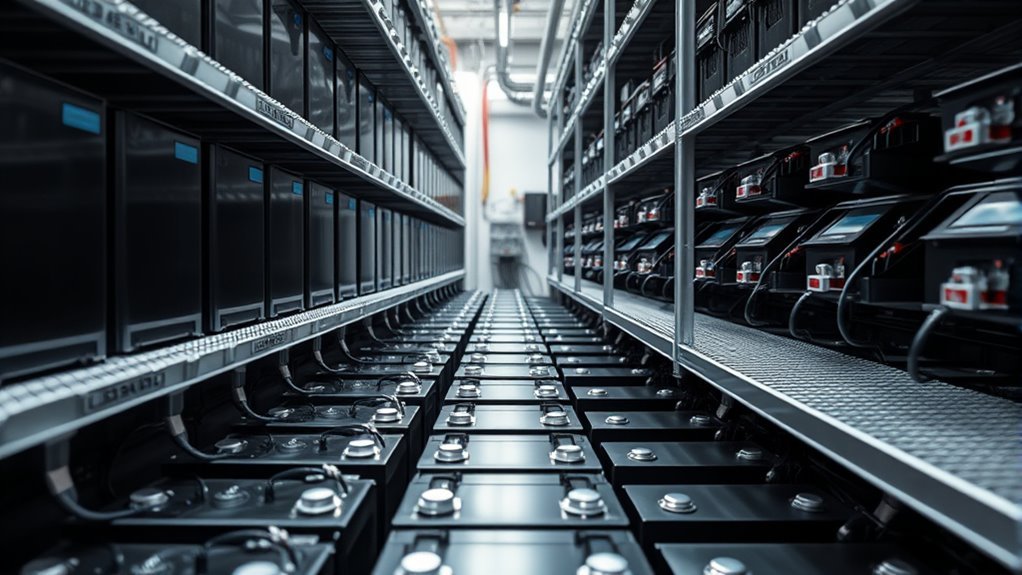
Although long-term lithium battery storage systems are designed to efficiently store and release energy over extended periods, their operation hinges on precise electrochemical processes within the cells. During charging, lithium ions migrate from the cathode to the anode, storing energy, while discharging prompts ions to return, releasing power. This cycle depends on stable electrode-electrolyte interactions, ensuring longevity and efficiency. However, the environmental impact of these systems must be considered, especially regarding battery recycling. Proper recycling reduces hazardous waste and recovers valuable materials, mitigating ecological harm. Advances in sustainable disposal methods are essential to minimize environmental footprint, particularly as deployment scales up. Understanding these processes underscores the importance of integrating recycling strategies to balance performance with ecological responsibility in long-term lithium battery storage.
What Are the Benefits of Using Lithium Batteries for Energy Storage?
Lithium batteries offer several compelling advantages for energy storage due to their high energy density, lightweight design, and fast response times. These features enable efficient, compact systems capable of meeting fluctuating energy demands. Additionally, advancements in battery recycling reduce environmental impact by recovering valuable materials and minimizing waste. Lithium batteries also exhibit long cycle life, lowering replacement frequency and operational costs over time. However, their environmental footprint depends on responsible disposal and recycling practices. The benefits include enhanced performance and sustainability, making them suitable for large-scale storage solutions. The table below summarizes key advantages:
| Feature | Benefit | Consideration |
|---|---|---|
| High energy density | Compact, high-capacity storage | Recycling importance |
| Lightweight design | Easier installation | Environmental impact |
| Fast response times | Grid stability, quick discharge | Lifecycle management |
| Long cycle life | Cost efficiency over time | Recycling infrastructure |
| Environmental impact | Focus on battery recycling | Reducing ecological footprint |
Key Factors to Consider When Choosing a Lithium Battery System
When selecting a lithium battery system, we need to carefully assess capacity and power output to guarantee it meets our energy demands. Compatibility and seamless integration with existing infrastructure are essential for peak performance, while longevity and warranty coverage directly impact long-term reliability and total cost of ownership. By systematically evaluating these factors, we can make informed decisions that maximize system efficiency and durability.
Battery Capacity and Power
How do we determine the right balance between battery capacity and power when selecting a lithium battery system? We analyze the specific energy demands and load profiles to optimize performance without overcapacity. Larger capacity ensures longer storage, but excess can lead to unnecessary environmental impact, especially considering battery recycling challenges. Power rating reflects the peak and continuous discharge capabilities, critical for high-demand applications.
| Capacity (kWh) | Power (kW) |
|---|---|
| Larger capacity reduces frequency of cycling | Higher power supports rapid load fluctuations |
| Increased capacity may elevate environmental impact | Balancing capacity and power minimizes waste |
Achieving this balance requires technical precision to maximize efficiency while mitigating environmental effects associated with battery disposal and recycling.
System Compatibility and Integration
Selecting a lithium battery system that seamlessly integrates with existing infrastructure requires careful evaluation of compatibility factors. System compatibility hinges on matching voltage ranges, communication protocols, and physical interfaces to prevent operational discrepancies. Integration challenges often include incompatible battery management systems (BMS), differing power conversion standards, and wiring complexities. Addressing these issues involves thorough technical assessments of hardware specifications and software interoperability. Confirming that the battery system aligns with current inverter, charger, and control systems minimizes system downtime and optimizes performance. Additionally, understanding potential integration hurdles upfront helps mitigate costly modifications later. Ultimately, choosing a compatible lithium battery system demands detailed analysis of technical specifications and proactive planning to ensure smooth, reliable integration into the broader energy management framework.
Longevity and Warranty Coverage
Longevity and warranty coverage are critical factors that influence the long-term value and reliability of a lithium battery system. Battery chemistry impacts lifespan, with lithium iron phosphate generally offering longer cycle life compared to other chemistries. Warranty policies vary considerably, affecting overall system assurance. To evaluate these, consider the following:
| Aspect | Consideration |
|---|---|
| Battery Chemistry | Affects cycle life, degradation rate, and thermal stability |
| Warranty Duration | Longer warranties typically indicate manufacturer confidence |
| Coverage Scope | Check if warranties cover capacity loss, defects, or both |
Understanding these elements helps ensure the system maintains performance over time and provides peace of mind against unexpected failures. Prioritizing comprehensive warranty policies aligned with battery chemistry ensures long-term reliability and optimal investment value.
How Long Do Lithium Batteries Last and How to Extend Their Lifespan
Understanding the factors that influence lithium battery lifespan is vital for optimizing performance and longevity. We need to examine proper charging practices, storage conditions, and maintenance routines to effectively extend their operational life. By applying this knowledge, we can maximize the value and reliability of lithium battery systems over time.
Factors Influencing Battery Lifespan
The lifespan of lithium batteries is primarily determined by a combination of usage patterns and environmental factors that accelerate or slow down their degradation. Frequent cycling, high temperatures, and deep discharges increase internal stress, shortening longevity. Conversely, moderate temperatures and shallow cycles extend lifespan. Additionally, improper storage can lead to capacity fade, impacting overall performance. Environmental impact considerations, such as the disposal and battery recycling process, influence long-term sustainability. Effective recycling reduces resource depletion and minimizes ecological harm, indirectly supporting battery longevity by encouraging responsible use. Understanding these factors enables us to optimize storage and usage, ultimately prolonging battery life and reducing environmental footprints. Proper management of these variables guarantees both economic and ecological benefits over the battery’s lifecycle.
Proper Charging Practices
How we charge lithium batteries considerably influences their overall lifespan and performance. Proper charging practices guarantee ideal cycle life while maintaining safety standards. Using appropriate chargers that adhere to charging safety protocols prevents overcharging and thermal runaway, which can degrade battery health. Maintaining a charge level between 20% and 80% minimizes stress on the electrodes, extending longevity. Avoiding deep discharges reduces capacity fade over time. Additionally, implementing correct charging routines supports efficient battery recycling at the end of its lifecycle, reducing environmental impact. Consistent, controlled charging not only prolongs battery service life but also promotes responsible disposal and recycling, ensuring sustainability. Consequently, disciplined charging habits are essential for maximizing lithium battery durability and supporting environmentally conscious practices.
Storage and Maintenance Tips
Proper charging practices considerably influence both the immediate performance and long-term health of lithium batteries. To maximize lifespan, store batteries in a cool, dry environment, ideally between 40-60% charge, as over-discharge or full charge at high temperatures accelerates capacity loss. Regular maintenance, such as periodic cycling, helps prevent capacity degradation. Additionally, responsible battery recycling reduces environmental impact, preventing hazardous materials from contaminating ecosystems. Maintaining ideal storage conditions minimizes chemical degradation, extending usable life. Proper disposal and recycling are essential to mitigate environmental harm caused by battery waste. By adopting these storage and maintenance strategies, we not only prolong lithium battery lifespan but also promote sustainable practices, reducing the ecological footprint associated with battery production, usage, and end-of-life management.
Best Practices for Maintaining Lithium Battery Performance
Maintaining ideal lithium battery performance requires diligent adherence to specific best practices that minimize capacity loss and extend lifespan. Proper management reduces degradation, delays capacity fade, and promotes sustainable disposal through battery recycling, which mitigates environmental impact. Key practices include:
Proper lithium battery care extends lifespan, reduces degradation, and supports eco-friendly recycling practices.
- Keep batteries within preferable charge ranges (20-80%) to prevent stress-induced capacity loss.
- Avoid deep discharges and overcharging, which accelerate degradation.
- Store batteries in cool, dry environments to reduce thermal stress and capacity fade.
- Regularly monitor performance metrics and engage in responsible battery recycling when end-of-life approaches, minimizing environmental impact and supporting sustainable resource recovery.
Following these guidelines ensures maximum performance longevity and aligns with eco-conscious disposal practices.
Comparing Lithium Battery Storage Technologies and Alternatives
As we evaluate the longevity and sustainability of lithium batteries, it’s important to compare different storage technologies and their respective advantages and limitations. Lithium-ion systems excel in renewable integration due to their high energy density and rapid response times, making them ideal for stabilizing grid fluctuations. However, alternatives like flow batteries offer longer cycle life and scalable capacity, which can be advantageous for long-term storage. When conducting a cost analysis, lithium batteries generally present higher upfront costs but benefit from declining prices and established supply chains. Solid-state batteries promise enhanced safety and energy density but remain in developmental stages. Each technology’s suitability depends on specific project requirements, balancing factors like lifespan, scalability, and overall system economics in the context of renewable integration.
Is Long-Term Lithium Battery Storage Worth the Investment?
Determining whether long-term lithium battery storage is a worthwhile investment requires a careful analysis of its economic and operational benefits relative to alternative solutions. Key considerations include:
- Cost-effectiveness: While initial investments are high, decreasing battery prices and improved longevity enhance long-term value.
- Battery recycling: Advances in recycling reduce environmental impact and recover valuable materials, offsetting ecological concerns.
- Environmental impact: Lithium batteries pose challenges; however, sustainable disposal and recycling mitigate negative effects.
- Operational efficiency: Lithium batteries offer high energy density and rapid response times, supporting grid stability and renewable integration.
Evaluating these factors helps clarify if the benefits outweigh costs, especially considering evolving recycling technologies and the importance of minimizing environmental footprint in long-term storage solutions.
How to Install and Integrate Lithium Batteries Into Your Energy System
Successfully installing and integrating lithium batteries into your energy system requires a systematic approach that guarantees compatibility, safety, and peak performance. Proper integration involves evaluating voltage and capacity alignment, ensuring wiring safety, and implementing robust monitoring systems. It’s crucial to consider environmental impact and battery recycling strategies to minimize waste and ecological footprint. To facilitate this, we’ve outlined key parameters:
| Parameter | Importance | Considerations |
|---|---|---|
| System Compatibility | Ensures seamless operation | Match voltage, capacity, and inverter specifications |
| Safety Protocols | Prevents hazards | Proper fusing, venting, and thermal management |
| Environmental Impact | Promotes sustainability | Recycle batteries responsibly, reduce waste |
| Monitoring & Control | Maintains efficiency | Use advanced BMS to optimize performance |
| Integration Standards | Ensures reliability | Comply with local electrical codes |
Emerging Trends and Future Innovations in Lithium Battery Storage
Advancements in lithium battery technology are driving rapid innovation, shaping the future landscape of energy storage. These trends directly influence renewable integration and accelerate market growth. Notable developments include:
- Solid-state batteries that enhance safety and energy density, facilitating large-scale renewable deployment.
- Fast-charging capabilities reducing downtime and improving grid responsiveness.
- Extended cycle life models supporting long-term storage needs and reducing replacement costs.
- Advanced thermal management systems that improve efficiency and safety in diverse environments.
These innovations are critical for integrating more renewable sources into existing grids and expanding market opportunities. As technology progresses, we anticipate increased adoption driven by improved performance, safety, and cost-effectiveness, ultimately transforming the energy storage landscape.
Frequently Asked Questions
What Safety Precautions Are Necessary for Long-Term Lithium Battery Storage?
We prioritize battery fire safety by storing lithium batteries in fire-resistant containers made of non-conductive materials, ensuring proper ventilation, avoiding extreme temperatures, and regularly inspecting for damage to prevent hazards during long-term storage.
How Does Temperature Affect Lithium Battery Performance Over Time?
Ever wondered how temperature fluctuations impact lithium batteries? Temperature stability and thermal management are vital; high temperatures accelerate degradation, reducing lifespan, while low temperatures hinder performance, making consistent thermal regulation essential for ideal long-term performance.
Can Lithium Batteries Be Recycled or Repurposed After Their Lifespan?
We can recycle lithium batteries through specialized battery recycling processes, recovering valuable materials, and employ repurposing strategies like second-life applications, extending their utility and reducing environmental impact, making them a sustainable choice for future energy solutions.
What Are the Common Causes of Lithium Battery Degradation?
Battery chemistry and degradation factors like repeated charge cycles, high temperatures, and deep discharges substantially accelerate lithium battery degradation. We analyze these influences to optimize lifespan, emphasizing the importance of proper maintenance and environmental control for longevity.
Are There Government Incentives for Using Lithium Battery Storage Systems?
We find that government subsidies and tax incentives often support lithium battery storage adoption, encouraging technical advancements and reducing costs. These policies aim to promote sustainable energy solutions, making lithium systems more accessible for consumers and industries alike.
Conclusion
In steering the landscape of lithium battery storage, we see it as a crucial engine powering our sustainable future. Like a finely tuned instrument, proper care and understanding access its full potential, ensuring reliability and longevity. As technology advances, these systems become more resilient and efficient, shaping a resilient energy ecosystem. By investing in meticulous maintenance and innovative solutions, we forge a path where renewable energy flows seamlessly, transforming challenges into opportunities for a brighter, more sustainable horizon.