Did you know that the typical lifespan of lithium batteries in RVs can vary substantially based on how they’re managed, often spanning between 2,000 to 3,000 charge cycles? While this might seem straightforward, factors like operating temperature, charge levels, and usage patterns play critical roles in longevity. Understanding these nuances can help us optimize performance and extend battery life, but the specifics can be complex—so, let’s explore what truly influences your RV lithium battery’s lifespan.
Key Takeaways
- Lithium batteries typically last 2000–3000 charge cycles or 8–10 years with proper maintenance.
- Maintaining charge levels between 20-80% and avoiding deep discharges prolongs lifespan.
- Proper temperature control and regular monitoring prevent capacity fade and ensure stable performance.
- Using compatible chargers and battery management systems (BMS) helps optimize battery health.
- Timely replacement and responsible recycling are essential for environmental sustainability and optimal RV power.
What Factors Affect Your RV Lithium Battery’s Lifespan
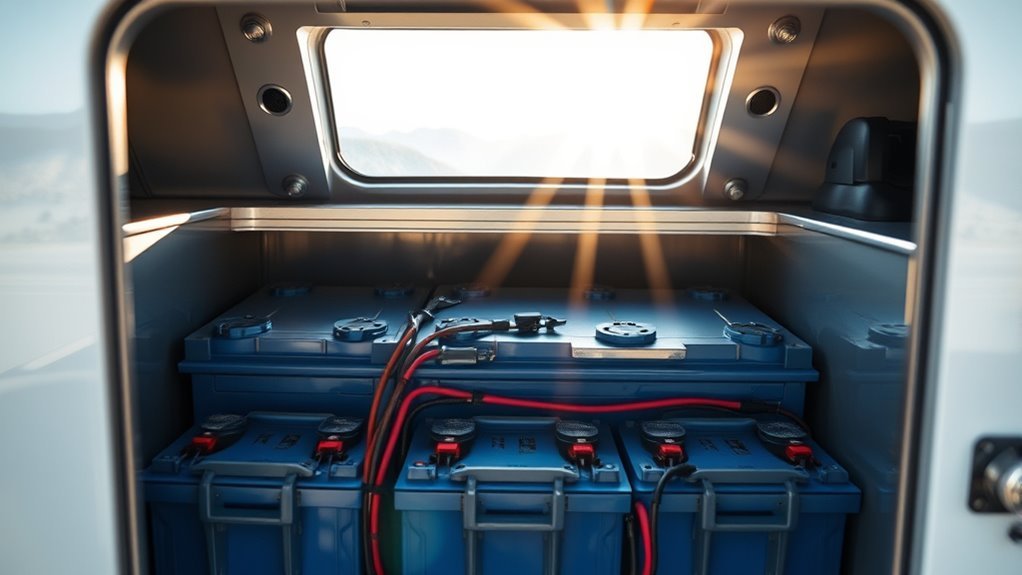
Understanding the factors that influence the lifespan of your RV lithium battery is vital for effective maintenance and ideal performance. Key elements include charge cycles, operating temperature, and depth of discharge, which directly impact battery degradation over time. Improper usage accelerates capacity loss, reducing overall lifespan. Additionally, environmental impact considerations, such as proper battery recycling, are essential to minimize ecological harm. Lithium batteries contain materials that, if not recycled properly, pose environmental risks. Maintaining ideal conditions and adhering to recycling protocols not only prolongs battery life but also supports sustainable practices. By understanding these factors, we can maximize performance, reduce environmental footprint, and guarantee responsible disposal, contributing to both technical efficiency and ecological preservation.
How to Properly Maintain Your Lithium Battery in an RV
Proper maintenance of your RV lithium battery is vital to guarantee peak performance and longevity. Regularly monitoring voltage levels and avoiding deep discharges prevent undue stress on the battery cells, extending lifespan. Making certain proper charging protocols—using a compatible charger and maintaining ideal temperature—reduces degradation. When replacing batteries, consider a thorough price comparison to find cost-effective options, factoring in long-term durability. Responsible battery recycling is essential at the end of its lifespan; partnering with certified recycling facilities minimizes environmental impact. Routine inspections for corrosion or damage help prevent failures. Maintaining accurate usage logs can enhance charge cycles and inform timely replacements. Adopting these technical practices ensures your RV lithium battery remains efficient, safe, and eco-friendly over its operational life.
Signs Your RV Lithium Battery Is Near the End of Its Lifespan
As lithium batteries in RVs age, their performance begins to decline, often signaling that they are nearing the end of their operational lifespan. Key indicators include reduced capacity, inconsistent voltage output, and longer charging times. When these signs become evident, it’s vital to evaluate whether the battery’s efficiency justifies replacement or if recycling options should be considered. Failing batteries may pose environmental risks if improperly disposed of, emphasizing the importance of responsible battery recycling. Recognizing these signs early helps mitigate potential environmental impact and ensures safe disposal practices. Additionally, decreased performance may lead to increased energy consumption, further stressing the battery’s limits. Monitoring these performance declines allows for timely intervention, optimizing both operational safety and environmental responsibility.
Top Tips to Maximize Your RV Lithium Battery’s Life
Maximizing the lifespan of your RV lithium battery requires a strategic approach centered on proper usage and maintenance practices. To optimize performance and minimize environmental impact, consider these key actions:
- Maintain optimal charge levels—avoid deep discharges and keep the battery within a 20-80% state of charge, reducing strain and prolonging cycle life.
- Implement regular monitoring—use precise battery management systems (BMS) to track voltage, temperature, and capacity, preventing damage from overcharging or overheating.
- Prioritize battery recycling—dispose of batteries responsibly at certified facilities, reducing environmental impact and enabling recycling of valuable materials.
Adhering to these tips enhances longevity, supports sustainable practices, and ensures efficient energy use for your RV adventures.
How Your Usage Patterns Impact Battery Longevity
Our charging habits directly influence lithium battery longevity, as frequent shallow cycles tend to preserve capacity better than deep discharges. Additionally, maintaining ideal storage conditions, such as moderate temperatures and partial charge levels, minimizes capacity fade over time. By understanding these patterns, we can implement strategies that extend the functional lifespan of our RV batteries.
Charging Habits Matter
Charging habits directly influence the lifespan of lithium batteries in RVs, as improper usage accelerates capacity degradation over time. Understanding battery chemistry is essential; overcharging or deep discharging stresses the cells, reducing overall longevity. To enhance lifespan, consider these practices:
- Maintain charging within the recommended voltage window to prevent thermal stress and preserve chemistry integrity.
- Avoid frequent deep discharges, which accelerate capacity loss and strain recycling procedures at end-of-life.
- Use smart chargers that monitor state-of-charge and temperature, ensuring ideal conditions for battery health.
Consistent, controlled charging preserves capacity and delays degradation. Proper management also simplifies recycling procedures by maintaining battery integrity, reducing environmental impact, and supporting sustainable disposal. Therefore, thoughtful charging habits are vital for maximizing lithium battery lifespan in RV applications.
Storage Conditions Impact
Proper storage conditions play a critical role in maintaining lithium battery health over time, as improper storage can accelerate capacity loss and diminish overall lifespan. Effective battery storage involves controlling environmental factors, especially temperature and humidity. Climate control minimizes thermal stress that causes electrode degradation and electrolyte breakdown, both of which impair capacity retention. Storing batteries in a cool, dry environment reduces the risk of self-discharge and chemical instability. Avoiding extreme temperatures—particularly heat—preserves chemical integrity and prevents capacity fade. Consistent, ideal climate conditions during storage are essential for prolonging battery life. Proper battery storage practices not only prevent premature deterioration but also ensure that the battery remains ready for use, ultimately extending the overall lifespan of your RV lithium batteries.
Best Practices for Charging and Discharging Lithium Batteries
Effective lithium battery management hinges on ideal charging techniques and careful control of discharge levels. Maintaining proper charge rates and avoiding deep discharges help minimize stress on the cells, extending their operational life. Implementing these best practices ensures consistent performance and maximizes battery longevity in RV applications.
Optimal Charging Techniques
To maximize the lifespan of lithium batteries in RV applications, it’s essential to adopt ideal charging and discharging practices rooted in an understanding of their electrochemical characteristics. Proper charging techniques optimize performance, reduce degradation, and support sustainable practices like battery recycling and renewable energy integration.
Key practices include:
- Maintaining a charging voltage within manufacturer specifications to prevent overvoltage stress.
- Using smart chargers with temperature compensation to avoid thermal damage during charge cycles.
- Avoiding complete discharges, which can accelerate capacity loss, and instead, maintaining charge levels between 20-80% for longevity.
Implementing these techniques not only prolongs battery life but also enhances energy efficiency, supporting environmentally friendly initiatives and the transition toward renewable energy sources.
Managing Discharge Levels
How we manage discharge levels considerably impacts the longevity and efficiency of lithium batteries in RV systems. Due to their specific battery chemistry, lithium cells maintain voltage stability over a broad range of states of charge, but excessive discharges accelerate capacity fade. To optimize lifespan, we aim to keep discharges above 20%, as deeper discharges induce stress on the chemistry, reducing cycle life. Monitoring voltage levels is critical; avoiding drops below 3.0V per cell ensures voltage stability and minimizes degradation. Implementing precise discharge management prevents voltage sag and preserves battery health. Consistent control of discharge depth, combined with appropriate load management, maximizes cycle lifespan while safeguarding the battery’s performance, making it essential for reliable and efficient RV energy systems.
Which Lithium Battery Brands Last the Longest for RVs
When selecting a lithium battery for RV use, understanding which brands offer the longest lifespan is crucial for long-term reliability and cost efficiency. Battery chemistry influences durability, with lithium iron phosphate (LiFePO4) batteries generally outperforming other chemistries in longevity. Brand reputation also plays an essential role, as established manufacturers tend to implement rigorous quality controls.
Key brands known for longevity include:
- Battle Born – Renowned for high-quality LiFePO4 chemistry and consistent performance.
- Victron Energy – Strong reputation for durability and advanced battery management systems.
- Renogy – Recognized for reliable battery chemistry and solid build quality, backed by positive user reviews.
These brands’ emphasis on robust chemistry and reputable manufacturing makes them leading options for long-lasting RV batteries.
When Is It Time to Replace Your RV Lithium Battery
As lithium batteries age and undergo repeated charge cycles, their capacity and performance gradually diminish, signaling the need for replacement. Typically, this occurs after 2000–3000 cycles or around 8–10 years of use, depending on maintenance and operating conditions. When capacity drops below 80%, the battery’s ability to support your RV’s power needs becomes compromised. Recognizing these signs helps prevent unexpected failures. Proper timing for replacement also considers environmental impact; responsibly recycling old batteries minimizes ecological harm. Delaying replacement can lead to increased waste and environmental degradation, emphasizing the importance of timely disposal and battery recycling. Regular performance assessments and adherence to manufacturer guidelines ensure maximum lifespan and environmental responsibility.
Frequently Asked Questions
Can Extreme Temperatures Affect My RV Lithium Battery’s Lifespan?
Extreme temperatures cause significant temperature fluctuations, accelerating battery degradation and reducing lifespan. We advise monitoring environmental conditions and maintaining consistent temperatures to optimize your RV lithium battery’s longevity and guarantee reliable performance over time.
How Do I Dispose of or Recycle My Old RV Lithium Battery Properly?
We recommend proper battery recycling by contacting certified disposal methods or local hazardous waste facilities. Despite concerns about environmental impact, safe disposal guarantees lithium battery recycling minimizes hazards, protecting both ecosystems and future battery reuse.
Are There Any Warranties Available for RV Lithium Batteries?
We find that warranty coverage often varies based on manufacturer policies, typically offering limited duration and conditions. It is crucial to review specific warranty terms carefully, ensuring you understand coverage limits and any required maintenance to preserve warranty validity.
What Impact Does Solar Charging Have on Battery Longevity?
Solar charging acts like a gentle gardener, nurturing battery longevity through consistent, efficient solar input. Proper solar efficiency and diligent battery maintenance prevent thermal stress, reducing degradation and extending lithium battery lifespan in RV applications.
Can I Upgrade to a Higher-Capacity Lithium Battery Easily?
Yes, upgrading to a higher-capacity lithium battery is feasible; we just need to take into account compatibility with existing charging methods and system voltage, ensuring proper connections and management to optimize performance and prevent potential electrical issues.
Conclusion
Understanding the factors influencing our RV lithium batteries’ lifespan allows us to optimize their performance and longevity. While proper maintenance and mindful usage can extend life, neglecting these practices accelerates degradation. It’s a delicate balance—like a tightrope walk between maximizing capacity and avoiding premature failure. Staying vigilant, monitoring performance, and knowing when to replace the battery ensures we keep our RVs powered efficiently, emphasizing that precision in care is vital in prolonging battery life and sustaining our adventures.