Did you know that LiFePO4 batteries typically last twice as long as standard lithium-ion options, with cycle lives reaching 3,000 compared to 1,500? This significant difference impacts their suitability for various applications, especially where longevity and safety are critical. Understanding the fundamental chemistry and performance distinctions can guide better decision-making, but many overlook these nuances. We’ll explore how these differences shape their practical advantages and limitations.
Key Takeaways
- LiFePO4 batteries have higher thermal stability and longer cycle life compared to lithium-ion batteries.
- Lithium-ion batteries generally offer faster charging and higher energy density than LiFePO4.
- LiFePO4 is safer, with lower risk of thermal runaway, and requires fewer safety protections.
- Recycling LiFePO4 is simpler and less environmentally damaging than recycling lithium-ion batteries.
- Lithium-ion batteries are more sensitive to temperature fluctuations and have a shorter lifespan than LiFePO4.
What Are LiFePO4 and Lithium-Ion Batteries?
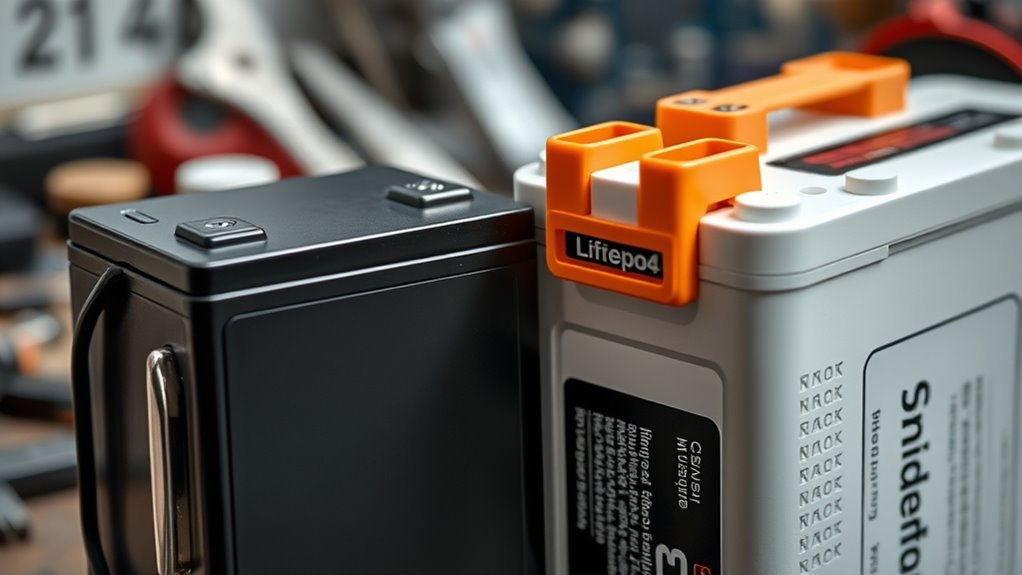
LiFePO4 (lithium iron phosphate) and lithium-ion batteries are two prominent types of rechargeable energy storage devices, each with distinct chemical compositions and performance characteristics. LiFePO4 batteries utilize a phosphate-based cathode, offering enhanced thermal stability and longer cycle life, which influences manufacturing processes and end-of-life battery recycling. In contrast, lithium-ion batteries typically employ layered transition metal oxides, providing higher energy density but requiring more complex manufacturing methods. The materials used also impact recycling strategies, with lithium iron phosphate being less toxic and easier to process. Understanding these differences helps optimize manufacturing processes for sustainability and efficiency, ensuring that battery recycling practices align with the specific chemistries involved, ultimately supporting environmental and resource recovery efforts.
How Safe Are Lithium Batteries? Safety Features Compared
Lithium batteries incorporate various safety features aimed at preventing thermal runaway and damage, including overheat prevention systems that monitor and regulate temperature. Built-in safety mechanisms, such as pressure relief valves and circuit interrupters, are designed to automatically activate under fault conditions. Analyzing these safety measures helps us understand how effectively lithium batteries mitigate risks during operation.
Overheat Prevention Features
While lithium-ion batteries are widely used for their high energy density, their safety features play a essential role in preventing overheating and thermal runaway. Effective thermal regulation systems are necessary, as they maintain ideal operating temperatures, reducing the risk of overheating. Overheating protection mechanisms, such as temperature sensors and shutdown protocols, are integrated to detect abnormal temperature rises promptly. These features activate cooling systems or disconnect the battery to prevent thermal escalation. The design of lithium-ion batteries often incorporates multiple layers of overheating protection, including venting mechanisms and thermal fuses, to mitigate potential hazards. These safety measures are key for ensuring reliable performance and minimizing the risk of thermal events, especially during high-demand or fault conditions.
Built-in Safety Mechanisms
Built-in safety mechanisms are integral to the design of lithium-ion batteries, directly addressing potential hazards and ensuring operational security. During battery manufacturing, multiple safety features are incorporated to mitigate risks such as thermal runaway and short circuits. These include thermal fuses, pressure relief valves, and electronic controllers that monitor voltage and current levels. Additionally, safety certifications from regulatory bodies verify that these mechanisms meet rigorous standards for safety and reliability. Such features prevent overheating, overcharging, and internal failures, reducing the likelihood of fires or explosions. The effectiveness of these safety mechanisms varies between battery types, with Lifepo4 batteries generally requiring fewer protective measures due to their chemical stability. Proper implementation of these safety features is vital for safe lithium-ion battery operation in various applications.
Battery Performance: LiFePO4 vs Lithium-Ion
Although both LiFePO4 and traditional lithium-ion batteries deliver high energy densities, their performance characteristics differ markedly. LiFePO4 batteries excel in thermal stability, allowing for safer operation and more reliable battery recycling processes. They typically have a lower charging speed compared to lithium-ion variants, which can influence rapid charging applications. Lithium-ion batteries, on the other hand, generally offer faster charging capabilities, making them suitable for quick turnaround cycles. However, their performance can be more affected by temperature fluctuations, impacting overall efficiency and safety. When evaluating battery performance, it’s essential to consider how each chemistry balances charging speed with safety and recyclability — factors vital for optimizing energy storage systems and lifecycle management.
Which Battery Lasts Longer? Lifespan and Durability
When comparing lifespan and durability, we focus on cycle life and resistance to wear, as these factors directly influence long-term performance. LiFePO4 batteries typically sustain more charge-discharge cycles before degrading, indicating a longer operational lifespan. Additionally, their superior resistance to wear under repeated use enhances durability, making them more reliable over extended periods.
Cycle Life Comparison
Lifepo4 and lithium-ion batteries differ markedly in their cycle life, which directly impacts their overall longevity and durability. Lifepo4 cells typically endure 2,000 to 3,000 cycles, while lithium-ion variants average around 500 to 1,500 cycles. This disparity results from differences in chemical stability and manufacturing processes.
Key factors include:
- Chemical Stability: Lifepo4’s robust chemistry resists degradation, extending cycle life.
- Battery Recycling: Lifepo4’s longer lifespan makes recycling more sustainable, reducing environmental impact.
- Manufacturing Processes: Variations in electrode fabrication influence cycle endurance, with Lifepo4 benefiting from more stable materials.
- Temperature Tolerance: Lifepo4 performs better under high temperatures, preserving its cycle life longer than lithium-ion batteries.
Resistance to Wear
Resistance to wear considerably influences the overall lifespan and durability of batteries, as ongoing use subjects electrode materials to mechanical and chemical stress. Lifepo4 batteries excel in wear resistance due to their robust chemistry, which provides superior corrosion resistance and minimizes electrode degradation over time. This inherent corrosion resistance reduces the formation of dendrites and other damaging byproducts, preserving structural integrity. Lithium-ion batteries, while generally durable, are more susceptible to wear caused by repeated charge cycles, especially if exposed to high temperatures or moisture, which accelerate corrosion. Consequently, Lifepo4 batteries tend to maintain their capacity longer, demonstrating better resistance to wear. This enhanced wear resistance directly translates into a longer lifespan and higher reliability in demanding applications.
LiFePO4 vs Lithium-Ion: Cost and Value
The cost and value of LiFePO4 batteries compared to lithium-ion variants hinge on initial investment, lifespan, and overall performance. Although LiFePO4 batteries typically have higher manufacturing costs upfront, their longer cycle life reduces replacement frequency and overall lifecycle costs. Key factors include:
- Manufacturing costs: LiFePO4’s complex chemistry often leads to higher initial production expenses.
- Lifespan: LiFePO4 batteries generally last 2-3 times longer, increasing value over time.
- Battery recycling: LiFePO4’s more stable chemistry simplifies recycling, lowering environmental costs.
- Performance stability: Consistent capacity retention enhances long-term reliability, offsetting initial costs.
How to Choose the Right Battery for Your Needs
How do you determine which battery best suits your specific application? We consider key factors like charging speed, which impacts operational efficiency, and the ease of battery recycling, essential for sustainability. Lithium-ion batteries typically offer faster charging times, beneficial for applications requiring rapid turnaround, whereas Lifepo4 batteries provide longer cycle life and improved safety. Evaluating your energy demands, lifespan expectations, and environmental considerations helps narrow options. For instance, if quick recharge cycles are critical, lithium-ion may be preferable; for long-term reliability and eco-consciousness, Lifepo4 might be better. Ultimately, understanding the trade-offs between charging speed and recyclability ensures you select a battery aligned with both performance needs and sustainable practices.
Environmental Impact of Lithium Batteries
Despite their widespread adoption, lithium batteries pose significant environmental challenges that cannot be overlooked. The primary concerns involve resource extraction and recycling challenges. Extracting lithium and other rare metals requires extensive mining, leading to habitat destruction, water depletion, and pollution. These processes are energy-intensive, contributing to carbon emissions. Additionally, recycling challenges hinder the sustainable management of used batteries, as current methods struggle to efficiently recover valuable materials like lithium, cobalt, and nickel. Without improved recycling technologies, e-waste accumulates, increasing environmental hazards. Furthermore, improper disposal can result in toxic leaks, contaminating soil and water supplies. Addressing these issues demands advancements in recycling processes and sustainable mining practices to minimize ecological footprints associated with lithium battery production and end-of-life management.
Frequently Asked Questions
Can Lifepo4 Batteries Be Recycled Easily?
Yes, Lifepo4 batteries can be recycled more easily due to their stable chemistry, which enhances the recycling process, promotes battery longevity, and simplifies hazardous material handling, making them a more environmentally friendly choice for sustainable energy storage solutions.
Are Lifepo4 Batteries Suitable for High-Temperature Environments?
We find LiFePO4 batteries suitable for high-temperature environments due to their superior thermal stability and heat resistance, ensuring safer operation and longer lifespan under elevated temperatures, unlike many other lithium-ion chemistries that risk thermal runaway.
How Do Charging Times Compare Between the Two Battery Types?
Charging times differ significantly: Lifepo4 batteries typically charge 20-30% faster than lithium-ion, thanks to their lower internal resistance. This efficiency enhances battery lifespan and maintains energy density, making them more reliable for high-demand applications.
Do Lifepo4 Batteries Require Special Maintenance?
We find Lifepo4 batteries require minimal special maintenance, enhancing battery lifespan and reducing environmental impact. Regular checks and proper charging practices suffice, making them a reliable, eco-friendly choice with fewer concerns about degradation compared to other lithium-ion types.
Which Battery Type Performs Better in Cold Weather Conditions?
We find Lifepo4 batteries outperform lithium-ion in cold weather, offering better battery longevity and consistent power efficiency. Their stable chemistry guarantees reliable performance, making them ideal for harsh climates where temperature fluctuations impact overall battery stability.
Conclusion
Ultimately, choosing between LiFePO4 and lithium-ion batteries is like selecting the foundation of a future structure—one that must balance safety, durability, and efficiency. LiFePO4 offers a stable, long-lasting core, akin to a resilient pillar, while lithium-ion provides dynamic energy flow, like a swift river. Our decision hinges on aligning these qualities with our application’s demands, ensuring the chosen battery’s essence sustains and supports our evolving technological landscape.