As we explore the landscape of EV lithium battery recycling, it’s clear that advancing sustainable methods is essential for reducing environmental impact and supporting a circular economy. We’re seeing a range of techniques—from mechanical to chemical and emerging direct recycling—that aim to maximize material recovery and safety. Understanding these options is critical as regulations evolve and technological innovations emerge, shaping the future of responsible battery lifecycle management. There’s more to uncover about how these approaches can transform the industry.
Key Takeaways
- Mechanical and chemical recycling methods recover valuable metals like lithium, cobalt, and nickel from used EV batteries.
- Hydrometallurgical and direct recycling techniques improve material purity and reduce processing steps.
- Automated disassembly and sorting systems enhance safety, efficiency, and recycling accuracy.
- Leading companies like Li-Cycle and Umicore utilize advanced, environmentally friendly recycling technologies.
- Proper disposal, take-back programs, and regulatory compliance support sustainable EV battery recycling options.
Why Recycling Lithium Batteries Is Essential for EV Sustainability
Although electric vehicles (EVs) offer a cleaner transportation alternative, their sustainability hinges on effective lithium battery management. Extending battery lifespan through proper care reduces the frequency of replacements, diminishing environmental impact. However, when batteries reach the end of their useful life, recycling incentives become essential. These incentives motivate stakeholders to recover valuable materials like lithium, cobalt, and nickel, minimizing resource extraction and waste. Efficient recycling processes not only recover critical components but also prevent hazardous disposal, reducing ecological risks. By integrating robust recycling incentives, we promote a circular economy that sustains EV manufacturing and reduces environmental footprints. Ultimately, sustainable lithium battery management guarantees that EVs remain an environmentally responsible transportation option over their entire lifecycle.
What Types of Lithium Batteries Do EVs Use?
Electric vehicles primarily rely on specialized lithium-ion batteries designed for high energy density and longevity. These batteries are engineered to optimize performance while ensuring battery safety during operation and recycling. EV lithium batteries mainly include lithium nickel manganese cobalt oxide (NMC), lithium iron phosphate (LiFePO4), and lithium nickel cobalt aluminum oxide (NCA). Each type balances energy capacity, thermal stability, and cycle life, impacting charging infrastructure compatibility.
Electric vehicle batteries focus on high energy density, safety, and recyclability, utilizing NMC, LiFePO4, and NCA types for optimal performance.
- NMC batteries excel in energy density, but require rigorous safety protocols.
- LiFePO4 batteries prioritize thermal stability and safety, suited for sustainable practices.
- NCA batteries provide high power output, demanding advanced safety measures.
- Choice of battery type influences recycling methods and sustainability strategies.
What Are the Biggest Challenges in Recycling EV Lithium Batteries?
Recycling EV lithium batteries presents significant technical and logistical challenges that hinder widespread adoption of sustainable practices. One major issue is the battery lifespan; as batteries age, their composition and structure change, complicating recycling processes. This variability affects the efficiency and consistency of recovery methods. Additionally, recycling economics play a critical role—high costs associated with disassembly, material extraction, and refining often outweigh the value of recovered materials, discouraging investment. The complex chemistry and tightly integrated components of lithium batteries further increase the difficulty of safe, effective recycling. Overcoming these challenges requires advancements in recycling technologies, standardization of battery designs, and economic incentives to make sustainable recycling practices both viable and scalable.
How Do Traditional Recycling Methods Work?
Traditional recycling methods primarily rely on mechanical separation processes to dismantle batteries and isolate key components, minimizing waste and preserving material integrity. Chemical extraction techniques then recover valuable metals like lithium, cobalt, and nickel through targeted processes that reduce environmental impact. Together, these methods form the backbone of sustainable EV battery recycling, emphasizing efficiency and resource recovery.
Mechanical Separation Processes
Mechanical separation processes serve as the foundational step in lithium-ion battery recycling, leveraging physical techniques to isolate valuable materials from used batteries. This stage addresses recycling challenges by breaking down batteries into manageable components, minimizing waste and energy use. Through shredding, crushing, and sieving, we separate metals, plastics, and active materials. These processes maintain the integrity of materials, enabling reuse and reducing reliance on virgin resources.
- Reduces environmental impact by avoiding chemical use during initial separation
- Enhances material purity for subsequent processing steps
- Addresses battery lifecycle by efficiently recovering critical components
- Streamlines recycling workflows, making traditional methods more sustainable
Mechanical separation provides a crucial foundation, but it’s just one part of a thorough recycling approach.
Chemical Extraction Techniques
After initial mechanical separation, chemical extraction techniques play an essential role in recovering high-purity materials from battery components. These methods involve targeted processes like solvent leaching and acid digestion to isolate valuable elements such as lithium, cobalt, and nickel. Electrolyte analysis is vital here, as it helps determine the composition and guides the extraction process to maximize efficiency. For anode recovery, chemical treatments dissolve graphite and other anode materials, allowing them to be purified and reused. This approach minimizes waste and reduces environmental impact by avoiding hazardous disposal. By refining these processes, we enhance the sustainability of battery recycling, ensuring that critical materials are recovered with high purity for reuse in new batteries, supporting a circular economy in the EV industry.
What Are the Latest Innovations in Lithium Battery Recycling Technologies?
Recent advancements in lithium battery recycling focus on advanced processes that enhance material recovery efficiency while minimizing environmental impact. Sustainable techniques utilize innovative equipment to extract valuable materials with reduced waste and energy consumption. These innovations are essential for developing more effective and eco-friendly recycling solutions for EV batteries.
Advanced Recycling Processes
Innovations in lithium battery recycling are driving more efficient and sustainable recovery methods, addressing the growing demand for resource conservation and environmental protection. Advanced recycling processes focus on overcoming recycling challenges related to complex battery chemistries and preserving battery lifespan. These innovations include:
- Hydrometallurgical techniques that selectively extract valuable metals with minimal waste.
- Direct recycling methods that restore cathode materials, reducing processing steps.
- Thermal processes optimized for energy efficiency, lowering carbon footprint.
- Automated sorting and disassembly, improving accuracy and safety.
These developments enable us to recover critical materials more effectively, ensuring the longevity of batteries and reducing reliance on virgin resources. Such advancements are essential for creating a sustainable, circular economy for EV lithium batteries.
Sustainable Material Recovery
Advancements in lithium battery recycling technologies are now enabling more sustainable recovery of critical materials, reducing environmental impact and conserving finite resources. Recent innovations focus on optimizing material extraction methods that preserve battery lifespan, ensuring materials can be efficiently reclaimed even after multiple cycles. These developments improve recycling economics by lowering processing costs and increasing recovery yields, making sustainable practices more commercially viable. Techniques such as hydrometallurgical and direct recycling processes are gaining prominence, enabling higher purity levels of recovered lithium, cobalt, and nickel. This not only minimizes waste but also reduces dependency on mining new raw materials. As a result, the industry moves toward a circular economy, where the lifecycle of battery materials is extended through more efficient, environmentally responsible recycling solutions.
Innovative Recycling Equipment
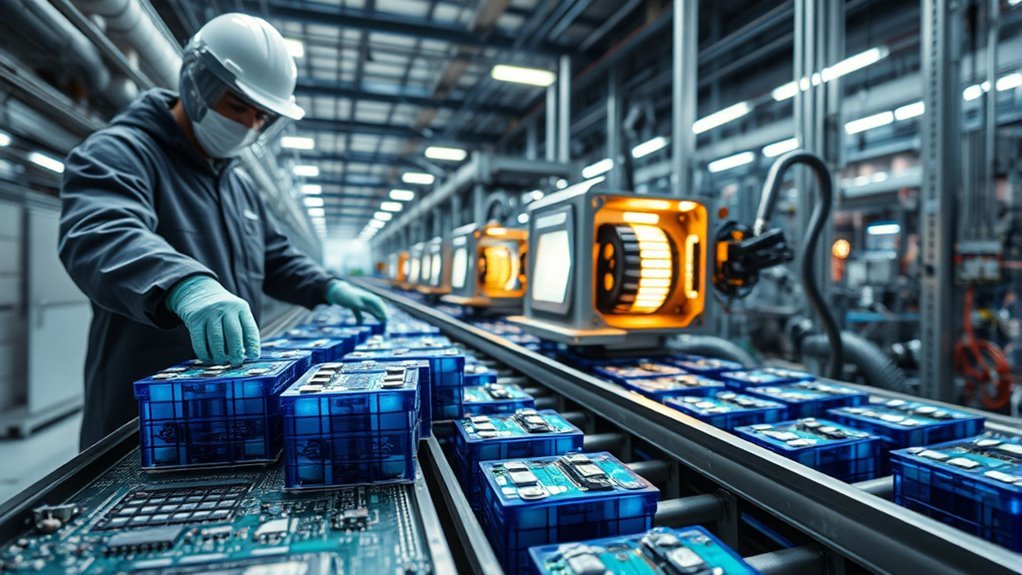
Advances in recycling equipment are transforming lithium battery recovery by enabling more efficient and environmentally friendly processes. Recent innovations focus on enhancing battery safety during dismantling and optimizing recycling logistics to reduce waste and emissions. New technologies include automated disassembly systems that minimize human exposure, advanced thermal and hydrometallurgical methods for higher material recovery rates, and real-time monitoring to guarantee safety standards. These innovations improve overall process sustainability by reducing chemical use and energy consumption. They also streamline logistics, making collection and transportation safer and more cost-effective. By integrating these cutting-edge tools, we can accelerate the shift toward a circular economy for EV batteries, assuring responsible resource management and environmental protection.
- Automated disassembly for safer handling
- Advanced recovery methods boosting efficiency
- Real-time safety monitoring systems
- Optimized logistics reducing environmental impact
Which Recycling Method Is Best in Terms of Cost, Efficiency, and Environment?
Choosing the most suitable recycling method for EV lithium batteries requires a careful balance of cost, efficiency, and environmental impact. Hydrometallurgical processes often excel in recovery rates, enhancing recycling economics and extending battery lifespan through higher material yields. These methods minimize hazardous waste and reduce energy consumption, making them more environmentally sustainable. Conversely, pyrometallurgical techniques are cost-effective for large-scale operations but involve higher energy use and emissions, impacting ecological balance. Solid-state recycling is emerging as a promising option, combining high efficiency with reduced environmental footprint, though it’s still in development. Ultimately, the best method depends on optimizing recycling economics while safeguarding environmental health and maximizing battery lifespan. We must focus on sustainable practices that reconcile these critical factors.
Who Are Leading Companies in EV Battery Recycling Innovation?
Leading companies in EV battery recycling are pushing the boundaries of sustainable innovation through cutting-edge technologies and strategic collaborations. They focus on extending the battery lifecycle and optimizing recycling incentives to maximize resource recovery. These innovators develop advanced processes like hydrometallurgy and direct recycling, minimizing environmental impact while improving efficiency. Their efforts enable the extraction of critical materials such as lithium, cobalt, and nickel, reducing reliance on primary mining. Furthermore, they collaborate with automakers and policymakers to establish scalable, circular economies for EV batteries. This approach accelerates the adoption of sustainable practices across the industry. Key players include:
Leading EV battery recyclers drive innovation, sustainability, and circular economies through advanced technologies and strategic collaborations.
- Li-Cycle, pioneering efficient hydrometallurgical methods
- Umicore, integrating battery recycling with material reuse
- Redwood Materials, focusing on closed-loop battery lifecycle management
- Glencore, leveraging recycling incentives to boost resource recovery
How Do Regulations Affect Battery Recycling Practices?
Regulations play a crucial role in shaping battery recycling practices by establishing standards that guarantee environmental safety, worker protection, and resource efficiency. Regulatory compliance is essential for recycling facilities to meet legal requirements, reduce hazards, and minimize environmental impact. Policy impacts influence the development of sustainable recycling infrastructure, encouraging innovation and ensuring responsible handling of hazardous materials like lithium and cobalt. These regulations often mandate reporting, traceability, and safe disposal protocols, which help prevent environmental contamination and worker exposure. Additionally, strict enforcement of policies incentivizes investments in advanced recycling technologies. Overall, regulations serve as a framework that guides the industry toward safer, more efficient, and sustainable practices, aligning economic incentives with environmental and social responsibilities.
How Can Consumers and Fleets Support Battery Recycling Efforts?
Consumers and fleets can actively support battery recycling efforts by prioritizing proper disposal and participating in take-back programs. Enhancing consumer awareness is essential for understanding lithium battery life cycles and environmental impacts. Fleet initiatives, such as implementing maintenance protocols that include battery health assessments and recycling plans, guarantee sustainability.
To deepen our collective impact, consider these actions:
- Educate users on safe, responsible disposal methods
- Collaborate with certified recycling facilities
- Incorporate recycling metrics into fleet management systems
- Advocate for policies supporting extended producer responsibility
What Are the Future Trends and Opportunities in EV Lithium Battery Recycling?
Advancements in recycling technologies and increasing industry investments are shaping a promising landscape for EV lithium battery recovery. Future trends focus on extending battery lifespan through design innovations, which facilitate more efficient recycling processes. Enhanced recycling incentives are also emerging, motivating manufacturers and consumers to prioritize sustainable disposal methods. These incentives aim to reduce environmental impact and recover valuable materials like lithium, cobalt, and nickel more effectively. Additionally, developments in direct recycling techniques promise to preserve more of the battery’s original material structure, improving resource efficiency. By integrating these technological and policy-driven opportunities, the industry moves toward a circular economy model, where batteries are reused and recycled responsibly, supporting sustainable growth and reducing reliance on finite raw materials.
Frequently Asked Questions
How Can Consumers Identify Responsible Lithium Battery Recycling Facilities?
We advise consumers to prioritize recycling facilities with clear certification standards and robust consumer education programs, ensuring responsible lithium battery recycling. These indicators demonstrate commitment to sustainability and compliance with environmental and safety regulations.
What Are the Safety Concerns During Lithium Battery Recycling Processes?
We prioritize safety by managing battery fire hazards through proper cooling and ventilation, while strict protocols prevent toxic chemical exposure, ensuring environmentally sustainable recycling processes that protect workers and communities from potential hazards inherent in lithium battery handling.
How Does Recycling Impact the Overall Lifecycle Cost of EV Batteries?
Recycling extends battery lifespan like nurturing a sapling, boosting recycling efficiency, and reducing costs. This sustainable cycle minimizes total lifecycle expenses, making EV batteries more economically viable while conserving resources and supporting environmental health.
Are There Any Health Risks Associated With Recycling Lithium Batteries?
Recycling lithium batteries poses minimal health risks if proper procedures are followed, as it reduces environmental pollution and prevents exposure to hazardous materials. Battery degradation during recycling is carefully managed to guarantee safety and sustainability in handling these materials.
What Incentives Exist for Companies to Improve Battery Recycling Practices?
We’re motivated by regulatory compliance and advancements in recycling technology, which make sustainable solutions more feasible. These incentives propel companies to prioritize responsible recycling practices, ensuring environmental integrity while improving efficiency and reducing costs in lithium battery reuse.
Conclusion
By embracing advanced recycling technologies, we can turn spent EV batteries into valuable resources rather than waste. Some might worry about the complexity or cost, but imagine an efficient, closed-loop system where each battery’s materials are recovered seamlessly, reducing environmental impact. This sustainable approach not only conserves critical resources but also drives innovation in the industry, ensuring a cleaner, greener future for all. Together, we can make EV recycling a cornerstone of sustainable mobility.