Ensuring safe charging of lithium batteries is critical to preventing potential hazards like overheating, fires, or explosions. We must adhere to specific safety protocols, use appropriate chargers, and monitor conditions carefully. The risks associated with improper handling can be significant, especially in everyday environments or travel scenarios. Understanding the precise safety measures involved can make a substantial difference in safeguarding both equipment and personal safety, prompting us to explore these guidelines in detail.
Key Takeaways
- Use chargers specifically designed for lithium batteries and avoid overcharging.
- Monitor temperature and stop charging if overheating or swelling occurs.
- Store batteries in a cool, dry place and disconnect once fully charged.
- Regularly inspect batteries for damage, swelling, or unusual odors.
- Handle damaged batteries with protective gear and dispose of them properly at certified facilities.
What Are the Essential Safety Rules for Charging Lithium Batteries?
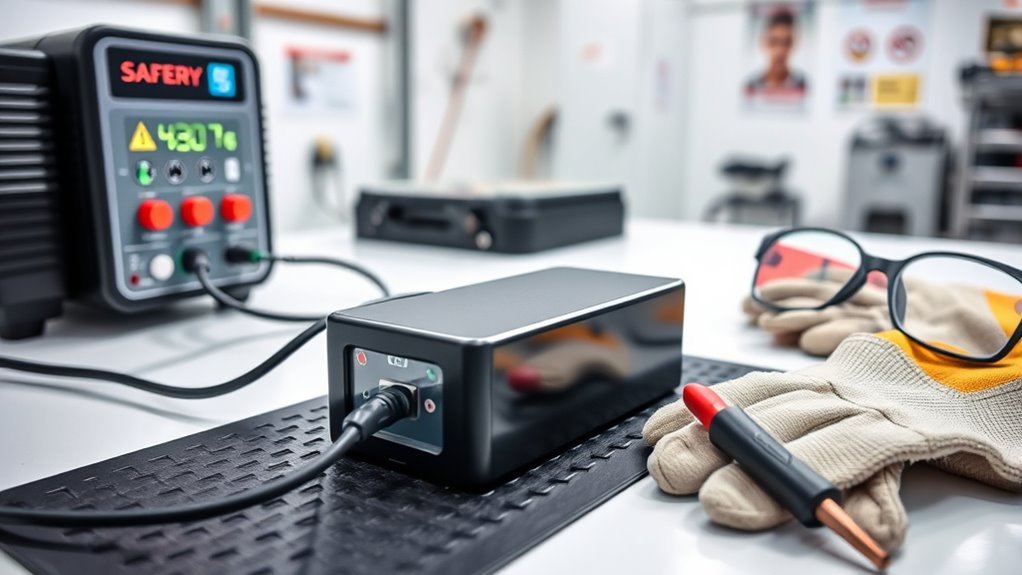
When charging lithium batteries, adhering to essential safety rules is critical to prevent hazards such as overheating, fire, or explosion. Proper charging practices directly influence battery lifespan and charging speed. Using the correct charger designed for the specific battery chemistry ensures consistent current flow, minimizing the risk of thermal runaway. Avoiding overcharging by disconnecting once full capacity is reached preserves battery integrity and prolongs lifespan. Additionally, maintaining ideal charging speed—neither too fast nor too slow—reduces stress on the cells, preventing degradation. Monitoring the charging environment for temperature and ensuring it remains within recommended limits further enhances safety. Strict adherence to these safety protocols ensures reliable performance, maximizes battery lifespan, and maintains safe charging conditions throughout the battery’s operational life.
How to Use the Right Charger and Create a Safe Charging Environment
Selecting the appropriate charger is essential for guaranteeing safe and efficient lithium battery charging. Compatibility between the charger and battery is critical, especially concerning voltage, current, and connector type. Using correct charging accessories minimizes risks associated with improper connections or overcurrent. To optimize safety, confirm your charger is designed for your specific battery type and adheres to manufacturer specifications. Properly organized battery storage reduces the risk of accidental short circuits during charging. Always use certified, high-quality charging accessories to prevent overheating or damage. Here is a quick reference:
| Charger Type | Suitable Battery Storage | Essential Charging Accessories |
|---|---|---|
| Smart Charger | Stable environment | Overcurrent protection devices |
| Fast Charger | Ventilated area | Temperature sensors |
| Standard Charger | Dry, cool location | Insulation tools |
| Universal Charger | Secure storage | Voltage regulators |
| Specialized Charger | Controlled environment | Safety cut-off switches |
Best Practices for Safe Charging at Home and While Traveling
To guarantee safe lithium battery charging both at home and during travel, we must follow strict protocols that prevent hazards such as overheating, short circuits, and fires. Proper practices include using certified chargers, avoiding damaged batteries, and monitoring charging sessions. Additionally, understanding lithium battery history informs safe handling and disposal, supporting effective battery recycling strategies.
Safe lithium battery charging requires certified chargers, proper handling, and mindful disposal to prevent hazards and ensure longevity.
Key best practices include:
- Always charge within manufacturer-recommended parameters and avoid third-party chargers that lack certification.
- Store batteries in a cool, dry environment and disconnect when fully charged to prevent thermal runaway.
- Prioritize battery recycling at end-of-life to reduce environmental impact and prevent unsafe disposal.
Implementing these steps ensures safety and longevity of lithium batteries during everyday use and travel.
How to Recognize Overheating and Battery Hazards
How can you identify signs of overheating and potential hazards in lithium batteries before they escalate into dangerous situations? Thermal detection is vital for early hazard prevention. Elevated surface temperatures, such as warmth or hot spots, indicate abnormal heat buildup. Swelling or bulging of the battery casing is a clear visual cue of internal overheating. Unusual odors or a metallic smell also signal thermal issues. In addition, a rapid decrease in performance or unexpected shutdowns may suggest internal thermal stress. Monitoring these signs allows us to act proactively, preventing thermal runaway or fires. Regular inspection and temperature checks are essential for hazard prevention, especially during charging or high-load use. Recognizing these indicators early ensures safety and prolongs battery lifespan.
What to Do If Your Lithium Battery Is Damaged or Malfunctioning
When you notice signs of damage or malfunction in a lithium battery, immediate action is vital to prevent safety hazards. First, disconnect the battery from any power source to stop current flow. Second, place the damaged battery in a non-flammable, ventilated container, avoiding contact with combustible materials. Third, follow emergency procedures by contacting emergency services and notifying relevant authorities. Do not attempt to repair or puncture the battery, as this can cause thermal runaway. Proper battery disposal is critical; take the damaged unit to a certified disposal facility following local regulations. Always handle damaged batteries with protective gear and ensure the area is well-ventilated. Prompt, informed action minimizes risks and promotes safe battery management.
Frequently Asked Questions
Can Lithium Batteries Be Safely Charged With Wireless Chargers?
We believe wireless charging can be safe for lithium batteries if the device’s battery compatibility is confirmed, and proper safety protocols are followed, ensuring the charger’s specifications match the battery’s requirements to prevent overheating or damage.
Are There Specific Safety Rules for Charging Lithium Batteries Outdoors?
We recommend following outdoor safety and weather considerations, such as avoiding rain and extreme temperatures, when charging lithium batteries outside. Ensuring dry, stable conditions prevents hazards, like overheating or short circuits, safeguarding both the user and device.
How Do Temperature Fluctuations Affect Lithium Battery Charging Safety?
Temperature fluctuations can cause thermal expansion in lithium batteries, risking safety hazards. Proper temperature regulation during charging minimizes this risk, ensuring stable performance and preventing thermal runaway caused by extreme or rapidly changing temperatures.
What Are the Long-Term Safety Considerations for Frequent Lithium Battery Charging?
Frequent lithium battery charging accelerates battery degradation through increased charging cycles, compromising long-term safety. We recommend monitoring charge levels, avoiding overcharging, and adhering to manufacturer guidelines to minimize risks associated with repeated charging.
Can Charging Speed Impact the Safety of Lithium Batteries?
Charging speed directly impacts battery safety; faster charging can generate excessive heat, risk thermal runaway, and degrade battery health. We recommend controlled charging rates to guarantee ideal battery safety and longevity during routine use.
Conclusion
Just as a skilled sailor navigates with care through unpredictable waters, we must approach lithium battery charging with vigilance and precision. Following safety rules guarantees we steer clear of hazards, preventing overheating or damage. By respecting our equipment and environment, we safeguard our journeys—whether at home or abroad. With disciplined practice, we maintain control, ensuring a safe voyage through the modern landscape of portable power, confidently avoiding the storms that can threaten our devices and safety.