Did you know that not all lithium chemistries are equally suited for long-term solar storage, especially when considering safety, lifespan, and environmental impact? While high energy density often dominates discussions, other factors like thermal stability and recyclability play a vital role in system reliability. Understanding these differences can considerably influence your choice. As we explore the various lithium options, you’ll see why certain chemistries are better aligned with sustainable, efficient solar energy solutions.
Key Takeaways
- Lithium Iron Phosphate (LiFePO₄) offers superior safety, long cycle life, and eco-friendly recyclability, making it ideal for solar storage.
- NMC batteries provide higher energy density but pose environmental and recycling challenges, suitable for space-constrained systems.
- Manganese-based lithium batteries (LiMn₂O₄) deliver high power output and thermal stability, beneficial for rapid charge/discharge cycles.
- Emerging solid-state and hybrid chemistries aim to improve safety, lifespan, and sustainability for future solar energy storage.
- Selecting the best chemistry depends on balancing safety, capacity, longevity, environmental impact, and recyclability for specific needs.
What Are the Main Types of Lithium Batteries for Solar Storage?
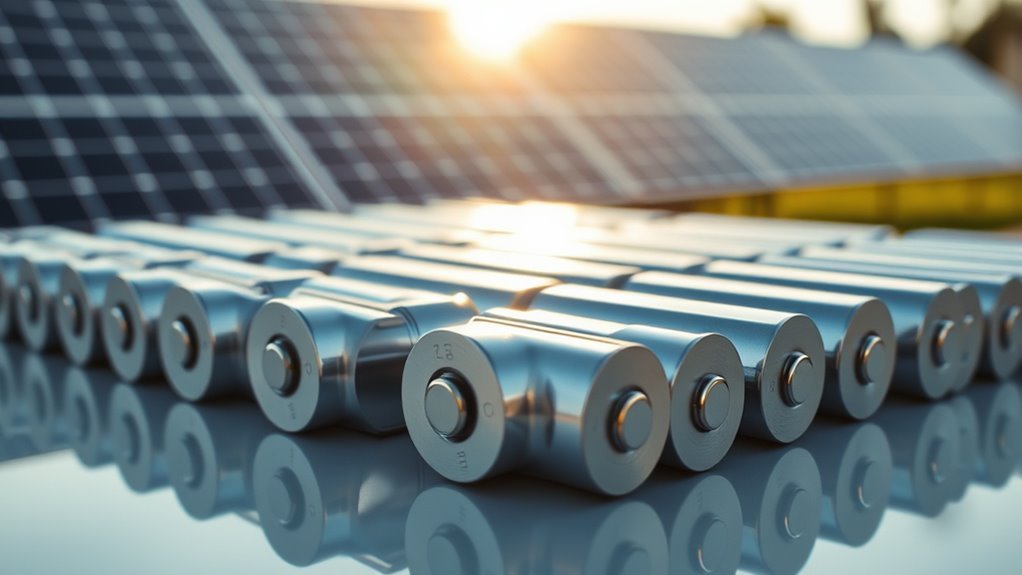
There are primarily three main types of lithium batteries used for solar storage: Lithium Iron Phosphate (LiFePO4), Lithium Nickel Manganese Cobalt Oxide (NMC), and Lithium Cobalt Oxide (LCO). Each offers distinct performance characteristics and environmental considerations. LiFePO4 batteries excel in safety, longevity, and stable chemistry, making them favorable for sustainable energy systems, especially considering the environmental impact. Their recyclability reduces concerns related to battery recycling, minimizing ecological harm. NMC batteries provide higher energy density, but their complex chemistry poses challenges for recycling processes, raising environmental impact questions. LCO batteries, common in consumer electronics, have lower durability and pose greater environmental risks during disposal and recycling. Understanding these distinctions helps optimize solar storage solutions while addressing environmental and recycling considerations.
How Do Lithium Iron Phosphate (LiFePO₄) Batteries Perform in Solar Systems?
Lithium Iron Phosphate (LiFePO₄) batteries are highly regarded for their reliable performance in solar energy systems, primarily due to their exceptional safety profile and long cycle life. Their stable chemistry minimizes thermal runaway risks, making them safer for residential and commercial applications. Regarding performance, LiFePO₄ batteries demonstrate high charge and discharge efficiency, maintaining capacity over thousands of cycles, which reduces replacement frequency. From an environmental perspective, they are more sustainable, with easier battery recycling processes and a lower environmental impact compared to other lithium chemistries. Their composition contains fewer hazardous materials, further supporting eco-friendly disposal. Overall, LiFePO₄ batteries offer a balanced combination of safety, longevity, and environmental responsibility, making them a robust choice for solar storage solutions.
Are NMC Batteries Suitable for Home Solar Storage?
Are NMC (Nickel Manganese Cobalt) batteries a practical choice for home solar storage? Their high energy density and charge retention make them appealing, but their suitability requires careful analysis. NMC batteries offer efficient performance; however, their environmental impacts are a concern due to the extraction of cobalt and nickel, which pose sourcing and sustainability challenges. Battery recycling becomes critical to mitigate these impacts, yet current recycling methods for NMC chemistries are complex and not universally accessible. Additionally, the long-term environmental footprint depends on advances in recycling technology and responsible material sourcing. While NMC batteries provide robust performance, their environmental considerations must be factored into their overall viability for home solar storage.
What Are the Pros and Cons of Lithium Manganese (LiMn₂O₄) Batteries?
Lithium Manganese (LiMn₂O₄) batteries present an alternative chemistry with distinct advantages and limitations for energy storage applications. They offer high power output, fast charge/discharge rates, and enhanced thermal stability, making them suitable for grid support and backup systems. However, their cycle life is typically shorter than other lithium chemistries, which can impact long-term cost-effectiveness. From an environmental perspective, LiMn₂O₄ batteries are generally considered less harmful due to the abundance of manganese, facilitating more sustainable battery recycling processes. Nonetheless, their relatively shorter lifespan increases the frequency of recycling, raising concerns about waste management and environmental impact. Balancing performance with recyclability and environmental footprint is essential when evaluating LiMn₂O₄ for solar storage solutions.
Which Lithium Battery Is Safest and Lasts the Longest?
Determining the safest and most durable lithium battery involves evaluating various chemistries based on their thermal stability, cycle life, and overall reliability. Lithium Iron Phosphate (LiFePO₄) batteries stand out due to their high thermal stability, reducing risks of thermal runaway, and longer cycle life, often exceeding 2,000 cycles. Their stability also benefits battery recycling, as they contain fewer hazardous materials, minimizing environmental impact. Conversely, while other chemistries like NMC offer higher energy density, they pose greater safety concerns and environmental challenges during disposal. Prioritizing safety and longevity, LiFePO₄ batteries not only provide reliable performance but also align with sustainable practices, making them the most suitable choice for long-term solar storage solutions.
How Do Costs and Performance Compare Among Lithium Battery Chemistries?
We compare lithium battery chemistries primarily on cost efficiency and performance metrics, which vary considerably across types. While some chemistries offer lower initial costs, others provide superior cycle life or energy density, influencing long-term value. Analyzing these trade-offs helps optimize system design for specific solar storage applications.
Cost Efficiency Variations
How do different lithium battery chemistries compare regarding cost efficiency and performance? Lithium iron phosphate (LiFePO4) batteries generally offer lower upfront costs and longer cycle life, enhancing long-term cost efficiency. Conversely, nickel manganese cobalt (NMC) chemistries tend to have higher initial prices but provide greater energy density, which can justify costs in space-constrained applications. Manufacturing sustainability also influences cost efficiency; chemistries with abundant, less environmentally damaging materials tend to reduce production costs. Additionally, battery recycling practices vary among chemistries, impacting lifecycle costs and environmental footprint. Efficient recycling processes can offset higher initial costs by recovering valuable materials, thereby improving overall cost efficiency. Ultimately, selecting a chemistry hinges on balancing initial investment, lifecycle longevity, environmental impact, and the potential for sustainable manufacturing practices.
Performance Differences Among Chemistries
Different lithium battery chemistries exhibit distinct performance characteristics that influence their suitability for specific applications. For instance, lithium iron phosphate (LiFePO4) offers high cycle life and thermal stability, making it ideal for long-term solar storage, but it has a lower energy density compared to lithium nickel manganese cobalt oxide (NMC). NMC batteries provide higher energy density but are more sensitive to temperature fluctuations and degrade faster over cycles. These performance traits directly impact maintenance costs and battery recycling efforts, affecting environmental impact. Chemistries with complex electrode materials pose challenges for recycling, increasing environmental concerns. Consequently, choosing a chemistry involves balancing performance with environmental considerations, where understanding these differences helps optimize system longevity and minimize ecological footprint.
What Factors Should You Consider When Choosing a Lithium Battery for Solar?
Selecting the appropriate lithium battery for solar storage requires careful consideration of several key factors that directly impact performance, safety, and longevity. Critical considerations include capacity, cycle life, safety protocols, and environmental impact. Additionally, understanding the battery’s recyclability and its influence on the environment is essential, especially given the growing emphasis on sustainable energy solutions.
- Battery recycling potential, which affects environmental impact and disposal costs
- Cycle life and depth of discharge, influencing long-term performance and cost-effectiveness
- Thermal stability and safety features, reducing risks of thermal runaway
- Manufacturing quality and supply chain transparency, ensuring reliability and ethical sourcing
Focusing on these factors helps optimize solar energy storage systems while minimizing ecological footprint and supporting sustainable practices.
Are Hybrid Lithium Chemistries a Better Fit for Solar Storage?
Hybrid lithium chemistries combine multiple battery chemistries within a single system to optimize performance for solar storage applications. This approach leverages the strengths of each chemistry, enhancing overall efficiency and longevity. Battery integration in hybrid systems allows for tailored energy management, balancing power density, cycle life, and safety. Consider this configuration:
| Chemistry A | Chemistry B | Synergy Effect |
|---|---|---|
| High power | High energy | Improved cycle life |
| Fast charge | Deep discharge | Optimized performance |
| Cost-effective | Long-lasting | Enhanced reliability |
Future Trends in Lithium Battery Chemistry for Solar Power
Advancements in lithium battery chemistry are poised to considerably enhance solar energy storage, driven by the need for higher energy densities, improved safety, and longer cycle life. Future developments focus on chemistries like lithium-silicon and solid-state batteries, which promise increased capacity and stability. Innovations will also emphasize reducing environmental impact through improved battery recycling techniques, minimizing hazardous waste, and sourcing sustainable materials. Additionally, researchers are exploring benign electrolytes to enhance safety and longevity. Key trends include:
- Integration of recyclable cathode materials to promote sustainability
- Development of solid electrolytes to improve safety and lifespan
- Use of abundant, less environmentally damaging elements
- Enhanced battery management systems for better cycle life and efficiency
These trends collectively aim to make lithium batteries more sustainable and efficient for large-scale solar storage applications.
Frequently Asked Questions
How Does Temperature Affect Lithium Battery Performance in Solar Applications?
Imagine a lithium battery as a delicate dancer; high temperatures disrupt its balance. Temperature stability is vital, and effective thermal management guarantees consistent performance, preventing degradation and prolonging battery life in solar storage systems.
What Are the Environmental Impacts of Different Lithium Battery Chemistries?
We find that lithium battery chemistries vary in environmental impacts, affecting battery safety and cost. Lithium iron phosphate offers safer, eco-friendlier options with lower environmental harm, while nickel-based chemistries tend to be more costly and environmentally taxing.
Can Lithium Batteries Be Recycled Efficiently After Solar Use?
Like a phoenix rising from ashes, lithium batteries can be recycled efficiently through advanced battery recycling techniques, enabling chemical recovery that minimizes environmental impact, maximizes resource reuse, and guarantees responsible solar energy storage with sustainable practices.
How Does Cycle Life Vary Among Lithium Battery Chemistries?
We find that cycle life varies markedly among lithium chemistries; lithium iron phosphate offers superior battery longevity and chemistry stability, while nickel manganese cobalt provides higher energy density but shorter cycle life, impacting long-term solar storage performance.
Are There Emerging Lithium Chemistries Promising Better Solar Storage?
Sure, emerging lithium chemistries promise solid-state advantages and fast charging potential, making them appealing for solar storage. These innovations could revolutionize energy efficiency, although long-term stability and cost remain challenges we’re enthusiastic to see addressed.
Conclusion
In conclusion, selecting the right lithium battery chemistry for solar storage involves balancing safety, longevity, and environmental impact. LiFePO₄ stands out as a reliable choice, offering a harmonious blend of performance and sustainability. While other chemistries present advantages, they often come with trade-offs that influence long-term value. Ultimately, thoughtful consideration of your specific needs and future energy goals will guide you toward the most fitting, forward-looking solution for your solar journey.