Imagine a user consistently charging their device to 100% and discharging below 20%, unknowingly accelerating battery wear over time. Such charging habits can generate stress within lithium cells, reducing capacity and lifespan. Understanding the precise impact of these actions is vital for optimizing battery health. By examining common mistakes and best practices, we can better preserve lithium battery performance—an essential consideration for anyone relying on long-lasting, reliable devices.
Key Takeaways
- Charging to 100% or discharging below 20% stresses battery cells, accelerating capacity loss.
- Frequent fast charging increases internal resistance and heats the battery, shortening lifespan.
- Deep discharges and irregular charging habits cause more stress cycles and degrade battery health.
- Keeping charge levels between 20% and 80% helps maintain optimal battery chemistry.
- Ignoring calibration and using incompatible chargers can lead to inaccurate readings and damage.
How Lithium Battery Aging Affects Performance
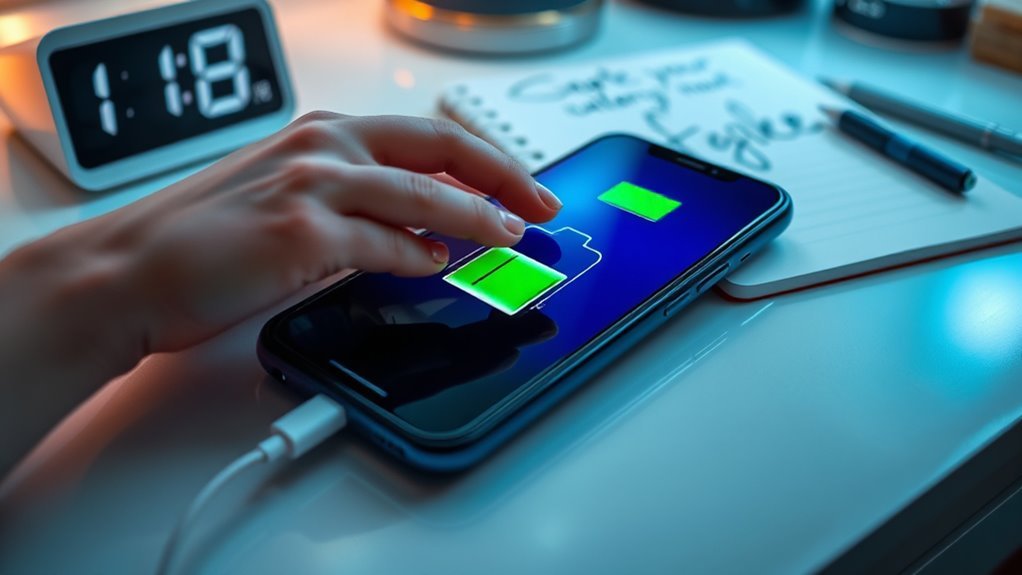
Lithium battery aging directly impacts device performance by reducing capacity and increasing internal resistance, which leads to shorter usage times and slower charging speeds. Battery degradation occurs over cycles due to chemical changes, resulting in capacity loss that diminishes the battery’s ability to hold charge effectively. As capacity declines, devices cannot operate as long between charges, affecting user experience. Increased internal resistance hampers current flow, causing slower charge rates and higher heat generation during operation. These effects compound over time, making it essential to understand how aging influences performance. Recognizing the signs of battery degradation helps in managing device longevity. Ultimately, capacity loss from aging reduces overall efficiency, emphasizing the importance of ideal charging habits to mitigate rapid deterioration.
Common Charging Mistakes That Shorten Your Battery’s Life
Have you ever wondered how certain charging habits can accelerate battery degradation? One common mistake is neglecting proper battery calibration, which causes inaccurate state-of-charge readings and can lead to overcharging or deep discharges. Using incompatible chargers is another critical error; non-certified or mismatched chargers may deliver inconsistent voltage or current, damaging the battery’s internal chemistry. Over-reliance on fast charging without considering the battery’s health accelerates capacity loss. Additionally, repeatedly charging to 100% or letting the battery drain below 20% stresses the cells, shortening lifespan. Proper charging practices involve using chargers compatible with your device and maintaining ideal charge levels. These habits help preserve battery health and extend overall longevity, avoiding unnecessary stress on lithium cells.
Smart Charging Habits to Maximize Battery Longevity
Adopting smart charging habits can considerably extend your battery’s lifespan by minimizing stress on the cells and maintaining ideal performance. Proper charging cycle management involves avoiding deep discharges and excessive fast charging, which accelerate capacity loss. Regularly performing battery calibration—full cycles of discharge followed by a complete recharge—helps the battery’s management system accurately monitor capacity and health. Keeping the charge level between 20% and 80% reduces strain on the electrodes and prolongs cycle life. Additionally, avoiding frequent top-ups from low states and limiting exposure to high temperatures during charging further preserves capacity. Implementing these disciplined practices ensures your lithium battery experiences fewer stress cycles, maintains accurate calibration, and ultimately achieves maximum longevity.
Troubleshooting and Fixing Battery Charging Problems
When your device exhibits charging issues, systematically diagnosing the problem is essential to prevent further damage and restore peak performance. First, verify the charging accessories—cables, adapters, and ports—for damage or debris, as faulty accessories can disrupt power flow. Make certain the charging port is clean and free of dust or corrosion. If issues persist, consider the battery recycling process; old or degraded batteries may cause charging failures, requiring replacement. Test with a known good charger to distinguish between accessory and device problems. Software glitches can also interfere with charging; a firmware update or reset might be necessary. Always use certified accessories and avoid third-party chargers that lack proper safeguards, as substandard accessories can compromise battery health and safety.
Daily Tips to Keep Your Lithium Battery Healthy
To maintain the longevity and ideal performance of your lithium battery, incorporating consistent daily habits is essential. Avoid deep discharges, as they strain the organic electrolyte, reducing capacity over time. Keep the battery charge level between 20% and 80% to minimize stress and prevent irreversible capacity loss. Regularly update device firmware to optimize charging algorithms. Proper battery recycling is vital; dispose of batteries responsibly to prevent environmental damage and potential degradation of remaining battery materials. Store batteries in a cool, dry environment when not in use, as high temperatures accelerate electrolyte decomposition. Limiting exposure to extreme temperatures preserves electrolyte stability. Adhering to these practices helps sustain battery health, ensuring consistent performance and prolonging lifespan.
Frequently Asked Questions
How Does Temperature Impact Lithium Battery Lifespan?
Temperature influences lithium battery lifespan through thermal degradation; high temperatures accelerate aging, while ideal storage at moderate temperatures minimizes this effect, preserving battery health. Maintaining perfect conditions is essential for extending lithium battery longevity and performance.
Can Using Fast Chargers Damage My Battery Long-Term?
Fast charging acts like a swift river, accelerating power flow, yet risking battery degradation. We see that frequent fast charging can cause long-term damage, stressing internal components and shortening lithium battery lifespan, so moderation is key.
Does Battery Capacity Decline Uniformly Over Time?
Battery capacity decline isn’t perfectly uniform; degradation varies with usage, temperature, and charging habits. Over time, capacity loss accumulates unevenly, impacting overall performance, but understanding these factors helps us mitigate long-term battery degradation effectively.
Are There Specific Brands With Better Lithium Battery Longevity?
We find that reputable brands like Samsung, Apple, and Sony consistently offer superior reliability and longevity, backed by rigorous testing. Their longevity comparison reveals consistent performance, making them a smarter choice for long-term battery health and device durability.
Is It Better to Store Batteries Fully Charged or Discharged?
We recommend storing lithium batteries at approximately 40-60% charge in ideal storage conditions, as this minimizes effects of battery self-discharge rates, preserving capacity and prolonging lifespan compared to fully charged or discharged states.
Conclusion
By adopting ideal charging habits, we can considerably extend our lithium battery lifespan. Studies show that improper charging accelerates capacity loss by up to 30% within the first year. Maintaining charge levels between 20% and 80% and avoiding deep discharges can preserve up to 50% of battery capacity over time. Implementing these practices isn’t just about performance—it’s about maximizing the longevity and reliability of our devices in the long run.