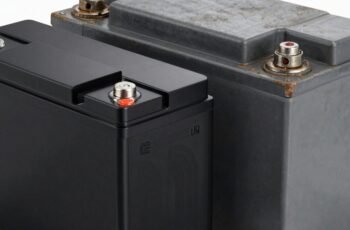
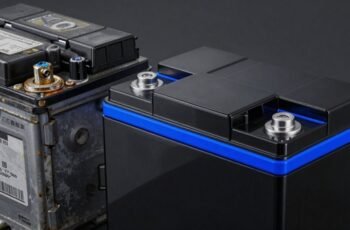
When comparing deep cycle lithium batteries to AGM options, it’s essential to weigh their technical performance, lifespan, and long-term value. Each has distinct advantages and limitations that can substantially influence application suitability. Understanding these differences requires a detailed analysis of their chemistry, cost structures, and maintenance needs—factors that ultimately determine which type aligns best with your specific energy requirements and sustainability goals.
Key Takeaways
- Deep cycle lithium batteries have a longer lifespan (up to 5,000 cycles) compared to AGM batteries (500-1,000 cycles).
- Lithium batteries offer higher energy density and faster charging, making them more efficient for demanding applications.
- AGM batteries are more affordable upfront but require more frequent replacements due to shorter lifespan.
- Lithium batteries are safer when properly managed and have advanced safety features; AGM batteries contain hazardous lead materials.
- Over time, lithium batteries provide lower total cost of ownership thanks to durability, performance, and environmental benefits.
What Are Deep Cycle Lithium and AGM Batteries?
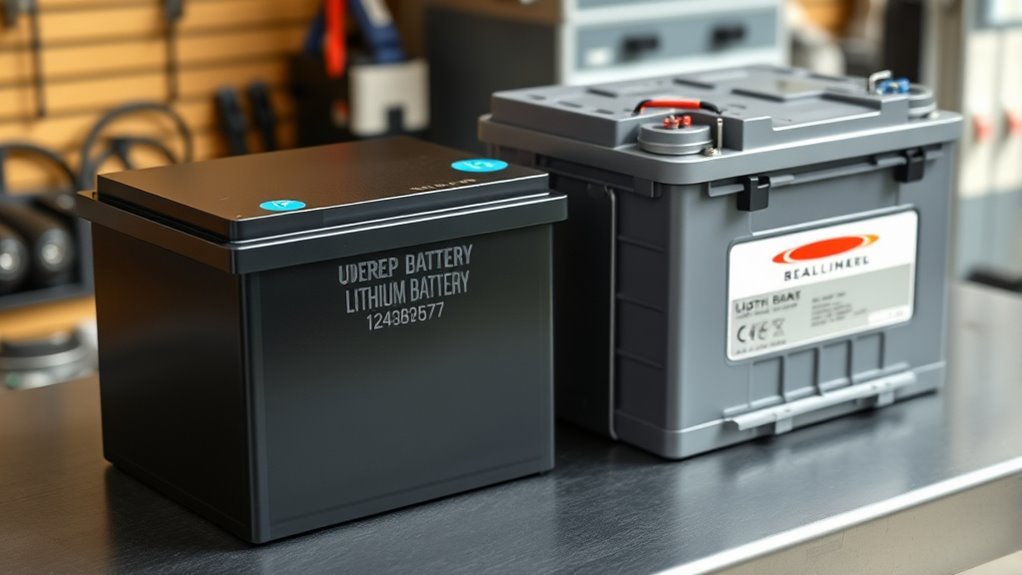
Deep cycle lithium batteries and AGM (Absorbent Glass Mat) batteries are specialized energy storage solutions designed for repeated, deep discharges. Lithium batteries utilize advanced chemistry, enabling higher energy density and longer lifespan, which influences their charging methods and recycling processes. AGM batteries, a type of lead-acid, employ glass mats to immobilize electrolyte, offering maintenance-free operation and consistent performance under cycling conditions. Both types require specific charging protocols to optimize longevity and safety; lithium batteries often demand precise, controlled charging, whereas AGM batteries benefit from regulated, multi-stage chargers. When considering battery recycling, lithium units pose more complex challenges due to their chemical composition, whereas AGM batteries are more straightforward but still require proper disposal procedures. Understanding these distinctions is key to maximizing performance and sustainability.
How Do They Perform Compared to Each Other?
When comparing performance, lithium batteries generally outperform AGM batteries in several key areas, owing to their advanced chemistry and design. Lithium batteries deliver higher energy density, faster charging, and greater cycle stability, making them more efficient for demanding applications. They also maintain consistent performance over their lifespan, which reduces replacements and improves overall reliability. From an environmental perspective, lithium batteries have an advantage due to evolving battery recycling techniques that aim to mitigate environmental impact. AGM batteries, while recyclable, pose more challenges in battery recycling processes and tend to generate more waste over time. Consequently, lithium batteries not only offer superior technical performance but also contribute to a lower environmental footprint, aligning with sustainable energy practices.
Which Lasts Longer: Lithium or AGM Batteries?
While both lithium and AGM batteries are designed for durability, lithium batteries generally outlast AGM counterparts due to their superior cycle stability and chemical resilience. Lithium batteries typically offer 3,000 to 5,000 charge cycles, compared to 500 to 1,000 for AGM batteries, translating into a longer overall lifespan. This durability impacts battery recycling and environmental impact, as longer-lasting batteries reduce waste and the frequency of replacements. Lithium’s chemical stability also minimizes degradation, further extending useful life. Conversely, AGM batteries tend to have a shorter lifespan, leading to more frequent disposal and increased environmental burden. Hence, from a longevity perspective, lithium batteries are more sustainable, provided their recycling processes are optimized, mitigating environmental impact and supporting eco-friendly energy storage solutions.
What Are the Cost Differences?
When comparing deep cycle lithium and AGM batteries, the initial purchase price is considerably higher for lithium options. However, analyzing long-term value reveals that lithium batteries often offer better lifecycle cost efficiency due to longer service life and reduced maintenance. Understanding these cost dynamics helps determine the most economical choice over the battery’s entire lifespan.
Initial Purchase Price
Are deep cycle lithium batteries more cost-effective upfront compared to AGM batteries? Initially, lithium batteries tend to have a higher purchase price, often double or more than AGM counterparts. However, their longer lifespan and higher efficiency can offset this initial expense over time. The table below compares costs and environmental considerations:
| Aspect | AGM Battery | Lithium Battery |
|---|---|---|
| Initial Cost | Lower | Higher |
| Recycling & Disposal | Less advanced | More efficient, eco-friendly |
| Environmental Impact | Higher due to shorter life | Reduced, longer lifespan |
| Upfront Investment | Economical | Costly but sustainable |
| Long-Term Savings | Less | Potentially greater |
Considering battery recycling and environmental impact, lithium batteries, though pricier upfront, present a more sustainable, long-term investment.
Long-Term Value
Despite the higher initial cost, lithium batteries typically deliver greater long-term value due to their extended lifespan and superior efficiency. They often last 3-5 times longer than AGM batteries, reducing replacement frequency and associated costs. This durability enhances total cost of ownership. Additionally, lithium batteries support advanced battery recycling processes, which minimize environmental impact by recovering valuable materials and reducing waste. In contrast, AGM batteries have a higher environmental footprint due to their shorter lifespan and more complex disposal procedures. Over time, lithium’s efficiency and recyclability translate into significant savings, making them a more sustainable investment. While upfront costs are higher, the reduced maintenance, longer cycle life, and lower environmental impact justify the initial expense through improved long-term value.
Are Lithium Batteries Safe and Easy to Maintain?
Lithium batteries have gained popularity due to their high energy density and long lifespan, but questions about their safety and maintenance remain. Lithium batteries are generally safe when used properly, with built-in protections against overcharging and overheating. Maintenance involves monitoring voltage levels and ensuring proper charging routines, which are relatively straightforward compared to AGM batteries. However, safety concerns also relate to the environmental impact of battery disposal, emphasizing the importance of battery recycling programs to mitigate toxic waste. Proper recycling reduces harmful material release and conserves valuable resources. Overall, lithium batteries are manageable with correct handling, but their environmental considerations require attention to guarantee safe and sustainable use over their lifecycle.
Which Battery Is Best for Your Needs?
Choosing the right battery depends on evaluating power capacity, durability, and total lifecycle costs. Lithium batteries typically offer higher energy density and longer lifespans, while AGM models may be more cost-effective upfront. Analyzing these factors guarantees you select the most suitable option for your specific application and operational requirements.
Power Capacity Differences
When evaluating power capacity, understanding how deep cycle lithium batteries and AGM batteries differ in their ability to deliver sustained energy is essential. The core difference lies in their battery chemistry, which influences energy density and overall capacity. Lithium batteries typically offer higher energy density, meaning more stored energy per unit volume, leading to greater capacity in a compact form. AGM batteries, with their absorbed glass mat design, provide reliable capacity but generally lower energy density.
| Feature | Deep Cycle Lithium | AGM Battery |
|---|---|---|
| Battery Chemistry | Lithium-ion | Lead-acid |
| Energy Density | Higher | Lower |
| Usable Capacity | Larger due to deeper cycling | More limited |
| Peak Power Output | Usually higher | Adequate for most applications |
| Overall Power Capacity | Superior for sustained loads | Suitable for moderate use |
Durability and Lifespan
While both deep cycle lithium batteries and AGM batteries are designed for repeated cycling, their durability and lifespan differ considerably due to construction and chemistry. Lithium batteries typically offer longer cycle life, often exceeding 5,000 cycles, compared to AGM’s 500-1,000 cycles. This increased longevity translates to fewer replacements, reducing waste and supporting better battery recycling practices. Lithium’s advanced chemistry also minimizes degradation, maintaining capacity over time, which benefits environmental impact. Conversely, AGM batteries tend to have shorter lifespans and may require more frequent replacement. Key considerations include:
- Cycle life and capacity retention
- Resistance to deep discharges
- Degradation rates over time
- Impact on battery recycling
- Overall environmental footprint
These factors influence durability and sustainability, guiding ideal battery choices for different needs.
Cost and Maintenance
Cost and maintenance considerations play a significant role in determining the most suitable battery type for specific applications. Deep cycle lithium batteries tend to have higher upfront costs but offer lower long-term maintenance due to fewer fluid management needs and reduced cycle degradation. AGM batteries, on the other hand, typically require less initial investment but may incur higher replacement and maintenance costs over time. Both types impact environmental sustainability; lithium batteries have a more favorable profile due to longer lifespan and easier battery recycling processes, reducing their environmental impact. AGM batteries contain lead and other hazardous materials, making recycling more complex and costly. Ultimately, evaluating total lifecycle costs, environmental considerations, and ease of battery recycling helps determine which option aligns best with your operational and ecological priorities.
Is Upgrading to Lithium Worth It?
Is upgrading to lithium batteries a worthwhile investment? For many, the answer hinges on factors like improved charging efficiency, lifespan, and environmental impact. Lithium batteries typically offer higher energy density and faster charging, reducing downtime. Additionally, their superior battery recycling processes contribute to sustainability. However, initial costs remain higher, though they often offset long-term savings through reduced maintenance and replacement needs. Key considerations include:
Upgrading to lithium batteries boosts efficiency, lifespan, and sustainability despite higher upfront costs.
- Enhanced charging efficiency leading to faster recharge times
- Longer cycle life reducing replacement frequency
- Better thermal management and safety features
- Environmental benefits from effective battery recycling
- Higher upfront costs balanced by lower total ownership expenses
Frequently Asked Questions
How Do Temperature Variations Affect Lithium and AGM Battery Performance?
Temperature variations impact battery durability and temperature resilience; lithium batteries perform better in extreme conditions, maintaining stability, while AGM batteries are more sensitive, risking reduced capacity and lifespan in temperature fluctuations.
Can Lithium Batteries Be Recycled Easily Compared to AGM Batteries?
We find lithium batteries are more challenging to recycle efficiently, impacting overall battery lifespan and cost efficiency. While AGM batteries are easier to recycle, lithium’s complex chemistry requires advanced methods, influencing long-term sustainability and economic viability.
What Are the Environmental Impacts of Manufacturing Lithium Versus AGM Batteries?
We find lithium battery manufacturing generally has higher environmental impacts due to resource extraction and energy consumption, but offers longer battery lifespan and cost efficiency, which can offset initial ecological costs over its lifecycle compared to AGM batteries.
Are There Size and Weight Differences Suitable for Portable Applications?
We find lithium batteries generally offer higher power density and larger capacity in a compact size, making them more suitable for portable applications, whereas AGM batteries tend to be heavier and bulkier with lower power density, affecting portability.
How Quickly Can Each Battery Type Be Recharged?
We find lithium batteries recharge faster, typically within 2-4 hours, enhancing lifespan and reducing downtime, while AGM batteries take around 4-8 hours; although lithiums cost more upfront, they offer better long-term value.
Conclusion
Ultimately, choosing between deep cycle lithium and AGM batteries is like selecting the right compass for a journey—each has its direction. Lithium batteries serve as a reliable, long-lasting lighthouse guiding sustainability and efficiency, while AGM batteries are the sturdy, budget-friendly vessel steering shorter routes. Our decision depends on our priorities: durability and environmental impact or initial investment. Aligning our choice with our specific needs guarantees we stay on course toward maximum performance and long-term value.