We recognize the importance of handling lithium-ion batteries safely, as improper use can lead to serious hazards. Following manufacturer guidelines, storing batteries properly, and recognizing signs of damage are critical steps everyone should take. But there are specific practices and precautions that often go unnoticed, which can make all the difference in preventing accidents. Stay with us as we explore essential safety tips that can help protect you and those around you.
Key Takeaways
- Always use manufacturer-recommended chargers and avoid overcharging or deep discharging batteries.
- Store batteries in a cool, dry place away from flammable materials to prevent damage and fire risks.
- Regularly inspect batteries for swelling, damage, or overheating, and replace damaged units promptly.
- Follow proper disposal and recycling procedures to prevent environmental hazards and safety issues.
- Have suitable fire extinguishing equipment, like Class D extinguishers or sand, ready for battery fire emergencies.
Understanding Lithium-Ion Battery Safety Basics
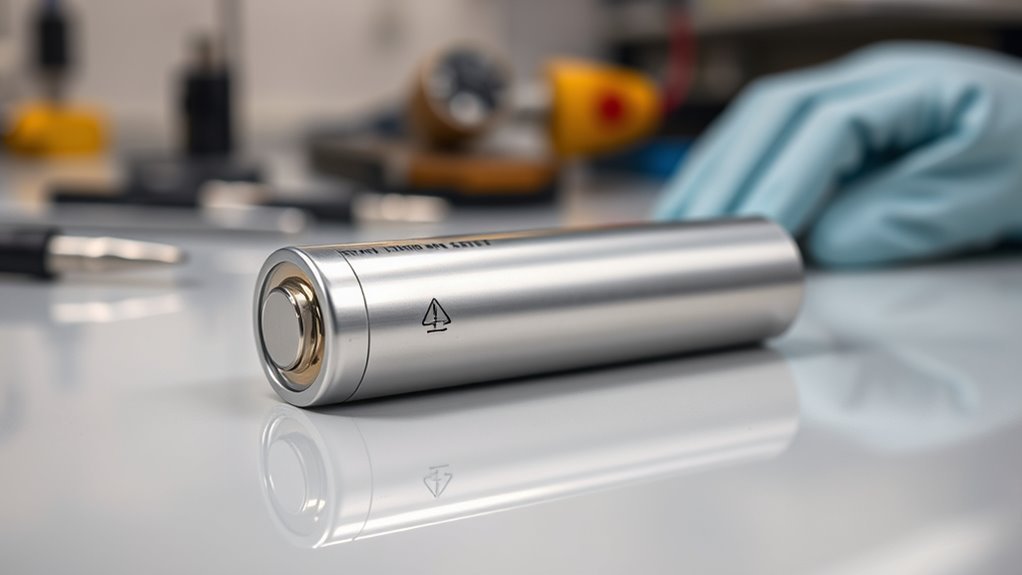
Although lithium-ion batteries are widely used for their efficiency and energy density, understanding their safety fundamentals is vital to prevent accidents. Central to this understanding is knowledge of battery chemistry, which influences how batteries respond under stress. Proper thermal management ensures that heat generated during operation and charging remains within safe limits, preventing thermal runaway. Battery chemistry determines the stability and potential risks associated with different cell types, while effective thermal management minimizes temperature fluctuations and dissipates heat efficiently. Maintaining ideal temperature conditions is essential for the safe performance of lithium-ion batteries, reducing the risk of overheating, swelling, or fires. By grasping these safety basics, users can better appreciate the importance of design and handling practices that protect against potential hazards.
How to Handle and Use Lithium-Ion Batteries Safely
Handling lithium-ion batteries properly is fundamental to guaranteeing safety and ideal performance. We must always follow manufacturer guidelines, avoid puncturing or exposing batteries to extreme temperatures, and store them in a cool, dry place. Proper handling reduces the risk of accidents, such as fires or leaks, which can have serious consequences. Additionally, responsible battery recycling is vital to minimize environmental impact, preventing hazardous materials from contaminating ecosystems. When batteries reach the end of their lifespan, recycling helps recover valuable materials and reduces waste. By adhering to safe handling practices and promoting battery recycling, we contribute to environmental sustainability and guarantee the safe, efficient use of lithium-ion batteries. Prioritizing these steps is indispensable for both safety and environmental protection.
Best Practices for Charging and Discharging
To guarantee peak performance and safety, we must follow best practices when charging and discharging lithium-ion batteries. Proper management extends battery lifespan, reduces safety risks, and supports sustainable practices like battery recycling. Use approved chargers and avoid overcharging or deep discharging. Maintain optimal charging infrastructure to prevent hazards.
| Charging Practice | Discharging Practice |
|---|---|
| Use manufacturer-recommended chargers | Avoid exposing batteries to extreme temperatures |
| Charge within 20-80% capacity | Discharge only as needed for use |
| Regularly cycle batteries to prevent capacity loss | Properly dispose of batteries through recycling programs |
Adhering to these practices enhances safety and efficiency while supporting responsible battery lifecycle management.
How to Recognize and Prevent Battery Damage
Recognizing and preventing battery damage is essential for maintaining ideal performance and safety. One key sign of damage is battery swelling, which indicates a buildup of gases inside the cell, risking rupture or fire. Always inspect your devices regularly for any bulging or deformation around the battery. Overheat indicators are also critical; if your device becomes excessively hot during use or charging, it signals potential damage or malfunction. To prevent these issues, avoid overcharging, using incompatible chargers, or exposing batteries to extreme temperatures. Proper handling, timely replacement of damaged batteries, and adherence to manufacturer guidelines can considerably reduce risks. By staying vigilant for signs like swelling and overheating, you uphold safety and prolong your battery’s lifespan.
Safe Storage, Disposal, and Emergency Response for Batteries
Proper storage, disposal, and emergency response are critical to ensuring safety when dealing with lithium-ion batteries. Store batteries in a cool, dry place away from flammable materials, and avoid damaging or puncturing them. When disposal is necessary, follow local regulations for battery recycling to prevent environmental harm and reduce fire safety risks. Do not throw batteries in regular trash, as damaged cells can ignite and cause fires. In case of a battery fire, use a Class D fire extinguisher or sand to smother flames—never water, which can intensify the fire. Always have a plan for emergency response, including proper ventilation and access to safety equipment. Prioritizing safe storage, responsible disposal, and preparedness minimizes hazards associated with lithium-ion batteries.
Frequently Asked Questions
Can Lithium-Ion Batteries Explode if Punctured?
Yes, puncturing a lithium-ion battery can cause a dangerous explosion risk. Battery puncture releases flammable electrolytes, leading to thermal runaway and potential fires or explosions. Always handle batteries carefully to prevent puncture and associated hazards.
Are There Specific Safety Certifications for Lithium-Ion Batteries?
We understand that lithium-ion batteries adhere to strict manufacturing standards and safety certifications like UL, IEC, and UN38.3, ensuring safe use, proper battery recycling, and compliance across industries—trust these certifications for reliable, safe products.
How Do Temperature Changes Affect Battery Safety?
Temperature changes cause thermal expansion and temperature degradation, which can compromise lithium-ion battery safety. We advise monitoring and maintaining ideal temperatures to prevent damage, reduce fire risks, and ensure reliable performance, especially during extreme temperature fluctuations.
What Are the Signs of Internal Battery Faults?
A sign of internal faults is that the battery swells or emits an unusual odor—think of a warning bell ringing. These indicators signal potential danger, urging immediate action to prevent hazards and guarantee safety.
Is It Safe to Use Third-Party Chargers With Lithium-Ion Batteries?
Using third-party chargers can pose significant risks due to compatibility issues and potential damage. We recommend only using chargers specifically designed for your lithium-ion battery to guarantee safety, peak performance, and to prevent hazards associated with third-party risks.
Conclusion
By following these safety tips, we can reduce the risk of lithium-ion battery accidents greatly. Did you know that nearly 80% of battery fires are caused by misuse or damage? Staying vigilant, using proper charging routines, and storing batteries safely are essential steps we all should take. Together, we can guarantee safer handling and disposal, protecting ourselves and our environment. Let’s prioritize safety and stay informed—it’s the best way to prevent emergencies.