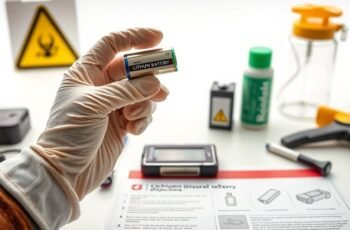
Ensuring safety when using marine lithium batteries is critical to prevent hazards like thermal runaway, fires, and explosions. Proper installation, handling, and maintenance are essential, and understanding the necessary precautions can substantially reduce risks. As vessel operators and technicians, we must adhere to international standards and best practices to protect both crew and environment. The following guidelines provide an extensive overview of safe practices that can make a tangible difference in marine battery management.
Key Takeaways
- Follow manufacturer guidelines for safe installation, wiring, and secure connections to prevent short circuits and thermal events.
- Regularly inspect batteries for physical damage, swelling, corrosion, or leaks, and disconnect immediately if issues arise.
- Use certified chargers compatible with lithium-ion chemistry and monitor voltage and temperature during charging.
- Store batteries in cool, dry, ventilated areas away from flammable materials and ensure proper labeling and segregation.
- Comply with international safety standards like IEC 62619 and UN38.3, and ensure proper recycling at end-of-life to protect environment.
What Are Marine Lithium Batteries and How Do They Work?
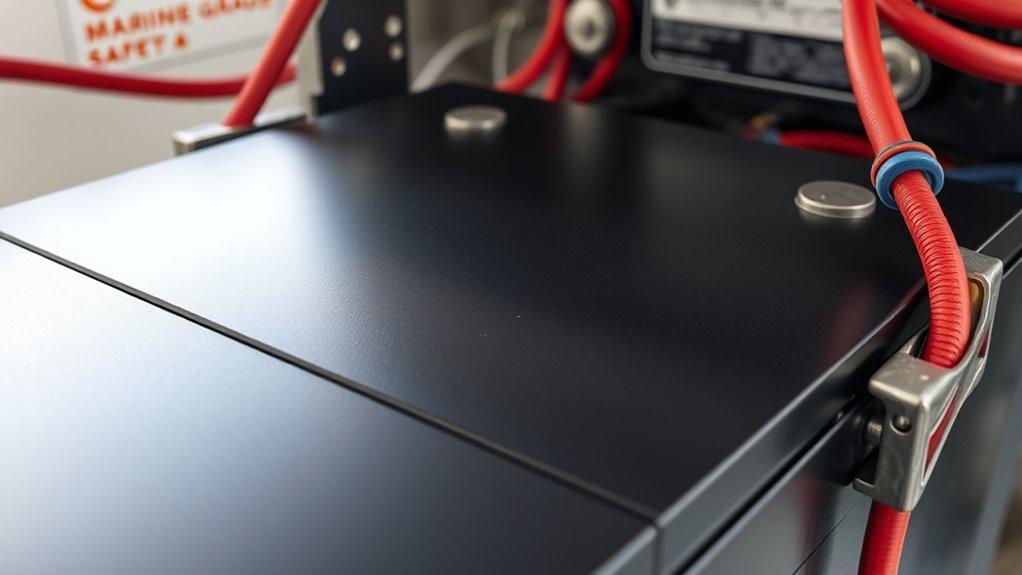
Marine lithium batteries are advanced energy storage systems designed specifically for marine applications, offering higher energy density and longer lifespan compared to traditional lead-acid batteries. They utilize lithium-ion battery chemistry, which provides a lightweight and efficient power source with stable voltage output. Their superior cycling performance enables rapid charge and discharge cycles without significant capacity loss, making them ideal for demanding marine environments. These batteries incorporate advanced management systems to monitor temperature, voltage, and current, guaranteeing ideal operation. Their high cycle life results from minimized electrode degradation, which extends overall durability. This combination of battery chemistry and cycling performance ensures reliability, efficiency, and longevity, enabling marine vessels to operate more effectively while reducing maintenance requirements.
Why Safety Should Be Your Top Priority When Using Marine Lithium Batteries
While lithium-ion batteries offer significant performance advantages for maritime use, their safety considerations are paramount to prevent accidents and guarantee reliable operation. Proper safety protocols mitigate risks such as thermal runaway, which can lead to fires or explosions. Ensuring compatibility with certified components reduces hazards, and adherence to manufacturer guidelines is essential. Additionally, understanding manufacturer warranties provides assurance of quality and support in case of defects or safety concerns. Responsible battery recycling is vital to prevent environmental contamination and reduce fire hazards from improper disposal. Prioritizing safety also involves regular inspections and monitoring for signs of degradation or damage. Ultimately, a thorough safety approach safeguards personnel, vessel integrity, and the environment, making safety the foundation of effective marine lithium battery utilization.
How to Safely Install and Connect Your Marine Lithium Battery
Proper installation and connection of your marine lithium battery are critical to guaranteeing safety and maximum performance. Follow manufacturer instructions meticulously, ensuring secure, corrosion-resistant connections. Use appropriate gauges of wiring for current capacity and include a proper fuse or circuit breaker to prevent overcurrent risks. When connecting, observe polarity carefully to avoid short circuits. Consider lithium sourcing from reputable suppliers to guarantee quality and compliance. Additionally, plan for battery recycling at end-of-life, adhering to environmental regulations. Use specialized terminal connectors and ensure proper torque specifications. Here’s a quick reference:
| Step | Key Considerations |
|---|---|
| Battery Placement | Ventilation, stability |
| Wiring and Polarity | Correct, secure connections |
| Fusing and Breakers | Appropriate ratings, safety measures |
| Connection Checks | Tightness, insulation integrity |
| Post-installation | Inspection, documentation |
Precautions for Charging and Maintaining Marine Lithium Batteries
To guarantee safe and reliable operation, we must adhere to strict precautions when charging and maintaining marine lithium batteries onboard. Proper charging etiquette involves using chargers compatible with lithium chemistry, avoiding overcharging, and maintaining consistent voltage levels. Regular maintenance includes monitoring cell voltages and temperatures, ensuring ventilation, and preventing contamination. When batteries reach end-of-life, comply with battery recycling protocols to minimize environmental impact and reduce hazards. Avoid using damaged or swollen batteries, and never bypass safety features. Consistent, controlled charging practices preserve battery health and safety. Proper maintenance and charging procedures are essential to prevent thermal runaway or fire risks, safeguarding both vessel and crew. Following these guidelines ensures longevity and safe operation of marine lithium energy systems.
How to Spot Battery Malfunctions and Damage Signs
Identifying battery malfunctions begins with inspecting for visible physical damage, such as cracks or bulges, which indicate structural compromise. We also monitor for unusual behavior, like rapid voltage fluctuations or overheating during operation. Additionally, any smell of burning or smoke near the battery signals an immediate safety risk that must be addressed promptly.
Visible Physical Damage
Visible physical damage is often the first indicator of a lithium battery’s malfunction or deterioration. During a thorough visual inspection, we look for signs such as cracks, bulges, or swelling on the battery casing, which suggest internal damage or cell failure. Discoloration, corrosion, or leaks around terminals indicate compromised insulation or electrolyte leakage. Physical damage like punctures or dents can impair battery integrity and pose safety risks. We also pay attention to deformities or bulging, which signal gas buildup from cell failure. Recognizing these visual cues promptly helps prevent potential hazards. Regular inspection for physical damage is essential for maintaining battery safety and performance, especially in marine environments where damage can escalate quickly if left unaddressed.
Unusual Battery Behavior
Unusual battery behavior often signals underlying issues that may not be immediately visible but can compromise safety and performance. Signs include unexpected voltage fluctuations, rapid self-discharge, or excessive heating during operation. Recognizing these indicators allows for prompt intervention, preventing potential failures. Such behaviors may result from internal degradation, manufacturing defects, or external damage. Addressing these issues responsibly involves proper battery recycling to mitigate environmental impact, as damaged cells can release hazardous materials. Additionally, monitoring for abnormal behavior helps extend battery lifespan and ensures safe marine operation.
- Voltage irregularities and overheating suggest internal faults
- Rapid capacity loss indicates degradation or damage
- Persistent self-discharge worsens performance and safety risks
Smell or Smoke Signs
When a lithium battery emits a burning smell or produces smoke, it signals a critical malfunction that requires immediate attention. Such signs indicate internal damage, often due to overcharging, excessive charging cycles, or degraded battery lifespan. Recognizing these warning signals promptly can prevent catastrophic failures. Below is a table illustrating various signs, causes, and recommended actions:
| Sign | Cause | Action |
|---|---|---|
| Burning smell | Internal short circuit | Disconnect power immediately |
| Smoke emission | Overheating or damaged separator | Evacuate and inspect for damage |
| Deformation or swelling | Excessive charge cycles or aging | Replace battery promptly |
| Discoloration | Chemical leakage or thermal runaway | Isolate and dispose safely |
| Unusual odors | Cell degradation or venting | Seek professional assessment |
Best Practices for Storage and Handling of Marine Lithium Batteries
Proper storage and handling of marine lithium batteries are crucial to guarantee safety and maintain peak performance. Correct practices minimize risks associated with thermal runaway, chemical leaks, and damage. Store batteries in a cool, dry, well-ventilated area, away from flammable materials and direct sunlight. Use appropriate protective gear during handling to prevent chemical exposure. Confirm batteries are securely anchored to prevent movement and potential short circuits. Regularly inspect for signs of damage or deterioration, and adhere to protocols for battery recycling when end-of-life. Emergency preparedness includes having spill containment materials on hand and understanding disposal procedures. Key practices include:
- Maintaining controlled environmental conditions during storage
- Properly labeling and segregating batteries based on charge state
- Implementing safety protocols for accidental exposure or leaks
How to Prevent Fires and Overheating on Your Boat
To prevent fires and overheating on your boat, it’s essential to implement thorough electrical system management and maintenance protocols. Regularly inspect wiring connections, fuses, and battery terminals for corrosion or damage, ensuring proper insulation and secure connections. Use battery management systems (BMS) to monitor voltage, temperature, and state of charge, preventing thermal runaway. Proper ventilation reduces heat buildup around batteries. Additionally, responsible battery recycling minimizes environmental impact by ensuring hazardous materials are safely disposed of, reducing fire risks associated with improper disposal. Maintaining a clean, dry environment minimizes the risk of short circuits. Consistent maintenance, combined with awareness of environmental considerations, helps mitigate fire hazards, ensuring safe operation and longevity of marine lithium batteries aboard your vessel.
What to Do If Your Marine Lithium Battery Overheats or Fails?
If your marine lithium battery overheats or fails, immediate action is crucial to prevent further damage or safety hazards. Disconnect power sources to isolate the battery and prevent thermal runaway. Do not attempt to handle or move the battery without proper safety equipment, as it may pose fire or chemical risks. Ventilate the area to disperse any heat or toxic fumes. Once cooled, assess the damage: a compromised battery should be properly disposed of through authorized battery recycling channels to minimize environmental impact. Recognize that repeated overheating can shorten lithium battery lifespan, emphasizing the significance of timely replacement. Proper management ensures safety and prolongs overall battery efficiency, reducing the risk of future failures. Prioritize professional inspection and safe disposal protocols to mitigate hazards.
Regulations and Certifications for Marine Lithium Battery Safety
We need to understand the key international safety standards and certification requirements that govern marine lithium batteries. Conformance with regulatory guidelines ensures that batteries meet safety and performance benchmarks. Adhering to these certifications is essential for legal operation and risk mitigation in marine environments.
International Safety Standards
What are the key international safety standards governing marine lithium batteries, and how do they guarantee vessel and crew safety? Standards such as IEC 62619 and UN Manual of Tests ensure rigorous testing and hazard mitigation, addressing risks like thermal runaway and fires. They also emphasize proper battery recycling procedures to minimize environmental impact, promoting sustainable disposal practices. These regulations mandate stringent design, manufacturing, and labeling requirements to prevent accidental damage and misuse.
- Guaranteeing compliance with environmental impact and battery recycling protocols
- Implementing rigorous testing for thermal stability and fault tolerance
- Maintaining traceability and documentation for safety and recycling purposes
Adherence to these standards not only enhances safety but also supports environmental responsibility, safeguarding the long-term viability of marine lithium battery use.
Certification Requirements
Meeting regulatory requirements for marine lithium batteries involves obtaining specific certifications that verify compliance with international safety standards. These certifications guarantee adherence to rigorous manufacturing standards, including safety, performance, and durability benchmarks. Certification processes typically require thorough testing for thermal stability, impact resistance, and electrical safety, aligning with standards such as UN38.3 and IEC 62619. Additionally, manufacturers must implement responsible battery recycling protocols to minimize environmental impact and meet regulatory directives. Certification bodies assess the entire supply chain, from raw material sourcing to end-of-life management, ensuring sustainable practices. Achieving such certifications demonstrates a commitment to safety, environmental responsibility, and regulatory compliance, which are critical for safe marine operations and market acceptance.
Regulatory Compliance Guidelines
Ensuring regulatory compliance for marine lithium batteries requires adherence to a thorough set of regulations and certification standards that guarantee safety and reliability. Compliance involves meeting international and local standards, such as ISO and IEC certifications, which address battery design, performance, and safety protocols. Additionally, regulations emphasize proper procedures for battery recycling to mitigate environmental impact, ensuring hazardous materials are safely managed and disposed of.
Key aspects include:
- Certification of fire resistance and thermal stability to prevent thermal runaway
- Adherence to environmental regulations for battery recycling and disposal
- Regular safety audits to verify ongoing compliance with evolving standards
Frequently Asked Questions
Can Marine Lithium Batteries Be Used in Saltwater Environments?
We can use marine lithium batteries in saltwater environments if we guarantee proper sealing of the battery compartment and address saltwater corrosion risks, as these measures prevent damage and maintain safety and battery longevity in harsh marine conditions.
What Is the Lifespan of a Typical Marine Lithium Battery?
Ever wondered how long a marine lithium battery lasts? Typically, they endure around 2,000 to 5,000 charging cycles, maintaining substantial capacity. With proper maintenance, their lifespan can extend to 8-10 years, ensuring reliable performance at sea.
Are Marine Lithium Batteries Recyclable or Environmentally Friendly?
Marine lithium batteries are recyclable, considerably reducing environmental impact through dedicated battery recycling programs. We recommend proper disposal and recycling to mitigate potential hazards, ensuring sustainable use and minimizing ecological footprint in marine applications.
How Do Temperature Changes Affect Battery Safety?
Temperature changes can challenge battery safety, affecting thermal regulation and risking exceeding temperature thresholds. We recommend monitoring ambient conditions carefully, as extreme fluctuations may compromise battery integrity and safety, emphasizing the importance of maintaining ideal operating temperatures for longevity and performance.
What Emergency Procedures Should Be Followed if a Fire Occurs?
In case of a fire, we activate fire suppression systems immediately and follow evacuation protocols strictly. We guarantee all personnel evacuate safely, prevent re-entry, and notify emergency services to contain lithium battery-related hazards effectively.
Conclusion
By following these safety guidelines, we guarantee our marine lithium batteries operate reliably, keeping our vessels secure amid open waters. Proper installation, vigilant maintenance, and adherence to regulations form the sturdy hull protecting us from hazards. When we treat batteries with care—monitoring temperature, inspecting regularly, and using certified components—we create a safe environment resembling a well-anchored ship, steadfast against the unpredictable currents of fire and failure. Safety isn’t just a practice; it’s our voyage’s foundation.