Like steering through a minefield, storing lithium batteries requires careful attention to detail to prevent hazards. Mistakes such as ignoring manufacturer guidelines or improper placement can compromise safety and system reliability. Understanding the nuances of ideal storage conditions is vital, yet many overlook these critical factors. To safeguard your investments and guarantee operational integrity, it’s imperative to recognize and avoid common pitfalls that could lead to costly failures or safety incidents.
Key Takeaways
- Avoid improper placement; store batteries in dry, well-ventilated areas away from heat and moisture.
- Follow manufacturer guidelines for handling, storage, and environmental conditions to prevent safety hazards.
- Prevent overcharging and deep discharging by using compatible chargers and monitoring voltage levels.
- Regularly inspect batteries and connections to detect early signs of damage or thermal issues.
- Ensure correct system sizing and proper disposal to maximize lifespan and minimize environmental impact.
Common Lithium Battery Installation Mistakes to Avoid
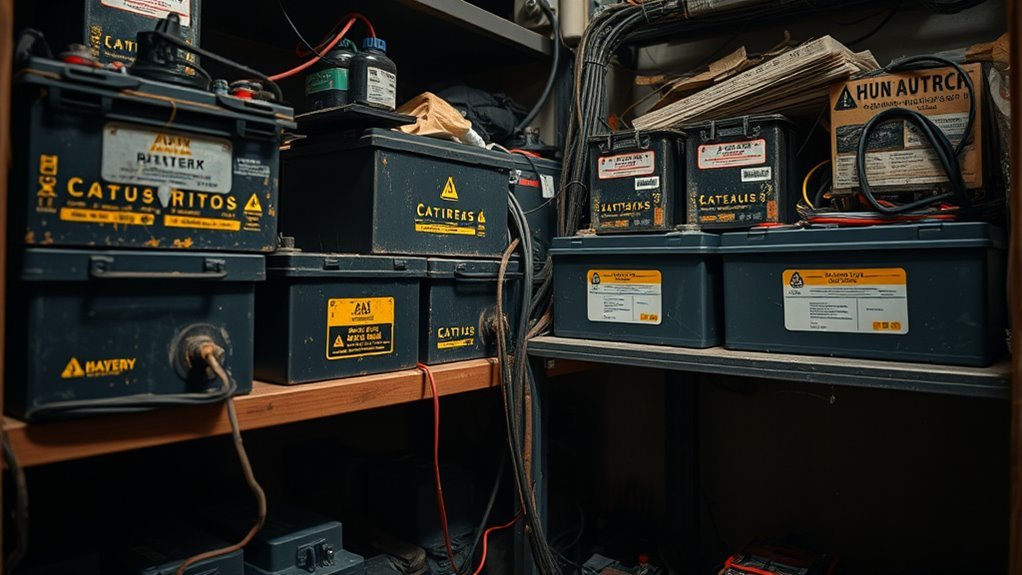
When installing lithium batteries, overlooking proper safety protocols and manufacturer guidelines can lead to significant risks and system inefficiencies. A crucial mistake involves neglecting the importance of understanding battery chemistry, which influences how batteries should be handled and maintained. Different chemistries, such as lithium iron phosphate or lithium cobalt oxide, have distinct thermal and safety characteristics that must be considered during installation. Additionally, improper selection or use of storage containers can cause thermal management issues or chemical stability problems, risking leakage or fire. Ensuring the correct storage environment, with proper ventilation and insulation, is essential. Failing to adhere to these guidelines can compromise system performance, diminish battery lifespan, and pose serious safety hazards. Proper attention to battery chemistry and storage containers is essential for safe and efficient lithium battery installation.
How to Follow Manufacturer Safety Guidelines for Lithium Batteries
To guarantee safe lithium battery storage, we must thoroughly review and understand the manufacturer’s safety guidelines, which specify critical handling and storage procedures. Adhering to proper handling protocols minimizes risk during installation and maintenance, while using the correct accessories prevents potential damage or safety hazards. Following these specific instructions is essential for maintaining battery integrity and ensuring operational safety.
Read and Understand Guidelines
Understanding and adhering to manufacturer safety guidelines is essential for preventing hazards associated with lithium batteries. These guidelines provide critical specifications related to battery chemistry, which influence the required storage conditions and handling protocols. Comprehending the recommended storage location guarantees the battery remains within controlled environments that mitigate risks such as thermal runaway or corrosion. Manufacturers specify safe temperature ranges, humidity levels, and ventilation requirements tailored to the battery’s chemistry to prevent degradation and potential failure. By thoroughly reading and understanding these guidelines, we can identify the appropriate storage setup that minimizes hazards, prolongs battery lifespan, and maintains safety standards. This analytical approach guarantees that safety measures are grounded in the battery’s specific chemical and environmental needs.
Follow Proper Handling Procedures
Following proper handling procedures is essential for maintaining safety when working with lithium batteries. Adhering to manufacturer safety guidelines guarantees that handling protocols mitigate risks such as thermal runaway, leakage, or fire. We must carefully observe recommended procedures for transportation, storage, and disposal, emphasizing the importance of avoiding mechanical damage and short circuits. Proper handling includes wearing appropriate protective equipment, avoiding punctures, and ensuring correct orientation during transport. Strict compliance with safety standards reduces the likelihood of accidents and preserves battery integrity. Battery safety hinges on understanding and implementing these protocols consistently. By prioritizing careful handling, we minimize hazards and extend battery lifespan, ultimately safeguarding personnel and property from preventable lithium battery incidents.
Use Correct Battery Accessories
Using the correct battery accessories is crucial to guaranteeing safety and maintaining the integrity of lithium batteries. Compatibility between accessories and the battery model is essential to prevent electrical issues and potential hazards. Always verify that chargers, connectors, and protective cases meet manufacturer specifications. Proper accessory installation tips include ensuring secure connections, avoiding over-tightening, and preventing contact with conductive materials. Mismatched or substandard accessories can cause overheating, short circuits, or battery failure. Adhering to manufacturer guidelines for accessory selection and installation ensures ideal performance and safety. Regularly inspecting accessories for wear or damage is also key. To sum up, using compatible, high-quality accessories and following proper installation procedures minimizes risk and extends the lifespan of lithium batteries.
Proper Placement and Ventilation for Battery Storage
Proper placement and ventilation are essential to guaranteeing the safe operation of lithium batteries. Correct battery placement involves situating batteries in a dry, stable environment away from direct sunlight, heat sources, and moisture, which can compromise their integrity. Adequate ventilation requirements are critical to prevent the buildup of heat and potentially hazardous gases released during operation or thermal events. We recommend installing batteries in well-ventilated areas with airflow that promotes heat dissipation and minimizes temperature fluctuations. Proper placement also involves avoiding confined spaces that could trap heat or gases. Adhering to these principles reduces the risk of thermal runaway and assures a safer, more reliable battery system. Proper placement and ventilation are fundamental to maintaining both safety and performance in lithium battery storage.
Monitoring and Managing Battery Temperature Effectively
Maintaining batteries within their ideal temperature range is critical to guarantee performance and longevity. Overheating considerably increases the risk of thermal runaway and capacity loss, so precise monitoring is vital. Effective management involves continuous temperature assessment and implementing safeguards to prevent overheating, thereby safeguarding the system’s integrity.
Optimal Temperature Range
Monitoring and managing battery temperature within its ideal range is essential for ensuring performance, longevity, and safety. Proper temperature regulation minimizes thermal stress that can degrade cell chemistry or cause capacity loss. Maintaining optimal conditions requires precise climate control systems that stabilize ambient temperatures, preventing fluctuations that compromise battery integrity. This involves deploying sensors and active cooling or heating mechanisms to sustain the recommended temperature window, typically between 20°C and 25°C. Effective climate control reduces the risk of thermal runaway and accelerates aging processes. By continuously monitoring temperature data, we can implement responsive adjustments, ensuring batteries operate within their safe and efficient range. Ultimately, diligent temperature regulation extends battery lifespan and enhances overall system reliability.
Prevent Overheating Risks
Effective prevention of overheating in lithium batteries hinges on real-time temperature monitoring combined with proactive management strategies. Overheating prevention relies on precise thermal management systems that detect temperature fluctuations early, enabling timely intervention. Continuous temperature sensors provide critical data to identify thermal anomalies before they escalate into safety hazards or capacity loss. By actively controlling cooling mechanisms—such as fans, liquid cooling, or heat sinks—we maintain the battery within safe thermal limits. Implementing robust thermal management not only minimizes overheating risks but also extends battery lifespan and performance. Regular monitoring and adaptive cooling strategies are essential for preventing thermal runaway and ensuring safe operation. Ultimately, integrating effective thermal management practices safeguards both the battery and the surrounding environment.
Avoid Overcharging and Deep Discharging Your Lithium Batteries
Overcharging and deep discharging lithium batteries can profoundly compromise their lifespan and safety. Overcharging risks cause thermal runaway, battery swelling, and capacity loss, making proper charge regulation critical. Excessive voltage from overcharging accelerates degradation of the battery’s internal chemistry, leading to diminished cycle life. Conversely, deep discharge prevention is essential because discharging beyond the recommended threshold can cause irreversible capacity loss, internal cell damage, and instability. Maintaining voltage levels within designated limits guarantees ideal battery health and safety. Implementing accurate charge controllers and monitoring systems helps prevent these issues, preserving the battery’s integrity over time. By avoiding both overcharging and deep discharging, we protect against premature failure and safety hazards, ensuring reliable performance and extending the overall lifespan of lithium batteries.
Choosing Compatible Chargers and Accessories
Selecting chargers and accessories that are compatible with lithium batteries is essential to guarantee safety, efficiency, and longevity. Proper charging compatibility guarantees the battery receives the correct voltage and current, preventing damage or degradation. When selecting accessories, focus on those specifically designed for lithium chemistry to avoid compatibility issues that can compromise performance.
| Charger Type | Compatibility Focus |
|---|---|
| Smart Chargers | Ensures proper charging cycles |
| Connectors | Must match battery terminals |
| Protective Devices | Prevent overcurrent and short circuits |
Accessory selection should prioritize safety features and manufacturer recommendations, as incompatible components can lead to overheating or failure. Accurate matching of chargers and accessories optimizes battery lifespan and maintains operational safety.
Conduct Regular System Inspections and Performance Checks
Regular system inspections and performance checks are essential to identify early signs of degradation or potential failures. By scheduling routine evaluations, we can monitor key metrics and guarantee the battery’s peak operation. This proactive approach helps prevent costly issues and extends the system’s overall lifespan.
Schedule Routine Inspections
Scheduling routine inspections is essential to guarantee lithium battery systems operate safely and efficiently over their lifespan. Regular inspections help identify potential issues before they escalate, ensuring peak performance and prolonging battery lifespan. During these checks, we assess critical components, verify connections, and evaluate overall system integrity. Proper monitoring of charging habits is crucial, as improper charging can degrade cells and reduce capacity over time. Consistent inspections also allow us to detect imbalances or signs of thermal stress early, preventing safety hazards. By adhering to a disciplined inspection schedule, we maintain system reliability, maximize performance, and extend battery life. This proactive approach minimizes downtime and costly repairs, ultimately safeguarding investment and ensuring sustained energy storage efficiency.
Monitor System Performance
Conducting routine system inspections and performance checks is crucial to guarantee lithium battery systems operate at peak efficiency and safety levels. Regular monitoring allows us to assess key metrics such as energy density and cycle life, which directly impact overall system longevity and capacity. By analyzing energy density, we can identify degradation patterns that reduce storage capacity over time, while evaluating cycle life helps predict the system’s durability under operational stress. These inspections enable early detection of potential issues like thermal imbalances or deterioration of internal components, preventing safety hazards. Systematic performance checks also ensure that our batteries maintain ideal charge/discharge rates, ultimately extending their service life and maximizing investment value. Consistent monitoring is essential for reliable, safe, and efficient energy storage management.
Maintain Your Lithium Batteries With Proper Care and Maintenance
To guarantee peak performance and longevity of lithium batteries, proper care and maintenance are essential. Maintaining ideal battery lifespan hinges on disciplined charging habits, avoiding deep discharges, and preventing exposure to extreme temperatures. Consistent, moderate charging—preferably between 20% and 80%—reduces stress on the cells, prolonging functional life. Additionally, using compatible chargers and avoiding overcharging minimizes degradation. Regularly inspecting connections and ensuring proper ventilation helps prevent capacity loss due to thermal stress. Monitoring voltage and current during operation allows early detection of potential issues. Implementing these maintenance practices ensures that lithium batteries sustain their capacity over time, reducing premature failure and maximizing overall system reliability. Proper care is a strategic investment in maximizing both performance and lifespan.
Why Proper Battery System Sizing Matters
Proper care and maintenance of lithium batteries depend heavily on understanding the specific requirements of your system, which is directly influenced by how well the system is sized. Correct sizing guarantees that the battery capacity aligns with your energy demands, preventing over- or under-utilization. An undersized system can lead to frequent deep discharges, reducing lifespan, while oversizing increases costs without proportional benefit. Proper sizing also supports system scalability, allowing for future expansion without significant redesign. Additionally, it optimizes charge/discharge cycles, enhances efficiency, and maintains safety standards.
- Accurate assessment of load demands
- Ensuring sufficient battery capacity for peak usage
- Facilitating seamless system scalability
- Minimizing operational risks and costs
Planning for Lithium Battery Disposal and Recycling
As lithium batteries reach the end of their operational life, planning for their disposal and recycling becomes crucial to minimizing environmental impact and complying with regulations. Effective disposal methods must prioritize safety and environmental responsibility, preventing hazardous leakage and pollution. Battery recycling plays an essential role in recovering valuable materials such as lithium, cobalt, and nickel, reducing the demand for virgin resource extraction. We must identify appropriate disposal methods, including specialized collection programs and certified recycling facilities, to guarantee responsible handling. Proper planning minimizes risks associated with improper disposal, such as fires or toxic exposure. By integrating thorough recycling strategies into our overall battery management, we can promote sustainability, reduce waste, and adhere to evolving regulatory standards.
Frequently Asked Questions
How Long Do Lithium Batteries Typically Last Before Replacement Is Needed?
Lithium batteries generally last 3-5 years, depending on battery maintenance and lifespan factors like temperature, charge cycles, and usage patterns. Regular monitoring and proper care can extend their functional lifespan before replacement becomes necessary.
Can Lithium Batteries Be Safely Stored Outdoors?
We advise against outdoor storage for lithium batteries due to weather considerations; in a case study, exposure to moisture caused thermal runaway. Outdoor safety requires controlled environments, protecting batteries from extreme temperatures, humidity, and direct sunlight for maximum performance and safety.
What Are Signs of Potential Lithium Battery Failure?
We notice signs of potential lithium battery failure through battery overheating and capacity degradation, indicating internal damage or aging. Monitoring these indicators helps us prevent failures, ensuring safety and maintaining peak performance in our storage systems.
Are There Specific Weather Conditions That Affect Lithium Battery Safety?
Like delicate plants, lithium batteries are highly sensitive to weather. Extreme temperatures and high humidity can cause overheating or corrosion, compromising safety and performance, so controlling environmental conditions is essential for maintaining ideal battery health and safety.
How Do Lithium Batteries Impact the Environment After Disposal?
Lithium batteries impact the environment post-disposal through environmental pollution from improper disposal and recycling challenges, as hazardous materials can leach into ecosystems, emphasizing the need for efficient recycling methods to mitigate ecological risks and promote sustainability.
Conclusion
In conclusion, avoiding common lithium battery storage mistakes is essential for safety and longevity. Studies show that improper storage can reduce battery lifespan by up to 50%, increasing risk of failure. By adhering to manufacturer guidelines, ensuring proper placement, and regular monitoring, we can mitigate hazards and optimize performance. Implementing these best practices not only enhances safety but also extends battery lifespan, underscoring the significance of meticulous management in high-stakes energy systems.